Physical Dependence: What It Is, How It Happens, and What to Do
When your body gets used to a medication and starts relying on it to feel normal, that’s physical dependence, a physiological state where stopping a drug triggers withdrawal symptoms. Also known as drug dependence, it’s not the same as addiction—no cravings or compulsive use needed. It can happen with painkillers, antidepressants, blood pressure meds, even caffeine if you take them daily for weeks. You don’t have to be abusing anything. Even someone taking a prescribed opioid for a broken leg can develop physical dependence in as little as two weeks.
This is why withdrawal symptoms, the physical reactions that happen when you stop a drug your body has adapted to show up so suddenly. Think sweating, shaking, nausea, insomnia, or even seizures—not because you’re weak, but because your nervous system is rewired. The same thing happens with benzodiazepines, SSRIs, or beta-blockers. Your body learned to compensate for the drug’s presence, and when it’s gone, everything goes out of balance. That’s why doctors don’t just tell you to quit cold turkey. Tapering isn’t optional—it’s science.
And then there’s medication tolerance, when you need higher doses to get the same effect because your body has adjusted. It’s often mistaken for addiction, but it’s just biology. Someone on long-term pain meds might need more over time—not because they want to get high, but because their receptors have slowed down. That’s why switching to a different drug or adjusting the dose isn’t a failure. It’s a necessary step.
You’ll find real stories here—not theory. Posts cover how people safely come off opioids without relapsing, why stopping an antidepressant too fast can feel like the flu, and how to spot when a common painkiller is causing more harm than good. You’ll learn why carrying your meds in original bottles matters when you’re tapering, how to talk to your doctor about reducing dosage, and what signs mean it’s time to get help before withdrawal turns dangerous.
This isn’t about judgment. It’s about understanding how your body reacts to the drugs you’re taking—whether they’re prescribed, bought over the counter, or used for years without a second thought. The goal? To help you recognize physical dependence before it catches you off guard, and to give you the tools to manage it safely.
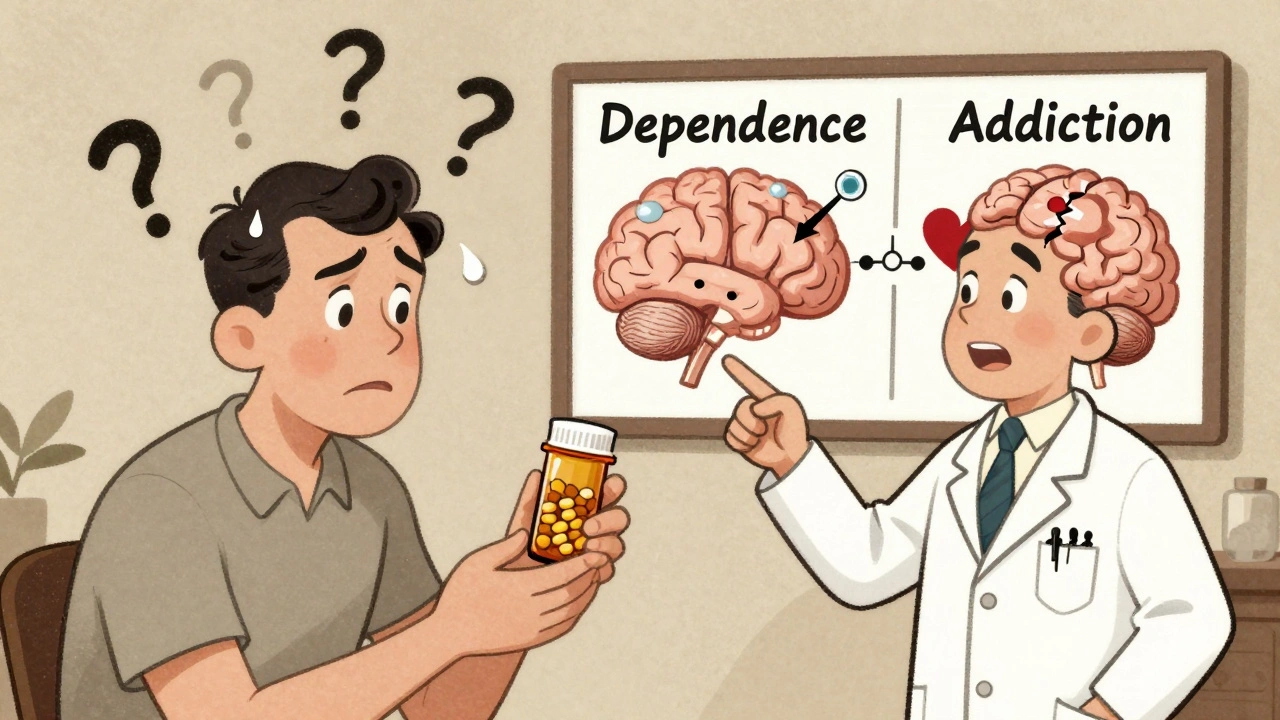
Physical Dependence vs Addiction: Clarifying Opioid Use Disorder
- 13 Comments
- Dec, 1 2025
Understand the critical difference between physical dependence and addiction when using opioids. Learn how withdrawal isn't addiction, why tapering works, and what true Opioid Use Disorder looks like.