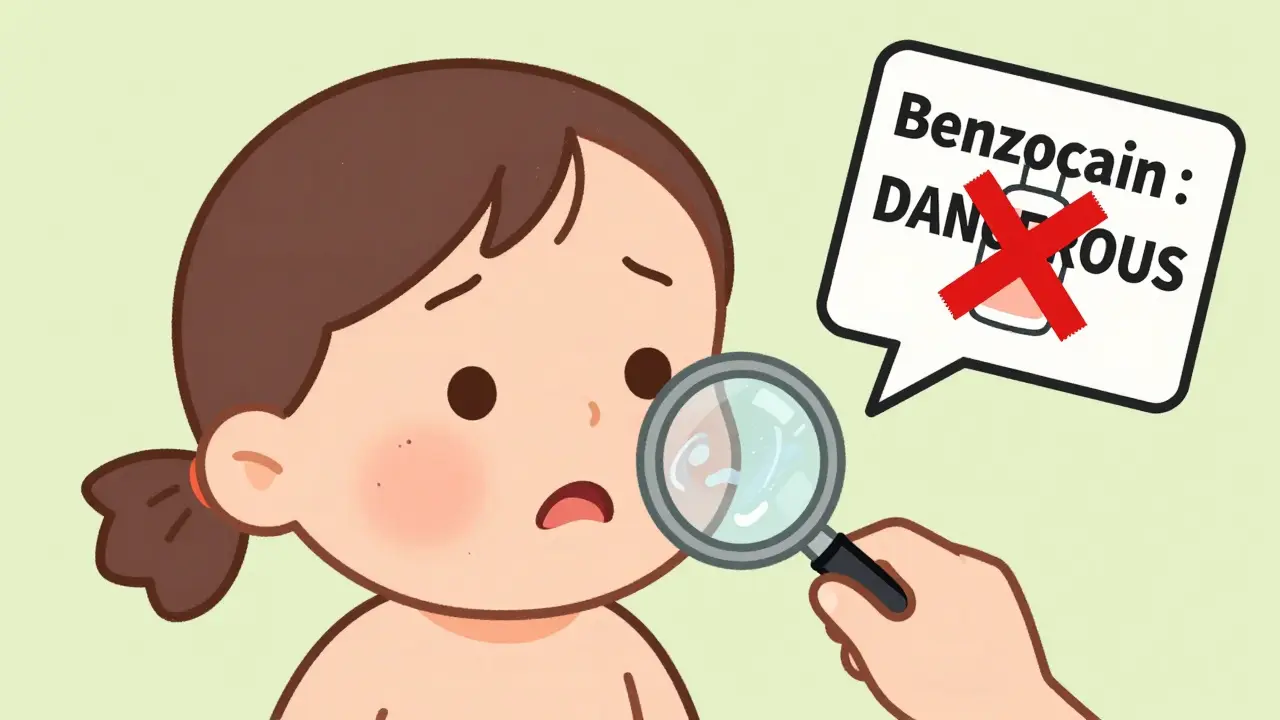
When your child has a rash, eczema flare-up, or teething pain, it’s natural to reach for a cream or ointment to help. But what seems like a simple fix can turn dangerous if you don’t know the risks. Topical medications-creams, gels, and lotions applied to the skin-are often seen as harmless, especially compared to pills. But for kids, especially babies under 1 year, these products can be far more powerful-and far more risky-than most parents realize.
Why Children’s Skin Is Different
Children’s skin isn’t just smaller skin. It’s fundamentally different. Babies have thinner outer layers, less fat underneath, and skin that absorbs things more easily. A child’s surface-area-to-body-weight ratio is 3 to 5 times higher than an adult’s. That means a small amount of cream applied to their skin can enter their bloodstream in amounts that would be harmless on an adult. For infants under 12 months, this absorption can be even higher-up to 10 times more than in older kids, especially if the skin is cracked, inflamed, or wet.This isn’t theoretical. It’s why a dab of lidocaine gel meant for a small area can cause seizures. Why a thin layer of hydrocortisone cream used daily for weeks can shut down a child’s stress response system. And why a teething gel containing benzocaine can drop oxygen levels dangerously low in minutes.
Top 3 Dangerous Ingredients to Avoid in Kids
- Benzocaine: Found in teething gels, sore throat sprays, and some numbing creams. The FDA banned its use in children under 2 years in 2018 after over 400 documented cases of methemoglobinemia-a condition where blood can’t carry oxygen properly. Symptoms? Blue lips, drowsiness, trouble breathing. In severe cases, it can be fatal.
- High-potency corticosteroids: Creams like clobetasol (class I) or betamethasone (class II) are powerful. Used even once on a baby’s face or diaper area, they can suppress the HPA axis, the body’s natural hormone system. This can lead to slow growth, high blood pressure, or even adrenal crisis. The AAP says these should never be used on children under 2 without direct medical supervision.
- Lidocaine (over 4%) and dibucaine: While low-dose lidocaine (1-4%) is sometimes used for minor procedures under medical guidance, anything stronger or used too often can cause toxicity. Over 10 deaths in children were linked to ingestion of these products before child-resistant packaging became mandatory in 1994. Even now, accidental overdoses happen when parents apply too much or use it too frequently.
What’s Safe? Alternatives That Actually Work
Just because some products are dangerous doesn’t mean you can’t treat your child’s skin. There are safer options.
- Low-potency hydrocortisone (0.5%-1%): This is the only steroid generally considered safe for short-term use in infants over 3 months. Use it only on small areas, for no more than 5-7 days, and never on the face unless directed by a doctor.
- Calcineurin inhibitors (tacrolimus 0.03%, pimecrolimus): These are non-steroid creams approved for children as young as 3 months. They’re especially useful for eczema on the face and neck, where steroids carry higher risks. Studies show they have 72% less systemic absorption than even low-dose steroids. While they carry a black box warning about cancer risk, 15 years of real-world use have shown no confirmed cases linked to the medication.
- Non-pharmacological options: For teething, chilled (not frozen) silicone teethers work better than any gel. For diaper rash, frequent changes and zinc oxide paste are more effective-and safer-than medicated powders or sprays. For dry skin, fragrance-free moisturizers like CeraVe or Eucerin are often enough.
Dosing Matters More Than You Think
Parents often use a “pea-sized” amount. That’s not precise enough. The standard unit doctors use is the fingertip unit (FTU).
One FTU is the amount of cream squeezed from a standard tube that covers the distance from the tip of your index finger to the first crease. One FTU covers an area about the size of two adult palms. For a 10kg child, the maximum daily dose of a low-potency steroid is 2g total-roughly 4 FTUs. Apply more than that, and you’re increasing absorption risk dramatically.
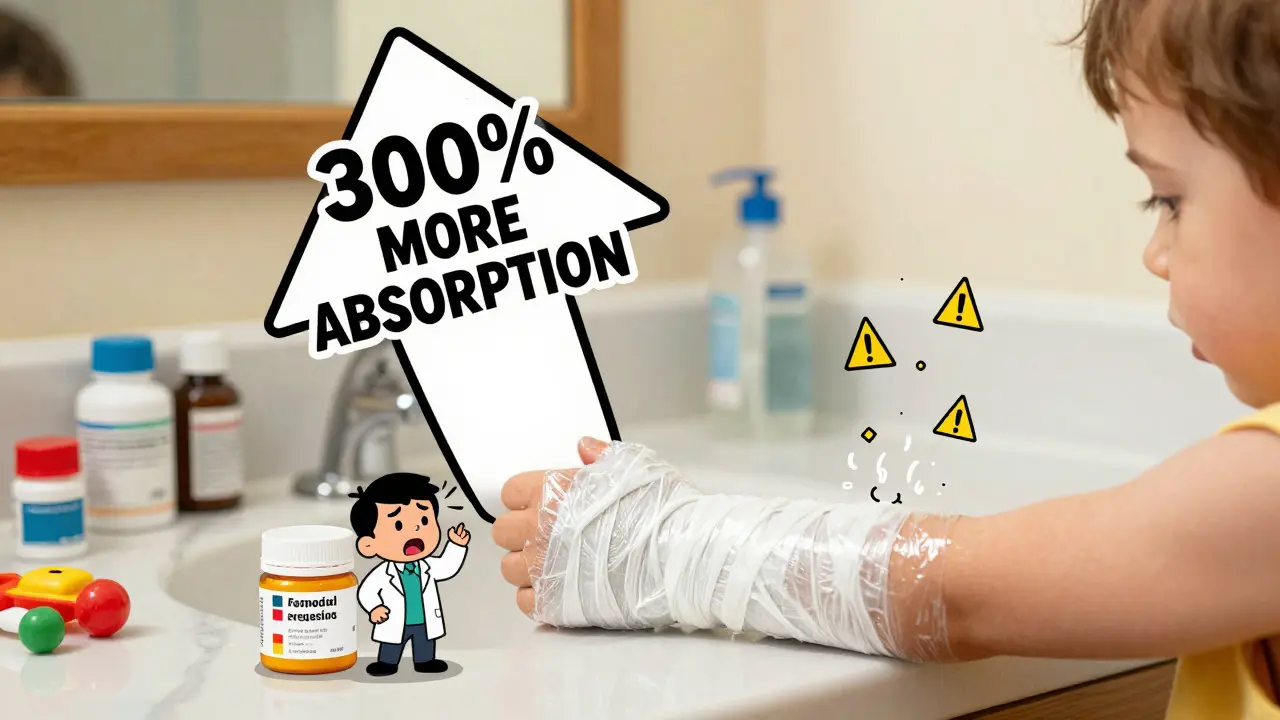
And never use occlusion-wrapping the area in plastic wrap, Tegaderm, or tight clothing-unless a doctor specifically says to. Occlusion can boost absorption by 300-500%. For a baby with eczema, whose skin is already more permeable, this can push a safe dose into the toxic range.
Storage and Prevention: The Simple Things That Save Lives
Most poisonings happen not because of misuse, but because the product was left out.
- Always return topical medications to their child-resistant container immediately after use.
- Store them out of reach-even if you think your child can’t open them. 78% of exposures happen because the product was left on the counter, bedside table, or bathroom sink after application.
- Never share prescriptions. Grandparents or babysitters may use leftover cream from another child. That’s how a 6-month-old ends up with a steroid overdose.
- Check expiration dates. Old creams can break down and become more irritating or even toxic.
What to Do If Something Goes Wrong
If your child shows any of these signs after using a topical product:
- Blue or gray skin, especially around lips or fingernails
- Unusual drowsiness or difficulty waking up
- Fast or shallow breathing
- Seizures or uncontrolled movements
Call Poison Control immediately (1-800-222-1222 in the U.S.) or go to the nearest emergency room. For benzocaine toxicity, methylene blue is the antidote-but it must be given quickly. Don’t wait to see if it gets better.
The Bigger Picture: Why This Keeps Happening
Despite clear guidelines, unsafe products are still easy to find. In the U.S., 45% of topical corticosteroids are sold over-the-counter without prescriptions. In India, it’s 78%. Many OTC labels still don’t list age restrictions. A 2021 study found only 37% of topical pain relievers included any pediatric dosing instructions.
And the market is growing. The pediatric topical medication industry is projected to hit $18.7 billion by 2027. But safety innovations lag. Only 18.3% of new products launched in 2024 include child-safe packaging or clear pediatric warnings-down from 22% in 2020.
Until regulations catch up, parents have to be the first line of defense. Know what’s in the product. Know how much to use. Know where to store it. And know when to call a doctor instead of reaching for the medicine cabinet.
Can I use hydrocortisone cream on my baby’s face?
Low-potency hydrocortisone (0.5%-1%) can be used on a baby’s face for short periods-no more than 5 days-if recommended by a pediatrician. Avoid using it on large areas or under occlusion. For facial eczema, calcineurin inhibitors like tacrolimus 0.03% are often safer and more effective long-term.
Is there a safe teething gel for babies?
No. The FDA advises against all benzocaine-containing teething gels for children under 2. Even products labeled "natural" or "herbal" may contain hidden anesthetics. The safest options are chilled (not frozen) silicone teethers, cold washcloths, or gentle gum massage with a clean finger.
How much cream is too much for a child?
Use the fingertip unit (FTU) method: one FTU covers two adult palms. For a 10kg child, the maximum daily dose of a low-potency steroid is 2g (about 4 FTUs). Never apply more than 10% of the body surface area at once. If you’re using more than one FTU per day, talk to your doctor.
Can I use my adult eczema cream on my child?
No. Adult creams often contain high-potency steroids (like clobetasol) or stronger preservatives that can be toxic to children. Even if the label says "for sensitive skin," it may still contain ingredients unsafe for infants. Always use products labeled for pediatric use or prescribed by a doctor.
What should I do if my child swallows topical medication?
Call Poison Control immediately at 1-800-222-1222. Do not induce vomiting unless instructed. If the product contains lidocaine, dibucaine, or benzocaine, emergency treatment may be needed. Keep the product container handy-doctors will need to know the exact ingredients and concentration.
Steve DESTIVELLE
February 12, 2026 AT 21:19Children’s skin isn’t just small adult skin it’s a different biological system entirely
Thinner barrier more surface area per kilo higher absorption rates
What’s harmless on you can be a silent poison on them
No such thing as too little when it comes to topical meds in infants
One dab becomes a systemic event
We treat these creams like candy because they smell nice and don’t require swallowing
But the body doesn’t care how you deliver the toxin
It just absorbs it
And then it reacts
And then it’s too late
Parents think they’re being careful because they use a pea sized amount
But a pea isn’t a unit of measurement it’s a snack
Stop guessing start measuring
One FTU one fingertip unit that’s the rule
Not your intuition not your gut not your mom’s advice
Science doesn’t negotiate
And children don’t get second chances
Stephon Devereux
February 14, 2026 AT 15:11This is one of the most important posts I’ve read all year
Seriously if you have a kid under 2 and you’re using any topical cream without knowing the ingredients you’re playing Russian roulette
I’m a pediatric nurse and I’ve seen three cases of methemoglobinemia in the last 18 months all from teething gels
One baby didn’t make it
The parents thought it was just a natural remedy
It wasn’t
And the FDA ban on benzocaine under 2 is barely enforced
Most pharmacies still stock it
Amazon still sells it
And labels still say ‘safe for infants’
Don’t trust the label
Trust the science
And if you’re unsure call your pediatrician
Not Google
Not grandma
Not the guy at the pharmacy who’s just trying to make his quota
Real human expertise matters here
Also if you’re using hydrocortisone on the face
Go for the 0.5% max and only for 3-5 days
Longer and you risk adrenal suppression
It’s silent
It’s slow
And it’s irreversible
Don’t wait for symptoms
Prevention is everything
athmaja biju
February 15, 2026 AT 07:29India has been dealing with this for decades
Pharmacies sell clobetasol like it’s hand cream
Grandmothers apply steroid creams to babies’ faces for ‘fair skin’
And no one questions it
Because in our culture we trust tradition over science
But science doesn’t care about tradition
It only cares about truth
And the truth is this: a baby’s skin absorbs 10x more than an adult’s
So when you put steroid cream on your child’s face thinking you’re helping
You’re actually poisoning their hormones
And when they grow up with stunted growth or high blood pressure
Who do you blame?
Not the doctor
Not the pharmacist
But you
Because you didn’t read
You didn’t ask
You just followed what everyone else did
Wake up
Knowledge is your child’s only real shield now
Robert Petersen
February 16, 2026 AT 01:41You guys are killing it with this info
Seriously thank you for laying it out so clearly
I’ve been a parent for 7 years and I had no idea about FTUs
I thought ‘pea-sized’ was the gold standard
Turns out it’s not even close
I just checked my medicine cabinet and found three expired creams
One of them was clobetasol from my own eczema
I threw them all out today
And I’m telling every new parent I know
This isn’t scare tactics
This is life-saving clarity
Also-calcineurin inhibitors are a game changer
My daughter had facial eczema for 18 months
Steroids made her skin thin
Tacrolimus 0.03%? Barely a side effect
And it actually worked
So if you’re scared of steroids
Ask your doc about these
They’re not perfect
But they’re way safer than you think
And your kid deserves that chance
Craig Staszak
February 16, 2026 AT 05:41Storage matters more than most realize
I’ve seen too many cases where a child got into the cream because it was left on the bathroom counter
One FTU is enough
But if you leave the tube out
You’re not just risking misuse
You’re inviting disaster
My rule now: meds go back in the locked cabinet
Even if I’m just putting it on for 10 seconds
No exceptions
No ‘I’ll put it back later’
That later is when the baby crawls over
And the bottle is open
And the world changes in seconds
Also occlusion
Please stop wrapping kids in plastic wrap
It’s not a miracle cure
It’s a chemical oven
And babies don’t sweat it off
They absorb it all
One time is enough to change their physiology
Don’t be that parent
alex clo
February 17, 2026 AT 15:08There is a critical gap between clinical guidelines and public awareness
The AAP and FDA have issued clear directives
Yet over-the-counter labeling remains dangerously vague
A 2021 study showed only 37% of topical pain relievers included pediatric dosing
This is not negligence
This is systemic failure
Regulatory agencies lack the power to mandate clear labeling
Manufacturers prioritize profit over safety
And parents are left guessing
We need mandatory child-specific labeling
We need standardized FTU instructions on every tube
We need child-resistant packaging for all topical medications
Until then
The burden falls on caregivers
And that burden is too heavy
This post is a necessary intervention
But systemic change is overdue
Ernie Simsek
February 19, 2026 AT 10:13OMG I JUST REALIZED I USED MY CLOBETASOL ON MY 10-MONTH-OLD FOR A RASH 😱
I thought it was ‘just a little’ and it was ‘for sensitive skin’
I’m literally panicking right now
She’s fine… I think?
Should I rush to the ER?
I’m gonna call Poison Control in 3… 2… 1…
Also I just Googled ‘benzocaine teething gel’ and found 5 brands still on Amazon
How is this legal??
I’m sharing this post to EVERY parent group I’m in
This is a public health emergency
💥🚨
Joanne Tan
February 20, 2026 AT 10:25i just used hydrocortisone on my 6mo old for 3 days on her arm bc she had a red patch
i thought it was fine bc it was 1%
i didnt know about ftu or the 2g max
now im scared
shes fine tho right?
i mean she aint blue or sleepin too much
but i just deleted all my teething gel apps from my phone
and i bought a chilled teether
also i put all meds in the locked drawer
sorry for the messy typing
but this hit me hard
thank you for writing this
Stacie Willhite
February 21, 2026 AT 23:35I just want to say thank you.
Not because I’m an expert.
But because I’m a mom who used to think ‘natural’ meant safe.
I used a herbal teething gel on my daughter because the label said ‘no chemicals’.
Turns out it had benzocaine.
She got sleepy.
We didn’t think much of it.
Now I know.
I’m not angry at myself.
I’m just committed to learning.
And sharing.
Because no parent should have to learn this the hard way.
You’ve given me a roadmap.
And I’ll follow it.
For my kids.
And for others.
Rob Turner
February 23, 2026 AT 12:12One thing I’ve noticed in the UK is that pharmacies still hand out steroid creams without asking age or weight
Just ‘here you go’
Like it’s aspirin
And parents don’t know what to ask
They don’t know FTU
They don’t know potency classes
They don’t know that ‘for external use only’ doesn’t mean ‘safe for babies’
I’ve been a pharmacist for 15 years
And I’ve seen this happen too many times
So I started leaving little printed cards on the counter
One FTU = two palms
Never on face unless approved
Never longer than 5 days
Call if you see blue lips
Simple
Clear
Human
Maybe we need more of that
Not more warnings
Just more kindness
And more clarity
Gabriella Adams
February 24, 2026 AT 02:56Thank you for this. Every word matters.
As a pediatric nurse, I’ve watched parents cry because they thought they were helping.
They weren’t careless.
They were misinformed.
And misinformation kills.
But knowledge? Knowledge heals.
So if you’re reading this and you’re scared?
You’re not alone.
If you’re reading this and you’re guilty?
You’re not a bad parent.
You’re a parent who didn’t know.
And now you do.
So change.
Not out of fear.
Out of love.
And then teach someone else.
That’s how we stop this.
One informed parent at a time.