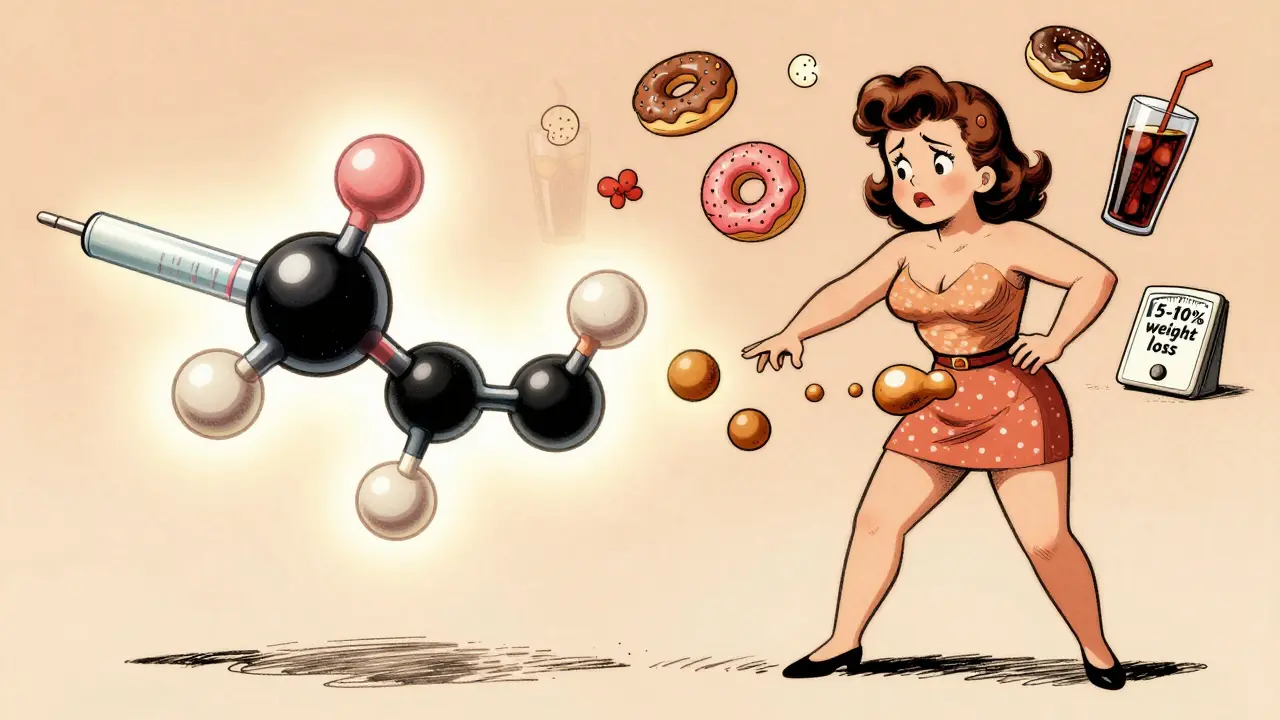
When you have PCOS, losing weight isn’t just about eating less or working out more. It’s not a lack of willpower. It’s biology. The real culprit behind stubborn belly fat, constant hunger, and failed diets isn’t laziness - it’s insulin resistance. And if you’re one of the millions of women with PCOS, this one hormone imbalance is quietly shaping your body, your cravings, and your health in ways you might not even realize.
Why Your Body Holds Onto Fat Like It’s a Lifeboat
Most people think of PCOS as a reproductive issue - irregular periods, acne, excess hair. But the real engine driving the weight gain? Insulin resistance. Up to 95% of women with PCOS who are overweight, and even 75% of those who aren’t, have it. That’s not rare. That’s the rule. Insulin is supposed to help your cells use sugar for energy. But when your body becomes resistant to it, your pancreas pumps out more and more to compensate. That extra insulin doesn’t just sit around. It tells your fat cells: store more. Burn less. It turns off your body’s ability to break down fat. And it makes you hungrier - especially for carbs and sugar. This isn’t just about calories. It’s about chemistry. High insulin also lowers a hormone called SHBG, which normally keeps male hormones like testosterone in check. When SHBG drops, testosterone rises. And that’s when you start seeing the classic PCOS body shape: fat piling up around your waist instead of your hips. Apple shape. Not pear. That’s not bad luck. That’s insulin.The Vicious Cycle: Weight Gain Makes PCOS Worse
Here’s the cruel twist: the more weight you gain, the worse your insulin resistance gets. Extra fat - especially belly fat - isn’t just storage. It’s active tissue that releases inflammatory chemicals. Those chemicals make your cells even more resistant to insulin. And that means even more insulin gets produced. More hunger. More fat storage. More testosterone. More missed periods. It’s a loop. And breaking it isn’t about extreme diets. It’s about retraining your metabolism. The NHS, Cleveland Clinic, and multiple research studies agree: weight loss - even just 5-10% of your body weight - can dramatically improve insulin sensitivity, restore ovulation, reduce acne, and lower your risk of diabetes. But you can’t do it with a low-fat, high-carb diet. Those make it worse.What to Eat: The Insulin-Smart Diet for PCOS
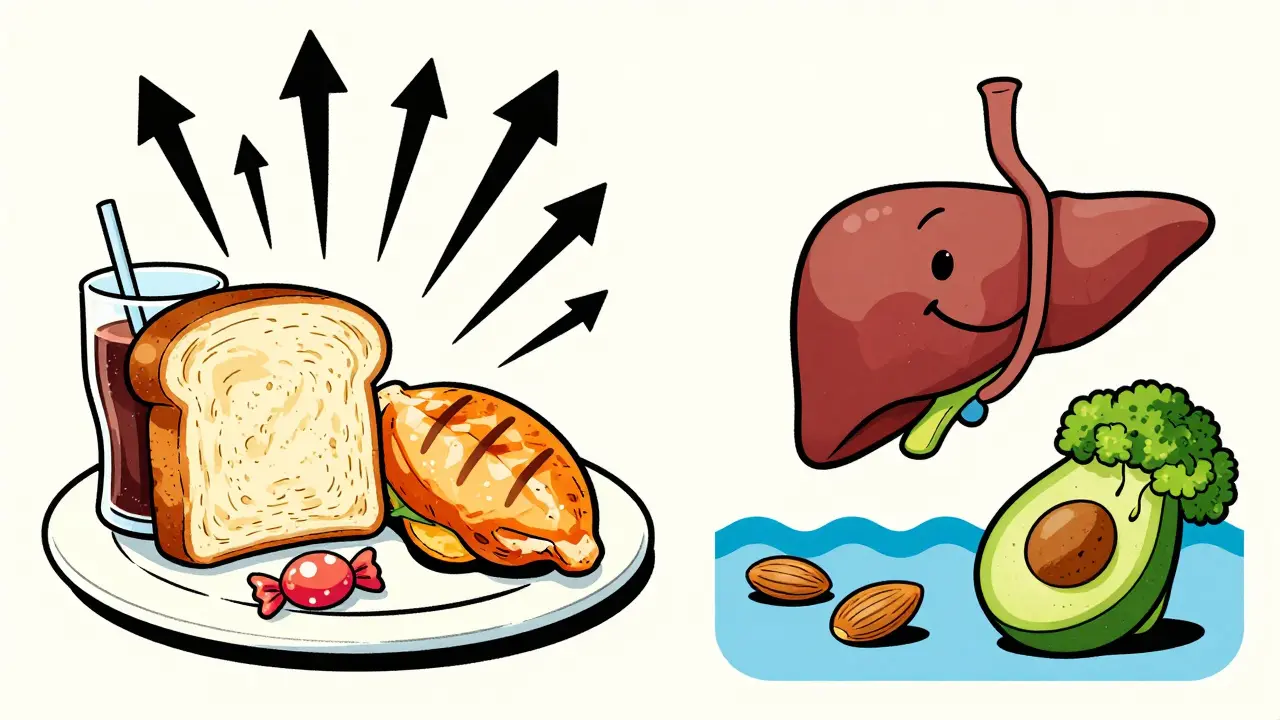
Forget counting calories. Start counting how your food affects your insulin. The goal? Keep blood sugar steady. No spikes. No crashes.- Choose low-glycemic carbs: Swap white bread, pasta, and rice for whole grains like quinoa, barley, oats, and buckwheat. Vegetables should be your main source of carbs - broccoli, spinach, kale, peppers, zucchini. They’re full of fiber, which slows sugar absorption.
- Pair carbs with protein and fat: Never eat carbs alone. Eat an apple with almond butter. Have sweet potato with grilled chicken. Add avocado to your salad. Protein and fat blunt the insulin spike from carbs.
- Ditch the sugar and refined carbs: Soda, candy, pastries, even fruit juice - these are insulin grenades. They spike blood sugar fast and keep it high. That’s what fuels fat storage and cravings.
- Don’t fear healthy fats: Avocados, olive oil, nuts, seeds, fatty fish like salmon - these don’t raise insulin. They help you feel full longer and reduce inflammation.
- Eat regularly: Skipping meals makes insulin levels swing wildly. Aim for 3 balanced meals and 1 snack if needed. Consistency matters more than timing.
Why Diets Fail (and What Actually Works)
Most weight loss plans for PCOS fail because they ignore insulin. A low-fat diet with lots of whole grains? That’s just a sugar overload disguised as healthy. You’ll feel hungrier, more tired, and gain more weight. Research from the Clue app and Fertifa shows that women with PCOS often battle insatiable hunger and emotional cravings - especially for sweets. That’s not a personal failure. It’s your body screaming for stable blood sugar. When insulin crashes after a carb-heavy meal, you crave more sugar to fix it. It’s a biological trap. The solution? Eat for stability, not restriction. A plate with lean protein (chicken, tofu, eggs), non-starchy veggies, and a small portion of complex carbs (like lentils or sweet potato) keeps insulin calm. Add a spoon of olive oil or a handful of almonds. That’s it.What About Intermittent Fasting?
Some women with PCOS find success with time-restricted eating - like eating within an 8-hour window. But it’s not magic. It works because it gives your insulin a break. Less time eating = less time spiking insulin = more time burning fat. But if you’re stressed, exhausted, or have a history of disordered eating, don’t jump in. Fasting can backfire. Start with simple habits: don’t snack after dinner. Wait 12 hours between dinner and breakfast. That’s a gentle way to let insulin drop.It’s Not Just About Weight - It’s About Long-Term Health
PCOS isn’t just about periods or acne. It’s a metabolic disorder. High insulin and belly fat raise your risk for type 2 diabetes, heart disease, high blood pressure, and even endometrial cancer. The CDC and WebMD are clear: women with PCOS are at significantly higher risk - especially if they carry extra weight. But here’s the good news: reversing insulin resistance doesn’t require drastic measures. Small, consistent changes work better than any quick fix. A study in the Journal of Clinical Endocrinology & Metabolism found that women with PCOS who followed a low-glycemic diet for 6 months saw a 20% drop in insulin levels - even without major weight loss.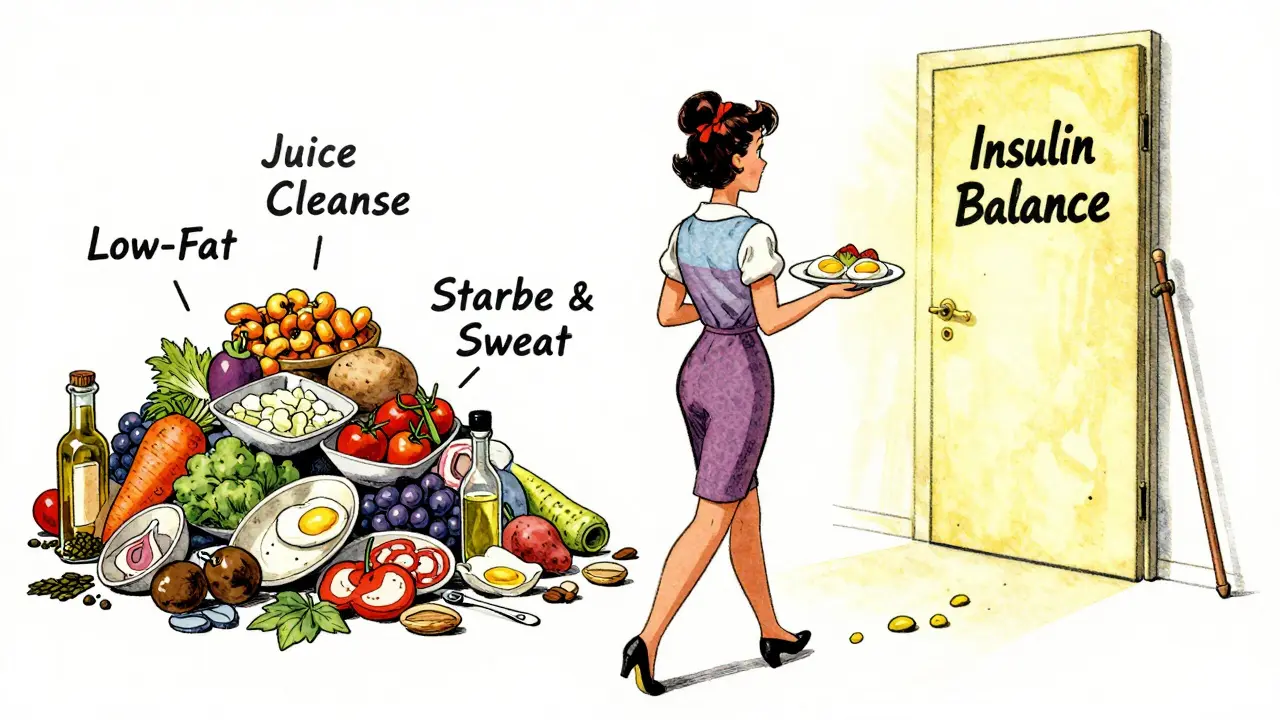
Real-Life Tips That Actually Help
- Start your day with protein: Eggs, Greek yogurt, or a tofu scramble. Avoid cereal or toast.
- Keep nuts or hard-boiled eggs handy. When hunger hits, reach for these - not the candy bar.
- Drink water before meals. Sometimes thirst feels like hunger.
- Move after eating. A 10-minute walk after dinner helps lower blood sugar.
- Sleep matters. Poor sleep raises cortisol, which worsens insulin resistance.
What About Supplements?
Some women find help with inositol, magnesium, or vitamin D. Inositol, in particular, has been shown in studies to improve insulin sensitivity and ovulation in PCOS. But supplements aren’t a substitute for food. They’re a support. Focus on your plate first.You’re Not Broken - Your Metabolism Just Needs a New Plan
If you’ve tried every diet and nothing stuck, it’s not you. It’s the approach. PCOS weight gain isn’t about willpower. It’s about hormones. And once you understand how insulin is working against you, you can finally outsmart it. You don’t need to be perfect. You just need to be consistent. One meal at a time. One day at a time. Your body isn’t fighting you - it’s just responding to the signals you’ve been giving it. Change those signals, and your body will change with you.Can you lose weight with PCOS if you’re not overweight?
Yes. Even women with PCOS who are lean often have insulin resistance. The issue isn’t just body weight - it’s fat distribution and metabolic health. Belly fat, even if it’s not visible, can still be present and contribute to hormonal imbalance. A diet focused on stabilizing insulin helps reduce abdominal fat and improve symptoms regardless of overall weight.
Why do I crave sugar so badly with PCOS?
High insulin levels cause blood sugar to spike and then crash. When your blood sugar drops, your body craves quick energy - sugar. This is compounded by hormonal shifts that affect hunger signals like ghrelin and leptin. Emotional stress from PCOS symptoms can also trigger cravings. The solution isn’t willpower - it’s eating meals that prevent these crashes: protein, fiber, and healthy fats with every meal.
Does losing weight cure PCOS?
No - but it can reverse many symptoms. Losing just 5-10% of body weight often restores regular periods, improves fertility, reduces acne and hair growth, and lowers diabetes risk. PCOS is a lifelong condition, but its effects can be dramatically managed. Weight loss doesn’t eliminate PCOS; it reprograms how your body responds to it.
Is a keto diet good for PCOS?
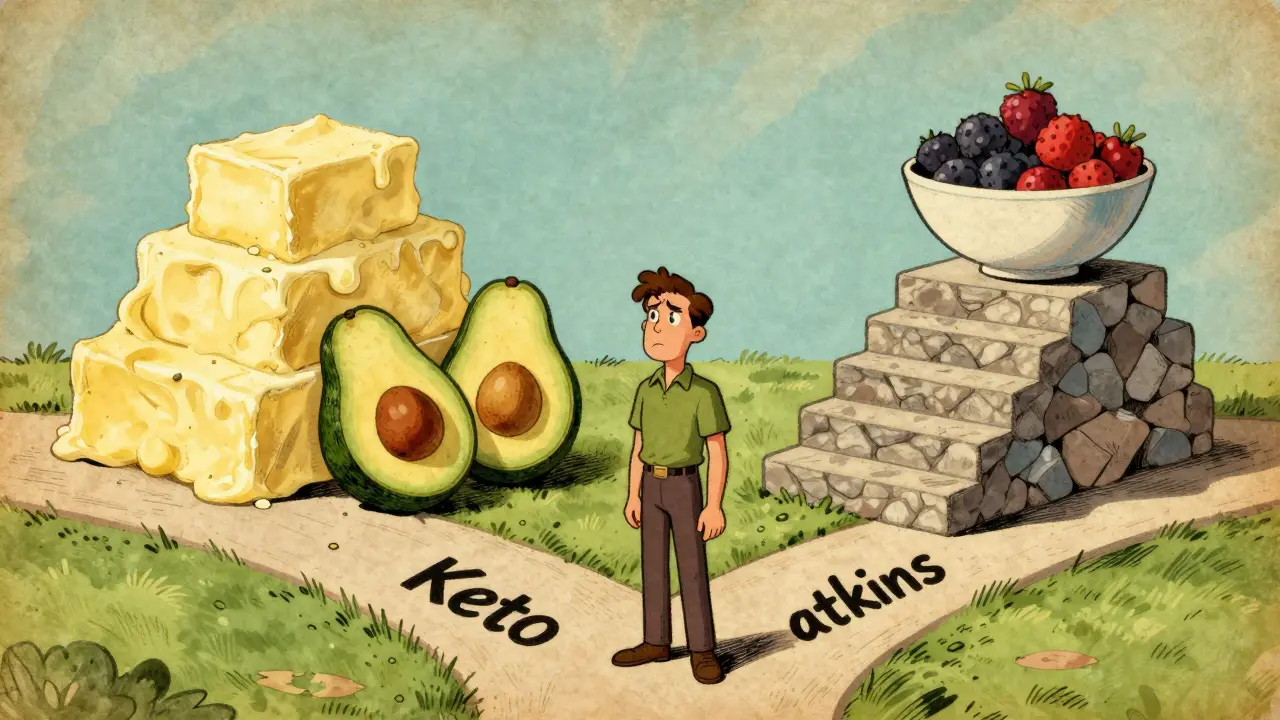
Many women with PCOS find keto helpful because it drastically cuts carbs, which lowers insulin. But it’s not necessary for everyone. A lower-carb, whole-foods approach - not necessarily strict keto - works well for most. Keto can be hard to maintain long-term and may affect thyroid or adrenal function in some. Focus on sustainable habits over extreme diets.
Can stress make PCOS weight gain worse?
Yes. Stress raises cortisol, which increases insulin resistance and promotes fat storage around the abdomen. It also triggers cravings for sugary, high-fat foods. Managing stress through sleep, movement, and relaxation techniques isn’t optional - it’s part of managing PCOS. You can’t out-diet stress.
Start today. Not tomorrow. Not after the holidays. Pick one change: swap your morning toast for eggs. Add a handful of nuts to your afternoon snack. Walk after dinner. Small steps build lasting change. Your body is waiting for the right signals. Give them to it.

John Smith
March 1, 2026 AT 22:59Let me tell you something straight up - this post is the goddamn truth and nobody wants to hear it because it means you gotta stop blaming yourself and start blaming your damn hormones. I had PCOS, I tried every diet under the sun, keto, vegan, intermittent fasting, you name it. None of it worked until I stopped thinking of food as calories and started thinking of it as a signal. Sugar isn’t just sugar - it’s a siren song from your own damn pancreas screaming ‘STOCK UP!’ And once I cut out the bullshit carbs and started eating protein with every damn meal? My belly fat started melting like ice in a microwave. No magic. Just biology.
Stop dieting. Start reprogramming.
Sharon Lammas
March 2, 2026 AT 00:46There’s something deeply human in how this post frames insulin resistance not as a failure, but as a biological response. It’s not that we lack discipline-it’s that our bodies are responding to signals we didn’t even know we were sending. I’ve spent years feeling broken, and this is the first time I’ve felt understood, not judged. The idea that fat isn’t just storage but active tissue that worsens the cycle… that changed how I see my own body. Not as an enemy. As a system trying to survive.
marjorie arsenault
March 3, 2026 AT 06:38You got this. Seriously. One small change. One meal. Swap the toast for eggs. That’s it. No need to overhaul your whole life today. Just do one thing differently. And tomorrow? Do it again. Consistency isn’t about perfection-it’s about showing up. Even on the days you don’t feel like it. Even when you’re tired. Even when the cravings scream. You’re not failing. You’re learning. And your body? It’s listening. Every bite counts.
Deborah Dennis
March 3, 2026 AT 17:10Tildi Fletes
March 4, 2026 AT 15:37While the general framework presented is consistent with current clinical guidelines regarding insulin-sensitizing dietary patterns in polycystic ovary syndrome, the oversimplification of metabolic regulation may inadvertently mislead patients. For instance, the assertion that ‘weight loss of 5–10% restores ovulation’ is empirically supported in cohort studies, yet individual variability in insulin sensitivity, adipokine profiles, and genetic polymorphisms (e.g., in the IRS1 gene) significantly modulates therapeutic response. Furthermore, while low-glycemic diets are beneficial, the omission of evidence supporting the role of circadian rhythm alignment and meal timing-particularly in conjunction with light exposure-represents a notable gap in translational application. Clinical outcomes are multimodal; dietary intervention alone is insufficient without concurrent management of sleep architecture, stress biomarkers, and physical activity intensity.
Levi Viloria
March 5, 2026 AT 11:55Kinda wild how the same advice that works for PCOS works for basically everyone else with metabolic issues. It’s not that PCOS is special-it’s that we’ve been sold a lie that fat people just need to eat less. Meanwhile, the real problem is the food system. Sugar is everywhere. Processed carbs are cheaper than kale. And now we’re supposed to be superheroes just because we have a hormone thing? Nah. We need policy changes, not Pinterest boards. But hey, at least this post doesn’t tell us to ‘just try harder.’ That’s a win.
Betsy Silverman
March 5, 2026 AT 22:01I just wanted to say thank you for writing this. I’ve been trying to figure out why I can’t lose weight even though I eat ‘clean’ and work out 5x a week. Turns out, I was eating oatmeal with banana and honey every morning. No wonder I felt like a zombie by 11am. I switched to eggs and avocado last week. My energy is up. My cravings? Gone. I didn’t even realize how much sugar I was eating. This isn’t about weight. It’s about feeling like yourself again.
Ivan Viktor
March 7, 2026 AT 19:17So let me get this straight. You’re telling me the reason I can’t lose belly fat is because my body thinks it’s in a famine? And the solution is… eat more bacon? I mean, I’m not mad. Just… surprised. Last time I ate bacon, my mom cried. Now she’s sending me recipes. What a time to be alive.
Zacharia Reda
March 9, 2026 AT 15:09Okay, but if insulin is the villain, why does everyone ignore the fact that high insulin also messes with your thyroid and adrenal glands? You can eat perfect meals all day, but if you’re chronically stressed or sleep-deprived, your body will still hoard fat like it’s preparing for the apocalypse. And no, ‘walk after dinner’ isn’t enough. You need to fix the root, not just the symptom. This post skips over the fact that PCOS isn’t just a diet problem-it’s a whole-system problem. And nobody talks about that.
Helen Brown
March 10, 2026 AT 14:30Did you know the government is secretly adding sugar to everything to keep women with PCOS fat and dependent on meds? Big Pharma and the USDA are in cahoots. They don’t want you to heal. They want you to keep buying insulin and metformin. And don’t even get me started on how the CDC hides the real data. I’ve seen the documents. It’s all a lie. You think you’re eating healthy? You’re being manipulated. Start eating raw meat and sunlight. That’s the only way.
John Cyrus
March 10, 2026 AT 16:32You people are ridiculous. This isn’t rocket science. Stop overcomplicating it. Eat less sugar. Eat more protein. Move your ass. Sleep. Done. If you can’t follow basic advice, that’s not biology. That’s laziness. I’ve seen hundreds of women with PCOS. The ones who get it? They stop making excuses. They just do the work. You want results? Stop reading blog posts. Go cook. Go walk. Go sleep. Simple. Not complicated. You’re not special. Your body isn’t broken. You’re just not trying.
Shivam Pawa
March 11, 2026 AT 11:54Insulin resistance is the core, yes. But in India, we see PCOS often with lean women too. The issue isn’t just fat mass-it’s visceral adiposity and chronic inflammation from processed oils and refined flour. We use turmeric, fenugreek, bitter gourd-natural insulin sensitizers. No need for expensive supplements. Food as medicine. Consistency over intensity. Small steps. Daily. That’s the key. Not keto. Not fasting. Just real food. And rest.