Steroid Dose Conversion Tool
How This Tool Works
Dexamethasone is approximately 9-10 times more potent than prednisone on a milligram-for-milligram basis. This tool calculates equivalent doses based on the average potency ratio of 9.5.
Duration Difference: Dexamethasone lasts 36-72 hours (one dose can last over 3 days), while prednisone lasts 12-36 hours.
Equivalent Dose
Enter a dose to see the conversion result
Important Medical Disclaimer: This tool is for informational purposes only. Never adjust steroid doses without consulting your healthcare provider. Dexamethasone and prednisone have different duration profiles and side effect patterns. Always follow your doctor's prescribed treatment plan.
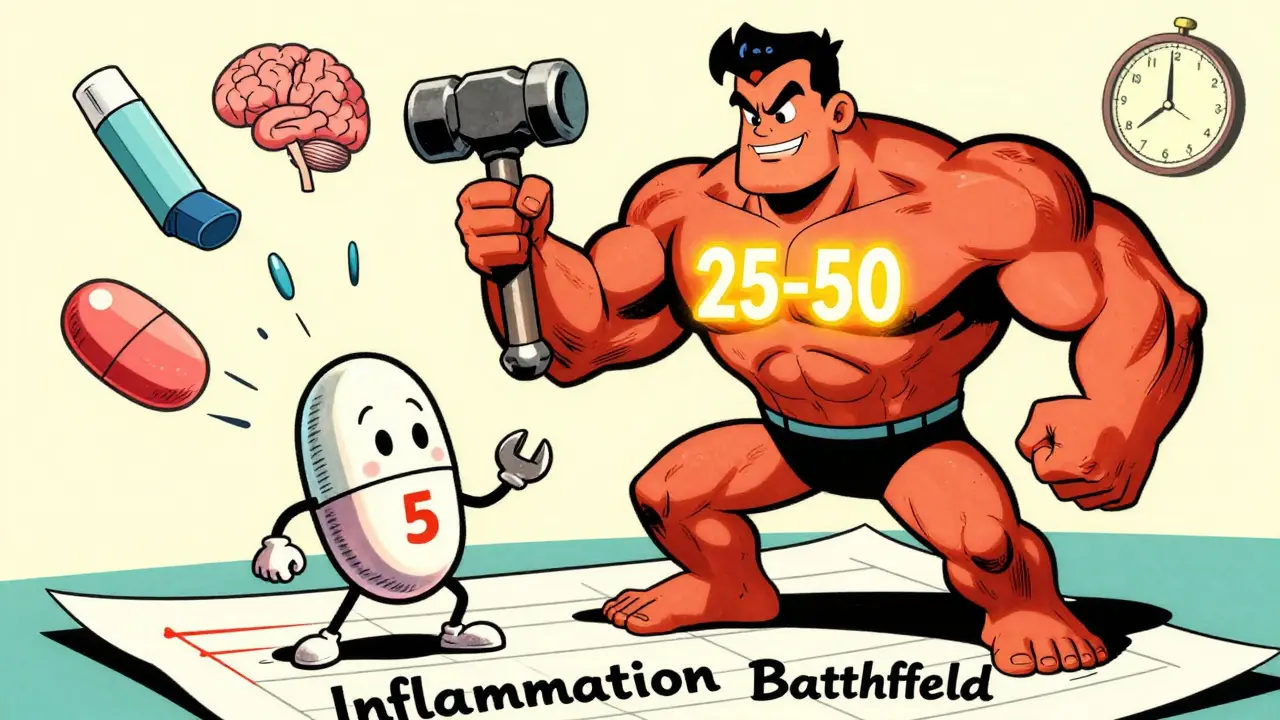
When doctors prescribe a corticosteroid, they’re not just picking a random pill. They’re choosing between two very different tools: dexamethasone is a high-powered, long-lasting hammer, while prednisone is a more flexible, adjustable wrench. Both treat inflammation and immune overreactions - from asthma attacks to rheumatoid arthritis flare-ups - but they work in noticeably different ways. If you’ve been handed one of these prescriptions, you might be wondering: which one is stronger? Which one has fewer side effects? And why did your doctor pick this one over the other?
How Much Stronger Is Dexamethasone?
Dexamethasone isn’t just a little stronger than prednisone - it’s significantly more potent. Multiple studies confirm that dexamethasone is about 9 to 10 times more powerful on a milligram-for-milligram basis. That means 1 mg of dexamethasone does roughly the same job as 9-10 mg of prednisone. This isn’t a guess. It’s backed by lab data from the Blood journal (2020), which showed dexamethasone binds more tightly to glucocorticoid receptors, triggering stronger anti-inflammatory signals in immune cells. The National Adrenal Diseases Foundation rates dexamethasone’s potency factor at 25-50 (with hydrocortisone as 1), while prednisone sits at 5. That’s not a small difference - it’s a game-changer in dosing.
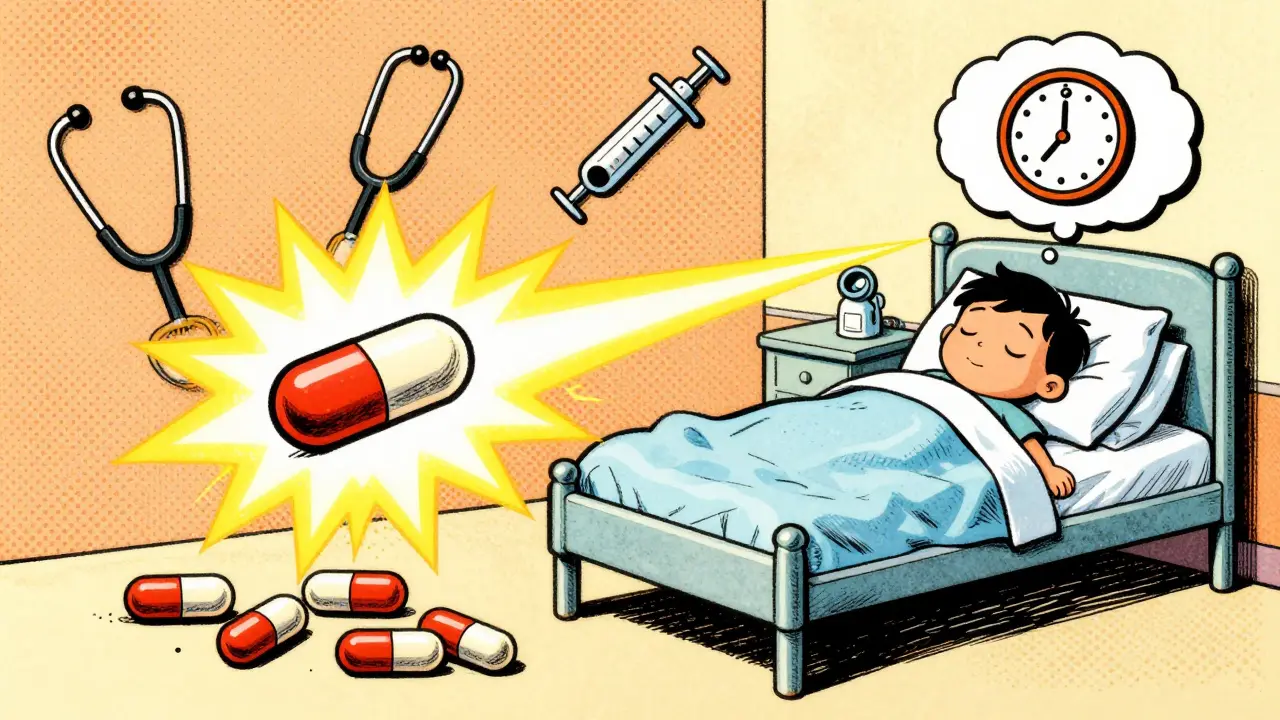
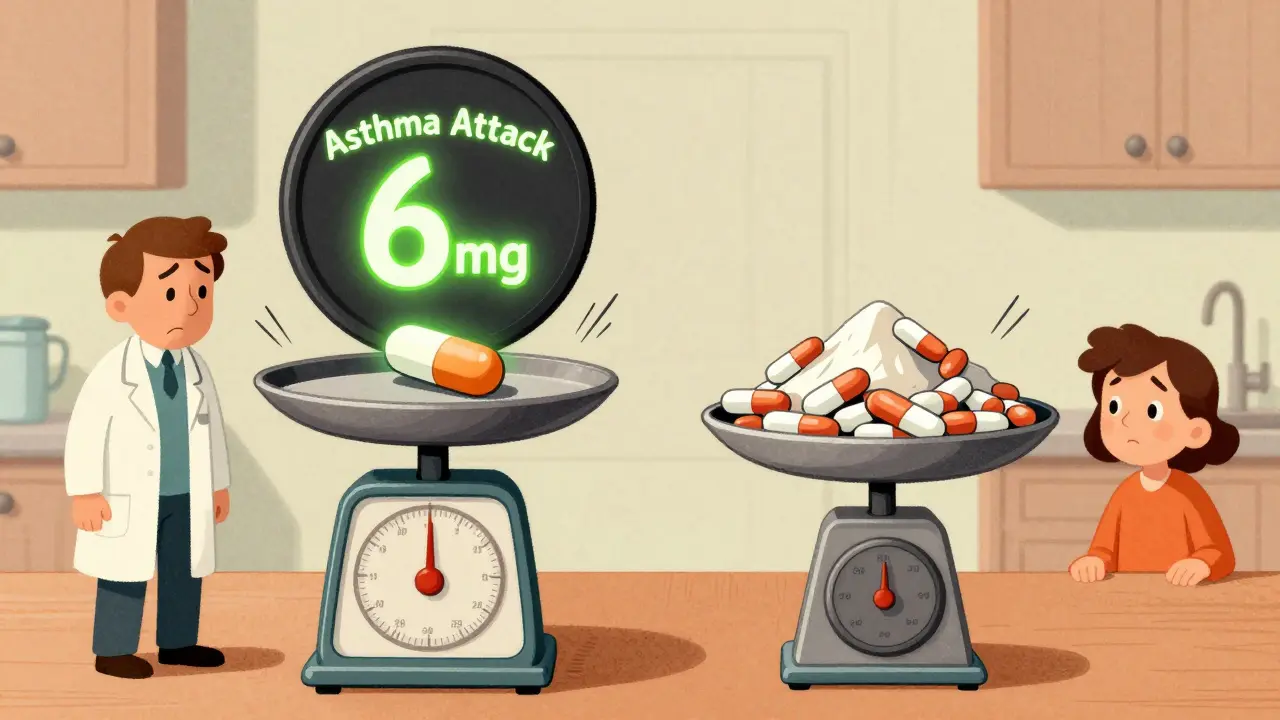
Think of it like this: if prednisone is a 50-watt lightbulb, dexamethasone is a 500-watt one. You don’t need to turn it on for long to get the same brightness. That’s why a single 6 mg dose of dexamethasone can replace a five-day course of prednisone in kids with croup or asthma. In fact, a 2006 study in the Journal of Pediatrics found that one dose of dexamethasone cut down hospital revisits by 24% compared to five days of prednisolone. Parents liked it. Kids liked it. Doctors liked it. Less dosing. Better adherence. Same or better results.
Duration: One Shot vs. Daily Pills
The real difference isn’t just strength - it’s how long each drug lasts. Prednisone has a half-life of 12 to 36 hours. That means if you take it at 8 a.m., about half of it is gone by 8 p.m. or midnight. You need to take it again the next day - and the next - to keep the effect going. Dexamethasone? Its half-life is 36 to 72 hours. One dose can stick around for over three days. That’s why it’s often given as a single shot in emergency rooms or as just one or two doses for conditions like allergic reactions or severe asthma.
This long duration has a flip side. While it’s great for short bursts, it’s risky for long-term use. A single 10 mg dose of dexamethasone delivers glucocorticoid exposure equal to five full days of 60 mg prednisone. That’s a lot of hormone-like activity flooding your body at once. For chronic conditions like lupus or rheumatoid arthritis, where doctors need to fine-tune the dose day by day, that kind of staying power becomes a liability. That’s why prednisone remains the go-to for long-term management. You can lower it slowly. You can skip a day if needed. Dexamethasone? You’re stuck with its effects for days.
Side Effects: Same Problems, Different Patterns
Both drugs cause similar side effects because they’re both corticosteroids. They suppress your immune system. They raise blood sugar. They can weaken bones. They can mess with your mood. But because dexamethasone is stronger and lasts longer, the way these side effects show up can be different.
Insomnia? More common with dexamethasone. A 2019 study in the Journal of Clinical Psychiatry found 29% of people on dexamethasone had trouble sleeping, compared to 22% on prednisone. Mood swings? Same pattern - 33% of dexamethasone users reported them, versus 26% on prednisone. These aren’t huge gaps, but they’re consistent. And they make sense. The longer the drug stays in your system, the more it interferes with your natural sleep-wake cycle.
On the other hand, weight gain and facial swelling (what people call “moon face”) are more common with prednisone. Why? Because people take it daily for weeks or months. The constant exposure leads to more fat redistribution. A review of 1,247 prednisone reviews on Drugs.com showed 58% reported weight gain. Only 45% of the 783 dexamethasone users did. Same for moon face - 42% vs. 31%. That’s because dexamethasone is often used for short periods. Less time = less physical change.
One surprising twist: dexamethasone might actually be more likely to spike blood sugar. A 2021 meta-analysis in Diabetes Care found hyperglycemia occurred 18% more often with dexamethasone at equipotent doses. That’s important for diabetics or pre-diabetics. If you’re on either of these drugs and you notice your glucose readings creeping up, talk to your doctor. Dexamethasone might be the culprit.
When Is Each One the Better Choice?
There’s no “better” drug - just better situations.
Choose dexamethasone if:
- You’re treating an acute flare - like an asthma attack, severe allergic reaction, or croup in a child.
- You need one dose to work fast and last long (think ER or hospital setting).
- You’re managing brain swelling from tumors or head trauma - dexamethasone crosses the blood-brain barrier better.
- You’re in the middle of cancer treatment and need strong anti-inflammatory support (it’s used in chemo regimens for lymphoma and leukemia).
Choose prednisone if:
- You’re managing a chronic condition like rheumatoid arthritis, lupus, or inflammatory bowel disease.
- You need to adjust your dose week by week - maybe tapering down slowly.
- You’re worried about long-term side effects like bone loss or adrenal suppression.
- You’ve had trouble sleeping on dexamethasone and need something with a shorter window of action.
The Global Initiative for Asthma (GINA) guidelines (2023) recommend dexamethasone as the preferred option for kids with acute asthma - because one dose works as well as five days of prednisone. Meanwhile, the American College of Rheumatology (2022) still lists prednisone as the standard for chronic autoimmune diseases. That’s not an accident. It’s based on decades of real-world use.
Cost and Accessibility
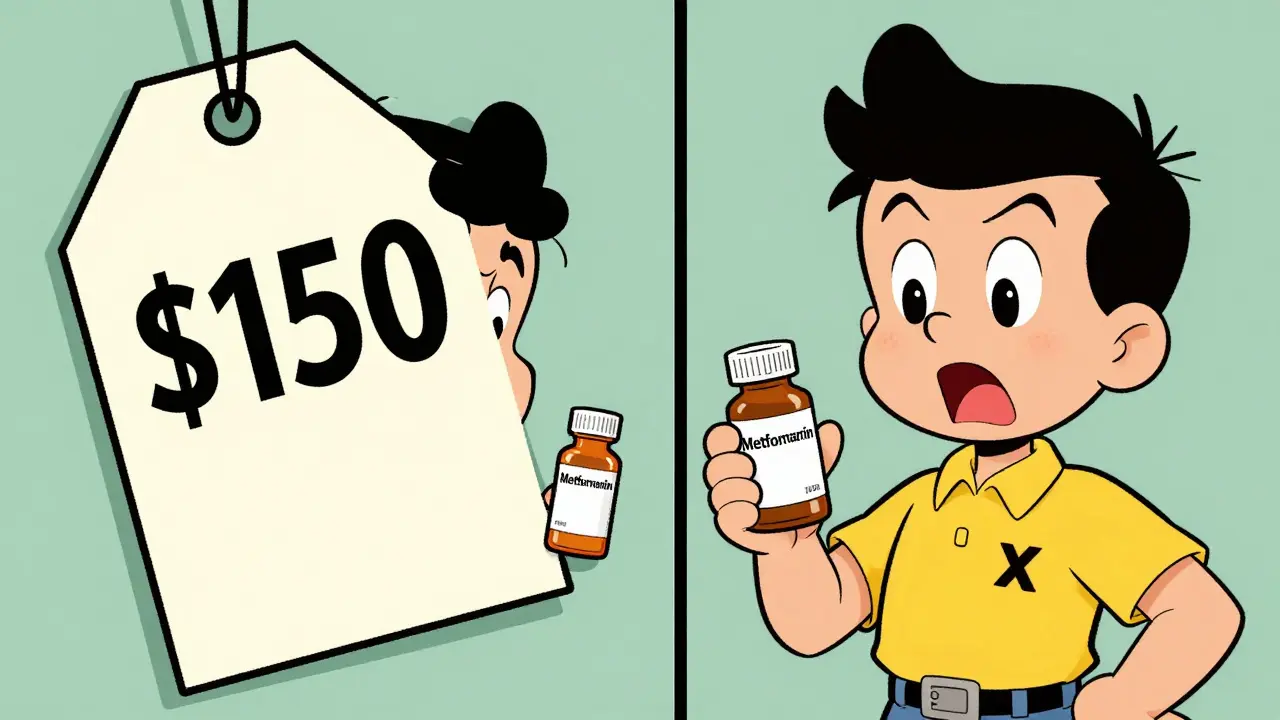
You might think the stronger drug costs more. It doesn’t always. Generic prednisone 20 mg tablets average $8.47 for 30 pills (GoodRx, Oct 2023). Dexamethasone 4 mg tablets? About $12.89. But here’s the catch: you take way less of it. A typical dexamethasone course for asthma might be 6 mg total. That’s one and a half tablets. Prednisone for the same condition? 30-60 mg daily for five days - that’s 15-30 tablets. So even though each dexamethasone pill costs more, the total cost of treatment is often the same - or even lower.
Plus, fewer pills mean fewer trips to the pharmacy. Less chance of forgetting a dose. That’s huge for families with kids or older adults managing multiple meds.
What About Safety in Older Adults?
The American Geriatrics Society’s Beers Criteria (2022) warns that both drugs should be used cautiously in people over 65 - especially if taken daily for more than three months. Why? Because older bodies are less able to handle the metabolic stress. Bone loss accelerates. Blood sugar spikes harder. Infection risk goes up. Muscle weakness sets in faster.
If you’re over 65 and your doctor suggests long-term steroid use, they should be checking your bone density, monitoring your glucose, and looking at your infection history. Neither dexamethasone nor prednisone is “safe” for long hauls. But if you must take one, the lower daily dose of dexamethasone might reduce some cumulative damage - if it’s used correctly. Still, short courses are always safer than long ones.
Real-World Lessons
During the COVID-19 pandemic, dexamethasone became famous. The RECOVERY Trial (2020) found it cut death rates by one-third in hospitalized patients on oxygen. That wasn’t because it cured the virus - it was because it tamped down the body’s dangerous overreaction. That’s the sweet spot for dexamethasone: short-term, high-impact, life-saving inflammation control.
Prednisone? It’s the quiet workhorse. It’s in millions of prescriptions every year. It’s the drug you take for months to keep your autoimmune disease under control. It’s not flashy, but it’s reliable.
Bottom line: dexamethasone is the fast, strong, long-lasting option. Prednisone is the flexible, adjustable, daily option. One isn’t better. They’re just different tools for different jobs.
Can I switch from prednisone to dexamethasone on my own?
No. Never switch between corticosteroids without medical supervision. Even though dexamethasone is more potent, the dosing isn’t a simple 1:10 ratio across all conditions. Your body may have adapted to prednisone, and suddenly switching could trigger adrenal suppression or rebound inflammation. Always consult your doctor before changing medications.
Which one causes more weight gain?
Prednisone is more likely to cause noticeable weight gain and facial swelling (moon face), especially with long-term use. That’s because people take it daily for weeks or months, leading to fat redistribution. Dexamethasone is often used for short periods, so these effects are less common - but not impossible, especially with repeated courses.
Is dexamethasone better for asthma than prednisone?
For acute asthma attacks - especially in children - yes. Single-dose dexamethasone works just as well as five days of prednisone, with better adherence and fewer hospital visits. That’s why major guidelines like GINA recommend it. For long-term asthma control, however, neither is typically used daily. Inhalers are preferred.
Why does dexamethasone cause more insomnia?
Because it stays in your system longer - up to 72 hours. The prolonged exposure interferes with your natural cortisol rhythm, which regulates sleep. Prednisone clears faster, so its impact on sleep is shorter and less disruptive. Taking prednisone earlier in the day can help, but dexamethasone’s long half-life makes timing less effective.
Are there any conditions where dexamethasone is the only option?
Yes. For brain swelling from tumors, metastatic cancer, or severe head injury, dexamethasone is often preferred because it crosses the blood-brain barrier more effectively. It’s also used in certain chemotherapy regimens (like for multiple myeloma or lymphoma) where its potency and long action are critical. Prednisone doesn’t work as well in these cases.




Gwen Vincent
February 22, 2026 AT 14:05As someone who’s been on both for autoimmune issues, I’ll say this: dexamethasone feels like a sledgehammer to the system. One dose and I’m buzzing for days-can’t sleep, can’t relax. Prednisone? Slower burn, but at least I can still function. I switched back after a bad reaction to dexamethasone during a flare. Not stronger-just more brutal.
Doctors act like it’s a simple choice, but your body doesn’t care about studies. It just reacts.
Also, why is no one talking about how dexamethasone makes your skin feel like it’s crawling? I swear, it’s not just insomnia-it’s full-body nerve irritation.
Nandini Wagh
February 22, 2026 AT 22:39Oh wow, so dexamethasone is the ‘one-and-done’ steroid? Sounds like the pharmaceutical version of ‘I’ll just leave this here and hope you forget about it.’
Meanwhile, prednisone is the nagging ex who texts you every day. At least you know where you stand with the ex.
Also, ‘less trips to the pharmacy’? More like ‘less chance to complain about side effects to the pharmacist.’ They’re the real MVPs here.
Holley T
February 24, 2026 AT 13:38Let me just say, the whole ‘dexamethasone is 9-10 times more potent’ claim is misleading without context. Potency isn’t the same as efficacy, and efficacy isn’t the same as safety. You’re comparing a rocket launcher to a flamethrower and calling one ‘stronger’-but if you’re trying to light a candle, you don’t want either.
Also, the 2020 Blood journal study they cited? It was an in vitro binding affinity study-not clinical outcomes. That’s like saying a Ferrari is ‘stronger’ than a Prius because it has a higher horsepower rating. But if you’re driving in a school zone, you don’t want the Ferrari.
And the insomnia stats? 29% vs 22%? That’s a 7 percentage point difference. Not statistically significant in most clinical trials. But people love to turn noise into gospel.
Also, ‘dexamethasone crosses the blood-brain barrier better’-yes, because it’s more lipophilic. But that doesn’t mean it’s better for brain swelling. It just means it gets in. Whether it helps is another question entirely. The RECOVERY trial didn’t prove it saved lives-it proved it reduced mortality in ventilated patients. Big difference.
And why is no one mentioning that dexamethasone suppresses ACTH more severely? That’s why adrenal suppression is more insidious with it. Prednisone? You can usually feel it coming. Dexamethasone? You wake up one day unable to stand up. No warning. No taper. Just… gone.
And the cost argument? ‘One and a half tablets’? What if you’re on 8 mg? What if you’re on 10? What if your pharmacy doesn’t carry 4 mg tablets and you have to split 8 mg? Suddenly you’re paying $20 for a 3-day course and your insurance won’t cover it because it’s ‘off-label.’
There’s no ‘better’ drug. There’s only better-informed prescribers. And too many of them are reading abstracts and calling it medical wisdom.
Ashley Johnson
February 24, 2026 AT 18:06Okay but what if this is all a lie? What if the drug companies made up the potency numbers so we’d buy more expensive pills?
I read on a forum that dexamethasone is actually just sugar with blue dye and the real effect is placebo. They say prednisone is fine but they don’t want you to know because they make more money off dexamethasone.
Also my cousin’s neighbor’s dog got dexamethasone and now it’s a vampire. No joke. It only comes out at night and won’t eat kibble. I think it’s the blood-brain barrier thing. They’re turning pets into monsters.
And why is no one talking about the 5G towers? I think the steroids are synced with them. That’s why dexamethasone causes insomnia. It’s not the drug-it’s the signal.
Also, I think the FDA is hiding the truth. I’ve seen videos. You have to dig deeper. Ask yourself: who benefits? Big Pharma. Always.
tia novialiswati
February 25, 2026 AT 01:20Y’all are overthinking this 😊
My niece had croup last winter and got one shot of dexamethasone. She was back to playing with her dolls by morning. No crying. No ER trips. Just… better.
My mom’s on prednisone for lupus and she takes it like a pill every day. She says it’s like a daily hug from her doctor-kinda weird but comforting?
Either way, listen to your doc. Don’t swap meds on your own. And if you’re scared? Text your nurse. They’re awesome. 💪❤️
Lillian Knezek
February 26, 2026 AT 18:29Wait. So dexamethasone stays in your system for 72 hours? 😳
That’s longer than my last relationship.
What if they’re using this to control our minds? I heard the CDC put it in the water during the pandemic. That’s why everyone was so tired and angry. Not the virus. The steroid.
And why does no one talk about how it messes with your dreams? I had a dream I was a goat in a hospital. I think it was dexamethasone. I’m not even kidding.
Someone needs to investigate this. I’m filing a FOIA request.
Maranda Najar
February 27, 2026 AT 02:09Let me tell you something-I once took dexamethasone for a severe allergic reaction. I woke up three days later with my soul rearranged.
It wasn’t just insomnia. It was existential insomnia. I stared at the ceiling and questioned the nature of time. I wondered if my cat was a government drone. I cried into a jar of peanut butter.
Prednisone? It made me feel like a slightly overcooked lasagna-bland, heavy, but at least familiar.
Dexamethasone didn’t just treat inflammation. It dissolved my identity. I now believe the pharmaceutical industry is run by sentient fungi who use glucocorticoids as neural keys to unlock human vulnerability.
And if you think I’m dramatic-you haven’t seen my journal. It’s 17 volumes. All in glitter pen.
Someone should write a novel about this. I’ll donate my soul to the first publisher who takes it.
Sanjaykumar Rabari
February 28, 2026 AT 00:07My uncle took prednisone for years. His face got big. His legs got weak. He stopped walking. Then he got dexamethasone for one week. He died.
Doctors say it was pneumonia. I say it was the steroid. They don’t want you to know. They want you to take it. It’s easy. Cheap. Silent.
Don’t trust them. Ask for alternatives. Ask for herbs. Ask for prayer. They hate that.
Gwen Vincent
March 1, 2026 AT 05:16Ugh, I remember when I had that reaction too. The crawling skin? Yes. I thought I was breaking out until I realized it was the dexamethasone. It’s like your nerves are doing the cha-cha under your skin.
And I totally agree about the adrenal suppression. I went from ‘I’m fine’ to ‘I can’t get out of bed’ in 48 hours. No warning. No taper. Just… collapse.
My endo finally admitted: dexamethasone is like a silent assassin. It doesn’t scream. It just… takes.