
When you’re 70 or older, taking the same dose of a pill you took at 30 can be dangerous - not because you’re taking too much, but because your body no longer processes it the same way. The liver and kidneys, two vital organs that clear drugs from your system, change significantly with age. These changes aren’t just minor tweaks - they can turn a safe dose into a toxic one. For many older adults, this is why medications that worked fine for years suddenly cause dizziness, confusion, falls, or even hospital stays.
What Happens to the Liver as We Age?
Your liver doesn’t shrink quietly. Between ages 30 and 80, liver mass drops by about 30%. Blood flow to the liver falls by nearly 40%. These aren’t theoretical numbers - they’re measurable, consistent changes seen in study after study. Less blood flow means drugs move slower through the organ. Less tissue means fewer enzymes to break them down.
The liver uses two main systems to process drugs: Phase I (mainly cytochrome P450 enzymes) and Phase II (conjugation pathways). Phase I enzymes, like CYP3A4 and CYP2D6, are responsible for breaking down about 80% of all prescription drugs. Research shows Phase I activity declines by 37% to 60% in older adults - but here’s the catch: it varies wildly from person to person. Some 80-year-olds metabolize drugs like younger people. Others barely break them down at all.
This is why some seniors on standard doses of propranolol (a blood pressure drug) end up with dangerously low heart rates. Or why verapamil - a heart rhythm medication - causes fainting in older patients. Both are flow-limited drugs, meaning their clearance depends almost entirely on blood flow. When liver blood flow drops 40%, so does drug clearance. No adjustment? Risk of overdose.
On the flip side, drugs like diazepam (Valium) or phenytoin (Dilantin) are capacity-limited. Their breakdown depends more on enzyme activity than blood flow. These tend to be handled better by aging livers. But even here, small changes add up. A 10-15% drop in clearance might seem minor - until you’re taking it daily for years. That’s when levels creep up, and side effects like drowsiness or unsteady walking start.
Kidneys Don’t Just Slow Down - They Stop Working as Efficiently
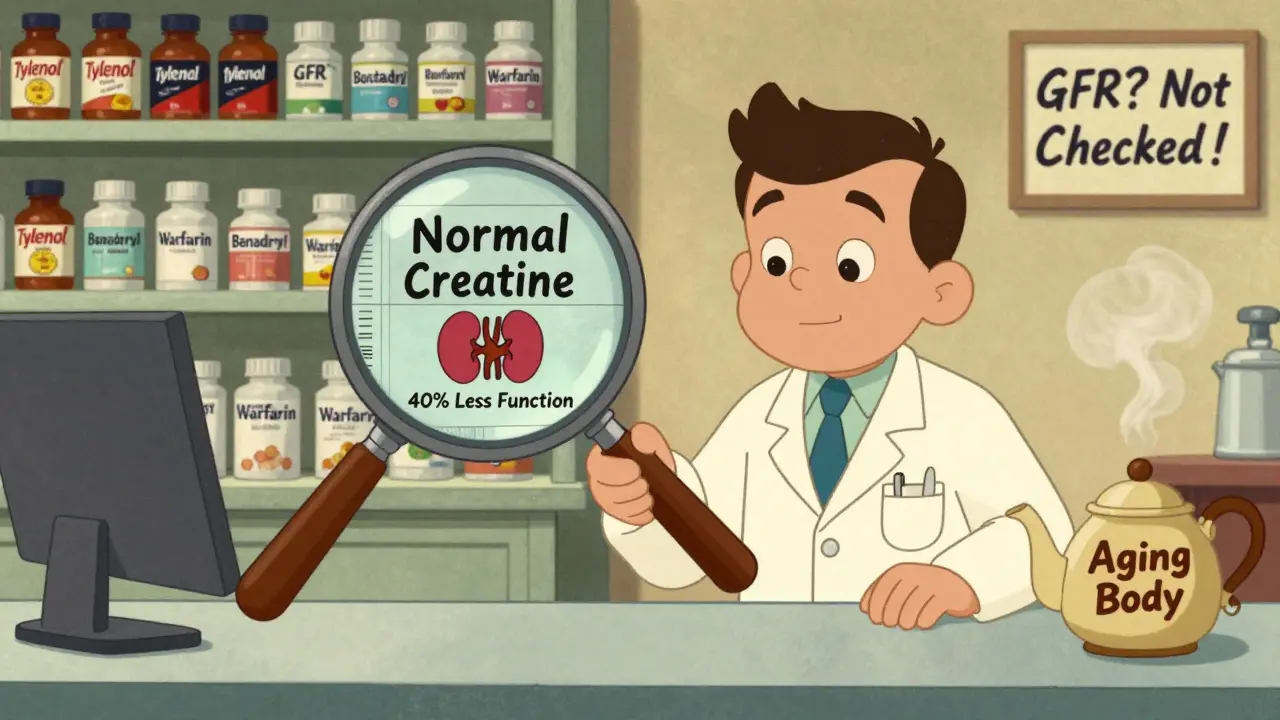
Most people think kidney function is measured by creatinine levels. But that’s misleading. As you age, muscle mass declines. Less muscle means less creatinine is made. So your blood creatinine might look normal - even when your kidneys are filtering 40% less than they did at 30.
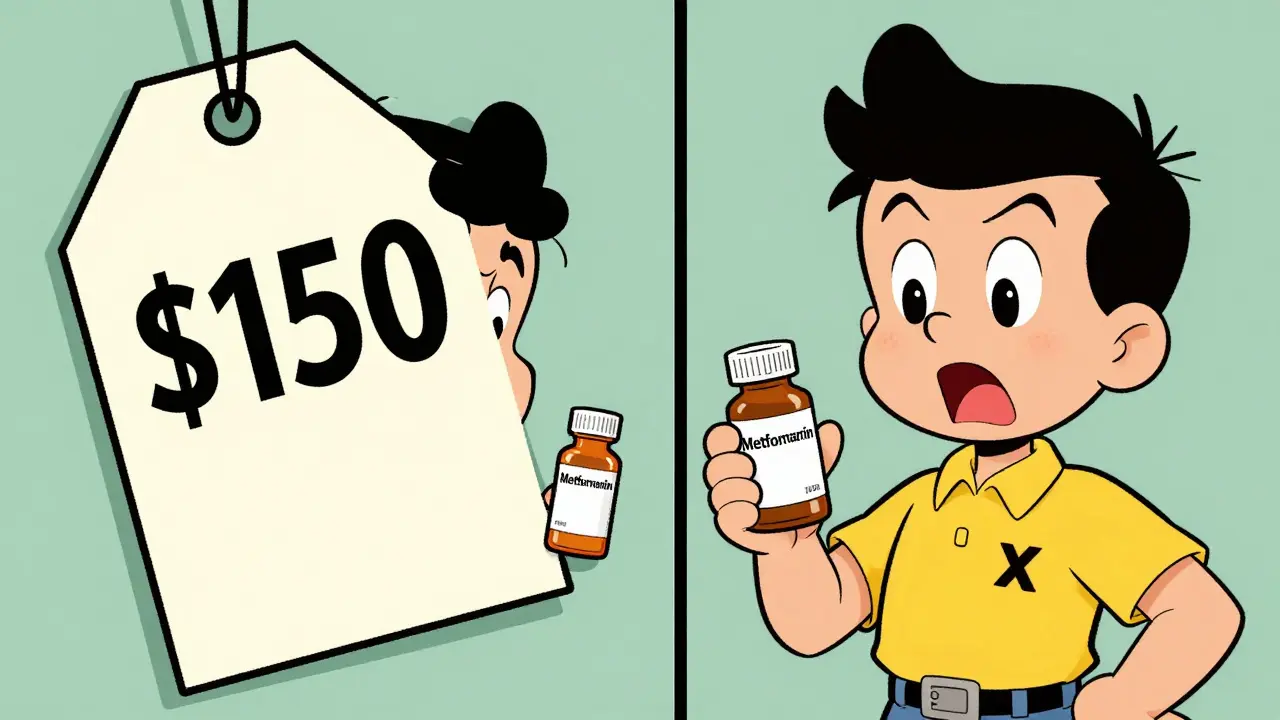
Glomerular filtration rate (GFR), the real measure of kidney function, drops 30-50% between ages 30 and 80. This affects drugs that are cleared mostly by the kidneys. Think vancomycin (an antibiotic), metformin (for diabetes), or lisinopril (a blood pressure pill). If your kidneys aren’t filtering well, these drugs pile up. Vancomycin can damage kidneys. Metformin can cause lactic acidosis. Lisinopril can cause dangerously low blood pressure.
Here’s what’s often missed: kidney problems can also hurt your liver. Recent studies show that when kidney function drops, certain liver enzymes (like CYP3A4) also become less active. So even if a drug is broken down by the liver, poor kidney function can still cause it to build up. This connection is rarely taught in medical school - but it’s why some seniors on kidney-friendly doses still end up with drug toxicity.
Why Some Drugs Are Riskier Than Others
Not all medications are created equal when it comes to aging. Some are time bombs. Others are relatively safe.
- High-risk drugs: Amitriptyline (for depression), diphenhydramine (Benadryl), warfarin (blood thinner), digoxin (heart medication), and benzodiazepines like lorazepam. These have narrow therapeutic windows - meaning the difference between a helpful dose and a harmful one is tiny. In older adults, even small changes in metabolism can push levels into the danger zone.
- Lower-risk drugs: Most statins (like rosuvastatin), insulin (when dosed properly), and some newer blood pressure drugs (like amlodipine). These have wider safety margins or are less affected by liver/kidney changes.
One real-world example: a 78-year-old woman started taking a standard 25 mg dose of amitriptyline for nerve pain. Within a week, she was confused, falling, and barely able to walk. Her doctor didn’t adjust the dose because her blood tests looked normal. But her liver enzymes were slow, and her kidneys weren’t filtering well. The drug built up. After cutting the dose in half, she returned to normal within days.
How Doctors Should Adjust Doses - And Why They Often Don’t
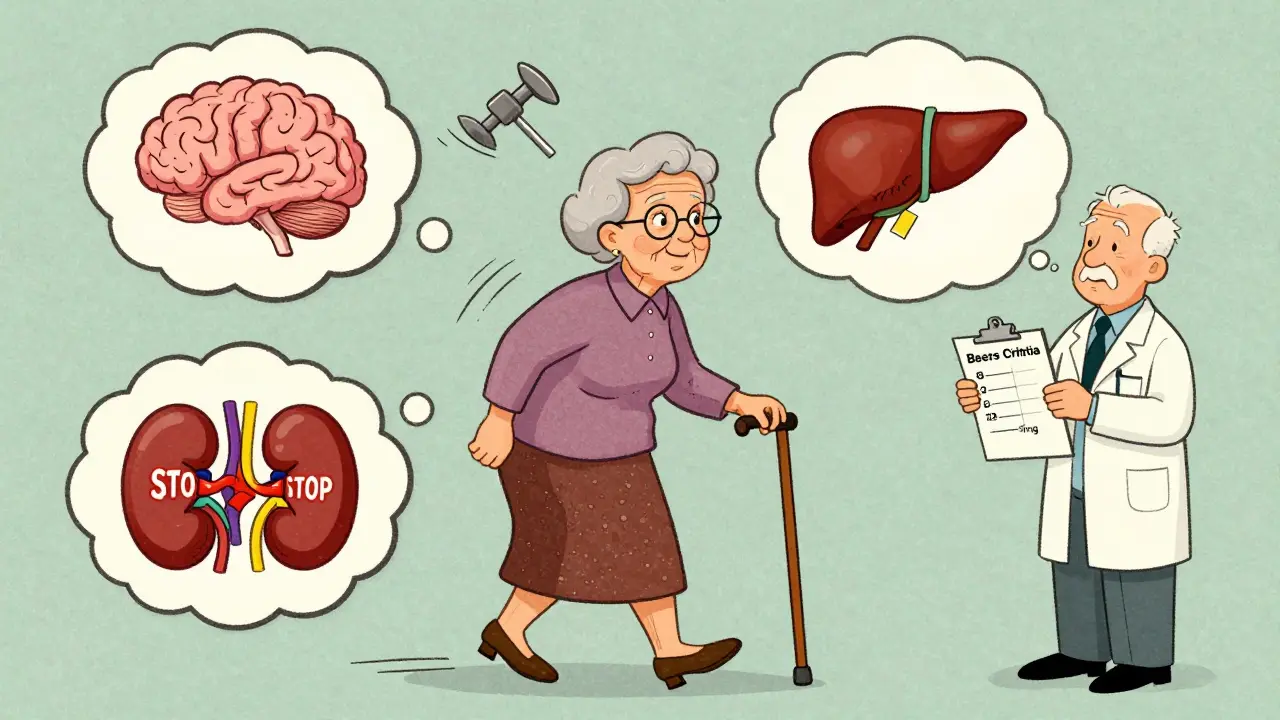
There are clear guidelines. The Beers Criteria® (updated in 2019) says: for drugs cleared by the liver, start with 20-40% less than the standard adult dose in patients over 65. For those over 75, reduce further. For kidney-cleared drugs, use the Cockcroft-Gault or CKD-EPI equation to estimate creatinine clearance - not just serum creatinine.
But here’s the problem: many doctors still rely on age alone. Or they don’t check kidney function at all. A 2021 study found that nearly 60% of older adults on kidney-clearance drugs had no recent GFR test. Why? Time. Cost. Lack of training. Many assume, "She’s 80, so she’s frail - I’ll just give her half." But that’s not precision. That’s guesswork.
Even worse: over-the-counter drugs. Acetaminophen (Tylenol) is the #1 cause of acute liver failure in older adults. Why? Because it’s metabolized by the liver. Most seniors don’t realize they’re taking it in cold medicine, pain relievers, and sleep aids. The cumulative dose can easily hit toxic levels - especially with reduced liver function.
What You Can Do - Even If You’re Not a Doctor
If you or a loved one is on five or more medications (and 41% of seniors are), here’s what to do:
- Ask for a medication review. Request a full list of all drugs - prescription, OTC, and supplements - from your pharmacist or doctor. Ask: "Which of these are cleared by the liver or kidneys?"
- Get a GFR test. If you’re over 65 and on any medication, ask for a blood test to estimate kidney function (eGFR). Don’t rely on serum creatinine alone.
- Watch for side effects. New dizziness? Confusion? Fatigue? Falls? These aren’t "just aging." They’re red flags for drug buildup.
- Avoid unnecessary drugs. The STOPP criteria show that 30% of prescriptions in older adults are potentially inappropriate. Ask: "Is this still needed?"
- Use one pharmacy. Pharmacists can catch interactions your doctor might miss. They’ll see if you’re taking 3 different drugs that all affect the same liver enzyme.
The Bigger Picture: Why This Matters Now More Than Ever
By 2050, nearly 1 in 5 Americans will be over 65. Globally, the number of people over 65 will double. Meanwhile, only 38% of drug trial participants are over 65. That means most medications were tested on people half their age. We’re prescribing based on data from 20-year-olds - for 80-year-olds.
The FDA now requires drug companies to include older adults in trials and analyze results by age. In 2023, they approved the first software - GeroDose v2.1 - that simulates how a specific person’s liver and kidneys will handle a drug. This isn’t science fiction. It’s here.
But technology won’t fix this alone. It takes awareness. It takes asking questions. It takes refusing to accept "that’s just getting old" as an excuse for side effects.
The truth? Aging doesn’t mean you have to suffer from bad drug reactions. With the right knowledge - and the right dose - medications can still be safe, effective, and life-saving.
Do all older adults process drugs the same way?
No. While liver and kidney function generally decline with age, the rate varies greatly. Genetics, diet, other diseases, and even gut health play a role. Two 80-year-olds on the same drug may need completely different doses. That’s why personalized dosing - based on organ function, not age - is becoming the standard.
Can I just lower my dose by half to be safe?
Not without guidance. Some drugs, like insulin or warfarin, require precise dosing. Others, like certain antibiotics, need higher doses to work. Reducing a dose too much can make the drug useless - or even dangerous. Always consult your doctor or pharmacist before changing any dose.
Why do some seniors get sick from Tylenol?
Acetaminophen (Tylenol) is broken down by the liver. In older adults, liver enzymes work slower. Many take it daily for pain - often without realizing it’s in cold medicines, sleep aids, or combination pills. The total daily dose can easily exceed 3,000 mg - the safe limit for seniors. This leads to liver damage, sometimes without symptoms until it’s too late.
Is it safe to take supplements as I get older?
Many supplements interfere with drug metabolism. St. John’s Wort speeds up liver enzymes, making medications like blood thinners or antidepressants less effective. Goldenseal and grapefruit juice do the opposite - they slow liver clearance, causing drugs to build up. Always tell your doctor what supplements you take - even "natural" ones.
What’s the best way to monitor kidney function?
Don’t rely on serum creatinine alone. Ask for an estimated glomerular filtration rate (eGFR) using the CKD-EPI equation. This formula accounts for age, sex, and race (or no race, as recommended since 2021). A normal creatinine doesn’t mean normal kidney function in older adults. If your eGFR is below 60 mL/min, talk to your doctor about adjusting medications.

Shruti Chaturvedi
March 12, 2026 AT 16:10Been caring for my 82-year-old mom for years and this is spot on. She was on five meds until we sat down with her pharmacist and cut out three that were just "just in case". One was diphenhydramine in her nighttime sleep aid. She stopped falling, stopped being confused, and started recognizing my face again. It wasn't aging. It was polypharmacy. Simple fix. No magic, just attention.
Also, always check OTCs. Tylenol PM? That's two drugs. Not one. And nobody tells you that.
Kandace Bennett
March 14, 2026 AT 08:46OMG YES 😍 I’m a geriatric pharmacist in NYC and this is literally my daily life. So many patients on 12+ meds. And guess what? 70% of them are taking Tylenol in 3 different forms without realizing it. I had a woman last week who was on 2000mg daily of acetaminophen from 4 different OTCs. Liver enzymes were through the roof. She thought it was "just for pain." Honey, it’s a chemical grenade.
Also-STOP using creatinine alone. The eGFR is your BFF. I print it out and tape it to their fridge. Literally.
PS: Grapefruit juice is a silent killer. Don’t even get me started 😤
rakesh sabharwal
March 16, 2026 AT 00:21Let’s be honest-the entire pharmacopeia is designed for 25-year-old white males with optimal renal function. The FDA’s "older adult" trials are a joke. 38% inclusion? That’s tokenism. They test on 66-year-olds who still jog and have no comorbidities. Real elderly? 80+, frail, on 8 meds, CKD stage 3, diabetic, on statins, with sarcopenia. That population is invisible. The system is built to fail them. It’s not negligence. It’s systemic erasure.
And don’t even mention supplements. St. John’s Wort? It’s a CYP3A4 inducer. You think your doctor knows? They don’t even know what CYP3A4 stands for. This isn’t medicine. It’s trial and error with human bodies.
Sally Lloyd
March 16, 2026 AT 04:20I’ve been watching this for years. The government knows. They’ve known since the 90s. But they don’t change the guidelines because drug companies lobby hard to keep dosing the same. Why? Because if they had to re-test every drug for seniors, it would cost billions. So they keep selling the same pills to 80-year-olds like they’re 30. And then they blame the patient when they end up in the ER.
And don’t get me started on the "natural remedies" industry. They prey on the elderly. Goldenseal? Grapefruit? They’re not "safe" because they’re herbal. They’re dangerous because they’re unregulated. The FDA doesn’t care. They’re too busy approving new antidepressants for cats.
Alex MC
March 17, 2026 AT 17:58Thank you for this. My dad’s story mirrors yours exactly. He was on lisinopril and metformin. No eGFR for 3 years. Started feeling weak, dizzy, nauseous. We asked for a test-eGFR was 42. Dose adjusted. Within 10 days, he was back to gardening. No drama. No miracle. Just science.
One pharmacy. One doctor. One conversation. That’s all it took. It’s not complicated. It’s just not prioritized.
And yes, supplements matter. My mom took ashwagandha. Didn’t know it lowered blood pressure. Then she passed out. We stopped it. She’s fine. Simple. But nobody warned us.
Thanks for the clarity.
tamilan Nadar
March 18, 2026 AT 02:21As an Indian doctor who trained in the US and now works in Chennai, I see this daily. The problem isn't just age-it's access. In rural India, elders take whatever's left in the cupboard. No labs. No pharmacists. No follow-up. We use the same Western guidelines, but they don't fit. Creatinine? Often not measured. Liver enzymes? Never. We guess. We cut doses by half. Sometimes it works. Sometimes they crash.
But here's the truth: the science is universal. The system isn't. We need low-cost eGFR kits. We need community pharmacists. We need education. Not just in English. In Tamil. In Hindi. In Telugu.
This isn't just a medical issue. It's a justice issue.
Emma Deasy
March 18, 2026 AT 14:31THIS. IS. A. NATIONAL. CRISIS. 🚨 The fact that we are still prescribing standard adult doses to octogenarians with declining hepatic and renal clearance is not just irresponsible-it is criminal negligence. The medical establishment has been willfully blind to the pharmacokinetic realities of aging. We are not "just getting older." We are becoming physiologically distinct populations. And yet, we are treated as if we are 40-year-olds with wrinkles.
And let’s not forget: the Beers Criteria® exists. It is updated. It is evidence-based. It is ignored. Why? Because it takes time. Because it requires thinking. Because it demands that we stop treating elders as monolithic, passive recipients of pharmaceutical dogma.
Every time a senior falls because of a benzodiazepine that should have been halved-there is a name. And there is a culpable provider. And there is a system that looks away.
Wake up. The time for half-measures is over.
Ali Hughey
March 20, 2026 AT 01:18They’re hiding something. I’ve seen the data. The pharmaceutical industry has known for decades that liver and kidney clearance declines with age. But they don’t want you to know. Why? Because if they had to retest every drug for seniors, they’d lose billions. So they keep the labels the same. They keep the dosing the same. They let the elderly die quietly from "side effects" that are actually overdoses.
And don’t you dare think it’s coincidence that the same companies that sell these drugs also own the medical journals that don’t publish the real studies. They suppress the truth. They fund the studies that say "it’s fine." They lobby against mandatory eGFR testing.
Who benefits? Not you. Not your grandma. Not me.
It’s a silent genocide. And they’re smiling while they do it.
Leah Dobbin
March 20, 2026 AT 05:12It’s funny how everyone talks about "personalized dosing" like it’s some revolutionary idea. It’s not. It’s basic pharmacology. The fact that we’re still using age-based assumptions instead of functional biomarkers is a reflection of how lazy medicine has become.
And yet, I’m not surprised. The medical field has always preferred simple heuristics over nuanced science. It’s easier to say "give half" than to run a CYP450 panel. It’s easier to rely on creatinine than to calculate eGFR. It’s easier to blame the patient for being "frail" than to admit the system is broken.
But here’s the thing: the science is there. The tools are there. The guidelines are there.
So why aren’t we using them?
Because it’s not about knowledge. It’s about power.
Scott Smith
March 20, 2026 AT 23:17