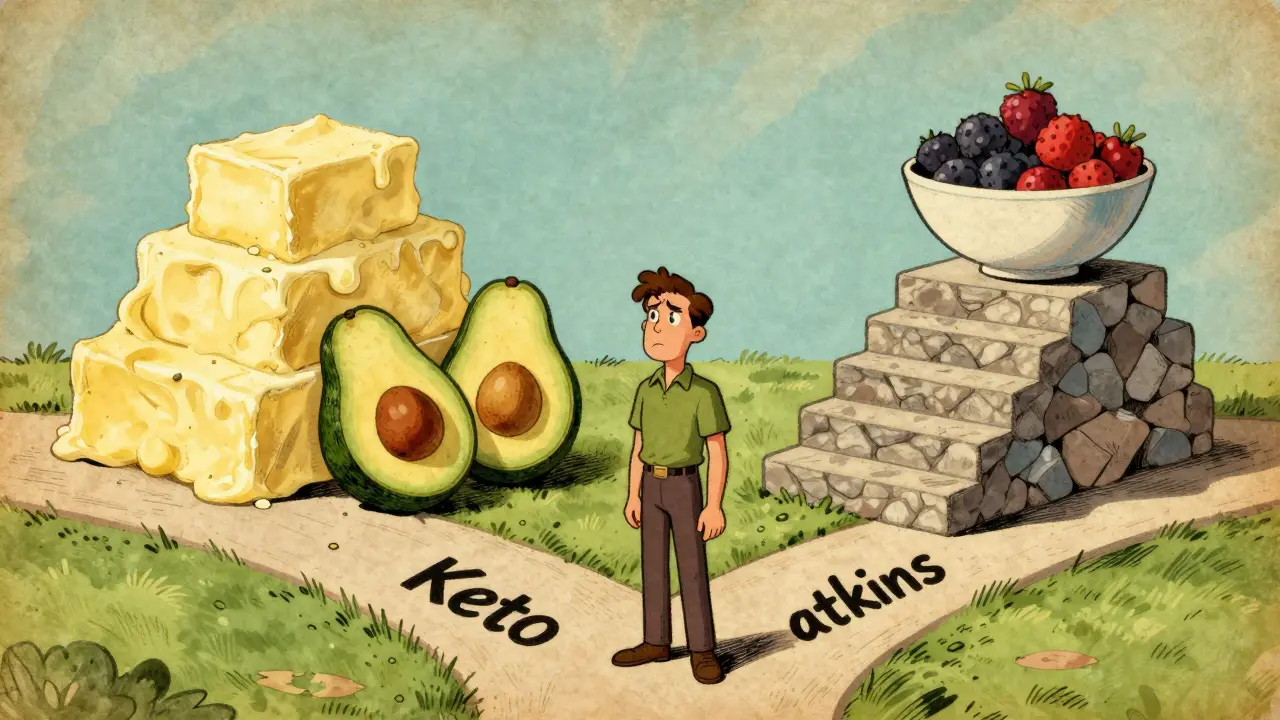
If you've ever looked at a piece of bread and felt like it was a forbidden fruit, you've probably considered a low-carb lifestyle. But here's the problem: the internet is a battlefield of "Keto vs. Atkins." One person tells you that you need to eat butter by the spoonful to lose ten pounds in a week, while another suggests a phased approach where you eventually get your berries back. The truth is, while both aim to shrink your waistline by cutting sugar and starch, they operate on completely different sets of rules.
Choosing between them isn't just about which one sounds easier. It's about whether you want a strict metabolic switch or a structured ladder to long-term maintenance. If you're tired of the confusion, let's strip away the marketing and look at how these two heavy hitters actually impact your body and your scale.
The Fast Track to Fat Burning: Understanding the Keto Approach
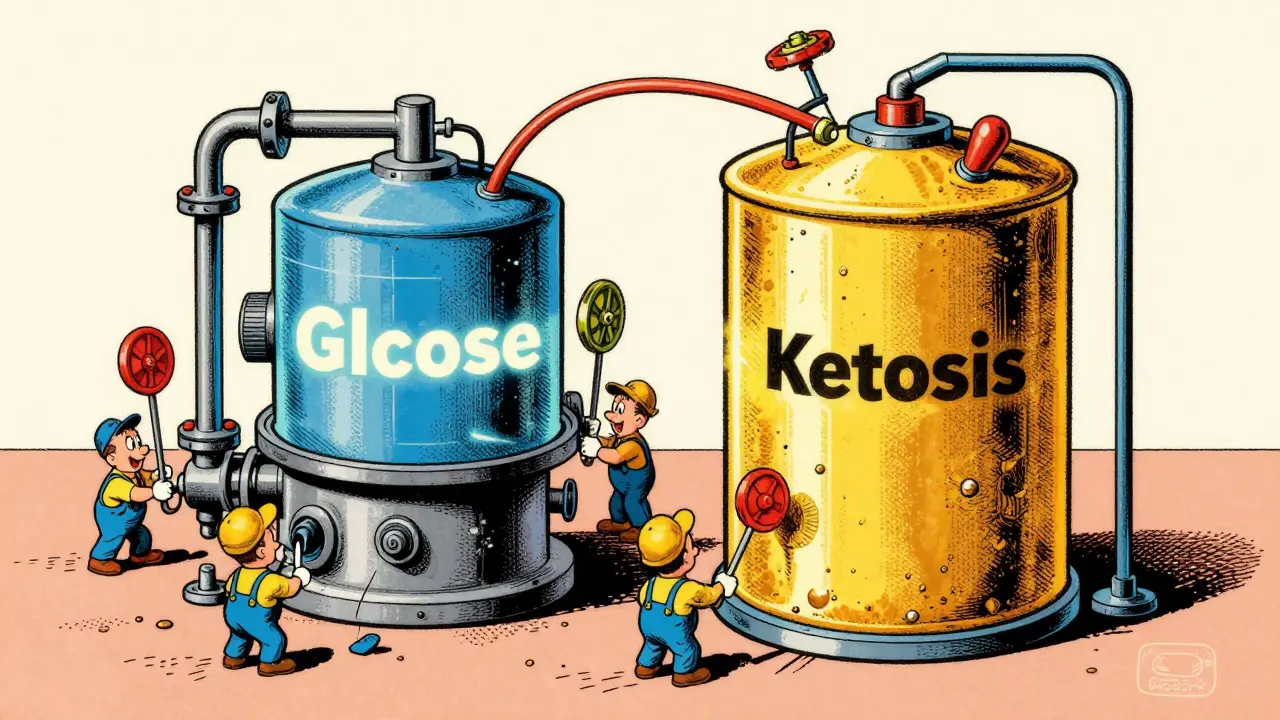
The ketogenic diet is a high-fat, very-low-carbohydrate regimen designed to put the body into a metabolic state called ketosis. Unlike most diets, Keto isn't just about cutting calories; it's about changing your fuel source. Normally, your brain and muscles run on glucose (sugar). When you starve the body of carbs, it turns to fat, creating molecules called ketones to use as energy.
To make this happen, you have to be precise. Most people follow a strict ratio: 75-90% of your calories come from fat, about 20% from protein, and a tiny 5-10% from carbohydrates. We're talking usually under 50 grams of carbs a day. Why the restriction on protein? Because too much protein can actually kick you out of ketosis through a process called gluconeogenesis, where your liver turns excess protein back into glucose.
The result is often rapid. In one 12-month study, people on a low-calorie keto diet lost about 44 pounds, significantly more than those on standard low-calorie plans, while keeping most of their muscle mass. But it's not a walk in the park. The first two weeks often bring the "keto flu"-headaches and fatigue as your brain screams for sugar. Once you're adapted, though, many users report a steady stream of energy and a complete disappearance of hunger pangs.
The Structured Ladder: How the Atkins Diet Works
If Keto is a sprint, the Atkins diet is more of a guided hike. Launched by Dr. Robert Atkins in 1972, this approach is built on the idea that you should restrict carbs to jumpstart weight loss and then slowly add them back until you find your personal "carb balance."
The Atkins journey is broken into four distinct phases:
- Phase 1 (Induction): This is the hardest part. You limit net carbs to 20-25 grams for two weeks to get the body moving.
- Phase 2 (Ongoing Weight Loss): You slowly increase your intake to 25-50 grams per day.
- Phase 3 (Pre-Maintenance): You push the limit further to 50-80 grams, testing how many carbs you can handle without gaining weight.
- Phase 4 (Lifetime Maintenance): You've reached your goal and now live on a sustainable level, often up to 100 grams of net carbs daily.
Unlike Keto, Atkins doesn't care as much about your protein intake. In fact, it encourages moderate to high protein consumption. This makes it much easier to eat "normal" meals like a steak with a side of broccoli without worrying if you've accidentally triggered glucose production in your liver.
The Head-to-Head: Comparing the Mechanics
When you put these two side-by-side, the biggest difference is the goal. Keto wants to keep you in ketosis permanently. Atkins uses low-carb as a tool to reach a goal, then transitions into a more flexible lifestyle.
Another major divide is the food philosophy. True Keto focuses heavily on whole, unprocessed fats-think avocados and grass-fed butter. Atkins is more commercial; they have a whole line of branded bars and shakes. While convenient, these processed "diet foods" are often criticized for having artificial ingredients that a strict keto devotee would avoid.
| Feature | Ketogenic Diet | Atkins Diet |
|---|---|---|
| Primary Goal | Continuous Ketosis | Phased Weight Loss & Maintenance |
| Fat Intake | Very High (75-90%) | Moderate to High |
| Protein Intake | Moderate/Limited | High/Encouraged |
| Carb Limit | Strict (<50g daily) | Starts low, increases over time |
| Flexibility | Low (Strict Macros) | High (Gradual Reintroduction) |
The Reality of Weight Loss: Short-Term Wins vs. Long-Term Truths
Let's be real: both of these diets work incredibly well in the first six months. When you cut carbs, you drop water weight almost instantly, and your insulin levels plummet, allowing your body to access stored fat. A study of adults with type 2 diabetes on the Atkins diet showed not only weight loss but also a decrease in HgbA1c levels and a lower need for medication.
But here is where the plot thickens. Long-term data from the Mayo Clinic suggests that after a year, low-carb diets aren't necessarily more effective than standard calorie-restricted diets. Why? Because they are hard to maintain. Dr. David Ludwig from Harvard notes that while the short-term results are impressive, the extreme restriction makes it a nightmare for most people to stick with for years.
The "dropout rate" is telling. Market data shows that while about 68% of keto users see big results in three months, only about 35% are still doing it a year later. Atkins has a slightly better retention rate (around 48%) because it doesn't feel like a life sentence of no bread; it feels like a plan with an end date.
Potential Pitfalls and Health Warnings
It's not all sunshine and bacon. Both diets come with risks if you do them wrong. The "Dirty Keto" approach-eating processed meats and low-quality fats-can lead to increased cardiovascular risk. Dr. Neal Barnard has warned that high saturated fat intake can be a gamble for your heart health, regardless of the number on the scale.
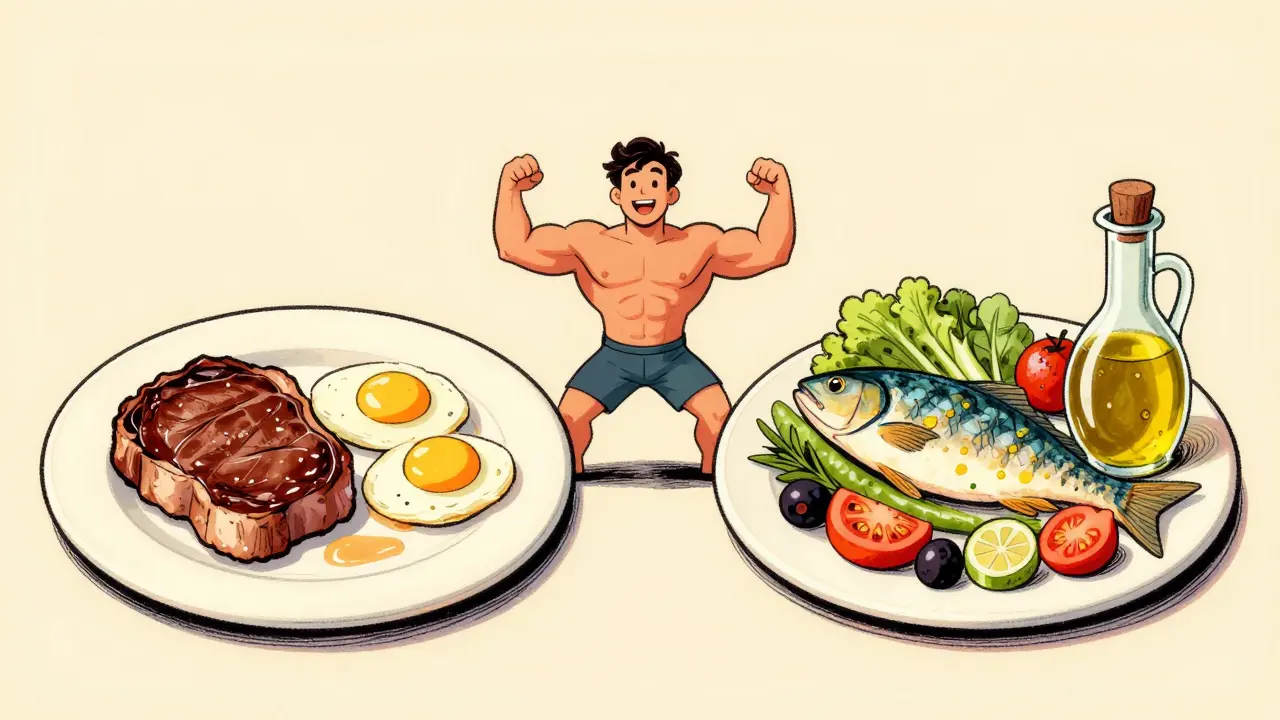
Then there's the nutritional gap. When you cut out entire food groups (like most fruits and grains), you risk missing out on essential fiber and micronutrients. This is why some people find success with a hybrid approach, like starting with a strict ketogenic phase for six months and then transitioning into a Mediterranean diet. Research has shown that this "switch" can lead to significant weight loss with almost no regain after a year.
Which One Should You Choose?
If you are looking for the fastest possible results and you enjoy tracking every gram of food on an app like Carb Manager, Keto is your best bet. It's a powerful metabolic tool that can stabilize blood sugar and crush cravings once you're past the adaptation phase. It appeals strongly to younger adults who want a high-performance, high-intensity approach to health.
On the other hand, if you want a system that teaches you how to live with a moderate amount of carbs and doesn't require a blood ketone meter to feel successful, go with Atkins. It's more forgiving, easier to navigate in social settings, and generally more sustainable for people who don't want to spend the rest of their lives counting macros to the decimal point.
Will I gain the weight back if I stop Keto or Atkins?
Yes, if you return to a high-carb, high-calorie diet immediately. Most of the initial weight loss on low-carb diets is water. To prevent the "rebound effect," you need a maintenance plan-like Atkins Phase 4 or a Mediterranean-style transition-that slowly introduces healthy carbs back into your system.
What is the "Keto Flu" and how do I stop it?
The keto flu is a collection of symptoms including fatigue, brain fog, and irritability that happens as your body switches from burning glucose to burning fat. You can minimize it by staying hydrated and increasing your electrolyte intake-specifically sodium, potassium, and magnesium-during the first two weeks.
Can I do the Atkins diet without buying their products?
Absolutely. While the Atkins brand sells convenient snacks, the actual diet is based on eating whole proteins, healthy fats, and low-carb vegetables. You can follow the four phases using fresh ingredients from any grocery store.
Is protein dangerous on a Keto diet?
Protein isn't "dangerous," but it can be counterproductive. Because of gluconeogenesis, the body can turn excess protein into glucose. If you eat too much protein, your insulin may rise enough to stop the production of ketones, effectively knocking you out of ketosis.
Which diet is better for Type 2 Diabetes?
Both can be highly effective for improving glycemic control in the short term. However, because these diets significantly affect blood sugar and medication needs, you must consult a doctor first. The American Diabetes Association notes that while these diets work for weight loss, long-term safety data is still being gathered.
Next Steps for Your Journey
Before you clear out your pantry, decide on your non-negotiables. If you can't imagine a life without an occasional apple or a slice of sourdough, start with the Atkins phased approach. If you're motivated by data and want to see a total metabolic shift, try the ketogenic path for 30 days.
Regardless of the path you choose, keep an eye on your energy levels and your heart health. Use a tracking app to keep yourself honest, but don't let the numbers stress you out. The best diet isn't the one that promises the most weight loss on paper-it's the one you can actually stick to when it's Tuesday night and you're exhausted from work.