Medication Anxiety Risk Checker
This tool helps determine if your medications might be contributing to anxiety symptoms. Based on your selections, it will assess your risk level and provide practical next steps.
Medication Categories
Select any medications you're currently taking that might cause anxiety (based on medical research):
Your Risk Assessment
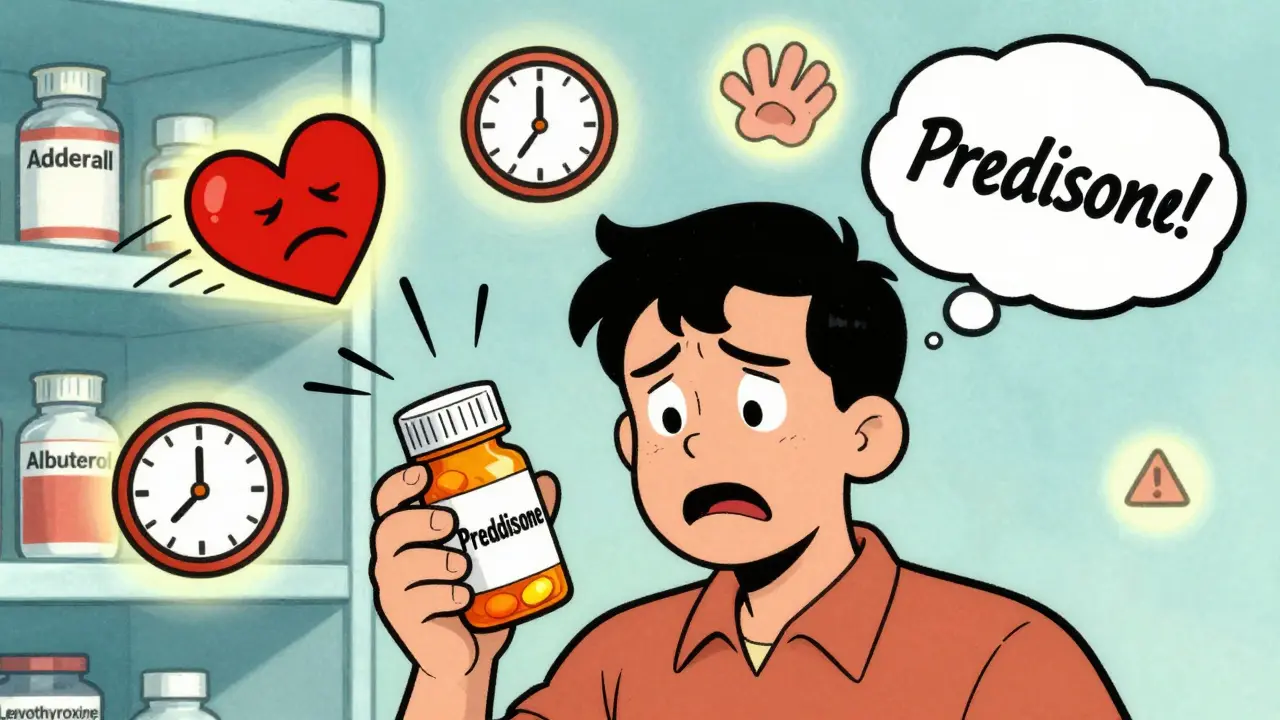
It’s not just in your head - sometimes, anxiety comes from your medicine cabinet. If you’ve started a new pill and suddenly feel jittery, your heart races for no reason, or you’re overwhelmed by worry out of nowhere, it might not be a mental health issue. It could be your medication. Medication-induced anxiety is more common than most people realize, and it’s often misdiagnosed as panic disorder or generalized anxiety. The good news? Once you identify the trigger, the fix is often simple: adjust the dose, switch meds, or give your body time to reset.
What Medications Can Cause Anxiety?
Not all drugs are created equal when it comes to your nervous system. Some are designed to calm you down. Others? They accidentally rev you up. According to medical sources like WebMD and the Mayo Clinic, seven major categories of medications are known to trigger anxiety symptoms:
- Corticosteroids - Drugs like prednisone, methylprednisolone, and dexamethasone, often used for asthma, arthritis, or autoimmune conditions, can spike cortisol levels and overstimulate your stress response. People on long-term or high-dose steroids report panic attacks, insomnia, and irritability.
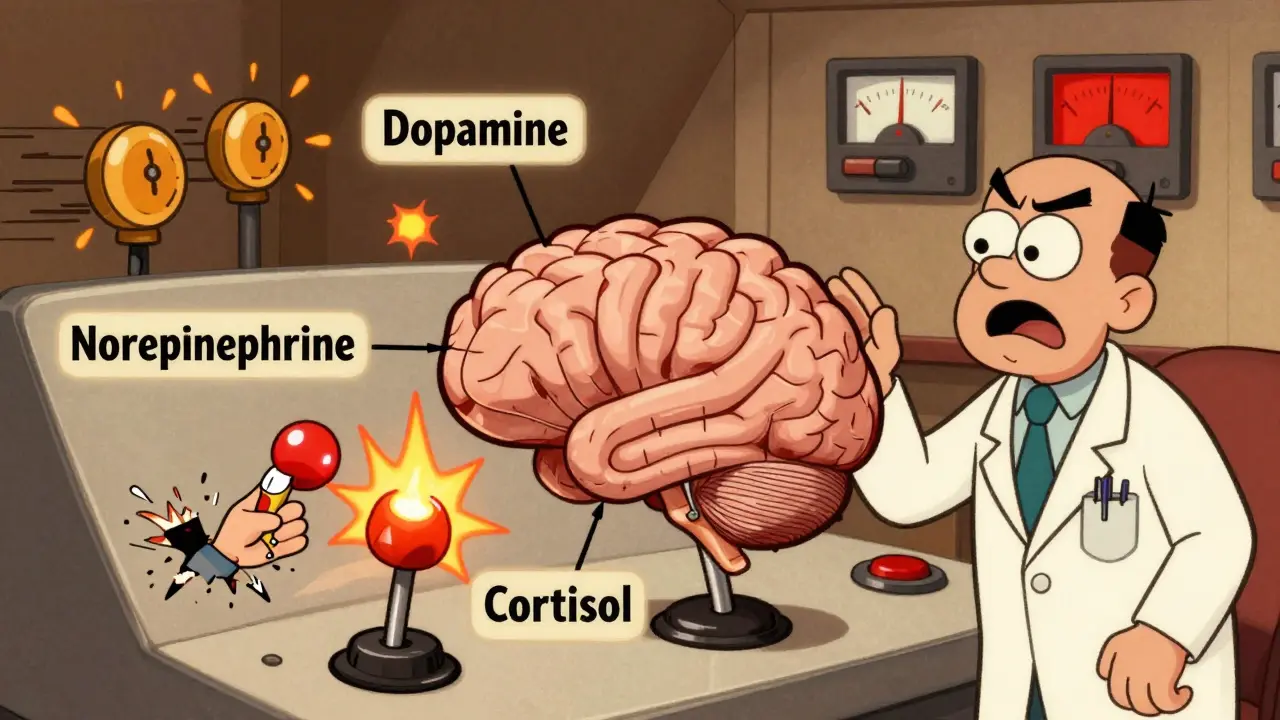
- ADHD stimulants - Medications like Adderall, Vyvanse, and Ritalin work by increasing dopamine and norepinephrine in the brain. That’s great for focus, but for some, it’s like pouring gasoline on a fire. Restlessness, racing thoughts, and heart palpitations are common side effects.
- Asthma inhalers - Albuterol (Proventil) and salmeterol (Serevent) are bronchodilators, but they also stimulate the sympathetic nervous system. Many users describe trembling hands, a pounding chest, and sudden panic - even if they’ve never had anxiety before.
- Thyroid meds - Levothyroxine (Synthroid) is essential for hypothyroidism, but too much of it mimics hyperthyroidism. Symptoms include sweating, heart palpitations, nervousness, and insomnia. A TSH level above 4.0 mIU/L often means you’re over-medicated.
- Decongestants - Pseudoephedrine (Sudafed) shrinks blood vessels to clear your nose, but it also tightens blood vessels in your brain and heart. This can cause jitteriness, trouble sleeping, and a feeling of impending doom.
- Antibiotics - Certain ones, especially fluoroquinolones like Cipro and Levaquin, have been linked to anxiety, insomnia, and even hallucinations in rare cases. The exact mechanism isn’t fully clear, but it may involve gut-brain axis disruption.
- Seizure and anesthesia drugs - Some anticonvulsants and anesthesia agents can alter brain chemistry in ways that trigger anxiety during or after use.
Here’s the catch: you don’t need to be abusing these drugs. Even prescribed doses, taken exactly as directed, can cause anxiety in susceptible people. A 2023 study from the NIH found that 5-7% of all anxiety cases in adults were directly tied to medication side effects - and that number jumps to over 20% in people taking three or more prescriptions.
Why Does This Happen?
Your brain runs on chemicals. Serotonin, dopamine, norepinephrine - they’re like traffic signals for your mood, energy, and fear response. When a medication interferes with those signals, it can throw your whole system off balance.
For example, ADHD stimulants boost norepinephrine to improve focus. But if your brain is already sensitive to that chemical, the extra push can trigger fight-or-flight mode. Corticosteroids mimic your body’s natural stress hormone, cortisol. Too much of it? Your brain thinks you’re under constant threat. Even decongestants like pseudoephedrine activate adrenaline receptors, making your heart pound and your palms sweat - classic panic symptoms.
It’s not just about chemistry. Genetics play a role too. A 2022 study in the Journal of Clinical Psychopharmacology found that people with certain variations in the CYP2D6 enzyme - which breaks down many medications - are far more likely to experience anxiety side effects. If your body processes drugs slowly, they build up and overstimulate your nervous system.
How to Tell If It’s the Medicine - Not Your Mind
One of the biggest problems? Doctors often assume anxiety is psychological. But there are clear signs that point to medication as the culprit:
- The anxiety started within days or weeks of beginning a new drug.
- You’ve never had anxiety before - no panic attacks, no social dread, no insomnia.
- Symptoms get worse when you take the pill and improve when you skip a dose (under medical supervision).
- You’re taking more than one medication - polypharmacy increases risk dramatically.
- You feel physical symptoms like trembling, racing heart, or dizziness along with the worry.
The DSM-5 (the diagnostic manual used by clinicians) says that for a diagnosis of substance-induced anxiety disorder, symptoms must appear during or shortly after drug use - and disappear within weeks of stopping. If your anxiety lingers after you quit the med, then it might be something else. But if it fades? That’s a strong clue.
One patient, ‘ThyroidWarrior’ on HealthUnlocked, spent three months seeing therapists and trying SSRIs before realizing her levothyroxine dose was too high. Once her doctor lowered it, her anxiety vanished in under a week. She wasn’t broken - she was over-medicated.
What to Do If You Suspect Your Medicine Is Causing Anxiety
Don’t stop cold turkey. Don’t guess. Do this instead:
- Track your symptoms. Keep a simple log: date, time, medication taken, anxiety level (1-10), and any physical symptoms (heart rate, shaking, sweating). Do this for at least a week. Patterns will show up.
- Check timing. Did the anxiety start after a dose increase? After adding a new drug? Many side effects show up 2-14 days after a change.
- Bring your log to your doctor. Don’t say, “I think this medicine is making me anxious.” Say, “I started X on [date], and since then, I’ve had [list symptoms] 12 times. They always happen within 2 hours of taking it.” That’s concrete evidence.
- Ask about alternatives. For ADHD: switch from Adderall to Strattera (a non-stimulant). For asthma: try a different inhaler class. For thyroid: get your TSH tested - levels above 4.0 may be too high.
- Ask about tapering. For steroids or benzodiazepines, quitting fast can cause rebound anxiety. Gradual reduction is safer.
One woman on Reddit, ‘MedReaction87,’ had three panic attacks after starting prednisone. Her doctor dismissed it as stress - until she printed out the WebMD page on steroid-induced anxiety. The next week, she was on a lower dose. Within five days, she felt like herself again.
What If You Can’t Stop the Medication?
Sometimes, you can’t quit - like if you’re on prednisone for a life-threatening flare-up. In those cases, manage the side effects:
- Lower the dose if possible. Sometimes half a pill is enough.
- Take it in the morning. This avoids sleep disruption, which worsens anxiety.
- Use CBT techniques. Breathing exercises, grounding techniques, and thought-stopping can reduce panic intensity while your body adjusts.
- Support your nervous system. Magnesium glycinate, omega-3s, and regular sleep help buffer overstimulation.
Studies show that combining medication adjustments with cognitive behavioral therapy (CBT) reduces anxiety symptoms by 60-70% during the transition period. You’re not just waiting for the drug to leave your system - you’re actively rewiring your response to it.
Prevention Is Better Than Fixing
If you have a history of anxiety, panic attacks, or mood disorders, tell your doctor before starting any new medication. Ask: “Can this cause anxiety? Is there a lower-risk alternative?”
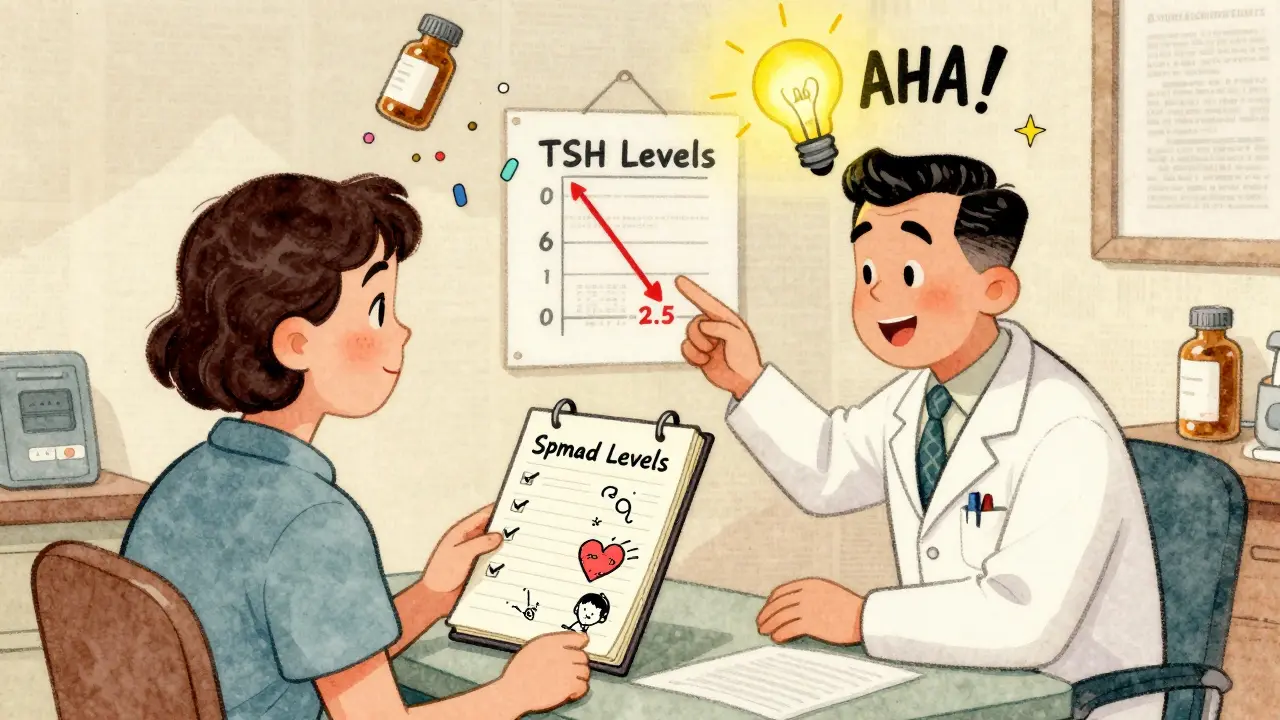
For thyroid patients: get TSH checked every 6-8 weeks after a dose change. The American Thyroid Association recommends keeping levels between 0.4 and 4.0 mIU/L to avoid over-replacement.
For ADHD: start low, go slow. Research shows that beginning stimulants at 10-25% of the target dose and increasing weekly cuts anxiety side effects by 65%.
For steroids: if you’re on a short course (under 2 weeks), anxiety is usually mild. But if it’s longer, ask about adding a low-dose beta-blocker like propranolol to calm heart rate and tremors.
What’s Next?
Scientists are moving toward personalized prescribing. In 2023, the National Institute of Mental Health launched a $2.3 million project to find genetic markers that predict who’s at risk for medication-induced anxiety. Within the next few years, we may have blood tests or saliva kits that tell you: “This drug will likely make you anxious. Try this one instead.”
Until then, the best tool you have is awareness. Anxiety from medication isn’t weakness. It’s a biological reaction. And it’s fixable.
If you’ve been told your anxiety is “all in your head,” but you know it started the day you began a new pill - you’re not crazy. You’re just one conversation away from relief.


Milad Jawabra
March 5, 2026 AT 23:21Bro, I was on prednisone for my eczema and thought I was losing my mind. Heart pounding, can't sleep, felt like I was gonna die every time I stood up. Then I read this and was like... oh. Duh. My doc laughed when I brought it up. I printed the WebMD page. Next week? Lower dose. Anxiety gone in 72 hours. You're not broken. Your meds are just being jerks. 🤯
Raman Kapri
March 6, 2026 AT 01:37It is imperative to note that the causal attribution of anxiety to pharmacological agents is frequently conflated with psychosomatic phenomena. The correlation does not imply causation, and confounding variables such as concurrent stressors, sleep deprivation, or underlying psychiatric comorbidities are often inadequately controlled in anecdotal reports.
Divya Mallick
March 7, 2026 AT 10:22OMG I’ve been there. I was on levothyroxine and thought I was having a nervous breakdown. My husband said I was ‘too emotional’ and told me to ‘chill out.’ I cried for three weeks straight. Then I found this post. Turns out my TSH was 7.2. My doctor said ‘it’s fine’ until I showed him the American Thyroid Association guidelines. He changed my dose. I haven’t felt like myself since 2019. Now I’m back. But seriously? Why do doctors treat us like we’re drama queens? I’m not crazy. I’m just over-medicated. 😭
Pankaj Gupta
March 8, 2026 AT 21:17The article presents a compelling and evidence-based overview of medication-induced anxiety. The inclusion of specific pharmacological classes, supported by peer-reviewed literature and clinical guidelines, enhances its credibility. Notably, the emphasis on the CYP2D6 polymorphism as a genetic risk factor aligns with current pharmacogenomic research. The practical advice on symptom tracking and patient-provider communication is clinically sound and should be widely disseminated.
Alex Brad
March 10, 2026 AT 09:23Had this happen with Adderall. Stopped it. Anxiety vanished. Done. Don’t overthink it. Talk to your doctor. Simple.
Renee Jackson
March 10, 2026 AT 14:02Thank you for this meticulously researched and profoundly important piece. It is both a clinical resource and a validation for countless individuals who have been gaslit by medical professionals. The structured guidance on symptom logging, dose timing, and alternative pharmacotherapies offers not only therapeutic clarity but also empowers patients to advocate for themselves with precision and dignity. This is medicine at its most humane.
Richard Elric5111
March 10, 2026 AT 17:06One cannot help but ponder the ontological implications of pharmaceutical-induced anxiety. If the mind is a chemical landscape, then what is the self when its terrain is artificially altered? Are we still the same person when our serotonin levels are manipulated? Or are we merely temporary vessels for molecular forces beyond our volition? The irony is profound: we take pills to become ‘better,’ yet they often render us strangers to ourselves.
Dean Jones
March 12, 2026 AT 02:57Look, I’ve been on like six different meds in the last five years - ADHD, thyroid, steroids, antibiotics - and yeah, half of them made me feel like a human alarm clock. I didn’t realize it until I stopped one and went ‘wait… why am I not vibrating?’ It’s wild how disconnected we are from our own bodies. Doctors treat symptoms like puzzles, not signals. But here’s the thing: your body isn’t broken. It’s screaming. And if you’re the kind of person who notices when your hands shake or your heart races when you take a pill? You’re not weak. You’re hyper-aware. And that’s a gift. Even if it sucks. I started taking magnesium glycinate and doing 5-minute breathwork before bed. Didn’t fix the med, but it stopped me from spiraling. And honestly? That’s half the battle. Also, if your doc says ‘it’s all in your head,’ ask them if their head’s been on 100mg of prednisone. I bet they’d shut up.
Betsy Silverman
March 12, 2026 AT 17:00I’m so glad this exists. I’ve been helping friends navigate this for years - the shame they feel when they say ‘I think this pill is making me anxious’ and get told to ‘just relax.’ I had a cousin on asthma inhalers who thought she had panic disorder. Turns out, it was albuterol. Switched to a different inhaler. Zero anxiety after. This isn’t just medical info - it’s emotional rescue. Thank you for writing this.
Ivan Viktor
March 13, 2026 AT 05:19So let me get this straight. You’re telling me that the same drug that’s supposed to help me breathe… also makes me feel like I’m about to die? And doctors just shrug? I’m not surprised. I’m just glad I didn’t take the ‘just breathe’ advice from my therapist. I took the ‘check your inhaler’ advice from Reddit. Saved my sanity. And my heart.
Jeff Card
March 14, 2026 AT 22:10I had a similar experience with pseudoephedrine after a bad cold. Thought I was having panic attacks. Went to my doc, got an EKG, got referred to a neurologist. Turned out it was the Sudafed. I hadn’t even connected the dots. I started keeping a log after this - meds, timing, symptoms. It’s crazy how clear the pattern becomes. I wish more people knew this. It’s not anxiety. It’s pharmacology.
Aisling Maguire
March 16, 2026 AT 05:19Ugh I’m so tired of people saying ‘it’s all in your head’ when it’s literally in your bloodstream. I was on Cipro for a UTI and had nightmares, panic attacks, and felt like I was floating. My therapist said I was ‘resisting healing.’ I stopped the antibiotic. 48 hours later, I was human again. Why do we have to fight so hard just to be believed?
marjorie arsenault
March 17, 2026 AT 03:10This is the kind of post I wish I’d found five years ago. I was on steroids for a flare-up and thought I was going crazy. I cried every day. My partner thought I was depressed. I didn’t know meds could do this. I lowered my dose slowly with my doctor’s help. Within two weeks, I felt like me again. You’re not broken. You’re just sensitive. And that’s okay.
Deborah Dennis
March 18, 2026 AT 20:24Wow. Just… wow. I can’t believe people actually think this is a real problem. I mean, if you’re taking medication and you feel anxious… maybe you’re just anxious? Maybe you’re not supposed to be on it? Maybe you’re just… weak? I’ve been on Adderall for 10 years. Never had an issue. So… maybe it’s you? Not the drug?