Rifampin is one of the most powerful drugs in the fight against tuberculosis. It cuts treatment time from over a year down to just six months. But this life-saving drug doesn’t work in isolation. Its ability to speed up how your body breaks down other medications can lead to dangerous, even deadly, consequences if not managed carefully.
How Rifampin Works - and Why It’s So Effective
Rifampin, also known as rifampicin, is a natural antibiotic derived from a soil bacterium called Amycolatopsis rifamycinica. It was first used in the 1960s and quickly became the backbone of modern TB treatment. Before rifampin, patients had to take pills for 18 months or longer. Now, with rifampin combined with pyrazinamide and other drugs, most people complete treatment in six months.How does it work? Rifampin slips into Mycobacterium tuberculosis cells and locks onto the enzyme that makes bacterial RNA. Without RNA, the bacteria can’t make proteins or replicate. It kills both active bacteria floating in the bloodstream and those hiding inside immune cells. A standard 600 mg dose raises blood levels to about 7 mcg/mL - enough to stop TB in its tracks.
But here’s the catch: rifampin doesn’t just target TB. It also rewires your liver.
The Hidden Power: Rifampin as a Drug Metabolism Engine
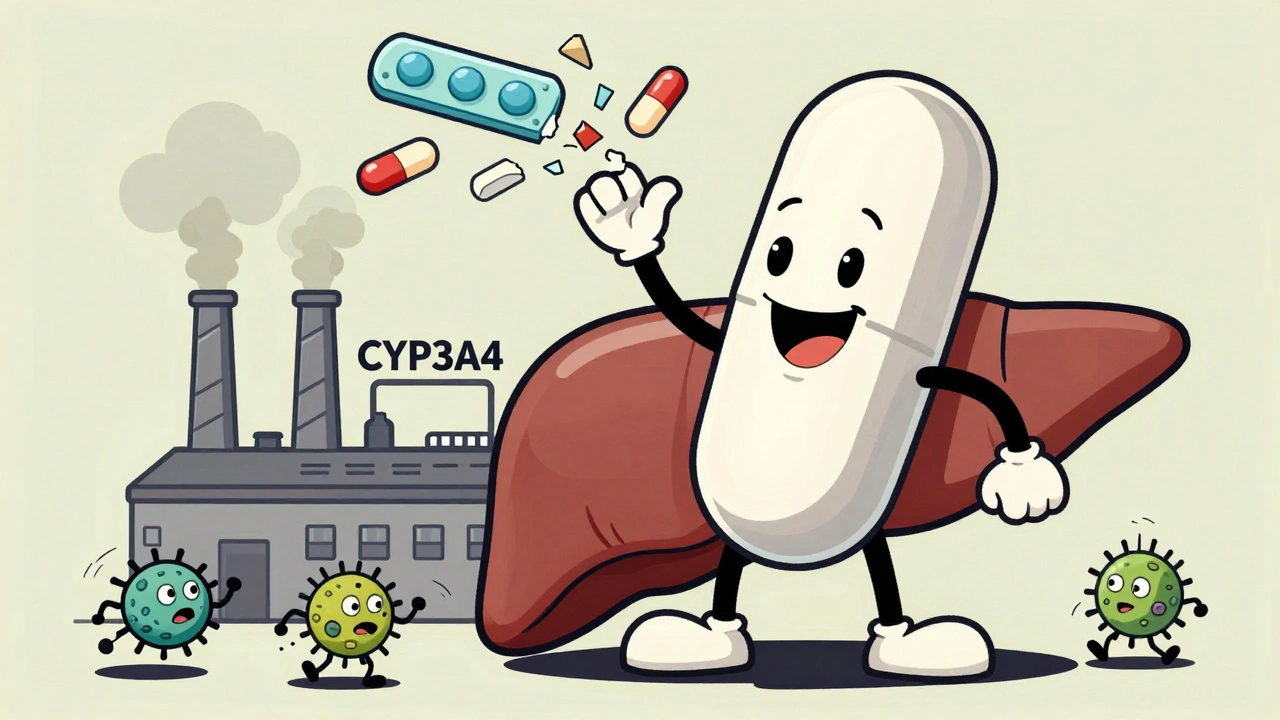
Rifampin doesn’t just kill bacteria - it turns on your body’s drug-clearing system. It activates a receptor in your liver called PXR. Once turned on, PXR tells your liver to produce more of certain enzymes, especially CYP3A4. This enzyme is responsible for breaking down more than half of all prescription drugs.Within 24 hours of taking rifampin, your CYP3A4 levels start climbing. By day 5 to 7, they can double or even triple. This means any drug your body normally processes through CYP3A4 gets broken down too fast. The result? The drug doesn’t stay in your system long enough to work.
This isn’t theoretical. Real-world data shows:
- Oral contraceptives lose 67% of their effectiveness - leading to unplanned pregnancies.
- Warfarin, a blood thinner, drops by 42% - raising the risk of clots or strokes.
- HIV antivirals like ritonavir and atazanavir can drop by 75-90% - risking treatment failure and drug-resistant HIV.
These aren’t rare side effects. They’re predictable, well-documented, and avoidable - if you know what to look for.
Who’s at Risk? The Most Dangerous Interactions
Some patients are walking into dangerous territory without realizing it. Here are the most common and dangerous combinations:- Birth control pills: Many women on rifampin don’t know their birth control is useless. A single missed pill or delayed dose becomes a pregnancy risk. Alternatives like IUDs or implants are safer.
- Anticoagulants: Warfarin, apixaban, rivaroxaban - all affected. INR levels can crash within days. Patients need weekly blood tests and dose adjustments.
- HIV medications: Rifampin can make HIV drugs completely ineffective. In places with high TB and HIV co-infection, this is a public health crisis. Doctors often switch to rifabutin, a weaker inducer, when possible.
- Immunosuppressants: Cyclosporine, tacrolimus, sirolimus - used after transplants. A drop in levels can lead to organ rejection.
- Antifungals: Fluconazole, itraconazole, voriconazole - their levels drop, making fungal infections harder to treat.
- Statins: Atorvastatin and simvastatin levels fall, reducing cholesterol control. Rosuvastatin is safer, since it’s not primarily metabolized by CYP3A4.
Even over-the-counter drugs like St. John’s wort can make rifampin’s effects worse. It’s not just prescriptions - it’s everything.
The Paradox: Rifampin Makes TB Harder to Kill
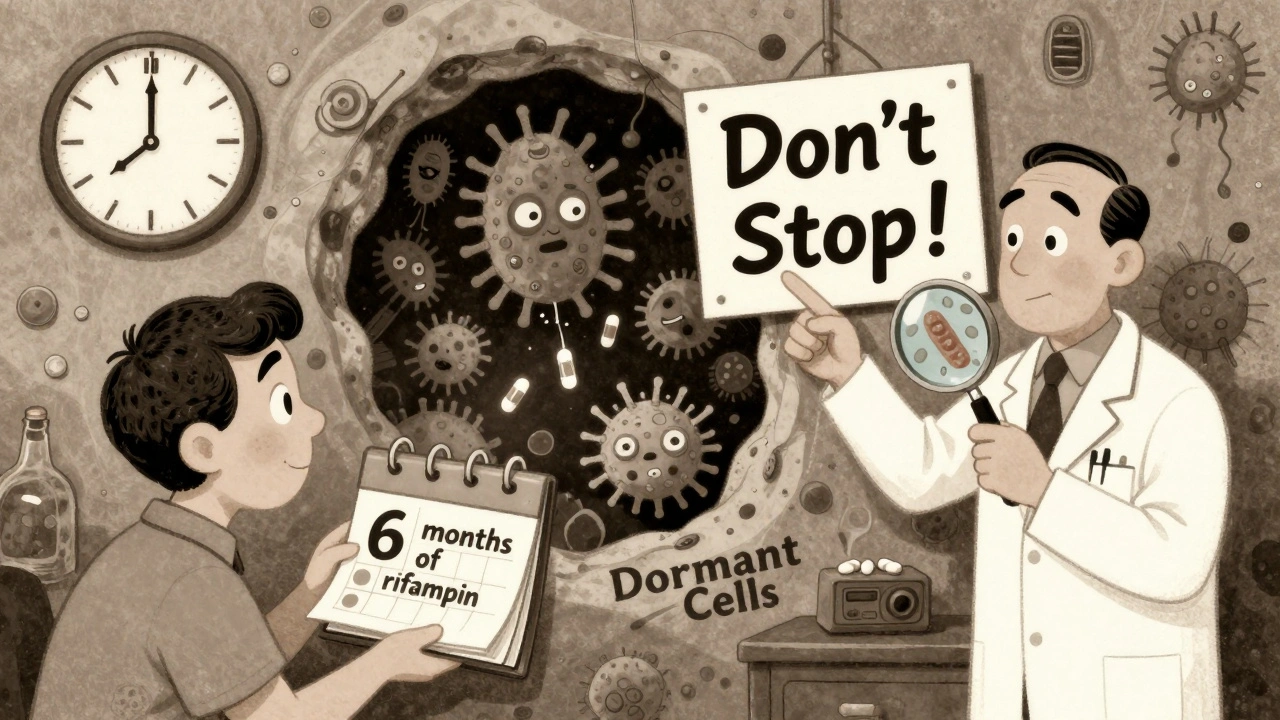
Here’s something even doctors don’t always talk about: rifampin can make tuberculosis itself harder to treat.Studies show that within hours of exposure, some TB bacteria activate defense systems. They pump rifampin out of their cells using special protein pumps. This isn’t genetic resistance - it’s a temporary survival tactic. These bacteria aren’t dead, just hiding. When treatment stops, they can wake up and cause relapse.
Even more surprising: rifampin triggers this defense in the bacteria. The drug itself is telling the bacteria to get ready for battle. That’s why six months of treatment is non-negotiable. Shorter courses? Relapse rates jump to over 25%.
New Hope: Blocking the Bacteria’s Escape Routes
Scientists are fighting back. Research shows that common drugs like omeprazole (Prilosec) and verapamil (a heart medication) can block those bacterial pumps. In lab tests, omeprazole at normal doses reduced rifampin efflux by nearly 70%. Verapamil did the same.This could be huge. If we add a simple, safe pill like omeprazole to TB treatment, we might cut the treatment time in half - from six months to three. Clinical trials are already underway. Early results in mice show relapse rates dropping from 25% to under 5%.
It’s not magic. It’s repurposing. We’re using drugs already approved for other conditions to make rifampin work better.
Managing Rifampin Safely - What You Need to Do
If you’re on rifampin, here’s what you must do:- Tell every doctor you see - even your dentist or dermatologist. Rifampin’s effects last for two weeks after you stop taking it.
- Review every medication - prescriptions, supplements, OTC drugs. Don’t assume something is safe because it’s “natural” or “over-the-counter.”
- Use non-hormonal birth control - IUDs, copper coils, condoms. Birth control pills won’t work.
- Get blood tests - especially if you’re on warfarin, cyclosporine, or HIV meds. Levels can drop fast.
- Don’t stop or change doses - even if you feel fine. TB can come back stronger.
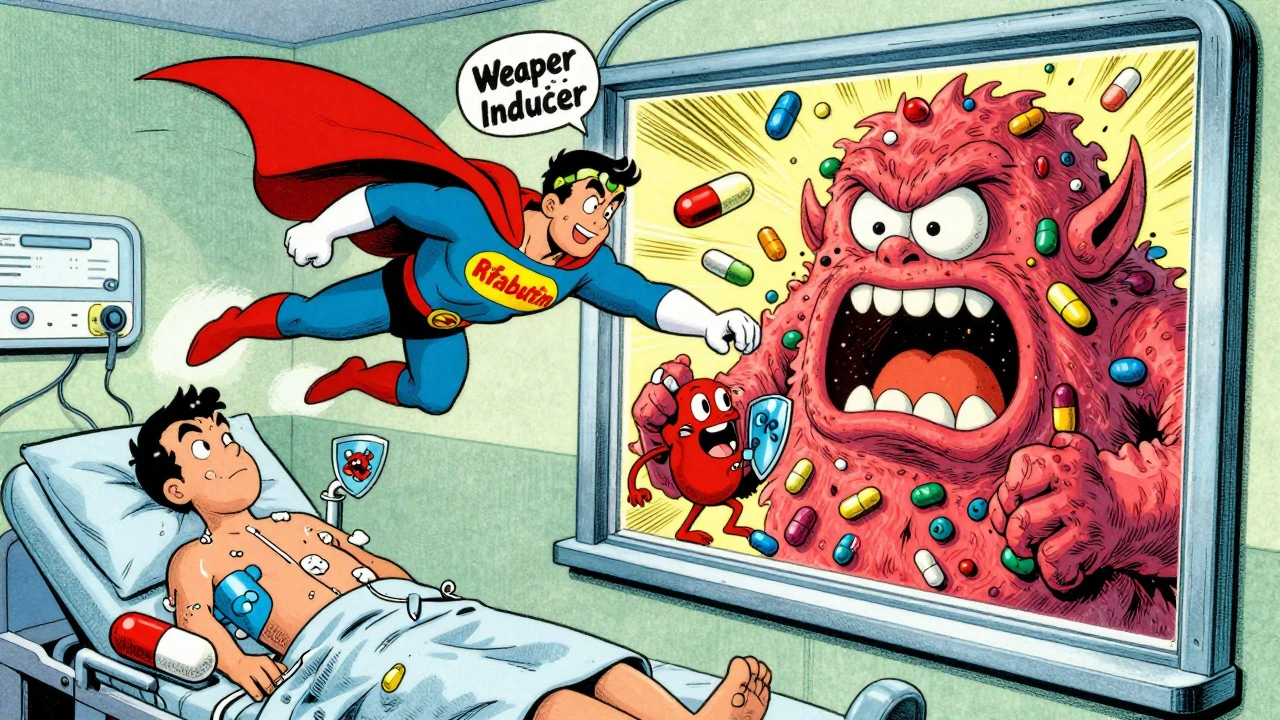
Doctors should also consider switching to rifabutin for patients on HIV meds or transplants. It’s less potent at inducing enzymes, so interactions are milder. But it’s not always available, and it’s more expensive.
What About Liver Damage?
Rifampin can hurt the liver. About 1 in 5 people on TB treatment show elevated liver enzymes. Most don’t have symptoms. But in rare cases, it leads to serious injury - especially if combined with alcohol, other liver-toxic drugs, or pre-existing liver disease.Watch for yellow skin, dark urine, nausea, or right-sided abdominal pain. Get liver tests before starting, and every 2-4 weeks during treatment. Don’t ignore it.
Why This Matters Globally
Every year, 3.5 million people start TB treatment with rifampin. In countries like India, South Africa, and Indonesia, TB and HIV overlap heavily. In these places, drug interactions aren’t just a medical footnote - they’re a death sentence if ignored.Global health programs are starting to catch on. New guidelines now emphasize checking for interactions before starting TB treatment. Pharmacists are being trained to flag risky combinations. But in many clinics, the system still relies on doctors remembering - and that’s not enough.
The future of TB treatment isn’t just better drugs. It’s smarter use of the ones we already have.
Can I take birth control pills while on rifampin?
No. Rifampin reduces the effectiveness of oral contraceptives by up to 67%. You can get pregnant even if you take them correctly. Use an IUD, implant, or condoms instead. Hormonal patches and rings are also unreliable. Don’t rely on pills - the risk is too high.
How long do rifampin interactions last after stopping the drug?
Rifampin’s enzyme-inducing effects last for up to two weeks after you stop taking it. That’s because the liver enzymes it induced take time to break down. If you’re switching to a drug like warfarin or an HIV medication, wait at least two weeks after your last rifampin dose - and sometimes up to four weeks for drugs with narrow safety margins.
Is rifabutin a safer alternative to rifampin?
Yes, for certain patients. Rifabutin is a weaker inducer of CYP3A4, so it causes fewer drug interactions. It’s often used when patients are on HIV antivirals or immunosuppressants. But it’s not always available, costs more, and may be less effective against some TB strains. Your doctor will weigh the risks.
Can I drink alcohol while taking rifampin?
It’s best to avoid alcohol. Both rifampin and alcohol stress the liver. Together, they increase the risk of liver damage. Even moderate drinking can push liver enzymes higher. If you have any liver issues, even one drink a day can be dangerous.
Why does TB treatment take six months if rifampin kills bacteria so fast?
Rifampin kills most TB bacteria quickly, but a small group survives by pumping the drug out of their cells. These bacteria are dormant, not dead. If you stop treatment early, they wake up and cause relapse. Six months ensures every last one is wiped out. Cutting it short increases relapse risk to over 25%.
Are there new treatments that might replace rifampin?
Not yet. Rifampin remains the most effective drug for shortening TB treatment. New drugs like bedaquiline and pretomanid are used for drug-resistant TB, but they don’t replace rifampin in standard cases. Research is testing if adding omeprazole or verapamil can shorten treatment to three months - but those are still in trials.

Christian Landry
December 7, 2025 AT 13:18Michael Robinson
December 7, 2025 AT 14:23Andrea DeWinter
December 8, 2025 AT 01:32Katie Harrison
December 9, 2025 AT 10:18Mona Schmidt
December 9, 2025 AT 20:36Kathy Haverly
December 9, 2025 AT 22:59Andrea Petrov
December 10, 2025 AT 06:11Guylaine Lapointe
December 11, 2025 AT 10:26Christian Landry
December 11, 2025 AT 13:03