When a new drug hits the market, everyone assumes it’s been thoroughly tested. But here’s the truth: drug safety signals often don’t show up until thousands, sometimes millions, of people are using the medicine outside of controlled trials. That’s not a flaw - it’s how the system is supposed to work. The real danger isn’t that risks emerge after approval; it’s that we don’t always catch them fast enough.
What Exactly Is a Drug Safety Signal?
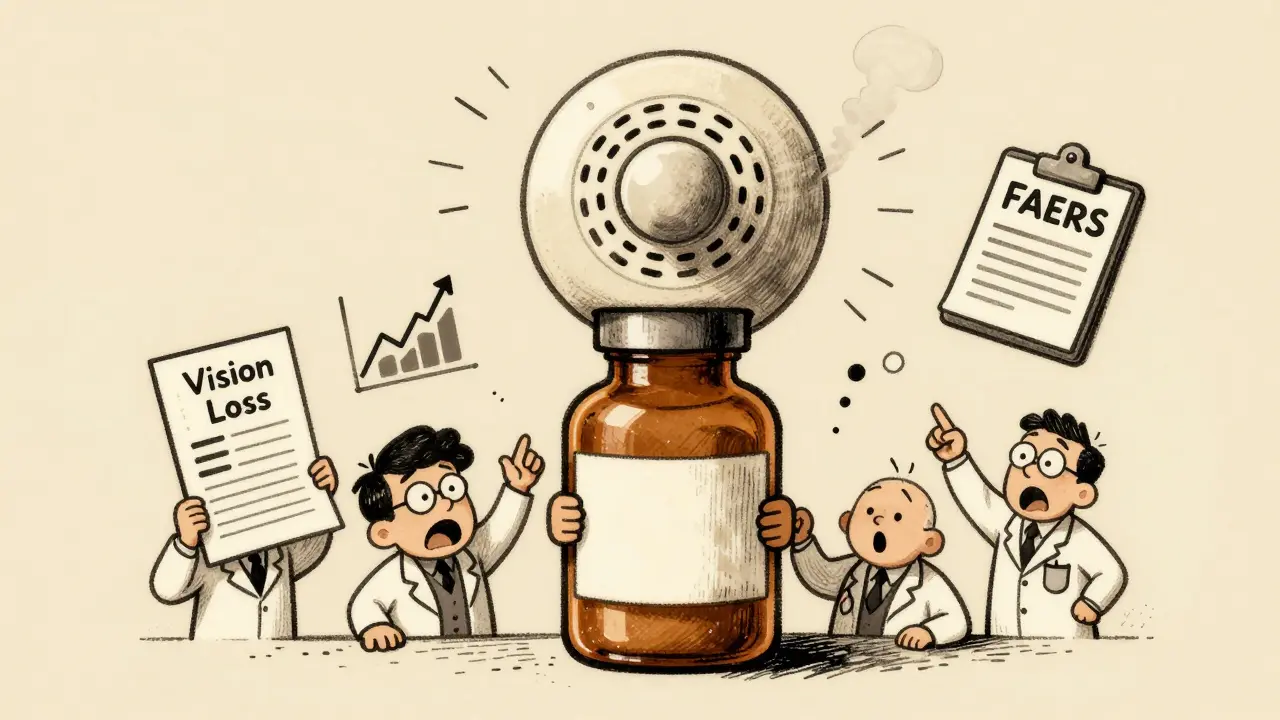
A drug safety signal isn’t a confirmed danger. It’s a red flag. Think of it like a smoke alarm: it doesn’t mean there’s a fire, but it means you need to check. According to the Council for International Organizations of Medical Sciences (CIOMS), a signal is any new or changing pattern of adverse events that suggests a possible link between a medicine and a health problem - one that’s strong enough to warrant deeper investigation. These signals can come from anywhere. Maybe a doctor reports that three patients on a new diabetes drug developed sudden vision loss. Maybe a patient’s family files a report after their loved one had a rare heart rhythm issue. Or maybe data mining tools spot a statistical spike in liver enzyme abnormalities among users of a cholesterol drug. None of these alone prove causation. But together, they trigger a probe.Why Clinical Trials Miss the Big Risks
Clinical trials are the gold standard for proving a drug works. But they’re not designed to catch every side effect. Most trials enroll between 1,000 and 5,000 people. They last months, not years. Participants are carefully screened - no one with three chronic conditions, no one on five other medications, no one over 75 unless it’s specifically for elderly use. That means real-world use often reveals problems trials never saw. Take the case of rosiglitazone, a diabetes drug approved in 1999. Clinical trials showed it lowered blood sugar. But post-market data, collected over 10 years from millions of users, revealed a doubled risk of heart attacks. The signal didn’t emerge until 2007 - eight years after approval. By then, over 2 million people had taken it. Another example: bisphosphonates, used for osteoporosis. Clinical trials showed they prevented bone fractures. But it took seven years after widespread use for doctors to notice a pattern: some patients developed severe jawbone decay after dental work. The delay wasn’t due to negligence. It was because the condition only appeared after long-term use - something trials simply couldn’t measure.The Two Types of Signals: Clinical and Statistical
Signals fall into two main buckets: clinical and statistical. Clinical signals come from individual case reports. These are stories. A nurse writes in: "Patient X, 68, on drug Y, developed unexplained muscle weakness within 48 hours of starting treatment. Symptoms resolved after stopping." That’s a clinical signal. It’s detailed, personal, and often includes timing - what happened before, during, and after the drug was taken. These reports are messy but rich. They can reveal patterns no algorithm can spot. Statistical signals come from numbers. Agencies like the FDA and EMA use software to scan databases of millions of adverse event reports. One method, called disproportionality analysis, looks for events that appear far more often with a specific drug than with others. If 150 people on Drug A report kidney failure, but only 3 on similar drugs do - that’s a red flag. The system flags it if the ratio exceeds 2.0 and at least three cases exist. But here’s the catch: 60-80% of these statistical flags turn out to be false alarms.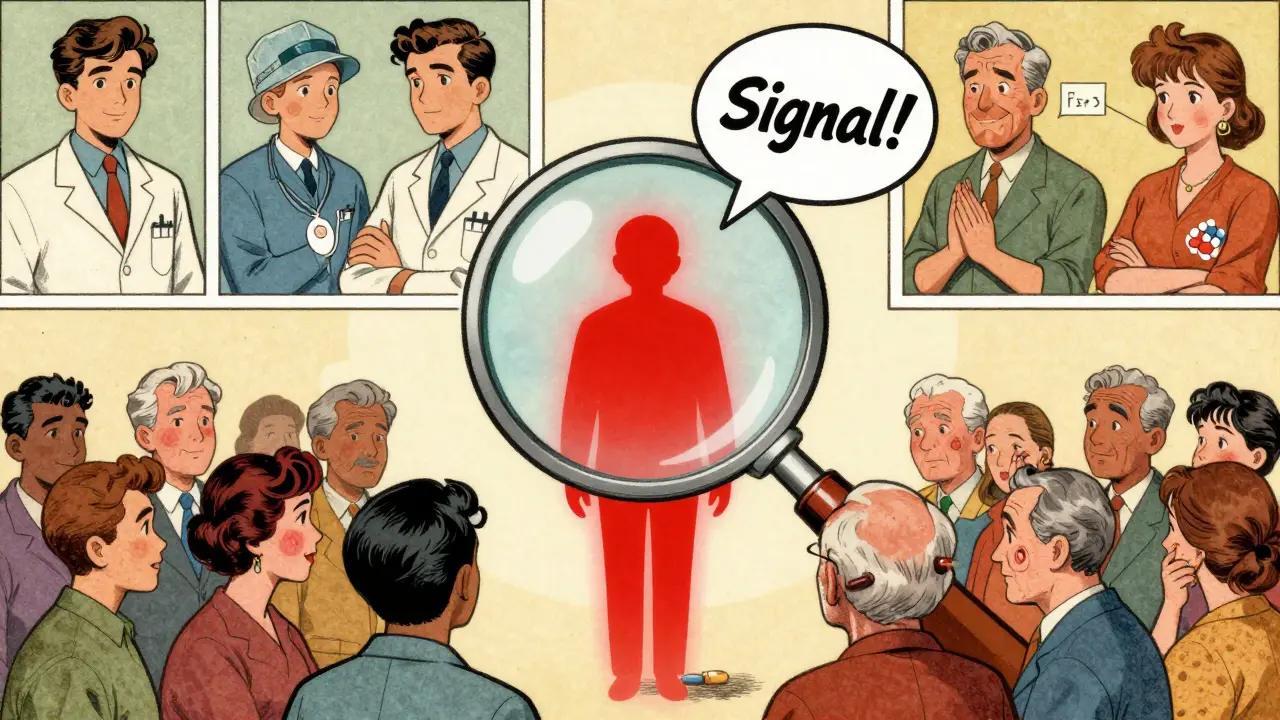
How Agencies Detect Signals - And Why They Disagree
The FDA checks its FAERS database every two weeks. The EMA runs continuous monitoring through EudraVigilance. Both collect spontaneous reports - the kind patients and doctors submit without being asked. FAERS holds over 30 million reports since 1968. EudraVigilance processes over 2.5 million per year. But they don’t always agree. A 2018 study found the EMA identified 27% more signals using case series reviews - digging into individual patient histories. The FDA found 19% more using statistical methods. Why? Because they’re built differently. The EMA leans on expert panels reviewing narratives. The FDA leans on algorithms scanning numbers. Neither is perfect. The FDA’s system catches more obvious spikes. The EMA’s catches subtle, clustered patterns. Together, they cover more ground. But it’s also why some signals get ignored for months - because one agency sees a red flag and the other doesn’t.When a Signal Becomes a Warning
Not every signal leads to a label change. But four things make it much more likely:- Replication across sources - if the same pattern shows up in spontaneous reports, clinical trials, and patient registries, the odds of it being real jump. Studies show this increases the chance of a label update by 4.3 times.
- Biological plausibility - does the event make sense? If a drug affects the immune system and patients start getting autoimmune disorders, that’s plausible. If it’s a skin rash and patients develop brain tumors? Less so.
- Severity - 87% of serious events (hospitalization, death, disability) led to label updates. Only 32% of mild ones did.
- Drug age - drugs under five years old are 2.3 times more likely to get updated labels. New drugs are still being tested in the wild.
The Noise Problem: False Alarms and Wasted Effort
One of the biggest headaches in pharmacovigilance is false positives. A 2019 signal linked canagliflozin (a diabetes drug) to leg amputations. The data showed a reporting odds ratio of 3.5 - way above the 2.0 threshold. Panic ensued. Hospitals reviewed records. Doctors changed prescriptions. Then came the CREDENCE trial - a large, randomized study of 4,400 patients. It found the actual risk increase was just 0.5%. The signal was noise. It happened because amputations are serious. People report serious events 3.2 times more often than minor ones. So even if the drug didn’t cause more amputations, more reports flooded in. This isn’t rare. A 2021 survey of 327 pharmacovigilance professionals found 61% spent too much time chasing false signals. It drains resources. It scares patients. It undermines trust.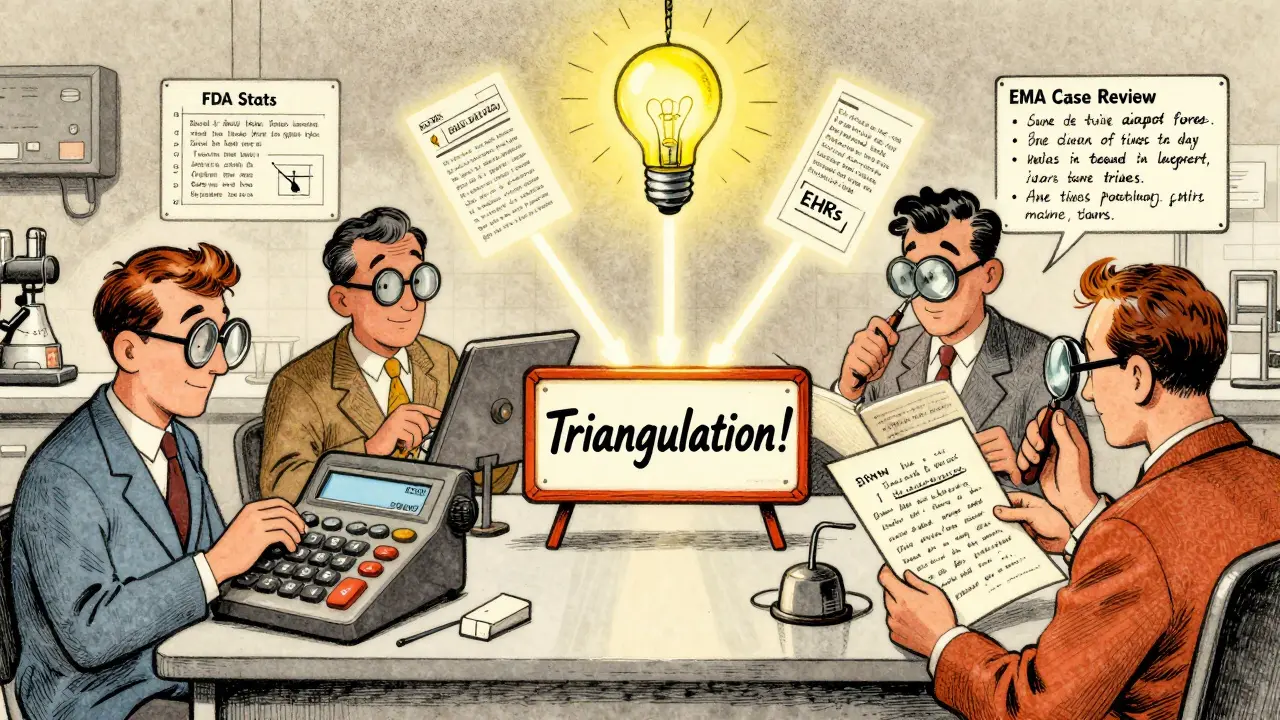
The Triangulation Rule: Three Sources, One Answer
Experts agree: don’t trust a signal from one source. The best practice? Triangulation. If you see a potential signal, look for it in:- Spontaneous reporting systems (like FAERS or EudraVigilance)
- Controlled clinical trials (post-marketing studies)
- Real-world data (electronic health records, patient registries)
The Future: AI, Big Data, and Real-Time Monitoring
In 2023, the FDA launched Sentinel Initiative 2.0 - integrating data from 300 million patients across 150 health systems. That’s not just more data. It’s real-time data. Instead of waiting for a report to come in, the system can now detect spikes in ER visits for a specific side effect within hours. The EMA started using AI in EudraVigilance in late 2022. Signal detection time dropped from 14 days to 48 hours. Sensitivity stayed at 92% - meaning it didn’t miss more true signals while cutting false ones. New tools can now combine electronic health records, pharmacy data, and even wearable device inputs. If someone’s heart rate spikes after taking a new drug - and they’ve been flagged for a similar reaction before - the system can alert their doctor before they even leave the pharmacy. But it’s not all progress. Biologics - complex drugs like monoclonal antibodies - are rising fast. Their side effects are harder to predict. And older patients on five or more drugs? Their interactions are invisible to current systems. A 2022 study found that 400% more elderly patients are on multiple prescriptions than in 2000 - and our signal detection tools weren’t built for that.What You Should Know
If you’re taking a new medication, understand this: the first year is the riskiest. That’s when hidden signals emerge. If you notice something unusual - fatigue, rashes, dizziness, mood changes - report it. Not just to your doctor. Use your country’s reporting system. In the U.S., it’s MedWatch. In Europe, it’s EudraVigilance. These reports matter. If you’re a patient advocate or a caregiver, ask your pharmacist: "Has this drug had any safety updates in the last year?" Most haven’t. But some have - and those updates save lives. Drug safety isn’t about perfection. It’s about vigilance. The system works because ordinary people report, scientists analyze, and regulators act. Not every signal leads to a warning. But every report adds to the picture.What triggers a drug safety signal?
A drug safety signal is triggered when a new pattern of adverse events emerges - either through individual case reports (like a doctor noticing three patients with the same rare side effect) or through statistical analysis of large databases (like a spike in liver damage reports among users of a specific drug). Signals require enough evidence to suggest a possible causal link, even if causation isn’t proven yet.
Why aren’t all side effects caught in clinical trials?
Clinical trials typically involve 1,000-5,000 participants over months or a few years. They exclude people with complex health conditions, multiple medications, or advanced age. Real-world use involves millions of diverse patients over decades. Rare side effects, delayed reactions, and drug interactions only show up in this broader population.
How do regulators decide if a signal is real?
Regulators look for three things: replication across multiple data sources (like spontaneous reports, clinical trials, and electronic health records), biological plausibility (does the effect make sense based on how the drug works?), and seriousness of the event. If a side effect is life-threatening and appears consistently across systems, action is taken - often within months.
Can a drug be pulled from the market because of a signal?
Yes, but it’s rare. Most signals lead to label changes - adding warnings, restricting use, or updating dosing guidelines. Full withdrawal usually happens only if the risk outweighs the benefit across a large population and no safer alternatives exist. Examples include rosiglitazone (restricted) and thalidomide (withdrawn decades ago).
How can patients help improve drug safety?
Patients can report any unusual or unexpected side effects through official channels like the FDA’s MedWatch or their country’s pharmacovigilance system. Even seemingly minor symptoms, if reported consistently, can help identify early signals. Reporting isn’t just helpful - it’s essential to keeping the system working.
Lisa Fremder
February 27, 2026 AT 14:57Brandon Vasquez
February 28, 2026 AT 00:53Vikas Meshram
February 28, 2026 AT 14:36Ben Estella
March 1, 2026 AT 17:17Jimmy Quilty
March 2, 2026 AT 08:33Miranda Anderson
March 2, 2026 AT 17:07Gigi Valdez
March 4, 2026 AT 11:09bill cook
March 4, 2026 AT 21:59