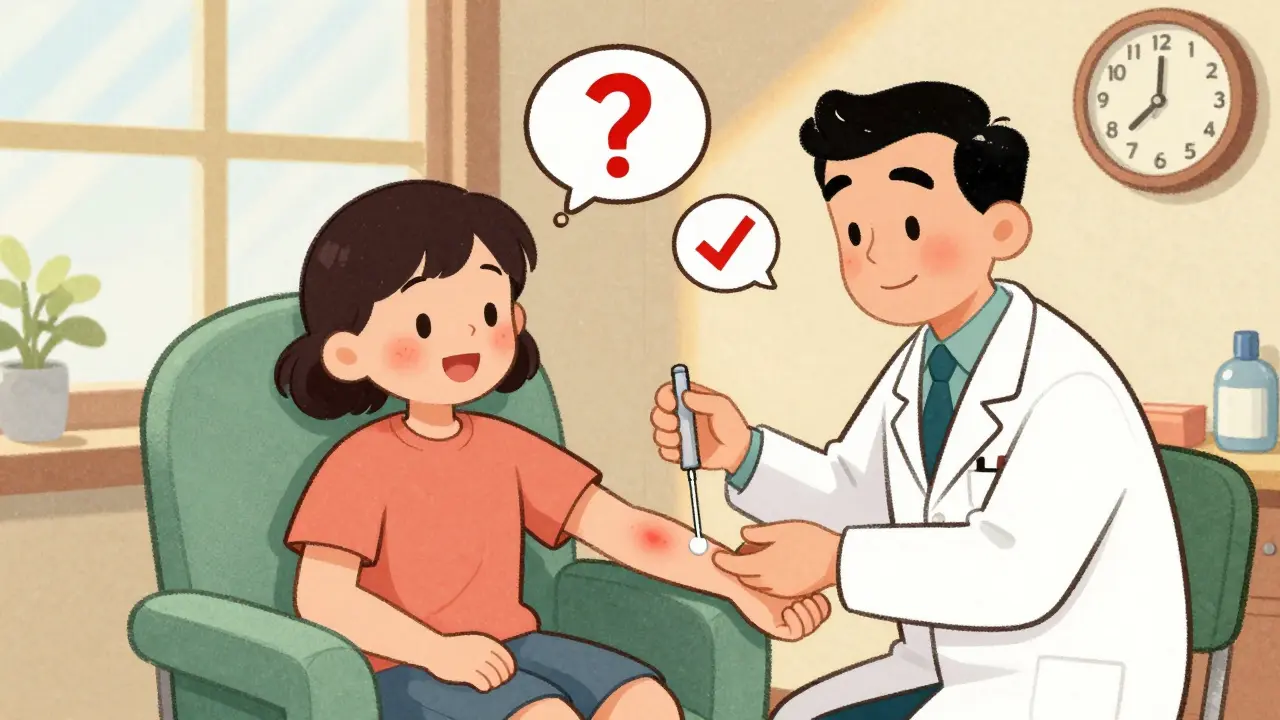
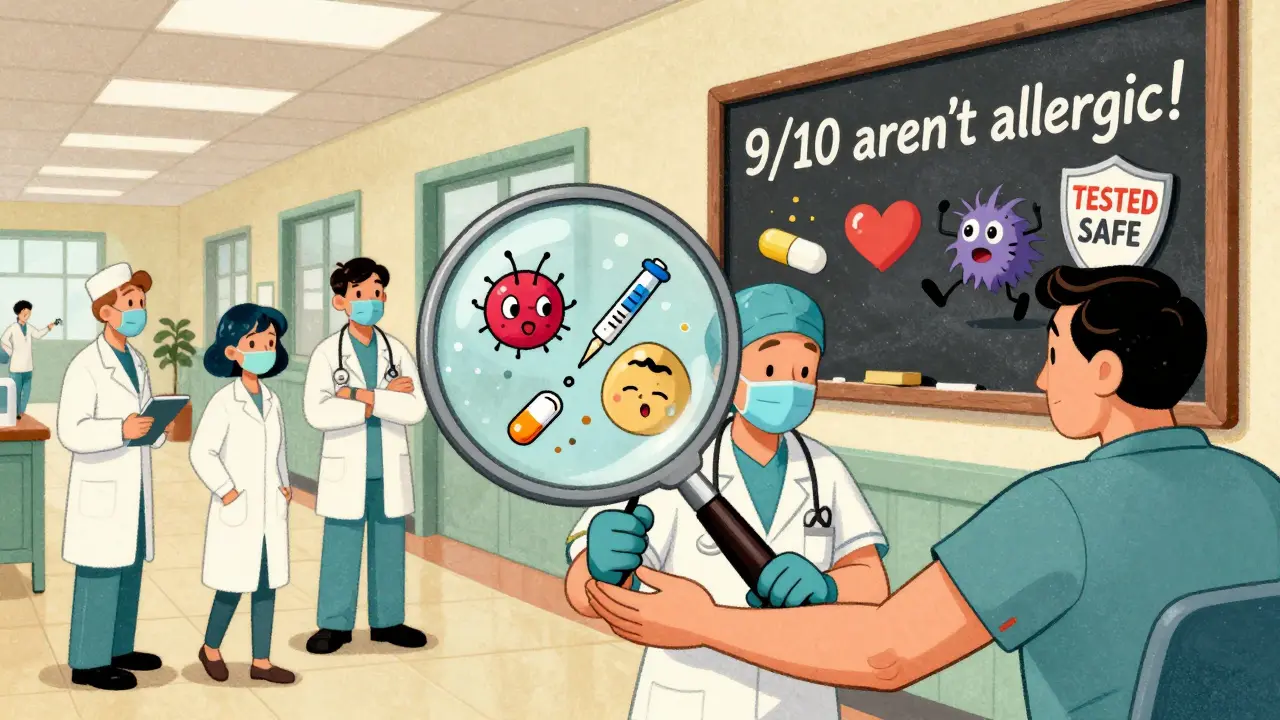
If you’ve ever been told you’re allergic to penicillin-or any other drug-and you’ve wondered if that label is really true, you’re not alone. In fact, about 1 in 10 people in the U.S. say they’re allergic to penicillin. But here’s the surprising part: 9 out of 10 of them aren’t actually allergic. That’s not a mistake. It’s a misdiagnosis. And skin testing is the key to finding out which one you are.
Drug allergy skin testing isn’t a scary procedure. It’s not a blood draw. It’s not a long hospital stay. It’s a simple, safe way to check if your body truly reacts to a specific medicine. And if you’re cleared, it can open up safer, cheaper, and more effective treatment options for future illnesses.
How Skin Testing Works: Three Simple Methods
There are three main ways to test for a drug allergy using the skin. Each one targets different kinds of reactions and is used depending on the drug and your history.
- Skin prick test (SPT): A tiny drop of the drug solution is placed on your skin-usually your forearm or back. A small, sterile needle lightly pricks the surface to let the solution seep in. It doesn’t draw blood. It feels like a quick, mild scratch. Results show up in 15 to 20 minutes.
- Intradermal test (IDT): If the skin prick test is negative but your doctor still suspects an allergy, they may do this next. A tiny amount of the drug is injected just under the skin with a thin needle, creating a small bump. The area is measured after 20 minutes. A bump that grows by 3 mm or more is a positive sign.
- Patch test: This is for reactions that show up hours or days after taking a drug-like a rash that develops 24 to 72 hours later. A patch with the drug is taped to your skin for 48 hours. You come back for the doctor to check for redness or swelling.
These tests aren’t done randomly. They’re chosen based on your reaction history. If you broke out in hives or had trouble breathing within an hour of taking a drug, the skin prick or intradermal test is used. If you got a delayed rash, the patch test is the way to go.
What You’ll Feel During the Test
Most people worry about pain or a bad reaction. The truth? It’s usually much milder than expected.
The skin prick test feels like a mosquito bite-quick and barely noticeable. The intradermal test stings a little more. You’ll feel a sharp pinch, then a mild burning or itching where the solution was injected. That’s normal. It doesn’t mean you’re having a full allergic reaction.
Every test includes two controls:
- A positive control-histamine. This causes a small, itchy bump on your skin. If you don’t react to histamine, the test can’t be trusted.
- A negative control-saline. This should cause no reaction at all. If it does, your skin is too sensitive, and the test may be invalid.
One patient on Healthgrades said, “The histamine made my arm itch like crazy for 15 minutes. But knowing it was supposed to happen made it less scary.”
And here’s the reassurance: the amount of drug used is tiny. It stays in the top layer of your skin. It doesn’t go into your bloodstream. That’s why serious reactions during testing are extremely rare.
What the Results Mean-And What They Don’t
A positive result? That means your skin reacted. It suggests you could be allergic. But it doesn’t confirm it. A negative result? That’s more powerful. For penicillin and related antibiotics, a negative skin test means there’s a 95% chance you’re not allergic.
But not all drugs are the same. Skin tests work best for beta-lactam antibiotics-like penicillin, amoxicillin, and ampicillin. For these, the negative predictive value is 85-90%. That means if you test negative, you’re very likely safe to take them.
For other drugs-like cephalosporins, sulfa drugs, or NSAIDs-the tests are less reliable. A negative result doesn’t rule out an allergy. In those cases, doctors may still recommend a drug challenge: giving you a small, controlled dose under close supervision to see how you react.
One case from the Cleveland Clinic tells the story: a 45-year-old woman was labeled allergic to penicillin after a rash as a child. She avoided all penicillin-type drugs for 30 years. Her skin test was negative. She got a supervised dose of amoxicillin. No reaction. She’s now able to take safer, cheaper antibiotics for future infections.

How to Prepare: What You Must Do Before Testing
Skipping this step can ruin the test. And you might have to reschedule-after waiting weeks.
You must stop taking antihistamines for 5 to 7 days before testing. That includes:
- Over-the-counter pills like loratadine (Claritin), cetirizine (Zyrtec), or diphenhydramine (Benadryl)
- Nasal sprays like azelastine
- Eye drops with antihistamines
Even one dose can block your skin’s reaction. A patient on Yelp wrote: “No one told me I couldn’t take my allergy pills. I had to cancel and wait another month.”
You also shouldn’t have an active rash, hives, or asthma flare-up on test day. If you’re having a reaction, the test is delayed. Safety comes first.
Why This Matters More Than You Think
This isn’t just about avoiding a rash. It’s about saving lives and cutting costs.
When people are wrongly labeled as penicillin-allergic, doctors often give them broader-spectrum antibiotics-like vancomycin or fluoroquinolones. These are more expensive. They’re harder on your gut. And they increase your risk of dangerous infections like Clostridioides difficile (C. diff), which causes severe diarrhea and can be deadly.
Hospitals that run allergy testing programs have seen:
- 30% fewer broad-spectrum antibiotics used
- 22% lower rates of C. diff infections
In the U.S., only 30-40% of people with suspected penicillin allergies get tested. In countries like France and Germany, it’s over 65%. That gap exists because many doctors don’t offer it-or patients don’t ask for it.
But the tools are getting better. In 2022, the European Medicines Agency approved standardized penicillin test kits. Before, reagents varied between labs, making results inconsistent. Now, the tests are more reliable.
Who Should Get Tested?
You should consider skin testing if:
- You were told you’re allergic to penicillin, amoxicillin, or another beta-lactam antibiotic
- You had a reaction years ago and haven’t taken the drug since
- You’re facing surgery or an infection and need antibiotics
- You’ve avoided certain drugs because of a past reaction-even if it was mild
It’s especially important if you’re pregnant, have a chronic condition like diabetes, or are in a hospital setting. Better antibiotics mean fewer complications.
What Happens After the Test?
After the 20-minute wait, your doctor checks the test sites. They’ll mark which areas reacted. Sometimes they take photos-this helps if you need testing again later.
If you’re negative:
- You’ll likely get a letter or form confirming you’re not allergic
- Your primary care doctor and pharmacist will be updated
- You may be offered a supervised drug challenge to confirm safety
If you’re positive:
- You’ll get a medical alert bracelet or card
- Your record will be updated
- You’ll be advised on safe alternatives
Either way, you walk out with clarity. No more guessing. No more avoiding meds you might safely take.
When Skin Testing Won’t Help
It’s not perfect. Some reactions can’t be tested this way.
- Delayed rashes (after 24 hours) need patch tests, not prick tests
- Some drugs, like NSAIDs (ibuprofen, naproxen), don’t have reliable skin tests yet
- Testing during an active reaction? Never. Wait until you’re stable
- If you have severe, uncontrolled asthma? The test is too risky
And even with a negative test, some people still react. That’s why doctors sometimes do a challenge-even if the skin test is negative. It’s a safety net.
Final Thought: Ask for It
Drug allergy skin testing is not routine. You have to ask. If your doctor says, “You’re allergic-avoid it,” ask: “Can I get tested to be sure?”
It’s quick. It’s safe. It’s free or low-cost with insurance. And it could change how you’re treated for the rest of your life.
Don’t let an old label hold you back. A simple skin test might give you back the right medicine-and the peace of mind that comes with it.
Can I eat or drink before a drug allergy skin test?
Yes, you can eat and drink normally before the test. There’s no fasting required. But you must stop all antihistamines-prescription and over-the-counter-for 5 to 7 days before the test. This includes allergy pills, nasal sprays, and eye drops. If you’re unsure about a medication, check with your doctor.
How long does a drug allergy skin test take?
The whole process usually takes 45 to 60 minutes. The skin prick test takes about 5 minutes to apply. You wait 15 to 20 minutes for results. If needed, the intradermal test is done next, which adds another 10 to 15 minutes. You wait another 20 minutes after that. The total time is about an hour. No long hospital stay-just a quick clinic visit.
Is skin testing safe if I’ve had a severe reaction before?
Yes, but only under strict supervision. Skin testing is done in a medical setting where staff are trained to handle anaphylaxis. They have epinephrine, oxygen, and emergency equipment ready. The amount of drug used is tiny and stays on the skin’s surface. Systemic reactions are extremely rare. If you’ve had a life-threatening reaction, your doctor will still proceed-but only if your condition is stable and you’re not currently having symptoms.
What if my skin test is negative but I still react to the drug?
That’s rare, but it can happen. Skin tests aren’t 100% accurate for every drug. For some, like certain antibiotics or NSAIDs, the test may miss the allergy. If you have a strong history of a reaction, your doctor may still recommend a supervised drug challenge-giving you a small, controlled dose under observation. This is the final step to confirm safety.
Can I get tested for allergies to multiple drugs at once?
Yes. Multiple drugs can be tested in one session, as long as they’re spaced out properly on the skin-at least 2.5 cm apart. Common combinations include penicillin, amoxicillin, and sometimes cephalosporins. Your doctor will choose which drugs to test based on your history and what you might need in the future. You won’t be tested for every drug ever taken-just the ones most relevant to your care.

Justin Archuletta
March 16, 2026 AT 07:24Sanjana Rajan
March 18, 2026 AT 06:06Kyle Young
March 19, 2026 AT 02:22Aileen Nasywa Shabira
March 20, 2026 AT 16:15Kendrick Heyward
March 22, 2026 AT 09:05lawanna major
March 23, 2026 AT 22:39Ryan Voeltner
March 25, 2026 AT 17:35Linda Olsson
March 27, 2026 AT 15:10Ayan Khan
March 28, 2026 AT 17:59Emily Hager
March 29, 2026 AT 19:06Melissa Starks
March 30, 2026 AT 07:32