Imagine ordering a medication online, paying for it, and receiving a pill that looks correct but contains 300% more active ingredient than the label claims-or worse, no active ingredient at all. It sounds like a nightmare, but for thousands of people, it's a reality. The FDA has warned that a staggering 96% of pharmacy websites operating globally are actually illegal operations. When you're dealing with your health, "guessing" if a site is legit isn't an option. You need a concrete way to tell the difference between a professional healthcare provider and a sophisticated scam.
Quick Safety Checklist
- Does the site require a valid prescription from a doctor?
- Is there a physical address and a working phone number listed?
- Can you speak with a licensed pharmacist for a consultation?
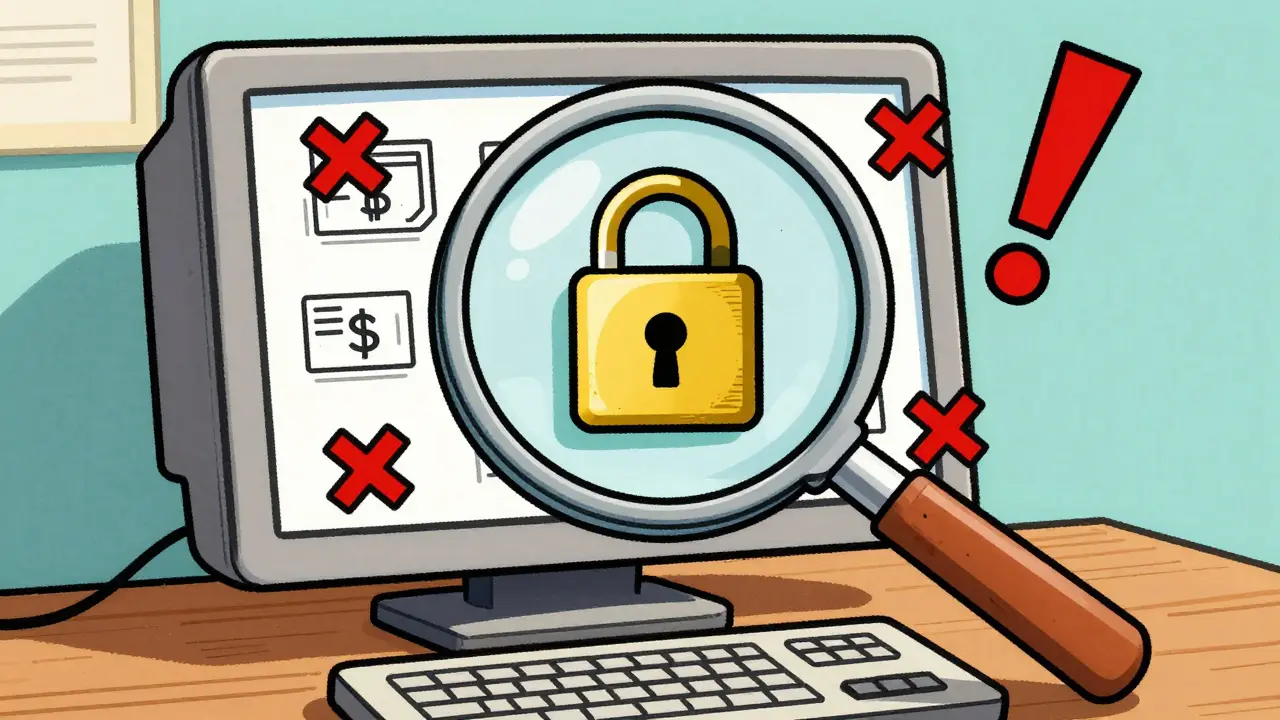
- Does the URL start with
https://and show a padlock icon? - Is the pharmacy listed in a trusted directory like NABP?
The Red Flags: How to Spot a Rogue Pharmacy
Scammers are great at making a website look professional. They use stock photos of pharmacists and fake "trust seals" to trick you. But there are always tells. The biggest red flag? A site that offers prescription-only meds without asking for a prescription. If a site says "no prescription needed," run the other way. Legitimate pharmacies, as emphasized by the FDA, will always require a valid script from a licensed healthcare professional before they ship anything.
Pay attention to the payment methods. Professional services use standard secure gateways like credit cards or PayPal. If a site asks for payment via wire transfer or cryptocurrency, they are trying to avoid a paper trail. This is a classic sign of an illegal operation. Also, be wary of prices that seem too good to be true. While saving money is great, a 70% discount on a name-brand drug often means you're buying a counterfeit product that could be toxic.
Verification Tools That Actually Work
You shouldn't trust a seal of approval just because it's pictured on a homepage-scammers often copy-paste these images. Instead, you need to use third-party verification tools to cross-reference the pharmacy's claims.
One of the gold standards is the National Association of Boards of Pharmacy (NABP). They manage the VIPPS program, which ensures pharmacies meet 17 strict criteria, including patient consultation and privacy practices. If a pharmacy has a VIPPS accreditation, it means they've been vetted for licensure and safety standards. You can use the NABP Safe Site Search Tool to see if a site is truly accredited.
Another reliable resource is PharmacyChecker. They don't just check licenses; they perform "mystery shopping" and periodic audits to ensure the pharmacy is actually delivering what it promises. They've expanded their audit to 86 different points, covering everything from SSL encryption to the validity of the dispensing license.
| Feature | Unverified Sites | PharmacyChecker | NABP (VIPPS) |
|---|---|---|---|
| Prescription Required | Often Optional | Mandatory | Mandatory |
| License Verification | None/Fake | Rigorous Audit | Official Board Review |
| Pharmacist Access | Non-existent | Verified | Mandatory Consultation |
| Physical Address | Hidden/Fake | Verified | Verified US/Local |
The ".pharmacy" Domain Trick
If you're browsing and see a website ending in .pharmacy, you're looking at a high-security marker. This isn't a domain anyone can just buy for $10. The .pharmacy top-level domain is strictly controlled by the NABP. To get one, a pharmacy must prove it is licensed and compliant with safety standards.
Think of it like a digital passport. While it's not the only thing you should check, it's a very strong indicator that the site has gone through a rigorous vetting process. If you see a site claiming to be a pharmacy but using a generic .net or .biz extension without any other accreditation, be much more cautious.
Special Case: Canadian Online Pharmacies
Many people look to Canada for cheaper medication, but this is where things get tricky. A huge number of sites claim to be "Canadian Pharmacies" when they are actually operating from other countries with zero oversight. According to NAPRA, nearly 42% of sites claiming Canadian licensing in recent audits were actually frauds.
If you're using a Canadian service, don't trust the "About Us" page. Instead, verify the pharmacy through the provincial pharmacy regulatory authority of the specific province they claim to be in. If they can't provide a provincial license number that matches the official government registry, they aren't a real Canadian pharmacy.
Step-by-Step Verification Protocol
To stay safe, follow this exact sequence before you enter your credit card details. It takes about 10 to 15 minutes but can save you from a medical emergency.
- Check the URL: Ensure it starts with
https://. If the browser warns you that the connection is "not private," leave the site immediately. - The Prescription Test: Try to find a way to order a prescription-only med. If the site allows you to add it to your cart without a script or offers a "consultation" that just leads to a payment page, it's a scam.
- Verify the Address: Look for a physical address. Plug that address into Google Maps. Does it look like a pharmacy, or is it a random residential house or a PO Box in a different country?
- Consult the Databases: Go to the NABP Safe Site Search or the FDA's BeSafeRx tool. Type in the pharmacy's name and see if they appear as a licensed entity.
- Contact the Pharmacist: Call the listed phone number. Ask to speak with the pharmacist on duty. A legitimate pharmacy will have a licensed professional available to answer your questions about drug interactions and dosages.
What to Do If You've Already Bought from a Suspect Site
If you've already received your medication and you're worried, do not take the first dose. Look at the packaging. Is the spelling correct? Is the printing blurry? Are there instructions in a language you don't recognize?
The safest move is to take the medication to your local brick-and-mortar pharmacist. They can often spot counterfeit packaging or tell you if the pill's appearance differs from the genuine product. If you suspect you've been scammed, you can report the site to the FDA's MedWatch program. This helps protect other people from falling into the same trap.
Is it safe to buy medication from a site that doesn't require a prescription?
No, it is extremely dangerous. Legitimate licensed pharmacies are legally required to verify a prescription from a healthcare provider. Sites that bypass this are often selling counterfeit, contaminated, or expired medications that can lead to severe health complications.
What is the difference between a regular website and a .pharmacy domain?
A regular domain (.com, .net, .org) can be purchased by anyone. The .pharmacy domain is a restricted top-level domain managed by the NABP. Only pharmacies that provide proof of licensure and meet specific safety standards are allowed to use it.
How can I tell if a "VIPPS" seal on a website is fake?
Many illegal sites simply copy the VIPPS image. To verify, do not click the image on the site. Instead, go directly to the official NABP website and use their Safe Site Search tool to look up the pharmacy by name.
Are all Canadian online pharmacies safe?
Not necessarily. While Canada has strict regulations, many rogue sites falsely claim to be Canadian to gain trust. You must verify the pharmacy's license through the specific provincial regulatory authority in Canada to ensure they are actually based there.
What should I do if the medication I received looks different than usual?
Stop taking the medication immediately. Take the bottle and the pills to a local licensed pharmacist who can examine the product for signs of counterfeiting. Report the incident to the FDA or your local health authority.