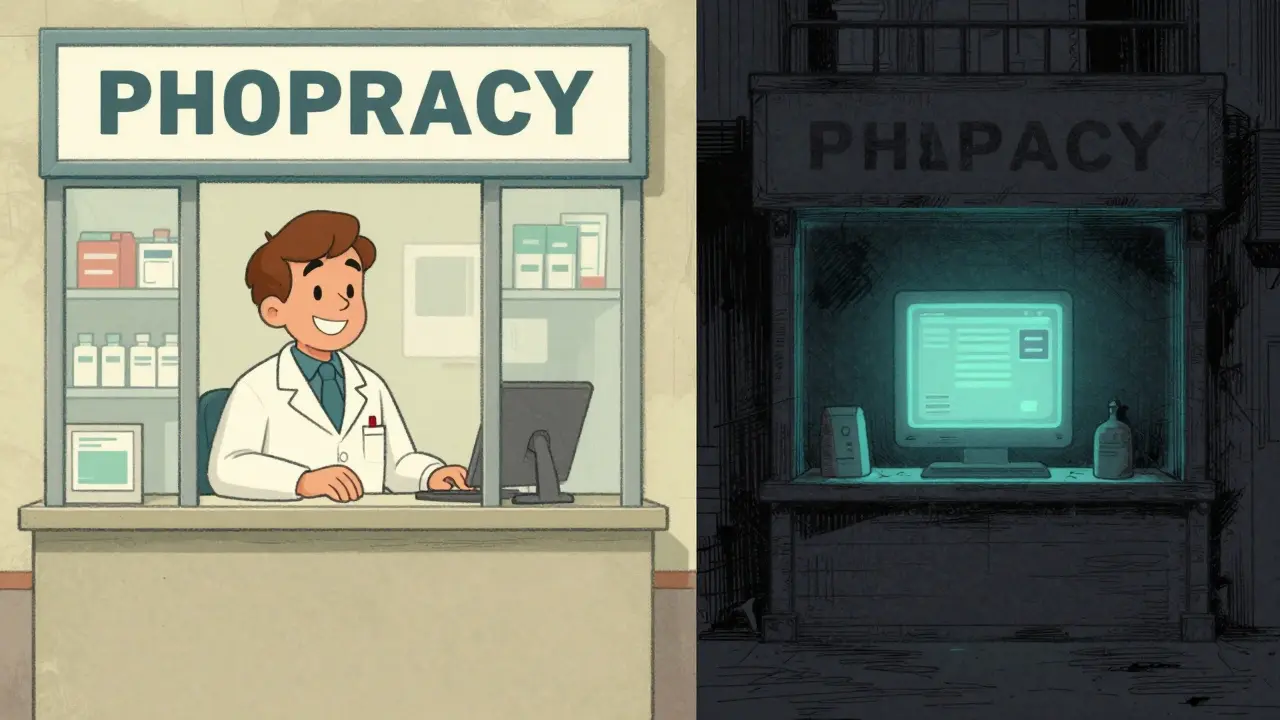
Buying medication online should be as simple as ordering a book, but the reality is a bit more dangerous. While a website might look professional, the gap between a legitimate pharmacy and an illegal operation is often invisible to the naked eye. In the U.S., this gap is managed by a complex web of federal and state rules. If you've ever wondered why some sites require a strict prescription while others offer "discounted" meds with no questions asked, you're seeing the results of regulatory oversight of online pharmacies in action.
| Authority | Primary Focus | Key Tools/Rules |
|---|---|---|
| FDA | Drug safety, labeling, and advertising | BeSafeRx, Warning Letters |
| DEA | Controlled substances & Telemedicine | Special Registrations, PDMP |
| State Boards | Licensing and professional conduct | Pharmacy Licenses, State Law |
The Federal Layer: FDA and DEA
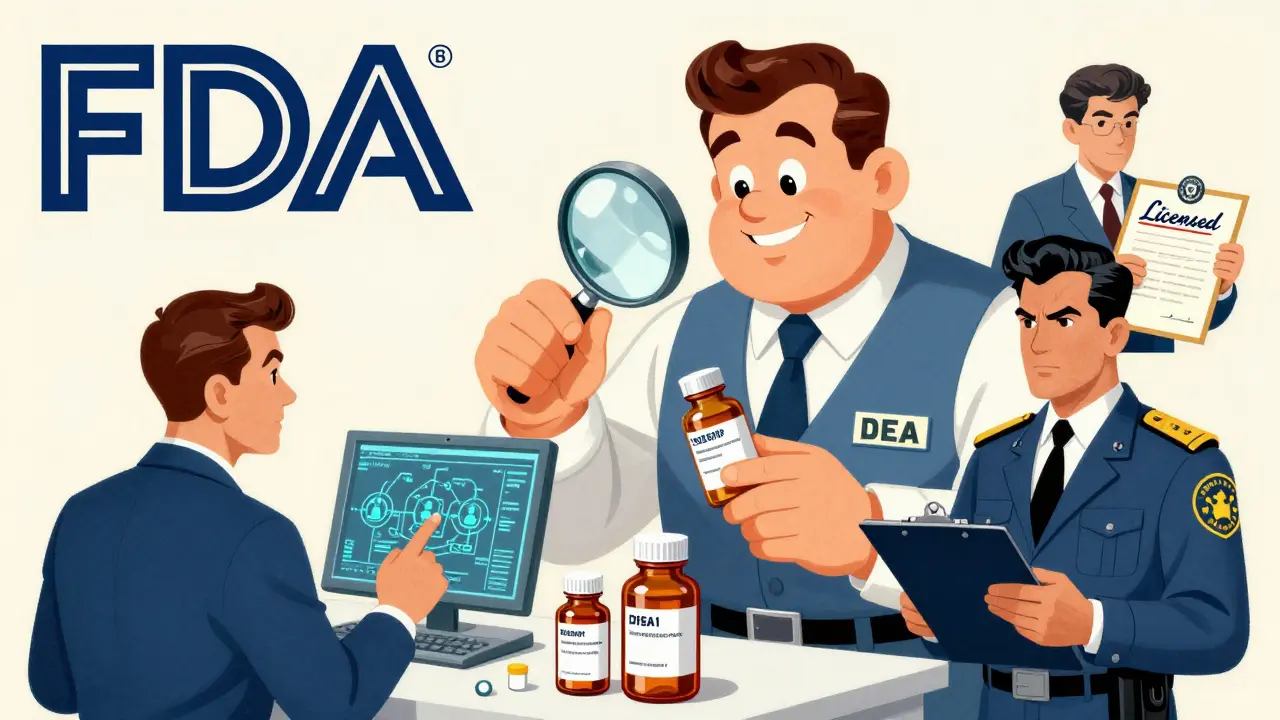
At the top level, the federal government focuses on the "what" and the "how" of medication. Food and Drug Administration is the agency responsible for ensuring the safety, efficacy, and secure labeling of drugs marketed in the U.S. . They don't license the pharmacy itself-that's a state job-but they regulate the products. If a site sells unapproved drugs or skips the required safety warnings, the FDA steps in with warning letters. In the first nine months of 2025 alone, the FDA issued 147 of these letters, a 32% jump from the previous year, showing they are cracking down harder on illegal operations.
Then there's the Drug Enforcement Administration (DEA), which handles the "heavy lifting" regarding controlled substances. Because medications like opioids or certain ADHD meds are prone to abuse, the DEA tracks who prescribes them and who sells them. A massive shift happened on January 16, 2025, when the DEA introduced new telemedicine rules. These rules created Special Registrations, allowing some doctors to prescribe Schedule III-V substances via telehealth without a mandatory in-person visit, provided they follow strict registration and monitoring guidelines.
The State Layer: The Real Gatekeepers
While federal agencies set the broad rules, State Boards of Pharmacy are the ones actually granting the right to do business. Think of it this way: the FDA says the drug must be safe, but the State Board says the pharmacy is qualified to sell it. This is why legitimate sites always list a physical U.S. address and a telephone number. If a pharmacy isn't licensed by a state board, it's essentially operating in the shadows.
This creates a bit of a headache for providers. Currently, 27 states have their own additional restrictions on telemedicine that go beyond federal rules. This fragmentation is exactly why the DEA is pushing for a nationwide Prescription Drug Monitoring Program (PDMP). By Q3 2026, the goal is to have a single system where a pharmacist in New York can see if a patient already has a prescription for the same medication from a doctor in Florida, cutting down on "doctor shopping" and drug diversion.
How to Spot a Rogue Pharmacy
It's easy to get fooled by a sleek UI, but illegal pharmacies almost always leave clues. The FDA's BeSafeRx program is the gold standard for spotting these red flags. A legitimate operation will always require a valid prescription and have a licensed pharmacist available to answer your questions. If a site offers deep discounts that seem "too good to be true," it probably is.
The risks aren't just financial. Many rogue sites sell counterfeit medications. These can contain too much of an active ingredient, too little, or even the completely wrong substance. On forums like r/Health, users have reported medications that simply didn't work or caused unexpected side effects because they were bought from unverified sources. For contrast, verified platforms like CVS Caremark consistently hold high Trustpilot ratings, while unverified sites often hover around a dismal 1.8/5.
The Complicated World of Compounded Drugs
One of the biggest regulatory grey areas involves Compounding Pharmacies, which create customized medications. These are split into two categories: 503A and 503B. A 503A pharmacy is usually a traditional pharmacy that mixes a drug for a specific patient with a prescription. A 503B pharmacy produces larger batches for other hospitals or clinics.
This became a huge talking point with the rise of GLP-1 medications like Semaglutide and Tirzepatide. During drug shortages, compounding pharmacies stepped in, creating a $4.2 billion market in 2024. The catch? Compounded drugs are not FDA-approved. The FDA doesn't verify their safety or quality before they hit the market. This puts an enormous amount of pressure on state boards to ensure these pharmacies aren't cutting corners.
Telemedicine and the New Registration Rules
The way we get prescriptions is changing fast. Under the old Ryan Haight Act of 2008, an in-person visit was generally required before getting a controlled substance. The DEA's 2025 update creates a tiered system to make this more flexible yet safe:
- Standard Registration: For Schedule III-V controlled substances.
- Advanced Telemedicine Prescribing Registration: Reserved for specific specialists-like psychiatrists, pediatricians, and hospice care physicians-to prescribe Schedule II medications.
- Limited State Telemedicine Registrations: Designed to handle specific state-level requirements.
These changes aim to help people in rural areas or those with mobility issues get the care they need without the burden of traveling hours for a ten-minute check-up. However, the DEA is keeping a close eye on this; some providers have been caught prioritizing profits over patient health by exploiting these more flexible rules.
The Fight Against Misleading Ads
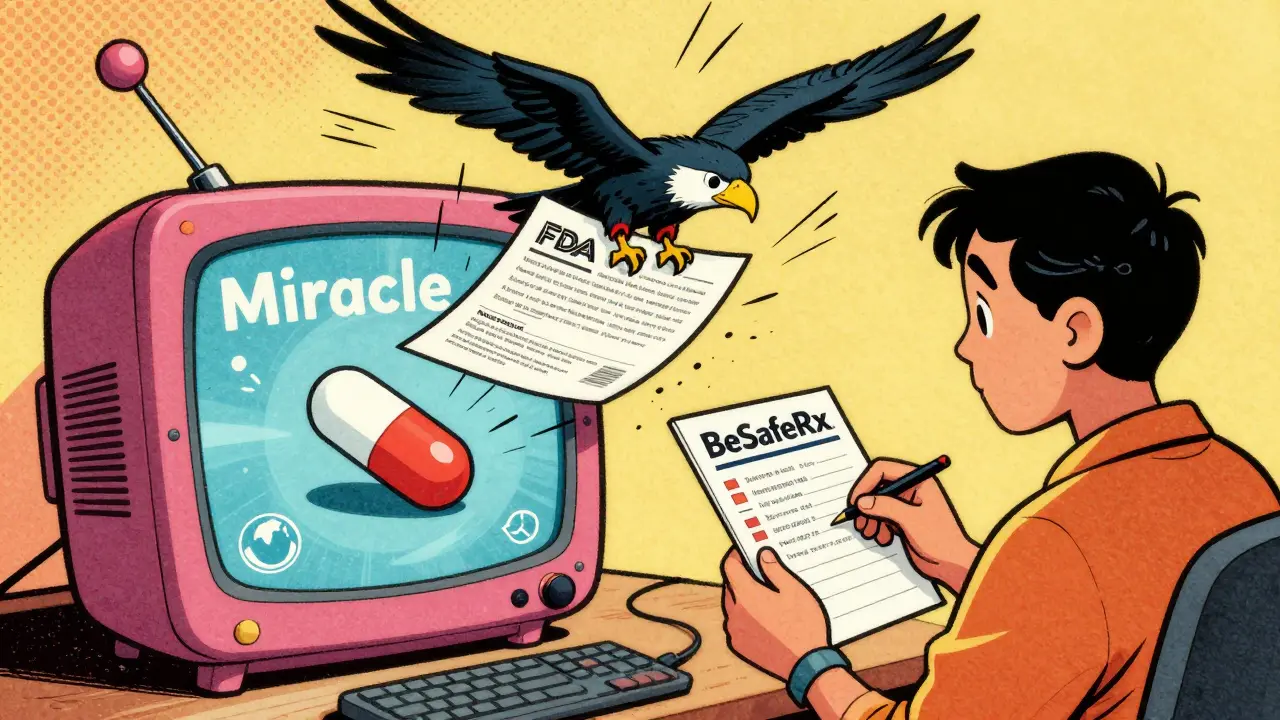
If you've seen a flashy Instagram ad promising a "miracle weight loss drug" with no prescription, you've encountered the latest target of federal enforcement. On September 9, 2025, the FDA and the Department of Health and Human Services (HHS) announced a crackdown on direct-to-consumer (DTC) advertising. They are specifically targeting paid influencers who fail to disclose the risks of the medications they promote.
The FDA's Office of Prescription Drug Promotion is now spending more time on social media monitoring. They want to eliminate misleading claims that make prescription drugs seem like over-the-counter supplements. For telehealth companies, this means every claim on their website must be substantiated with data, or they risk facing heavy fines and public warning letters.
How can I tell if an online pharmacy is legal?
A legal pharmacy must be licensed by a state board of pharmacy, require a valid doctor's prescription, provide a U.S. physical address and phone number, and have a licensed pharmacist on staff. You can use the FDA's BeSafeRx tool to verify their license in the state's database.
Do I always need to see a doctor in person for controlled substances?
Not necessarily. While the Ryan Haight Act generally required in-person visits, new 2025 DEA rules allow certain telemedicine providers with Special Registrations to prescribe Schedule III-V substances without a prior in-person evaluation.
What is the difference between a 503A and 503B pharmacy?
503A pharmacies are traditional pharmacies that compound medications for a specific patient based on a prescription. 503B pharmacies are outsourcing facilities that can compound in larger batches without individual prescriptions for every single unit.
Are compounded medications FDA-approved?
No, compounded medications are not FDA-approved. The FDA does not verify their safety, effectiveness, or quality before they are marketed, which is why oversight falls heavily on state pharmacy boards.
What happens if an online pharmacy violates federal law?
They can receive official warning letters from the FDA, face civil monetary penalties (some as high as $500,000), or have their DEA registrations revoked, effectively shutting down their ability to handle controlled substances.
Next Steps for Users and Providers
If you are a patient, your priority is verification. Before entering your credit card info, spend two minutes on the BeSafeRx site. If the pharmacy isn't listed in a state database, walk away. No discount is worth the risk of taking a counterfeit pill with unknown ingredients.
For telehealth providers, the focus must be on compliance and transparency. Ensure your marketing materials are truthful and that your staff is trained on the new DEA Special Registrations. With the nationwide PDMP coming in 2026, the era of "invisible" prescriptions is ending; the system is moving toward total transparency to protect patients from the risks of over-prescription.