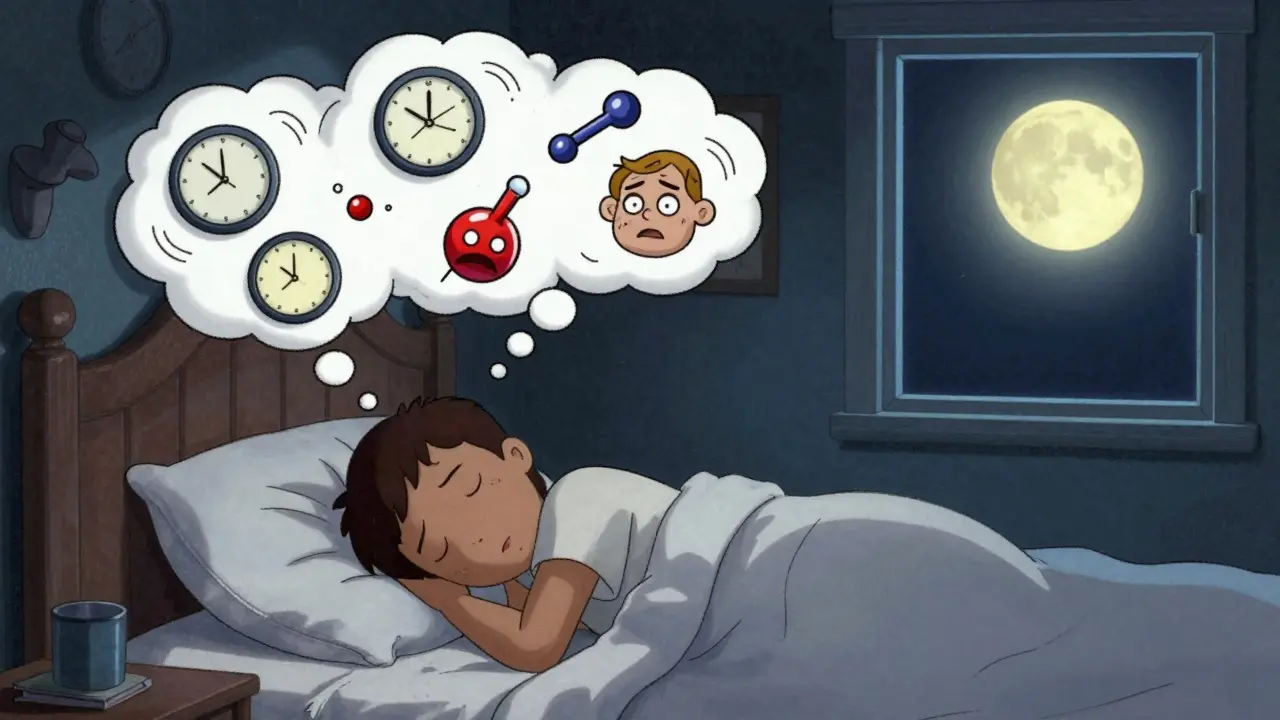
When you can't sleep, it's not just about being tired. For millions of people with depression or anxiety, insomnia isn't a side effect-it's a driver. Research now shows that fixing sleep isn't just about feeling better at night. It's one of the most powerful ways to reduce symptoms of depression and stop anxiety from getting worse. And the best part? There's a proven, drug-free method that works better than pills in the long run.
Why Insomnia Isn't Just a Symptom
For years, doctors treated insomnia as a side effect of depression or anxiety. If you were depressed and couldn't sleep, you got an antidepressant. If you had anxiety and lay awake at night, you got a sleeping pill. But that approach missed the real problem: insomnia itself is a risk factor. The DSM-5, the official guide psychiatrists use to diagnose mental illness, changed the game in 2013. It recognized insomnia as its own condition-one that can exist on its own and make other mental health problems worse. Studies now show people with chronic insomnia are 40 times more likely to develop severe depression than those who sleep well. That's not correlation. That's causation. Think of it this way: when you're constantly wired, your brain never gets a chance to reset. Stress hormones like cortisol and CRH stay high. Your nervous system stays in fight-or-flight mode. Over time, that rewires how your brain handles emotions. You start seeing threats everywhere. You ruminate. You feel hopeless. Insomnia doesn't just come with depression-it fuels it.The Gold Standard: CBT-I
The most effective treatment isn't a pill. It's Cognitive Behavioral Therapy for Insomnia, or CBT-I. It's not talk therapy in the traditional sense. It's a structured, step-by-step program that targets the behaviors and thoughts keeping you awake. CBT-I usually takes 6 to 8 weeks. Each session lasts about an hour. You don't need a fancy device or a clinic. Many programs are now available online, and they work just as well as in-person ones. The core pieces are simple:- Stimulus control: Your bed is only for sleep and sex. No scrolling, no working, no watching TV in bed. If you're not asleep in 20 minutes, get up. This trains your brain to associate bed with sleep, not stress.
- Sleep restriction: You spend less time in bed than you think you need. If you're only sleeping 5 hours a night, you're only allowed to be in bed for 5 hours. It sounds brutal, but it builds sleep pressure. You get so tired that falling asleep becomes easy.
- Relaxation techniques: Deep breathing, progressive muscle relaxation-these calm your body's physical tension. When your muscles relax, your mind follows.
- Cognitive therapy: You challenge thoughts like, "I'll never sleep again," or "If I don't sleep 8 hours, I'll crash tomorrow." These beliefs keep you anxious and awake. CBT-I helps you replace them with realistic ones.
And here's the kicker: it works. A 2023 review of 186 studies found that people who completed CBT-I had significantly lower rates of developing major depression. Those who fully recovered from insomnia cut their risk of depression by over 80%. Even if depression didn't fully disappear, symptoms dropped by a large margin-comparable to the effect of antidepressants, but with lasting results.
Why Pills Don't Cut It
Medications like zolpidem (Ambien) or benzodiazepines might help you fall asleep the first few nights. But they don't fix the root problem. They're like putting a bandage on a broken bone. A 2025 study in Nature Scientific Reports compared CBT-I and zolpidem. Both helped with sleep and mood at first. But after six months, the CBT-I group kept getting better. The zolpidem group? Their symptoms crept back. Many started needing higher doses. Some developed dependence. CBT-I teaches your brain how to sleep naturally. It doesn't mask the issue. It rewires it. That's why it's the only treatment shown to prevent depression relapse. One study found that treating insomnia along with depression cut relapse risk by up to 50% compared to treating depression alone.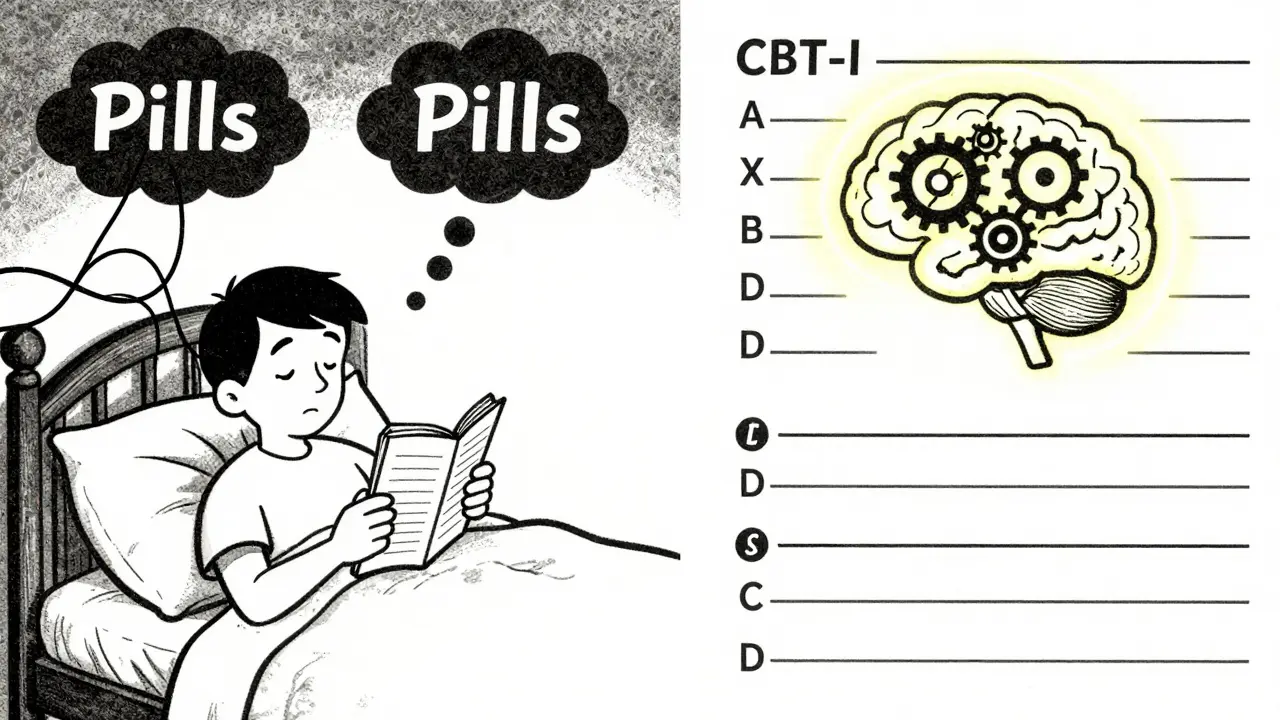
What Happens When You Try CBT-I
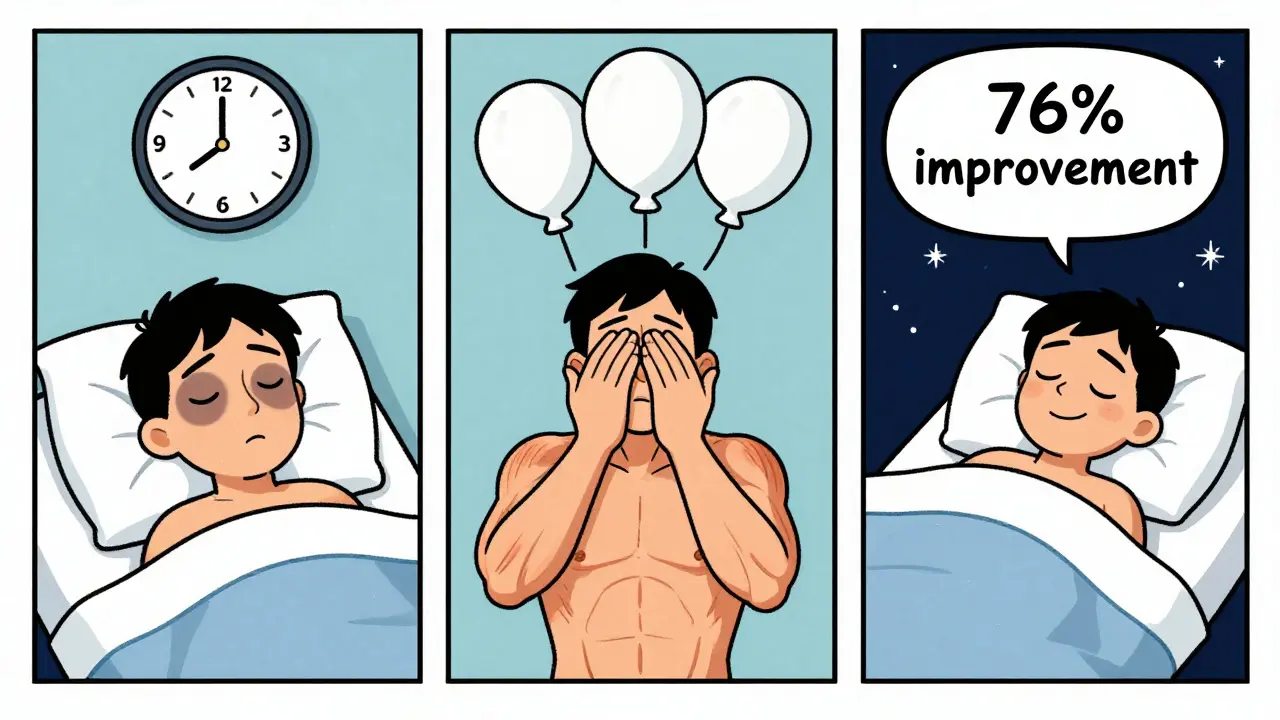
It's not easy. The first two weeks are the hardest. Sleep restriction means you're exhausted during the day. You might feel irritable, foggy, or worse than before. That's normal. Your body is recalibrating. About 65-75% of people report discomfort during early sleep restriction. And 30-40% struggle to keep a consistent sleep diary. But those who stick with it? Over 70% see major improvement. One study showed 76% of digital CBT-I users had a clinically meaningful drop in insomnia severity. You don't need to be perfect. You don't need to sleep 8 hours straight. You just need to build consistency. Go to bed at the same time. Get up at the same time-even on weekends. No naps. No caffeine after noon. Your body will adapt.Why Most People Never Get Help
The science is clear. The tools exist. So why are so many still suffering? Only 1-2% of people with insomnia get CBT-I. Why? Three big reasons:- Access: There aren't enough trained therapists. Only about 5% of U.S. psychologists are certified in CBT-I.
- Coverage: Insurance often won't pay for it. Even when it does, finding a provider can take months.
- Misunderstanding: Many doctors still treat insomnia as a symptom, not a target. Patients are told to "just relax" or given a pill without ever learning how to fix the pattern.
The pandemic made it worse. In 2021, one in three people had clinical insomnia symptoms-double the pre-pandemic rate. Demand for telehealth CBT-I jumped 300% between 2019 and 2022. But supply didn't keep up.
What's Changing Now
Things are starting to shift. Kaiser Permanente began screening all depression patients for insomnia in 2022. Those who got CBT-I saw a 22% drop in relapse rates. That's not just better sleep. That's fewer hospital visits, fewer missed workdays, fewer crises. Digital platforms like Sleepio and SHUTi are making CBT-I more accessible. They cost less than therapy, work on your phone, and have been tested in dozens of clinical trials. One study found that using a digital program cut the odds of moderate-to-severe depression by 57% compared to just getting sleep education. And now, researchers are combining CBT-I with antidepressants. A 2024 JAMA Psychiatry study found that patients who got sertraline (an antidepressant) plus CBT-I had 40% higher remission rates than those who only took the pill.What You Can Do Today
If you're struggling with sleep and mood:- Don't wait for your doctor to bring it up. Ask: "Could my insomnia be making my anxiety or depression worse?"
- Try a digital CBT-I program. Look for ones backed by peer-reviewed studies-Sleepio, SHUTi, or CBT-I Coach (free app from the VA).
- Start a sleep diary. Write down when you go to bed, wake up, and how you slept. You'll spot patterns you didn't notice.
- Stop using your bed for anything but sleep and sex. No phone. No TV. No work.
- If you're not asleep in 20 minutes, get up. Go to another room. Read something boring until you're sleepy.
It's not magic. It's science. And it's working for millions. Sleep isn't just rest. It's repair. When you fix your sleep, you're not just sleeping better-you're healing your brain.
Is insomnia a symptom of depression or its own disorder?
Insomnia is both. The DSM-5, the standard guide for mental health diagnoses, recognizes insomnia as a standalone disorder that can exist without depression or anxiety. But it also acts as a major risk factor for developing those conditions. Treating insomnia isn't just about helping you sleep-it's about preventing worsening mental health.
Can I treat insomnia with just sleep hygiene tips like avoiding caffeine?
Basic sleep hygiene-like cutting caffeine, keeping a regular schedule, or avoiding screens before bed-is helpful, but it's not enough for chronic insomnia. Studies show that most people with long-term sleep problems need the structured, behavior-changing approach of CBT-I to see lasting improvement. Sleep hygiene alone rarely works for those with depression or anxiety.
How long does CBT-I take to work?
Most people start seeing improvements in 2 to 4 weeks, especially with sleep restriction and stimulus control. Full results usually take 6 to 8 weeks. The key is consistency. Even if you feel worse at first, sticking with the program leads to better sleep and mood in the long run.
Are digital CBT-I programs as effective as in-person therapy?
Yes. Multiple high-quality studies, including a 2023 review in the journal Sleep, show that digital CBT-I programs like Sleepio and SHUTi are just as effective as in-person therapy for reducing insomnia and improving depression symptoms. They're also more accessible and often cheaper.
Why doesn't my doctor recommend CBT-I?
Many doctors still think of insomnia as a symptom and reach for medication first. There's also a shortage of trained CBT-I providers-only about 5% of U.S. psychologists are certified. Insurance coverage is inconsistent. But awareness is growing. More health systems are now screening for insomnia and offering digital programs as part of standard care.
Can CBT-I help if I have both anxiety and depression?
Absolutely. CBT-I is effective for insomnia regardless of whether it's linked to anxiety, depression, or both. In fact, treating insomnia often reduces anxiety symptoms faster than treating anxiety alone. Better sleep calms the nervous system, which directly lowers the physical tension and racing thoughts that fuel both conditions.
What if I don't improve after CBT-I?
About 30-40% of people don't fully remit from insomnia after standard CBT-I. That doesn't mean it failed. It may mean you need a longer course, a different approach, or to combine it with medication. Some people benefit from adding an antidepressant like sertraline. Others need help with underlying trauma or chronic stress. Work with a specialist to adjust your plan-it's not a one-size-fits-all fix.
William James
February 25, 2026 AT 19:57Man, I wish I knew this back when I was pulling all-nighters in college. I thought sleep was just "lazy time," but now I see it's like rebooting your brain's OS. No wonder I felt like a zombie after three hours of sleep. CBT-I sounds like the mental equivalent of a factory reset-no drugs, just rebuilding the habit. I’m trying it next month. Thanks for laying this out so clearly.
David McKie
February 27, 2026 AT 07:19Oh great. Another wellness cult pushing "natural fixes" while ignoring real biology. You act like insomnia is some moral failing. My anxiety isn't fixed by "sleeping in a dark room"-it's rooted in trauma, systemic stress, and a society that rewards burnout. CBT-I? Sounds like a Band-Aid on a hemorrhage. And don't get me started on "digital programs"-that’s just corporate capitalism selling snake oil to the exhausted.
Southern Indiana Paleontology Institute
March 1, 2026 AT 02:30Yall got it all wrong. Sleep ain't magic. It's physics. Your body needs rest like a car needs oil. You can't run on fumes forever. I been sleepin' 4 hours a night since '09 and still got my job. CBT-I? Sounds like some fancy word for "stop watchin' YouTube at 2am." I just turn off the phone. Done. No therapy needed. And if you can't do that? Maybe you ain't built for real life.
Joanna Reyes
March 2, 2026 AT 04:38I’ve been doing CBT-I for 11 weeks now, and honestly, the first three weeks were brutal. I was so tired during the day I cried at my desk. But then something shifted-around week five, I realized I wasn’t dreading bedtime anymore. I started looking forward to it. It’s not about forcing sleep; it’s about letting go of the fight. The sleep restriction part felt cruel, but it taught me that my brain wasn’t broken-it was just confused. Now I sleep 6.5 hours consistently, and my panic attacks? Down 90%. It didn’t fix my depression, but it stopped it from eating me alive. If you’re skeptical, try it for 30 days. Just 30. You have nothing to lose except the anxiety that keeps you awake.
Nerina Devi
March 3, 2026 AT 19:04This is so important. In India, sleep is never talked about as a health issue-it’s seen as laziness or lack of discipline. My grandmother used to say, "If you’re tired, wake up earlier." But I’ve seen how my cousin’s insomnia worsened her depression until she tried a digital CBT-I program. She’s now working again, laughing again. We need to change the conversation. Sleep is not a luxury. It’s the foundation.
Dinesh Dawn
March 5, 2026 AT 14:16Been there. Lost 3 years to insomnia. Tried melatonin, chamomile, weighted blankets, white noise machines-nothing worked. Then I found CBT-I on YouTube. Started with sleep restriction. Felt like I was going crazy. But after 10 days? I slept 5 hours straight. No meds. Just structure. Now I sleep 7. It’s not perfect, but it’s mine. If you’re stuck, just start with one thing: get out of bed if you’re not asleep in 20 minutes. It sounds stupid, but it works.
Vanessa Drummond
March 6, 2026 AT 10:28I hate how people act like CBT-I is this magical cure. I did it. I followed every step. Kept a sleep diary. Got up at 2am to read. Didn’t use my bed for anything. And still? I wake up at 3am every night. Still anxious. Still crying. So yeah, it helps-but it’s not a fix. And don’t pretend it is. Some of us have deeper wounds that no sleep schedule can heal.
Nick Hamby
March 6, 2026 AT 19:28Thank you for this meticulously researched and compassionately articulated exposition. The conflation of insomnia as a symptom rather than a primary disorder has perpetuated a systemic failure in mental health care. The empirical superiority of CBT-I over pharmacological interventions, particularly in relapse prevention, is not merely statistically significant-it is ethically imperative. One must ask: if we have evidence-based modalities that reduce depression incidence by over 80%, why is access so severely restricted? The answer lies not in efficacy, but in institutional inertia and profit-driven paradigms. We must advocate for policy reform, insurance expansion, and provider training-not just individual behavior change.
kirti juneja
March 8, 2026 AT 19:23CBT-I changed my life, but let’s be real-it’s not for everyone. I tried it after my mom passed. I was up every night thinking about her voice. The sleep restriction felt like torture. But I stuck with it because my therapist said, "Your body remembers safety before your mind does." And she was right. Now I have a ritual: dim lights, 10 minutes of breathing, no phone. Not perfect. But peaceful. And that’s enough. If you’re hurting, start small. Just one night. Just one change. You don’t need to fix everything to start healing.
Haley Gumm
March 10, 2026 AT 10:31Okay but why is everyone acting like CBT-I is the holy grail? What about people with shift work? Trauma? ADHD? Chronic pain? You’re ignoring the intersectionality here. And don’t even get me started on "digital programs"-most are designed for middle-class white folks with Wi-Fi and a quiet bedroom. What about the single mom working two jobs? The person living in a noisy apartment? The one who can’t afford $50/month for an app? This isn’t science-it’s privilege.
Gabrielle Conroy
March 11, 2026 AT 23:22YES YES YES!!! I did CBT-I through the VA app and it was life-changing!! I used to have panic attacks every time I lay down!! Now I fall asleep in 10 minutes!! I even started sleeping on my side (which I hated before) because I’m not terrified anymore!! My therapist said I was "a miracle"-I said no, it was just science!! Thank you for sharing this!! I’m telling everyone I know!!
Spenser Bickett
March 12, 2026 AT 06:12Oh wow, another "sleep is the cure" sermon. Next you’ll tell me meditation fixes capitalism. I’ve got PTSD, depression, and a 3am feed schedule. CBT-I? Sounds like a 12-step program for people who think they can think their way out of trauma. I tried it. Felt like being yelled at by a sleep robot. I’m still awake. And I’m still angry. And I’m not gonna feel guilty for it.
Christopher Wiedenhaupt
March 13, 2026 AT 00:46Insomnia is a public health crisis. The fact that we treat it as a personal failure instead of a medical condition is shameful. I work in healthcare and see patients every day who are given Ambien and told to "try harder." No one asks what’s keeping them awake. No one checks their housing, their job stress, their trauma history. CBT-I works, but it shouldn’t be a privilege. It should be standard. Like blood pressure checks. Like vaccines. We need systemic change, not just self-help tips.