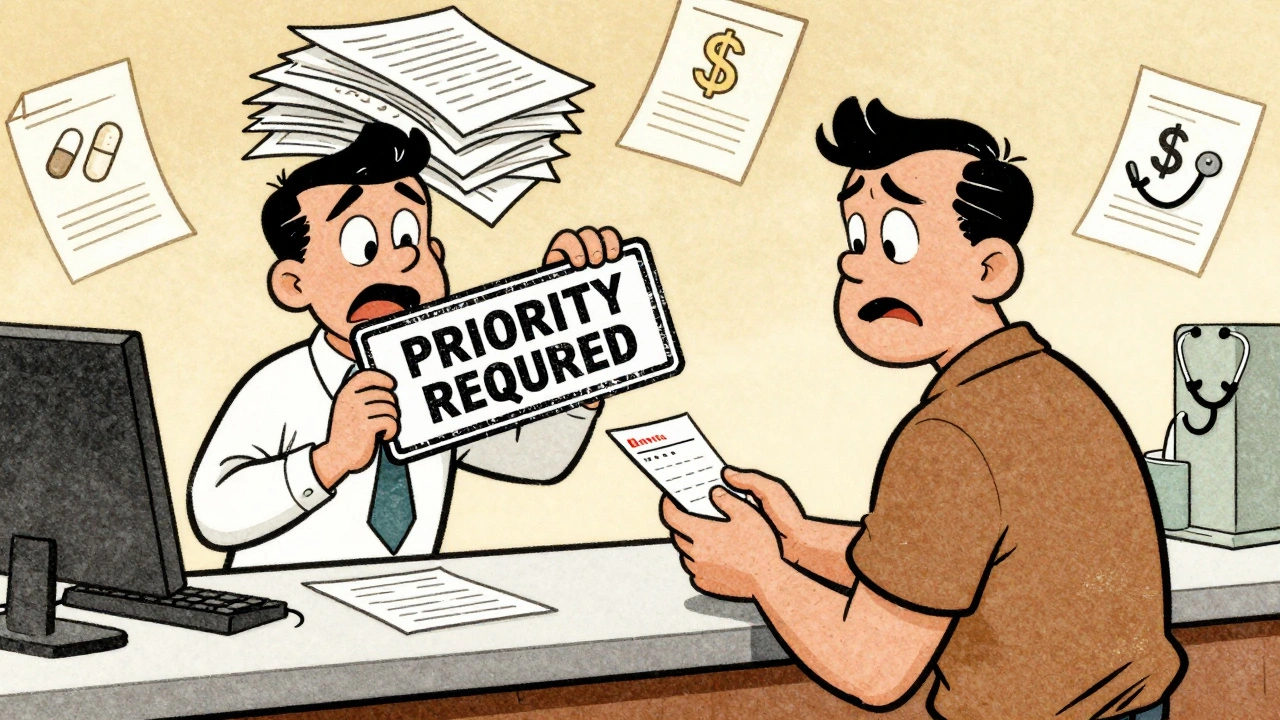
Imagine you go to your doctor for a new medication. They write the prescription, you head to the pharmacy, and then you’re told: "We can’t fill this yet. We need approval first." It’s frustrating. You didn’t sign up for paperwork battles just to get your medicine. But this isn’t a glitch-it’s prior authorization, a common step in how health insurance controls drug costs in the U.S. and parts of the UK. And if you’re on Medicare Part D, private insurance, or even some employer plans, you’ve probably run into it-or will soon.
What Is Prior Authorization?
Prior authorization (also called pre-authorization or pre-certification) is when your insurance company says: "Hold on. We need to check if this drug is really necessary before we pay for it." It’s not about doubting your doctor. It’s about making sure the right drug is being used for the right reason-and that a cheaper, equally effective option hasn’t been tried first. Under Medicare Part D, this is officially called a "coverage determination." Private insurers like Cigna, Blue Shield, and UnitedHealthcare use the same process. The goal? To reduce waste. Some drugs cost hundreds or even thousands of dollars a month. Insurance companies want to make sure you’re not getting a brand-name drug when a generic works just as well. Or that you’re not taking a powerful medication for a condition it’s not approved for.Which Medications Usually Need Prior Authorization?
Not every prescription needs approval. But these types almost always do:- Brand-name drugs with generic versions available - If there’s a cheaper generic, your insurer will want proof that the brand is truly needed.
- High-cost medications - Think cancer drugs, rheumatoid arthritis biologics, or rare disease treatments. These can cost over $10,000 a year.
- Drugs with strict usage rules - For example, a weight-loss drug might require proof you’ve tried diet and exercise first. Or a painkiller might need evidence you’ve failed other treatments.
- Drugs with safety risks - Medications that can cause liver damage, interact badly with other drugs, or have abuse potential (like certain opioids or stimulants).
- Off-label uses - If your doctor prescribes a drug for a condition it’s not officially approved for (like using a depression drug for chronic pain), extra documentation is required.
Some plans even limit who can prescribe these drugs. For example, chemotherapy agents might only be approved if prescribed by an oncologist-not a general practitioner.
How Does the Process Work?
It’s not something you do yourself-at least, not directly. Here’s how it usually plays out:- Your doctor writes the prescription for a drug that requires prior authorization.
- Their office checks your insurance’s formulary (the list of covered drugs) and sees that prior auth is needed.
- Your doctor’s staff fills out a form-sometimes online, sometimes by fax-with details about your diagnosis, why this drug is needed, and why alternatives won’t work.
- The insurance company reviews it. This can take 24 hours for urgent cases or up to two weeks for routine requests.
- If approved, the pharmacy gets the go-ahead. If denied, your doctor can appeal.
Some insurers let you check your drug’s status online. Blue Shield of California, for example, has a "Price Check My Rx" tool. You can log in and see if a drug needs prior auth before you even walk into the pharmacy.
What Happens If It’s Denied?
A denial isn’t the end. Your doctor can file an appeal. They’ll submit more medical records, lab results, or even published studies showing why this drug is the best choice for you. Medicare and most private plans require insurers to respond to appeals within 72 hours for standard cases and 24 hours for urgent ones. If the appeal is still denied, you can request an external review by an independent third party.But here’s the catch: while the appeal is pending, you might still need the medication. In those cases, you can pay out-of-pocket and later submit a claim for reimbursement if approval comes through. Some pharmacies will even hold your prescription until the approval is confirmed.
How Long Does Approval Last?
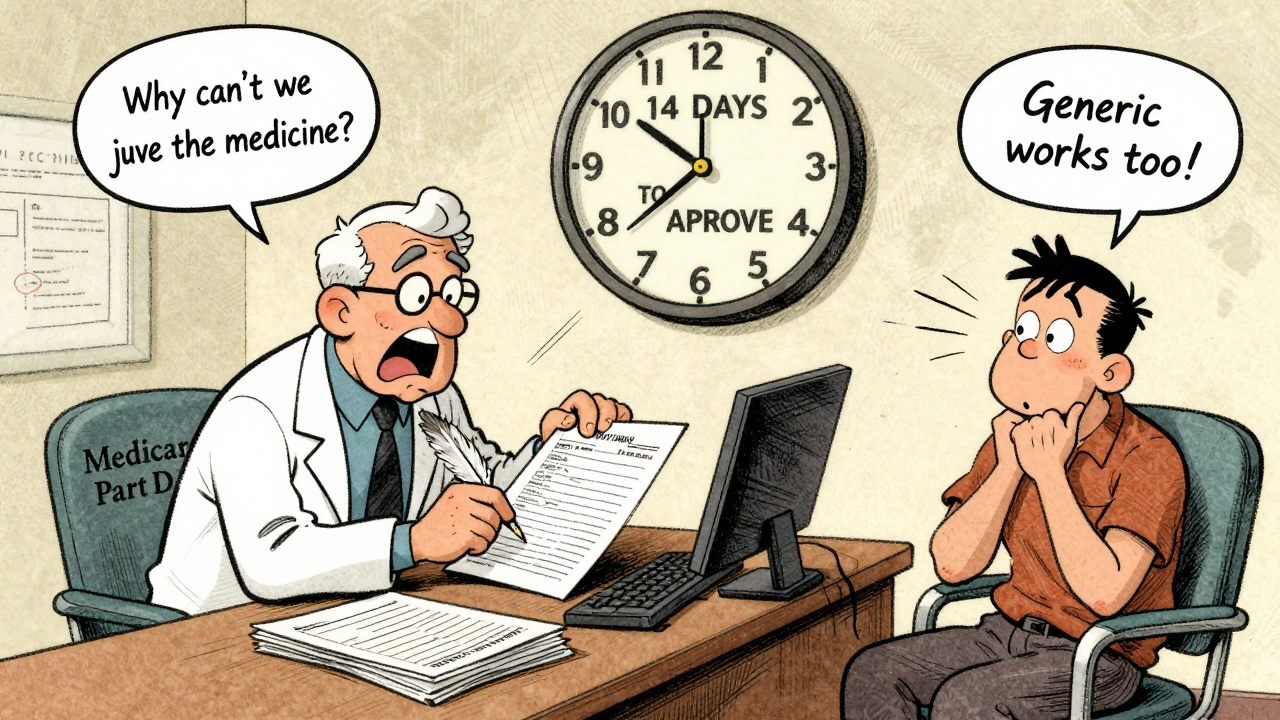
Prior authorization isn’t permanent. Most approvals last 30 to 90 days. After that, your doctor has to reapply-especially if you’re refilling a long-term medication. This means you could face the same delay every few months.Some insurers offer longer-term approvals for stable conditions. But if your diagnosis changes, your dosage increases, or you switch plans, you’ll likely need to start the process again.
What Can You Do as a Patient?
You’re not powerless in this system. Here’s what you can do:- Ask your doctor before the appointment: "Is this medication likely to need prior authorization?" That way, they can plan ahead.
- Check your formulary: Log into your insurer’s website and search for your drug. If it says "prior auth required," you’ll know what’s coming.
- Ask about alternatives: If a drug needs prior auth, ask if there’s a similar one on the formulary that doesn’t. Sometimes, switching brands avoids the delay.
- Call your doctor’s office: If you haven’t heard back in 3-5 days, call and ask if the request was submitted. Delays often happen because the paperwork got lost or wasn’t filled out correctly.
- Use GoodRx or SingleCare: If you’re stuck paying out of pocket, these apps often show cash prices lower than your insurance copay-especially for drugs with prior auth hurdles.
Why Does This Exist?
Critics say prior authorization is a bureaucratic nightmare. The American Medical Association says doctors spend an average of 13 hours a week just on prior auth paperwork. That’s time taken away from patients. But insurers argue it’s necessary. Without it, some drugs would be overused. For example, a study by the Academy of Managed Care Pharmacy found that prior authorization reduced inappropriate use of expensive biologics by 30% in some plans. It also helps prevent dangerous drug interactions and ensures patients get evidence-based care.It’s a balancing act: controlling costs without delaying life-saving treatment. In emergencies, prior authorization isn’t required. But for ongoing conditions, the system is designed to make sure you’re getting the most cost-effective, safe option.
What About Medicare Part D?
If you’re on Medicare Part D, the rules are the same-but you have more rights. You can request a coverage determination (prior auth) in writing, and the plan must respond within 72 hours. For urgent cases (like if you’re in pain or at risk of hospitalization), they must respond within 24 hours.You can also file an appeal if your request is denied. Medicare gives you 60 days to do so. And if you’re still denied, you can ask for a review by an independent agency. You’re not alone in this process-Medicare has a free counseling service called SHIP (State Health Insurance Assistance Program) that helps beneficiaries navigate these steps.
What’s Changing?
There’s growing pressure to simplify prior authorization. In 2024, the U.S. Centers for Medicare & Medicaid Services (CMS) proposed rules to cut down on unnecessary requests and require electronic submission for all prior auth forms by 2026. Some insurers are starting to use AI to auto-approve routine requests.But for now, the system remains slow, inconsistent, and confusing. The goal is to make it faster and fairer-but until then, knowledge is your best tool.
When You Shouldn’t Wait
If you’re in a medical emergency, prior authorization doesn’t apply. Your insurance must cover emergency care-including emergency medications-without delay. But if you’re not sure whether your situation qualifies, call your insurer. They’ll tell you what’s covered and what isn’t.Also, if you’re switching plans, your prior authorization won’t transfer. You’ll need to reapply under your new insurance-even if you’ve been on the same drug for years.
Do I need prior authorization for every prescription?
No. Most generic medications, common antibiotics, or basic blood pressure pills don’t require prior authorization. It’s usually only needed for expensive brand-name drugs, specialty medications, or those with strict usage rules. Check your plan’s formulary to see which drugs require approval.
Can I get my medication if prior authorization is denied?
Yes, but you’ll have to pay out of pocket. You can also ask your doctor to appeal the decision or switch to a similar drug that’s covered. Some pharmacies will hold your prescription while you wait for an appeal outcome.
How long does prior authorization take?
It can take from one business day for urgent cases to up to 14 days for standard requests. Most approvals are decided within 3-5 days. If you’re running out of medication, ask your doctor to mark the request as urgent.
Why does my doctor have to do all the paperwork?
Because your doctor is the one who knows your medical history and can prove the drug is medically necessary. Insurance companies require clinical justification-not just a prescription. Your doctor’s office handles the forms because they’re legally responsible for the accuracy of the information.
Can I switch to a different drug to avoid prior authorization?
Sometimes. Many drugs in the same class work similarly. For example, if one statin requires prior auth, your doctor might switch you to another that doesn’t. Ask your doctor if there’s a covered alternative with the same effect.
Does prior authorization mean my insurance doesn’t trust my doctor?
Not necessarily. It’s not about distrust-it’s about policy. Insurance plans use prior authorization to ensure medications are used according to clinical guidelines and to avoid unnecessary spending. Most doctors understand this and work within the system to get you the care you need.
Final Thoughts
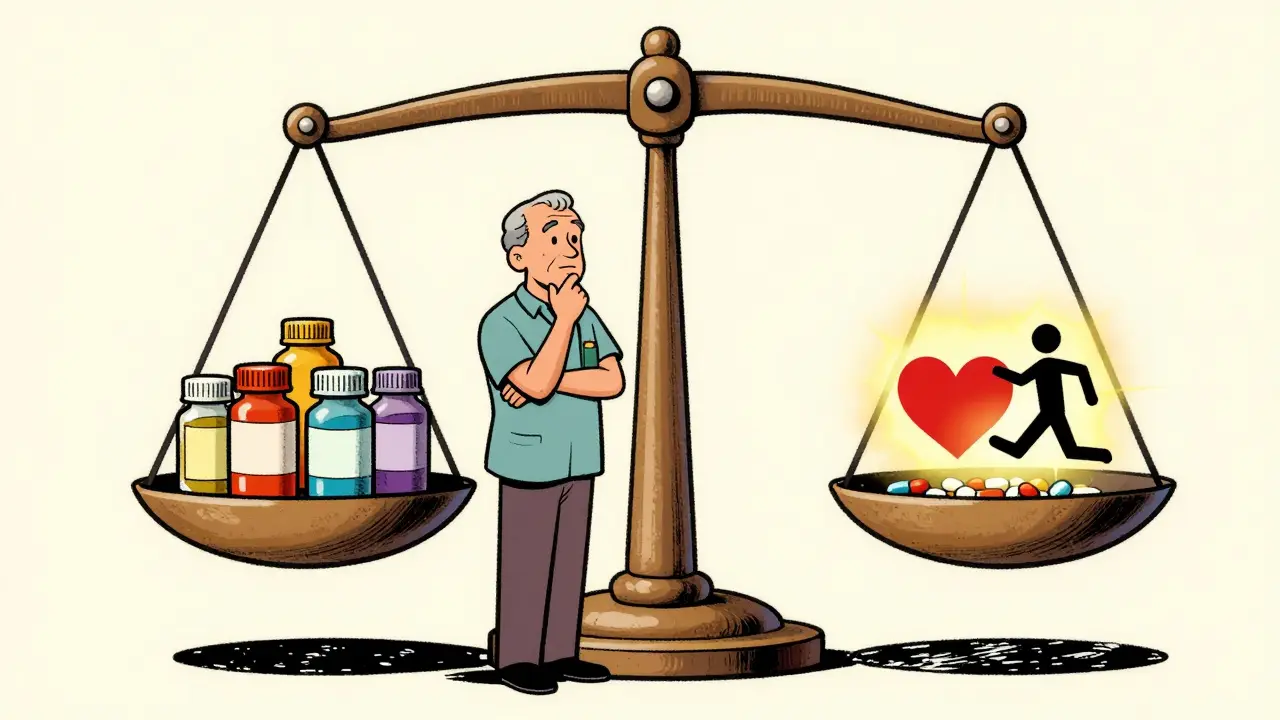
Prior authorization isn’t perfect. It’s slow, repetitive, and adds stress to an already complex healthcare system. But it’s here to stay-for now. The key is to be proactive. Know which of your meds need approval. Ask your doctor early. Check your insurer’s website. And don’t be afraid to follow up.If you’re spending more time on paperwork than on your health, you’re not alone. But with the right information, you can cut through the red tape-and get your medication faster.
Taya Rtichsheva
December 8, 2025 AT 11:50insurance companies really think we dont notice theyre just trying to save 20 bucks by making us suffer
Evelyn Pastrana
December 8, 2025 AT 12:05Nikhil Pattni
December 9, 2025 AT 02:54Elliot Barrett
December 9, 2025 AT 16:31Andrea Beilstein
December 11, 2025 AT 07:31we let corporations decide who gets to live and who gets to wait
and we call it efficiency
but what if efficiency is just another word for cruelty?
Sabrina Thurn
December 12, 2025 AT 12:40Richard Eite
December 13, 2025 AT 22:01Tim Tinh
December 14, 2025 AT 03:27Stacy Tolbert
December 15, 2025 AT 11:20Ryan Brady
December 16, 2025 AT 17:05