Every pill you take, every vial of insulin, every antibiotic in your medicine cabinet - it has a story. And that story starts with a lot number or a serial code. These aren’t just random strings of letters and digits. They’re the digital fingerprints of your medicine. When a batch of drugs turns dangerous, these numbers are the only thing that can stop a crisis before it spreads.
Counterfeit drugs are a global problem. The World Health Organization estimates that 1 in 10 medical products in low- and middle-income countries are fake. Even in places like Australia, the U.S., and Europe, fake pills containing fentanyl, sugar, or toxic chemicals are showing up in online pharmacies and street markets. And without proper track-and-trace systems, there’s no way to know which pills are safe - and which could kill you.
What’s the difference between a lot number and a serial code?
Think of a lot number like a group ID. If a factory makes 10,000 bottles of amoxicillin on the same day, using the same ingredients and machines, they all get the same lot number. That number tells you when it was made, which shift ran it, which supplier provided the active ingredient, and where it was packaged. If one bottle turns out to be contaminated, you don’t need to recall all amoxicillin ever made. Just the lot.
A serial code is different. It’s like a passport for a single unit. Every one of those 10,000 bottles might have its own unique serial number - even if they’re from the same lot. This is common for high-value or high-risk products like injectables, cancer drugs, or medical devices. If a patient has a bad reaction, investigators can pull up that exact serial number and trace it back to the exact machine, technician, and even the batch of raw material used.
Lot tracking is for groups. Serial tracking is for individuals. Both are needed to stop fake drugs.
Why track-and-trace matters more than ever
The 1937 Elixir Sulfanilamide tragedy killed over 100 people because the drug wasn’t tested, and there was no way to track where it came from. That disaster led to the first U.S. laws requiring batch identification. Today, those rules are stricter than ever.
The U.S. Food and Drug Administration (FDA) now requires all prescription drugs to have a unique serial number under the Drug Supply Chain Security Act (DSCSA). The EU has similar rules. Australia’s Therapeutic Goods Administration (TGA) is moving toward full serialization by 2027. These aren’t suggestions - they’re legal requirements.
Why? Because counterfeiters are getting smarter. They’re copying packaging, printing fake barcodes, even forging digital verification systems. But they can’t copy every serial number in a legitimate production run. If a pharmacy scans a bottle and the serial number doesn’t match the national database, the system flags it as fake - instantly.
Real-world example: In 2023, a pharmacy in Sydney flagged a batch of metformin because the serial code didn’t match the manufacturer’s database. The pills were fake - laced with industrial chemicals. Thanks to the track-and-trace system, 3,000 bottles were pulled from shelves before a single patient was harmed. Without that system? The same pills could’ve been sold across three states.
How the system works behind the scenes
It’s not magic. It’s software, barcodes, and strict rules.
At the factory, each batch gets a lot number stamped into the system. Each individual unit gets a unique serial code printed on the label - usually as a 2D barcode or QR code. That code links to a secure digital record: where it was made, when, who shipped it, which distributor handled it, and which pharmacy received it.
When a box arrives at a pharmacy, the pharmacist scans the barcode. The system checks:
- Is the lot number registered with the manufacturer?
- Is the serial code in the national database?
- Has this unit been reported as stolen or recalled?
If anything looks off - the system blocks the sale. No manual checks. No guesswork.
Most systems now use cloud-based platforms like Microsoft Business Central or QR Inventory. These tools let pharmacies, hospitals, and distributors scan products on their phones. No special hardware needed. Just a camera and an app.
And it works. Companies using full track-and-trace report a 94% drop in counterfeit drug incidents. Recall times drop from weeks to minutes. Waste from unnecessary recalls drops by 63%.
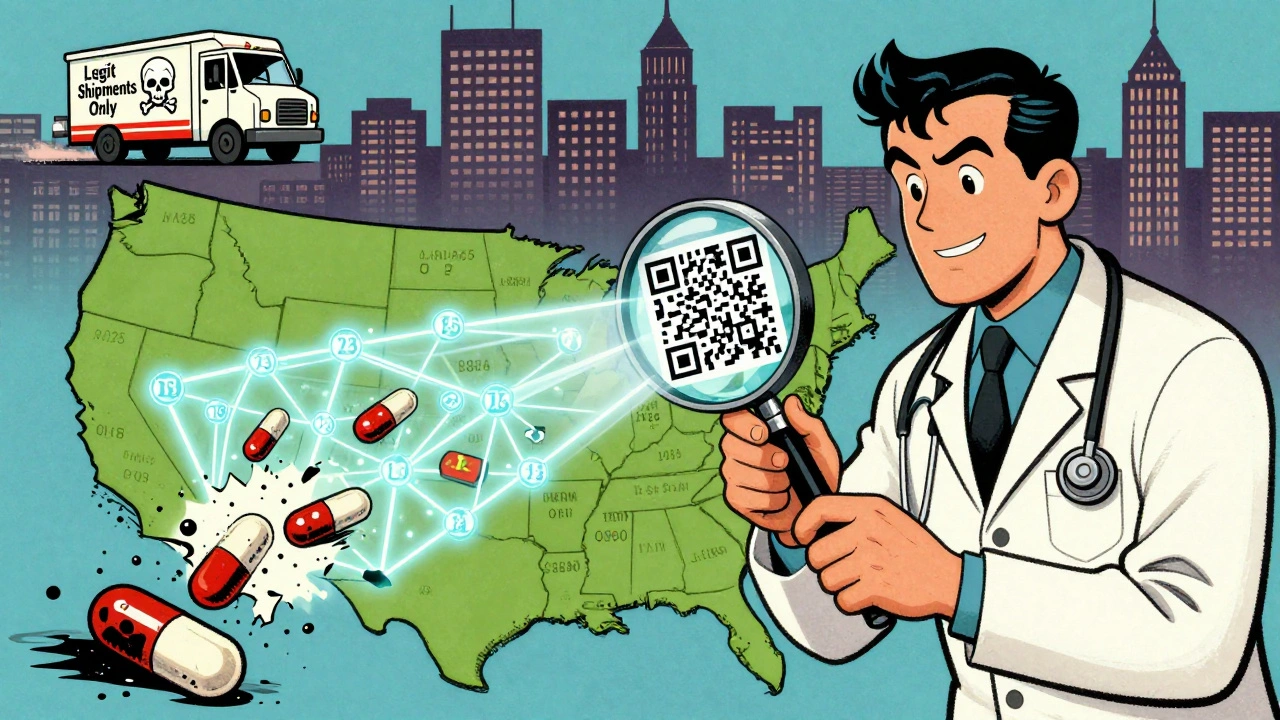
What happens when the system fails
It’s not foolproof. The biggest weakness? Human error.
A 2023 FDA report found that 67% of traceability failures came from bad data entry - a worker typing a lot number wrong, a barcode not scanned at transfer, a system not updated after a shipment. One medical device company in the U.S. got a warning letter because different departments used different formats for the same lot number. One team wrote “LOT2023-04-15,” another wrote “20230415.” The system couldn’t match them. The entire batch was quarantined for six weeks.
Another problem? Small pharmacies and clinics. Many still rely on paper logs or outdated software. They don’t have the budget for scanners or cloud systems. That’s where counterfeiters target. Fake drugs often end up in these gaps.
And then there’s the black market. Some online sellers claim to sell “verified” drugs. But if they don’t scan the serial code at point of sale, the system can’t verify them. A fake serial number can look real - until you check the official database.
What you can do as a patient
You don’t need to be a tech expert to help stop fake drugs.
- Always buy from licensed pharmacies. If it’s not a brick-and-mortar store or a verified online pharmacy (look for the VIPPS seal in the U.S. or the AHPRA logo in Australia), walk away.
- Check the packaging. Does the lot number match the one on the box? Is the barcode clear and not smudged? Fake products often have blurry labels or mismatched fonts.
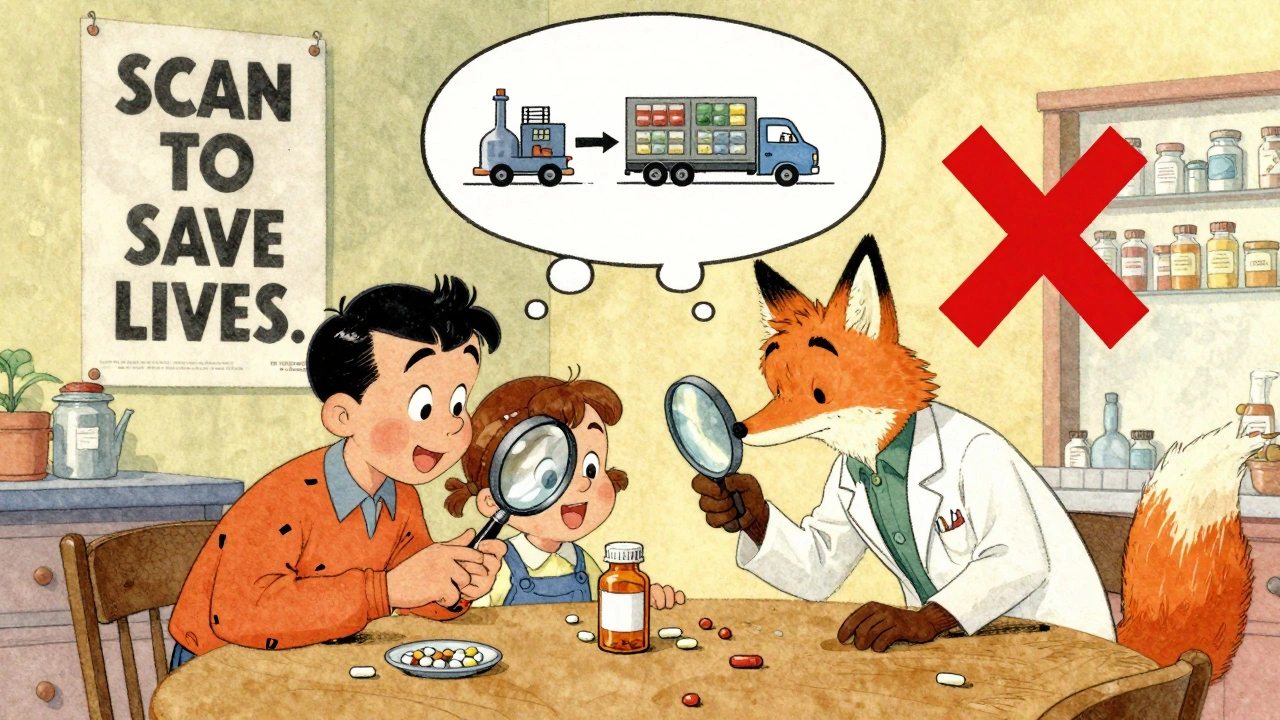
- Ask your pharmacist to scan it. Most now have the tools. If they say they can’t, that’s a red flag.
- Report anything suspicious. In Australia, report fake drugs to the TGA. In the U.S., use the FDA’s MedWatch system. Your report could save a life.
Don’t assume your medicine is safe just because it came from a “reputable” source. Counterfeiters use real logos, real addresses, even fake websites that look identical to the real thing. The only thing that can prove authenticity is the serial code - and whether it’s been scanned and verified.
The future: AI, blockchain, and real-time alerts
Track-and-trace isn’t standing still. The next wave is smarter.
Some companies are now using blockchain to store serial code records - making them impossible to alter. Others are linking lot numbers to IoT sensors. A shipment of insulin, for example, can now send real-time alerts if it’s exposed to heat or freezing temperatures during transit. If the temperature went too high, the system auto-flags the lot - no human has to check.
By 2027, the EU’s Digital Product Passport will require every medicine, battery, and electronic device to carry a digital ID you can scan with your phone. That means you’ll be able to check your drug’s origin, expiration, and journey - right from your pocket.
AI is coming too. Systems will soon predict which lots are most likely to be counterfeit based on shipping routes, supplier history, and even weather patterns during transport. If a lot was shipped through a known smuggling corridor, the system will flag it before it even reaches the pharmacy.
These aren’t sci-fi ideas. They’re already in pilot programs with Pfizer, Novartis, and major Australian distributors.
Bottom line: Your safety depends on these numbers
Lot numbers and serial codes aren’t just for regulators or manufacturers. They’re your last line of defense against fake medicine.
When you take a pill, you’re trusting that it’s what it says it is. That trust is built on a chain of data - from the factory floor to your medicine cabinet. Break that chain, and lives are at risk.
The systems exist. The technology works. What’s missing is awareness. If you don’t know what to look for, you can’t protect yourself. Start by asking your pharmacist: ‘Can you scan this?’ If they say yes - you’re safe. If they say no - walk out. And report it.
Counterfeit drugs don’t just cost money. They cost lives. And every serial code that’s scanned is one less person who won’t wake up sick - or worse.
Geraldine Trainer-Cooper
December 7, 2025 AT 07:27So basically we're trusting machines and databases to keep us from dying? Cool. I guess that's better than trusting a guy in a hoodie selling 'pharma-grade' Adderall off a sidewalk.
Ashish Vazirani
December 8, 2025 AT 14:34India has been doing track-and-trace since the 1990s-yes, before your FDA even knew what serialization meant! Our pharma giants export to 150 countries while your 'safe' meds are still getting recalled for 'unspecified contaminants'! You think your system is advanced? We built it while you were still arguing about whether aspirin should be OTC!
Kenny Pakade
December 9, 2025 AT 04:01Oh wow. So now we need QR codes on aspirin? Next they’ll make us scan our Tylenol before we swallow it. What’s next? A government app that logs your heartbeat after you take a pill? This is surveillance dressed up as safety. I’d rather die from a fake pill than live in a database.
brenda olvera
December 10, 2025 AT 09:59I love how this post doesn’t just explain the tech but reminds us we’re all in this together. Seriously-pharmacists scanning your meds? That’s human care wrapped in innovation. It’s not just about safety-it’s about dignity. We deserve to know what’s in our bodies. And we’re lucky to have systems that protect that.
Brooke Evers
December 10, 2025 AT 12:18It’s easy to feel overwhelmed by all this tech, but I want to say-thank you to every pharmacist, warehouse worker, and quality control inspector who’s been doing this quietly for years. You’re the invisible shield between people and poison. And yes, the system isn’t perfect-but every time someone scans a code and says ‘this is clean,’ that’s a small miracle. Don’t underestimate the power of that.
Nigel ntini
December 12, 2025 AT 10:52The elegance of this system lies in its simplicity: unique identifiers, immutable records, and interoperable databases. It’s not about complexity-it’s about traceability. The EU’s Digital Product Passport will be a landmark in public health infrastructure. When every product carries its provenance, trust becomes programmable.
Priya Ranjan
December 12, 2025 AT 11:46People in the West act like this is some new breakthrough. Meanwhile, in India, we’ve been scanning pills since before you knew what blockchain was. And yet, you still buy meds off Instagram? You’re not just reckless-you’re irresponsible. Stop blaming systems. Start blaming yourselves.
pallavi khushwani
December 13, 2025 AT 22:46I think what’s beautiful here is how something so technical-lot numbers, serial codes-ends up being deeply human. It’s not about the tech. It’s about knowing your medicine didn’t come from a basement in Manila or a warehouse in Belarus. It’s about being able to look at a pill and feel, for once, safe. That’s worth all the QR codes in the world.
Dan Cole
December 15, 2025 AT 13:52Let’s be real: this entire system is a corporate tax write-off dressed as public health. The FDA didn’t mandate serialization to save lives-they did it because they got sued after the 2012 meningitis outbreak. And now? Pharma giants use it as a barrier to entry for generics. The real villain isn’t counterfeiters-it’s monopolies hiding behind ‘security’.
Billy Schimmel
December 15, 2025 AT 17:07So you’re telling me I need to scan my ibuprofen with my phone… just to make sure it’s not sugar? I’m not mad. I’m just impressed we’ve reduced human survival to a barcode scan.
Katie O'Connell
December 16, 2025 AT 14:04It is imperative to underscore that the implementation of serialization protocols under the DSCSA constitutes a paradigmatic shift in pharmaceutical supply chain governance. The confluence of cryptographic hashing, ISO-compliant data structures, and real-time cloud synchronization represents not merely a logistical upgrade, but a epistemological reconfiguration of pharmaceutical authenticity.
Andrew Frazier
December 18, 2025 AT 00:03Yeah right. And I’m sure the Chinese government isn’t just printing fake serial codes with their own printers. You think your fancy database stops that? LOL. We’re all being played. The only thing that matters? Buy from Walgreens. Or don’t. I’m not your mom.
Mayur Panchamia
December 19, 2025 AT 19:01India produces 80% of the world’s generic drugs-and you’re telling me we need your fancy QR codes to know if it’s real? We’ve been shipping to Africa, Latin America, and the US for decades without scanning every damn pill! Your system is overkill. Our medicine works. Your paranoia? That’s the real epidemic.
Nava Jothy
December 19, 2025 AT 23:23Ugh. I just got my blood pressure meds from a pharmacy that didn’t scan it… and now I’m crying. 😭 Why does everyone have to be so careless? I just want to take my pills without wondering if I’m gonna die. Someone please fix this. I’m not ready to go yet.
Saketh Sai Rachapudi
December 21, 2025 AT 06:23Wait so if a guy types LOT2023-04-15 wrong it gets quarantined? That’s it? That’s the whole system? I thought this was AI magic. Turns out it’s just people who can’t spell. I’m out.