Immunosuppressant Medication Risk Calculator
Calculate Your Infection Risk
Select your current medications to see your personalized infection risk level and prevention recommendations.
Your Infection Risk Level
Essential Prevention Steps
- Wash hands frequently with soap for 20 seconds
- Wear a mask in crowded indoor spaces
- Avoid raw or undercooked foods
- Check your skin daily for new sores or rashes
- Get regular blood tests as recommended by your doctor
- Avoid travel to high-risk areas without consulting your doctor
Why Immunocompromised Patients Face Unique Medication Risks
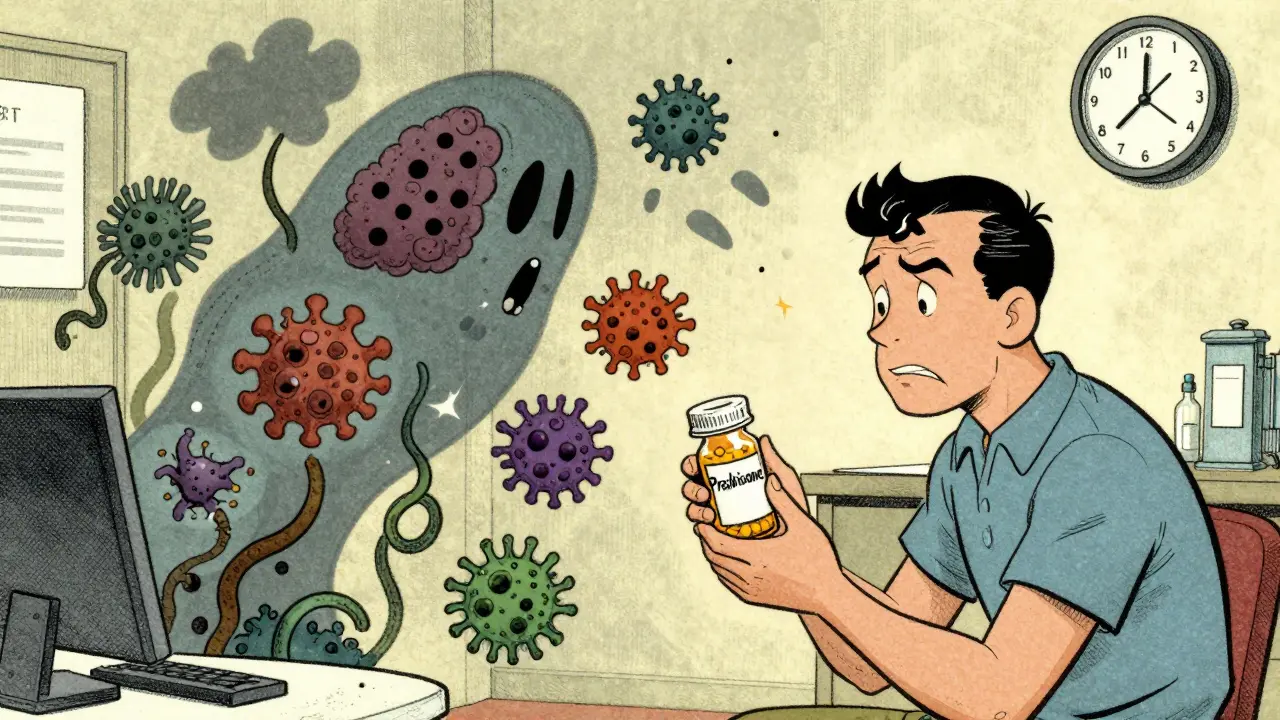
If your immune system isn’t working right, even common medications can turn dangerous. Being immunocompromised means your body can’t fight off infections the way it should - whether because of cancer treatment, an organ transplant, autoimmune disease, or long-term steroid use. That’s not just a minor inconvenience. It changes everything about how your body reacts to drugs, including ones meant to help you.
Take corticosteroids like prednisone. They’re great for reducing inflammation in conditions like rheumatoid arthritis or lupus. But at doses above 20mg a day for more than two weeks, they cut your body’s ability to respond to infection by nearly half. A 2012 study of over 4,000 patients found that those on these drugs had a 60% higher chance of getting a serious infection than those not taking them. And here’s the catch: you might not even know you’re sick. Steroids can hide the usual signs - no fever, no redness, no swelling. A simple cough could be pneumonia. A sore throat could be a fungal invasion. By the time symptoms become obvious, it’s often too late.
How Different Immunosuppressants Affect Your Body
Not all immunosuppressants work the same way - and they don’t all carry the same risks. Understanding the difference matters because your treatment plan depends on it.
Corticosteroids suppress broad immune activity. They slow down white blood cell production and shut down inflammatory signals. That’s why they’re used for flare-ups. But long-term use increases risk of bacterial infections like pneumonia, fungal infections like candidiasis, and even reactivation of old viruses like shingles (herpes zoster).
Then there’s methotrexate, one of the most common drugs for autoimmune diseases. About half of people stop taking it within a year because of side effects: nausea, fatigue, mouth sores, hair thinning. But for the other half, it works. The trade-off? Liver and kidney stress. Monthly blood tests are non-negotiable. Without them, you could develop liver fibrosis or low blood cell counts without realizing it.
Azathioprine targets T and B cells - the soldiers of your immune system. It reduces antibody production and can cause leukopenia, a dangerous drop in white blood cells. That’s when you’re most vulnerable to opportunistic infections like Pneumocystis jirovecii pneumonia (PCP), which used to kill AIDS patients before modern treatments. Even hepatitis B can flare up again if you’ve had it in the past.
Biologics - drugs like Humira, Enbrel, or Remicade - are the most powerful but also the riskiest. They block specific parts of the immune response, like TNF-alpha, which sounds precise until you realize it leaves you wide open to tuberculosis, fungal infections, and even rare brain infections like PML. A 2021 review found biologics carry nearly twice the infection risk of traditional DMARDs like methotrexate.
And then there’s cyclosporine and tacrolimus, used after transplants. These drugs can trigger viral reactivations - Epstein-Barr, cytomegalovirus, BK virus - that can damage kidneys, lungs, or nerves. One transplant patient on Reddit described tacrolimus as “life-changing” but said he spent more time in doctors’ offices than at home, monitoring for signs of infection.
The Hidden Danger: Infections That Don’t Look Like Infections
One of the biggest mistakes people make is assuming they’ll feel sick before they get sick. That’s not how it works for immunocompromised patients.
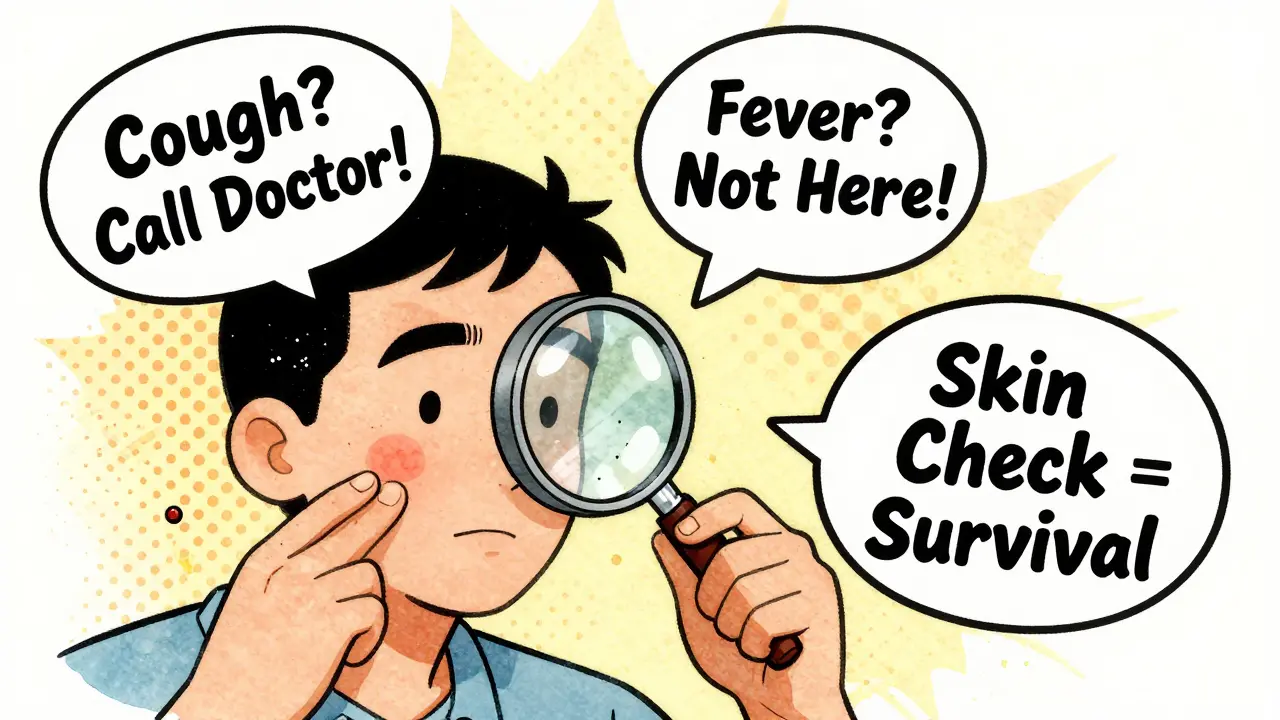
Dr. Francisco Aberra’s research showed corticosteroids blunt the body’s natural warning signals. A fever? Maybe not. Red, swollen skin? Sometimes absent. Chest pain? Could be a silent heart infection. You might just feel tired, or have a slight cough, or lose your appetite. These aren’t red flags - they’re the only flags you get.
That’s why patients on immunosuppressants are told to treat every symptom like it could be serious. A 24-hour headache? Get checked. A low-grade temperature? Don’t wait. A blister on your lip? Could be herpes - and if left untreated, it can spread to your brain.
And don’t forget about vector-borne diseases. The CDC warns that people with weakened immune systems are far more likely to get severely ill from ticks or mosquitoes. Lyme disease, West Nile virus, dengue - these aren’t just annoyances. They can become life-threatening fast.

Combining Drugs Multiplies the Risk
Many patients are on more than one immunosuppressant. That’s often necessary - especially after transplants or with severe autoimmune disease. But stacking drugs doesn’t just add risks. It multiplies them.
Take prednisone plus methotrexate. Alone, each has a moderate infection risk. Together? The chance of a serious infection jumps dramatically. The same goes for combining biologics with steroids. A 2021 review in the Journal of Autoimmunity found that dual therapy increased the risk of opportunistic infections by more than 300% compared to single-drug regimens.
Even over-the-counter supplements can interfere. St. John’s wort can lower tacrolimus levels, leading to transplant rejection. Garlic supplements can thin the blood and increase bleeding risk with certain drugs. Always tell your doctor everything you’re taking - even herbal teas.
What You Can Do to Protect Yourself
Living with immunosuppression doesn’t mean living in fear. It means being smart. Here’s what actually works:
- Wash your hands like your life depends on it - at least 20 seconds, scrubbing under nails and between fingers. Alcohol-based sanitizer is fine when soap isn’t available, but soap works better on dirt and viruses.
- Get vaccinated - but not all at once. Flu, pneumonia, and COVID-19 vaccines are critical. But live vaccines (like MMR or shingles vaccine) are dangerous if you’re on strong immunosuppressants. Ask your doctor which ones are safe before you start treatment.
- Wear a mask in crowds. Especially during flu season or in hospitals. One study found mask-wearing reduced respiratory infections in transplant patients by 60%.
- Check your skin daily. Look for new sores, rashes, or blisters. Skin infections can spread fast when your immune system is down.
- Keep wounds clean. Even a small cut can become infected. Use antibiotic ointment and cover it. Don’t ignore redness or swelling.
- Get regular blood tests. CBC, liver enzymes, kidney function - these aren’t optional. For methotrexate, monthly tests are standard. For biologics, every 3 months. Skipping them is like driving blindfolded.
The Unexpected Twist: COVID-19 and Immunosuppression
At the start of the pandemic, everyone assumed immunosuppressed patients would die in droves. The opposite happened.
Johns Hopkins researchers followed over 1,200 patients on immunosuppressants who got COVID-19. Their outcomes were surprisingly similar to those without immune suppression. Some even had milder cases. Why? It’s still being studied. One theory: too much immune overreaction - not too little - causes the worst damage in COVID-19. If your immune system is already turned down, maybe you avoid the cytokine storm.
That doesn’t mean you’re safe. It means you need personalized advice. Some drugs, like JAK inhibitors, may still increase risk. Others, like certain biologics, might not. Your doctor should review your specific meds, not just assume all immunosuppressants are equal.
Living Well With the Risk
Yes, the risks are real. But so are the benefits. For many, immunosuppressants mean the difference between constant pain and a normal life. One woman on r/RheumatoidArthritis said she went from using a cane to hiking with her kids after starting a biologic. Another transplant recipient said he finally slept through the night for the first time in years.
The goal isn’t to avoid medication. It’s to use it wisely. That means:
- Knowing your exact drug, dose, and why you’re on it
- Tracking your symptoms - not just when you feel bad, but when you feel off
- Asking your doctor: “What’s the infection risk with this drug? What signs should I watch for?”
- Building a support system - family, friends, patient groups - who know what to look for
There’s no perfect solution. But with the right knowledge and vigilance, you can manage the risks and live fully.
What’s Next for Immunosuppression Treatment?
Doctors are moving away from one-size-fits-all dosing. New research is looking at pharmacogenomics - using your DNA to predict how you’ll respond to a drug. Some people metabolize methotrexate slowly and need lower doses. Others clear it quickly and need more. Testing for these variations is already available in some clinics.
Also emerging are targeted therapies that suppress only the parts of the immune system causing disease, not the whole system. JAK inhibitors like tofacitinib are already doing this for arthritis. Future drugs may block only specific inflammatory pathways, leaving infection-fighting cells alone.
And then there’s the bigger threat: antibiotic resistance. The WHO predicts drug-resistant infections could kill 10 million people a year by 2050. Immunocompromised patients will be hit hardest. That’s why preventing infections now - through hygiene, vaccination, and smart drug use - isn’t just personal health. It’s public health.
Can immunosuppressants cause cancer?
Yes, some immunosuppressants increase cancer risk, especially skin cancer and lymphoma. This is why regular skin checks and avoiding sun exposure are critical. Drugs like azathioprine and cyclosporine carry FDA black box warnings for malignancy. The risk is higher with long-term use, especially in transplant patients. But for many, the benefit of controlling a life-threatening autoimmune disease outweighs this risk - as long as you’re monitored.
Is it safe to travel if I’m immunocompromised?
Travel is possible but requires planning. Avoid areas with high rates of malaria, dengue, or tuberculosis. Get travel-specific vaccines before starting immunosuppressants if possible. Carry a letter from your doctor listing your medications and allergies. Bring extra doses in case of delays. Avoid raw foods, unfiltered water, and street food. Always have a plan for medical care abroad.
What should I do if I think I’m getting sick?
Don’t wait. Call your doctor immediately - even if symptoms seem mild. A low fever, cough, or unusual fatigue could signal a serious infection. Don’t try to tough it out. Early antibiotics or antivirals can make the difference between a quick recovery and hospitalization. Keep a list of your medications handy for emergency rooms.
Can I get the COVID-19 booster if I’m on immunosuppressants?
Yes, and you should. The CDC recommends additional booster doses for immunocompromised individuals because standard vaccines may not trigger a strong enough response. Timing matters - some doctors suggest holding off on certain drugs for a week after vaccination to improve antibody production. Always coordinate with your rheumatologist or transplant team.
How often should I get blood tests while on immunosuppressants?
It depends on the drug. Methotrexate usually requires monthly blood tests for the first 6 months, then every 3 months if stable. Azathioprine and cyclosporine need testing every 2-4 weeks initially, then monthly. Biologics typically require testing every 3 months. Your doctor will adjust based on your results and side effects. Never skip these tests - they catch problems before you feel them.
Final Thoughts: Balance, Not Fear
Being immunocompromised doesn’t mean you can’t live a full life. It means you need to be more careful - not paralyzed by worry. The goal isn’t to stop taking your medication. It’s to take it with your eyes wide open. Know your risks. Track your body. Ask questions. Work with your team. The right balance lets you control your disease without letting your disease control you.


Bridget Molokomme
February 1, 2026 AT 23:36Vatsal Srivastava
February 3, 2026 AT 22:43Becky M.
February 5, 2026 AT 05:48Ellie Norris
February 7, 2026 AT 02:41Sandeep Kumar
February 7, 2026 AT 05:31clarissa sulio
February 7, 2026 AT 11:27Brittany Marioni
February 8, 2026 AT 13:31Monica Slypig
February 9, 2026 AT 02:40