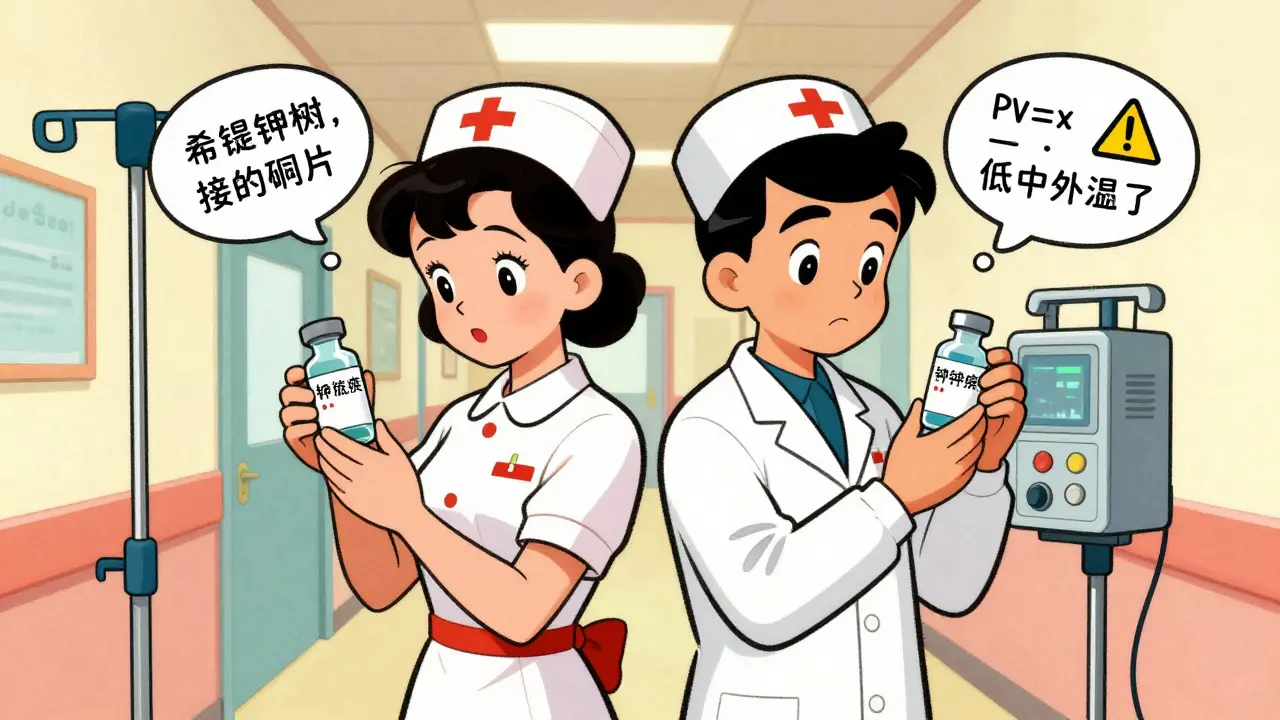
Every year, thousands of patients are harmed by medication errors - and many of those errors involve drugs that are perfectly safe when used correctly, but deadly when given wrong. These are called high-alert medications. They don’t cause more errors than other drugs, but when they’re messed up, the results can be fatal. That’s why hospitals and clinics have strict rules around them: independent double checks. But not every high-alert drug needs a double check. And not every double check actually works. So how do you know which ones truly require it - and how to do it right?
What Makes a Medication High-Alert?
A high-alert medication isn’t defined by how often it’s misused. It’s defined by how badly things go when it is. The Institute for Safe Medication Practices (ISMP) first listed these drugs in 2001, and they update the list every two years. The latest version, released January 9, 2024, includes 19 categories. These aren’t just strong drugs - they’re drugs with a razor-thin margin between helping and harming.Think insulin. Give a patient too much IV insulin, and their blood sugar crashes. In minutes, they can slip into a coma. Too little, and diabetic ketoacidosis creeps in. Now consider potassium chloride concentrate. A single misplaced IV push can stop a heart. Heparin? Wrong dose, wrong rate - bleeding or clots follow. These aren’t hypothetical risks. They happen. ECRI Institute found that when double checks are done properly, they stop 95% of these errors before they reach the patient.
But here’s the catch: not every high-alert drug needs the same level of protection. Some, like oral antibiotics, are low-risk even if dosed wrong. Others, like IV neuromuscular blockers or chemotherapy, are so dangerous that even small mistakes kill. The key is knowing which ones fall into the highest-risk tier.
Which Medications Require a Double Check?
There’s no single universal list, but most hospitals follow ISMP’s guidance. Here’s what’s consistently flagged:- Insulin - especially IV infusions and bolus doses
- Concentrated potassium chloride (1 mEq/mL or higher)
- Concentrated potassium phosphate (1 mEq/mL or higher)
- Sodium chloride solutions above 0.9%
- IV heparin - including flushes over 100 units/mL
- Neuromuscular blocking agents (like succinylcholine or rocuronium)
- Chemotherapeutic agents (all forms)
- Injectable narcotic PCA pumps
- Total parenteral nutrition (TPN) and lipid infusions
- Direct thrombin inhibitors (argatroban, bivalirudin)
- Continuous renal replacement therapy (CRRT) solutions like Prismasol
- Controlled substances (especially IV opioids)
Some institutions go further. Providence Health System includes all continuous infusions. VHA mandates double checks for every single one of these. But that’s not always the best approach. ISMP warns against blanket rules. If you’re double-checking everything, you’re training staff to go through the motions - not thinking.
What Makes a Double Check Actually Work?
A double check isn’t just two people looking at the same thing. If they stand side by side, talk it through, and nod at each other - that’s not a double check. That’s a group hug with a clipboard.True independent double check (IDC) means two licensed clinicians - a nurse, pharmacist, or physician - check the medication alone, apart, and without talking. Each one verifies five things:
- Right patient - two forms of ID (name, DOB, medical record number)
- Right medication - match the label to the order
- Right dose - calculate it yourself, don’t just trust the pre-filled syringe
- Right route - IV? IM? Subcutaneous? Don’t assume
- Right time - is this dose due now? Or was it held?
At WVU Medicine, nurses must independently calculate the dose before comparing results. At VHA, they must verify pump settings - like infusion rate and volume - separately. Only after both have done their own checks do they compare notes. If there’s a mismatch, the medication doesn’t go in. Period.
But here’s where most double checks fail: they’re not independent. A 2017 study in the Journal of Patient Safety found that when nurses checked together - one reading aloud, the other nodding - error detection dropped from 87% to just 32%. Why? Because the second person hears what they expect to hear. They don’t question. They confirm.
Why Overusing Double Checks Makes Them Less Effective
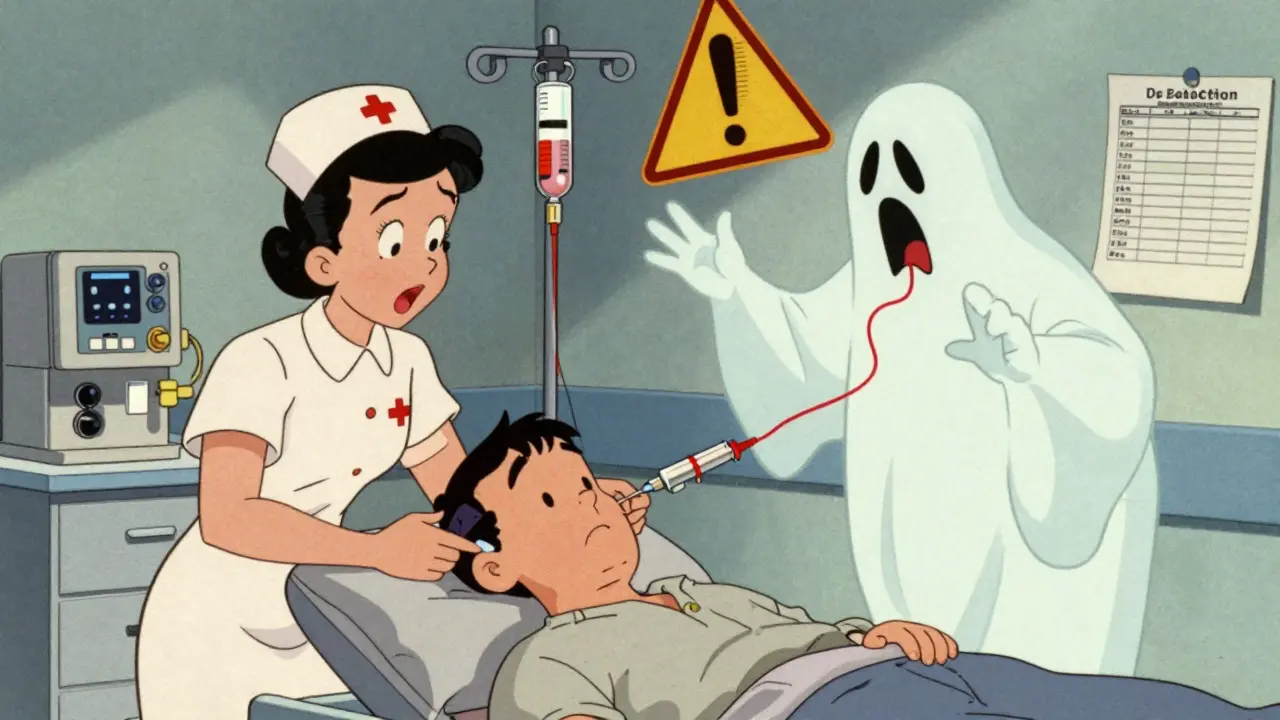
It sounds logical: if one double check stops errors, then ten should stop more. But that’s not how human attention works.When every single high-alert drug requires a double check, staff get fatigued. They rush. They sign off without verifying. They start checking only the easy parts - the label, not the math. A 2023 Reddit thread from ICU nurses revealed a pattern: nurses reported catching three real errors in six months using proper IDCs - but also witnessed twelve rushed checks where the second person didn’t even look at the pump settings.
Michael Cohen, former president of ISMP, put it bluntly: “Overuse of manual independent double checks has been called to task.” He’s not saying they’re useless. He’s saying they’re overused. And when you overuse a safety tool, it becomes background noise.
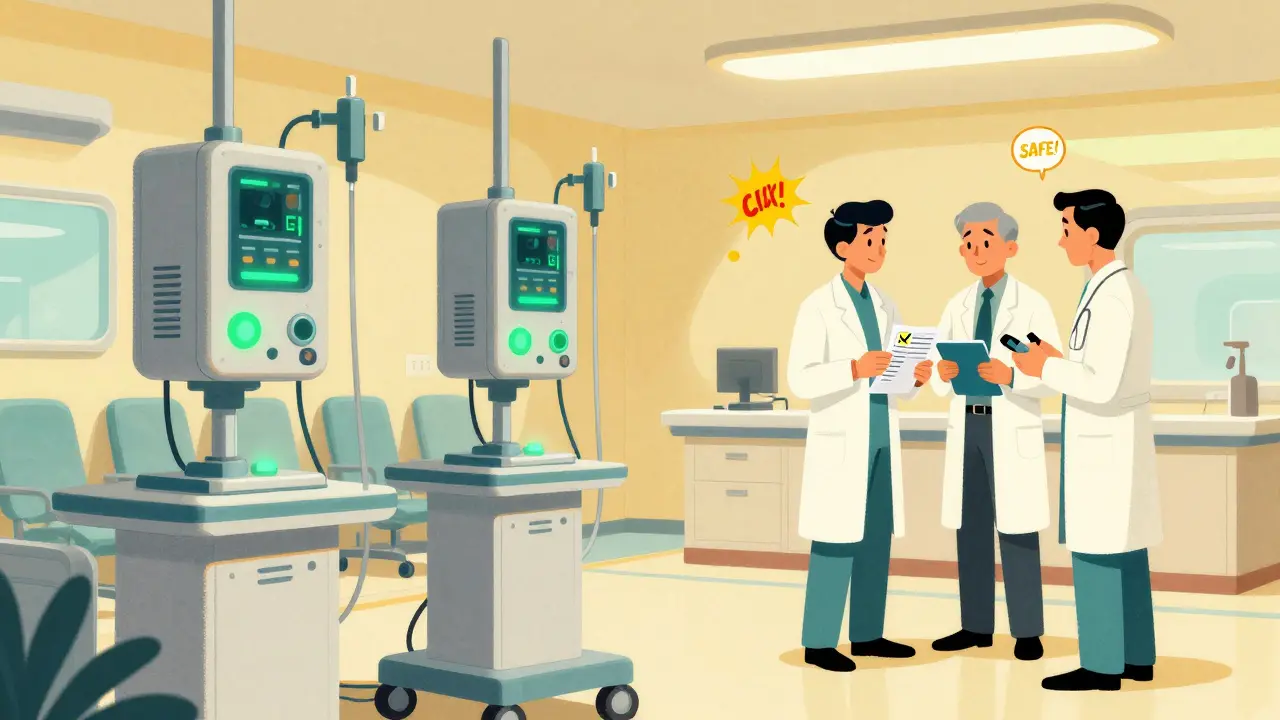
Smart hospitals now use a risk-based approach. They reserve double checks for the top 5-10% of medications that carry the highest risk. For others, they use smarter tech: smart pumps that block dangerous doses, barcode scanning that flags mismatches, or automated alerts in the eMAR system.
How Technology Is Changing the Game
The best safety systems don’t rely on people to catch every mistake. They make mistakes harder to make.Smart infusion pumps - now used in 65% of large hospitals as of Q2 2024 - can be programmed to reject doses outside safe limits. If a nurse tries to program 100 units of heparin per hour when the safe max is 20, the pump won’t allow it. That’s a forcing function - it physically blocks the error.
Barcoding systems that scan the patient’s wristband and the medication vial reduce wrong-patient and wrong-medication errors by up to 80%. And eMAR systems now require dual electronic signatures - no paper, no shortcuts. At Magnet-recognized hospitals, 78% use this system.
But tech doesn’t replace human judgment. It supports it. For IV insulin in a diabetic ketoacidosis patient, you still need a second nurse to confirm the dose, the rate, and the patient’s response. No pump can assess if the patient is improving or crashing. That’s where the double check still matters.
How to Implement This Right - Without Burning Out Staff
Getting this right isn’t about policy. It’s about culture.Johns Hopkins Hospital reduced IV heparin dosing errors from 12.7% to 2.3% in 18 months - not by adding more staff, but by changing how they trained them. They created a 2-hour competency module. Nurses had to demonstrate they could independently calculate doses, verify pump settings, and document correctly. Only then were they allowed to perform double checks.
Mayo Clinic built double-check time into staffing ratios. If a nurse needs to do a double check, they don’t have to rush. The system expects it. That’s huge. In contrast, 63% of nurses surveyed in 2022 said staffing shortages made true independent checks impossible.
Here’s the 4-step plan that works:
- Identify - Use your own error data. Which drugs caused the most harm last year? Start there.
- Define - Write down exactly what each double check must include. No vague language. “Verify dose” isn’t enough. “Recalculate dose from weight-based formula and compare to order” is.
- Train - Don’t just hand out a pamphlet. Role-play it. Make nurses do it twice - once right, once wrong. Show them how a rushed check misses things.
- Monitor - Audit charts. Are the signatures there? Did they calculate? Did they document pump settings? Feedback loops matter.
What Happens When You Skip the Rules?
In emergency rooms, double checks often get skipped. A 2021 survey of 850 ER nurses found 68% admitted to bypassing them during resuscitations. Why? “No second nurse available” - reported by 82%. “Too many checks for stable patients” - 76%.But skipping isn’t safe. One case from a Texas hospital: a nurse gave 100 mL of 10% potassium chloride instead of 10 mL of 2 mEq/mL. The patient died. The double check wasn’t done because “everyone knew it was potassium.” That’s the mindset that kills.
Even in stable units, shortcuts add up. A 2021 ISMP study found 38% of double-check failures happened because the protocol was unclear. If your staff don’t know what they’re supposed to check, they won’t check anything meaningful.
Regulations Are Catching Up
The Joint Commission’s National Patient Safety Goal (NPSG.01.01.01), effective January 1, 2024, requires every accredited hospital to identify high-alert medications and implement safeguards. CMS also mandates safe medication systems - failure can mean lost funding.And the pressure is growing. The FDA’s Safe Use Initiative now targets insulin, opioids, and anticoagulants specifically. The High-Alert Medication Safety Coalition - made up of ISMP, ASHP, AHA, and The Joint Commission - is pushing for national standardization. By 2028, ECRI predicts manual double checks will drop by 40% as tech improves. But for the highest-risk drugs? Human verification will stay.
The future isn’t eliminating double checks. It’s making them smarter. Focused. Intentional.
Which medications absolutely require a double check?
The highest-risk medications include IV insulin, concentrated potassium chloride, heparin infusions, neuromuscular blockers, chemotherapy agents, and injectable narcotic PCA pumps. These are consistently flagged by ISMP and major health systems. Always verify your institution’s official list - but if a drug can cause death in minutes with a small mistake, assume it needs a double check.
Is a double check the same as a witness check?
No. A witness check is when two people check together - one reads, the other listens. An independent double check means each person checks alone, without talking, then compares results. Witness checks are far less effective. The VHA and ISMP both require true independence. If you’re discussing the dose while checking, you’re not doing it right.
Can a pharmacist do the second check?
Yes - and often, they should. Pharmacists are trained in dose calculations and drug interactions. Many hospitals use a nurse-pharmacist team for high-alert meds. The key is independence: the pharmacist must check without hearing the nurse’s thoughts. Some systems even require the pharmacist to verify the pump settings separately, not just the label.
What if there’s no second person available during an emergency?
In true emergencies, safety protocols allow exceptions - but only if documented. The key is to use tech: smart pumps with dose limits, barcode scanning, and pre-programmed orders. After the emergency, a second clinician should review the medication and document the exception. Never skip the check just because it’s busy. Use the system, not the chaos, as your excuse.
How do you train staff to do proper double checks?
Don’t rely on lectures. Use simulations. Give nurses a mock order with a hidden error - say, a 10x overdose. Have them perform the check alone, then compare with a trainer. Show them how easy it is to miss. Repeat. Annual competency tests should include a live scenario. At Cleveland Clinic, nurses must pass a 95% score on their module before being cleared to perform double checks.
Are double checks required for oral medications?
Rarely. Oral high-alert meds like warfarin or methotrexate are risky, but errors are usually caught earlier - by pharmacists or during order entry. Most hospitals use barcode scanning and electronic alerts instead of manual double checks for oral meds. The focus is on prevention before it reaches the nurse, not verification at the bedside.
Final Thought: Safety Isn’t About Checking Boxes
The goal isn’t to tick off a box on a checklist. It’s to make sure no patient dies because someone assumed the dose was right. The best safety systems don’t rely on people being perfect. They’re designed so that even when people slip, the system catches it.Use double checks only where they matter most. Train people to think - not just to sign. Let technology handle the routine. And never, ever let convenience override caution. Because when it comes to high-alert medications, there’s no second chance.
Lydia H.
January 20, 2026 AT 08:12Man, I’ve seen double checks turn into performative rituals. Two nurses nodding at each other like they’re in a cult. The system’s broken when we’re checking boxes instead of minds.
Phil Hillson
January 22, 2026 AT 04:44so like... why are we even doing this if the pumps block the errors anyway?? i mean come on
Josh Kenna
January 22, 2026 AT 08:03you guys are overthinking this. i work in a rural hospital and we dont have pharmacists on call every shift. we use barcode scanners and smart pumps. if the machine says its safe, we go with it. its not perfect but its better than waiting 10 minutes for someone to check a potassium dose while the patient codes.
Lewis Yeaple
January 22, 2026 AT 12:52The conflation of technological safeguards with human verification is a fundamental error in contemporary clinical safety paradigms. Smart pumps mitigate dosage errors but cannot assess clinical context, patient response, or pharmacodynamic interaction. The independent double check remains indispensable for high-alert agents such as neuromuscular blockers and IV insulin precisely because human cognition integrates variables machines cannot perceive.
Jackson Doughart
January 22, 2026 AT 16:29I’ve watched nurses rush through checks during code blues. It’s not laziness-it’s exhaustion. We need to stop blaming individuals and fix the system. If double checks are mandatory but staffing is inadequate, we’re setting people up to fail.
Malikah Rajap
January 23, 2026 AT 14:41But... what if the second person is also tired? What if they’re new? What if they’re just going through the motions? I’ve seen it so many times-two people, same chart, same error, both miss it. It’s not a double check-it’s a double blind spot.
Tracy Howard
January 25, 2026 AT 01:50Can we just admit that American hospitals are drowning in bureaucracy? In Canada, we use automated dose-limiting systems and pharmacist-led verification. We don’t waste nurses’ time with redundant rituals. If you’re still relying on human eyes for everything, you’re not progressive-you’re negligent.
sujit paul
January 26, 2026 AT 11:40Let me tell you something. In India, we don’t have smart pumps in 80% of hospitals. We have nurses who work 16-hour shifts with no breaks. We have vials labeled in English but nurses who speak only Hindi. We have patients who can’t afford insulin. So when you talk about "independent double checks"-you’re talking about a luxury. The real high-alert medication here? Time. And we’re out of it.
Jake Rudin
January 27, 2026 AT 21:00There’s a deeper truth here: we treat safety like a checklist, not a mindset. A double check isn’t a procedure-it’s a pause. A moment of humility. When you stop and ask, "What if I’m wrong?"-that’s when lives are saved. Not because of the form you signed, but because you dared to doubt.
Astha Jain
January 28, 2026 AT 22:05why do we even need checks? i mean like... if the doctor ordered it, its probably right? right??
Erwin Kodiat
January 30, 2026 AT 13:50My aunt died from a potassium overdose in a small ER. They skipped the check because "everyone knew it was potassium." That’s the line I’ll never forget. We’re not just saving lives-we’re saving people from the arrogance of routine.
Valerie DeLoach
January 31, 2026 AT 15:31What we’re really talking about is trust. Trust in systems. Trust in each other. Trust in our own ability to be wrong. The best double checks I’ve seen weren’t about matching labels-they were about asking, "Did you think about why this dose makes sense?" That’s the moment the error dies.
Christi Steinbeck
February 2, 2026 AT 10:15Let’s stop pretending this is about protocols. This is about culture. If your hospital rewards speed over safety, you’re not just risking patients-you’re betraying your oath. We can do better. We have to.