Drug-Induced Hemolytic Anemia Risk Checker
Check Your Risk
This tool helps you assess potential risk of drug-induced hemolytic anemia based on your symptoms and medications. It is not a substitute for professional medical advice.
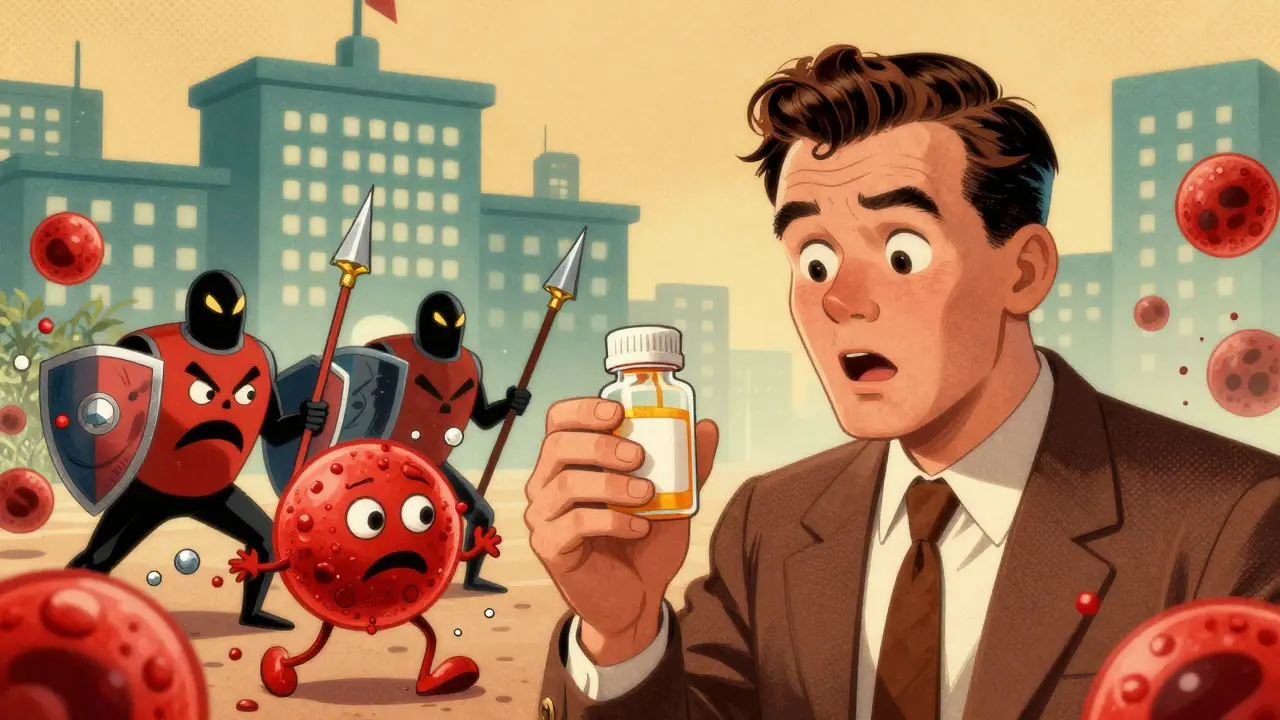
When you take a pill for an infection, pain, or high blood pressure, you expect relief-not your body turning against itself. But for some people, a common medication can trigger a dangerous chain reaction: their immune system starts attacking their own red blood cells. This is drug-induced immune hemolytic anemia (DIIHA), a rare but serious condition where drugs cause red blood cells to break down prematurely. It doesn’t happen often, but when it does, it can crash your hemoglobin in just a few days and send you to the hospital. Recognizing the signs early can mean the difference between a quick recovery and life-threatening complications.
How Medications Destroy Red Blood Cells
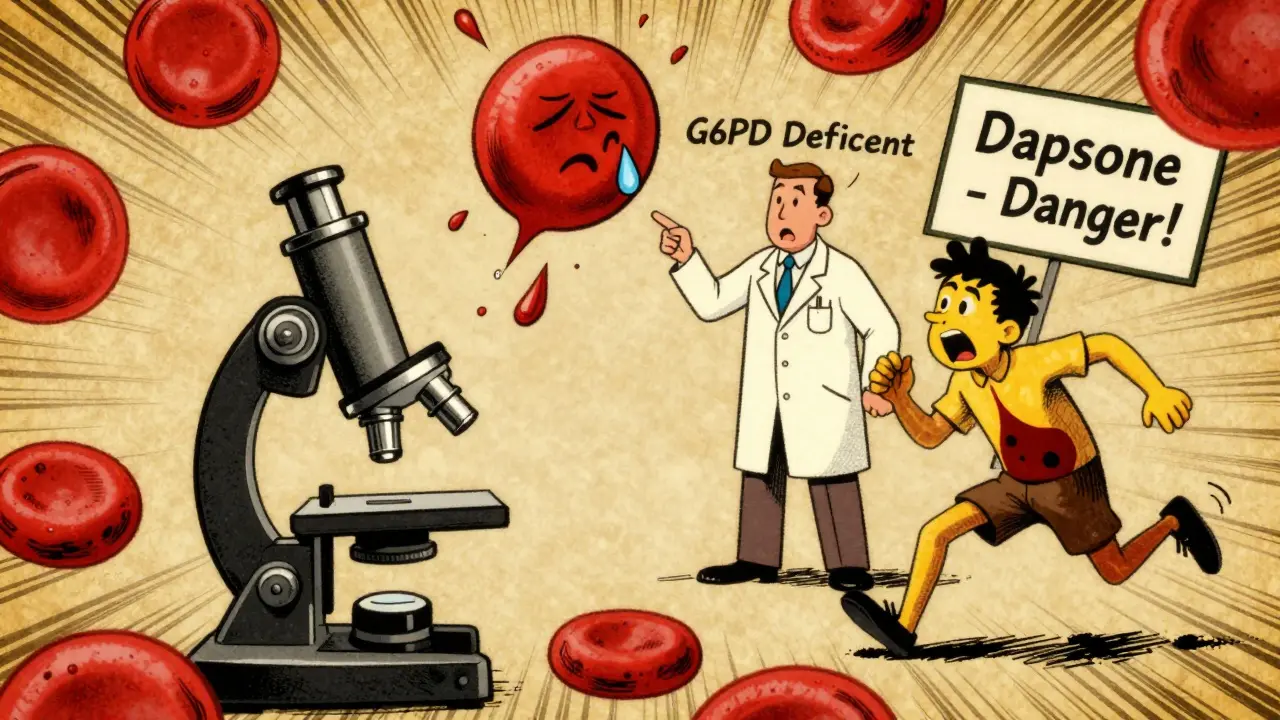
There are two main ways drugs cause red blood cells to die too soon. The first is immune-mediated destruction. Certain medications, especially antibiotics like cefotetan, ceftriaxone, and piperacillin, stick to the surface of red blood cells. Your immune system sees these drug-coated cells as foreign invaders and sends antibodies to destroy them. This process usually takes 7 to 10 days after starting the drug, which is why it’s often missed at first. The direct antiglobulin test (DAT) is positive in 95% of these cases, but even that can be negative early on or with some drug types. The second mechanism is oxidative hemolysis. Some drugs don’t trigger antibodies-they directly damage hemoglobin inside red blood cells. This happens when the cell’s ability to handle oxidative stress breaks down. If you have glucose-6-phosphate dehydrogenase (G6PD) deficiency-a genetic condition affecting 10-14% of African American men and 4-15% of people of Mediterranean descent-you’re at much higher risk. Even normal doses of drugs like dapsone, phenazopyridine, or benzocaine can trigger rapid hemolysis in these individuals. In fact, G6PD deficiency is the most common inherited enzyme disorder linked to drug-induced hemolysis worldwide.Which Medications Are Most Likely to Cause This?
Not all drugs carry the same risk. Cephalosporin antibiotics make up about 70% of immune-mediated cases. Among them, third-generation ones like ceftriaxone and cefotetan are the biggest culprits. Other common offenders include:- Penicillin and related antibiotics
- Methyldopa (used for high blood pressure, now rarely prescribed)
- NSAIDs like ibuprofen or naproxen
- Nitrofurantoin (for urinary tract infections)
- Levofloxacin and other fluoroquinolones
- Dapsone (used for leprosy and some skin conditions)
- Phenazopyridine (Pyridium, for urinary pain)
- Primaquine and sulfa drugs
- Topical benzocaine (in throat sprays or numbing gels)
What’s surprising is that many of these are everyday prescriptions. A patient might take ceftriaxone for a sinus infection, then develop fatigue and yellow eyes a week later. No one connects the dots until the blood work comes back.
What Symptoms Should You Watch For?
The symptoms of drug-induced hemolytic anemia aren’t unique. They mimic other types of anemia or even the flu. That’s why it’s so often missed. But if you’re taking one of the high-risk drugs and start feeling:- Extreme fatigue (reported in 92% of cases)
- Shortness of breath during light activity
- Rapid heartbeat (over 100 beats per minute)
- Pale skin or yellowing of the eyes and skin (jaundice)
- Dark urine (like tea or cola)
- Back or abdominal pain
-you need to act. Symptoms can appear suddenly. In severe cases, hemoglobin can drop 3 to 5 grams per deciliter in just 48 to 72 hours. That’s enough to trigger heart stress. Studies show that when hemoglobin falls below 6 g/dL quickly, 8% of patients develop heart failure, 15% get cardiomyopathy, and 22% suffer arrhythmias.
How Doctors Diagnose It
There’s no single test that catches this on its own. Diagnosis is a puzzle. First, your doctor confirms hemolysis is happening by checking three key blood markers:- Indirect bilirubin above 3 mg/dL
- Lactate dehydrogenase (LDH) above 250 U/L
- Haptoglobin below 25 mg/dL
If those are off, they look at your peripheral blood smear under a microscope. Immune-mediated DIIHA often shows spherocytes-small, round red blood cells without the normal dip. Oxidative hemolysis shows Heinz bodies, which are clumps of damaged hemoglobin. A positive DAT confirms immune involvement. But here’s the catch: if you’re tested during active hemolysis, your G6PD level might look normal. That’s because the test measures older red cells, and during an attack, those are the ones getting destroyed. The newer, healthier cells (reticulocytes) still have normal enzyme levels. That’s why G6PD testing should wait 2 to 3 months after the episode.
What Happens After Diagnosis?
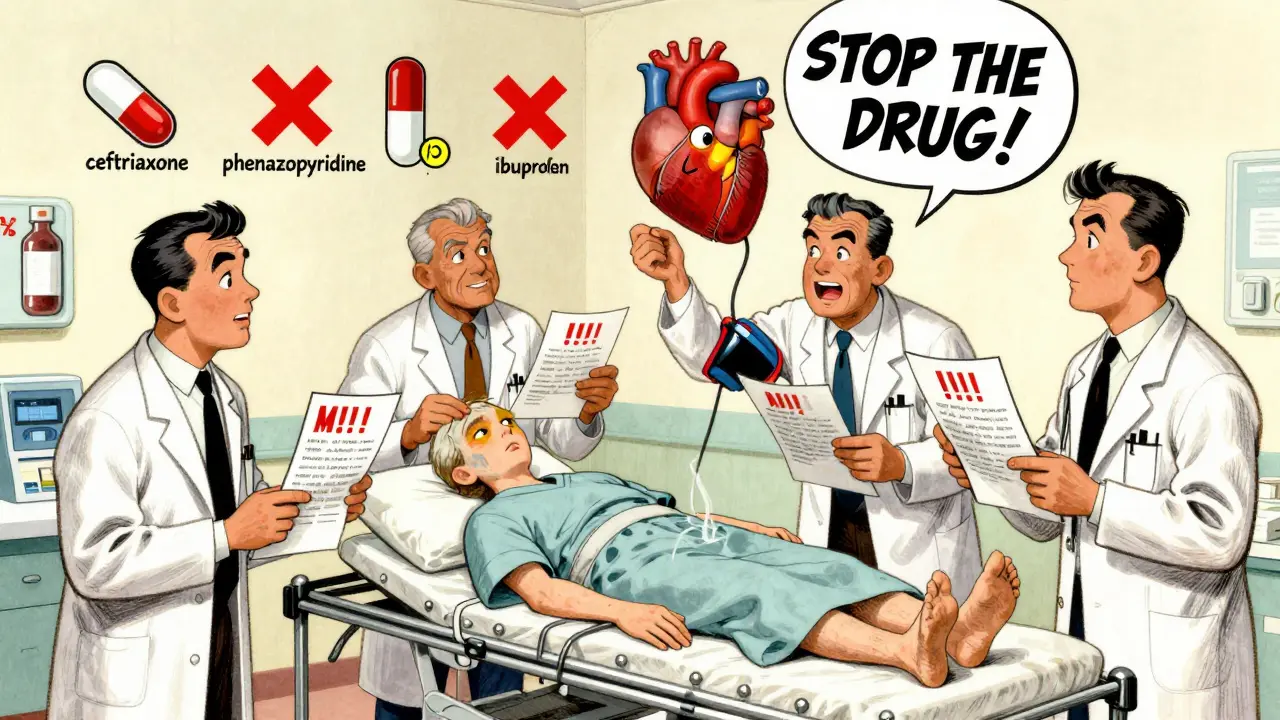
The first and most critical step? Stop the drug. Immediately. In over 95% of cases, hemolysis stops once the trigger is removed. Hemoglobin levels usually stabilize within 7 to 10 days and return to normal in 4 to 6 weeks. No fancy treatment needed-just time and rest.But if your hemoglobin is dangerously low-below 7 or 8 g/dL-you’ll need a blood transfusion. Don’t delay. Severe anemia strains your heart. And here’s something many don’t know: people with DIIHA are at higher risk for blood clots. Even though they’re anemic, their blood becomes hypercoagulable. A 2023 study found 34% of severe DIIHA cases developed deep vein thrombosis or pulmonary embolism. That’s why doctors often give blood thinners during recovery.
Corticosteroids like prednisone were once standard, but evidence is weak. Most patients recover without them. If the immune attack keeps going after stopping the drug-because the body made autoantibodies that stick around-then stronger treatments kick in: intravenous immunoglobulins (IVIG), then drugs like rituximab, azathioprine, or cyclosporine. About 78% of these refractory cases respond within 3 to 6 weeks.
If you have methemoglobinemia (a dangerous form of oxygen deprivation from oxidative damage), you’ll get methylene blue. But never give methylene blue to someone with G6PD deficiency-it can trigger even more hemolysis. It’s a deadly mistake.
Why This Condition Is Often Missed
A 2024 multicenter study found that 43% of DIIHA cases were misdiagnosed at first. Why? Because doctors think of common causes first: bleeding, iron deficiency, chronic disease. They don’t always think, “What drug did this person start?” Especially if it was weeks ago. Internal medicine residents correctly diagnosed DIIHA in only 58% of cases on their first try. After targeted training on drug culprits and lab patterns, that jumped to 89%. Education matters.Also, many doctors still think methyldopa is the main cause. It’s not anymore. Cephalosporins are. And many patients don’t realize that even a single dose of phenazopyridine for a UTI can trigger hemolysis in someone with undiagnosed G6PD deficiency.
What You Can Do
If you’re on any of these medications and feel unusually tired, short of breath, or notice yellowing of your skin or eyes, talk to your doctor immediately. Bring your full medication list-even over-the-counter and herbal products. Don’t assume it’s just “the flu.”If you’re of African, Mediterranean, or Southeast Asian descent, ask your doctor about G6PD testing before starting any new drug. It’s a simple blood test. Knowing your status can prevent a medical emergency.
And if you’ve had hemolytic anemia before, keep a list of the drugs that caused it. Share it with every doctor you see. That’s your safety net.
What’s Changing in Treatment
New tools are emerging. Two clinical trials in 2024 showed promise: one testing efgartigimod (a drug that clears antibodies) had a 67% response rate in 4 weeks. Another is studying complement inhibitors to block the immune attack at its source. Hospitals are also starting to build alerts into electronic health records-flagging high-risk drugs for patients with a history of hemolysis. One hospital system saw a 32% drop in severe DIIHA cases after implementing these alerts.But the core hasn’t changed. Stop the drug. Test the blood. Support the body. Monitor for clots. That’s still the gold standard.
Can a single dose of a drug cause hemolytic anemia?
Yes, especially in people with G6PD deficiency. Oxidative hemolysis can occur within 24 to 72 hours of taking a single dose of drugs like dapsone, phenazopyridine, or benzocaine. Immune-mediated cases usually take longer-7 to 10 days-because the body needs time to produce antibodies. But even one pill can trigger a severe reaction in susceptible individuals.
Is hemolytic anemia from drugs permanent?
No. In most cases, stopping the drug leads to full recovery within 4 to 6 weeks. The bone marrow replaces destroyed red blood cells, and hemoglobin levels return to normal. Only in rare cases where the immune system keeps attacking on its own (drug-independent autoantibodies) does the condition persist-and even then, it’s treatable with immunosuppressants.
Can children get drug-induced hemolytic anemia?
It’s rare in children, but it does happen. When it does, children often present with more severe anemia than adults-average hemoglobin levels around 5.2 g/dL versus 6.8 g/dL in adults. Because symptoms can be mistaken for infections or viruses, pediatric cases are frequently delayed in diagnosis. Any child on a high-risk drug who develops jaundice, dark urine, or extreme fatigue needs urgent evaluation.
Can I take NSAIDs if I’ve had hemolytic anemia before?
It depends. If your previous episode was caused by an NSAID, avoid all of them. If it was caused by something else-like a cephalosporin-you might still be able to take NSAIDs safely. But you need to know the exact trigger. Never assume. Keep a record of the drug that caused your hemolysis and share it with every healthcare provider. When in doubt, choose acetaminophen instead.
Should I get tested for G6PD deficiency before taking new medications?
If you’re of African, Mediterranean, Middle Eastern, or Southeast Asian descent, yes. G6PD deficiency is common in these populations and often undiagnosed. Even a routine antibiotic or pain reliever can trigger a dangerous hemolytic crisis. Testing is simple, inexpensive, and can prevent hospitalization. If you’ve had unexplained jaundice or dark urine after taking medication in the past, get tested regardless of background.

srishti Jain
December 29, 2025 AT 14:15Shae Chapman
December 31, 2025 AT 14:09Glendon Cone
January 1, 2026 AT 07:32henry mateo
January 1, 2026 AT 19:22Sandeep Mishra
January 2, 2026 AT 20:58Aayush Khandelwal
January 3, 2026 AT 17:40Kunal Karakoti
January 5, 2026 AT 09:07Colin L
January 6, 2026 AT 03:28Cheyenne Sims
January 7, 2026 AT 11:43Nadia Spira
January 9, 2026 AT 06:22Kelly Gerrard
January 10, 2026 AT 04:55Henry Ward
January 10, 2026 AT 22:14Joseph Corry
January 11, 2026 AT 16:14