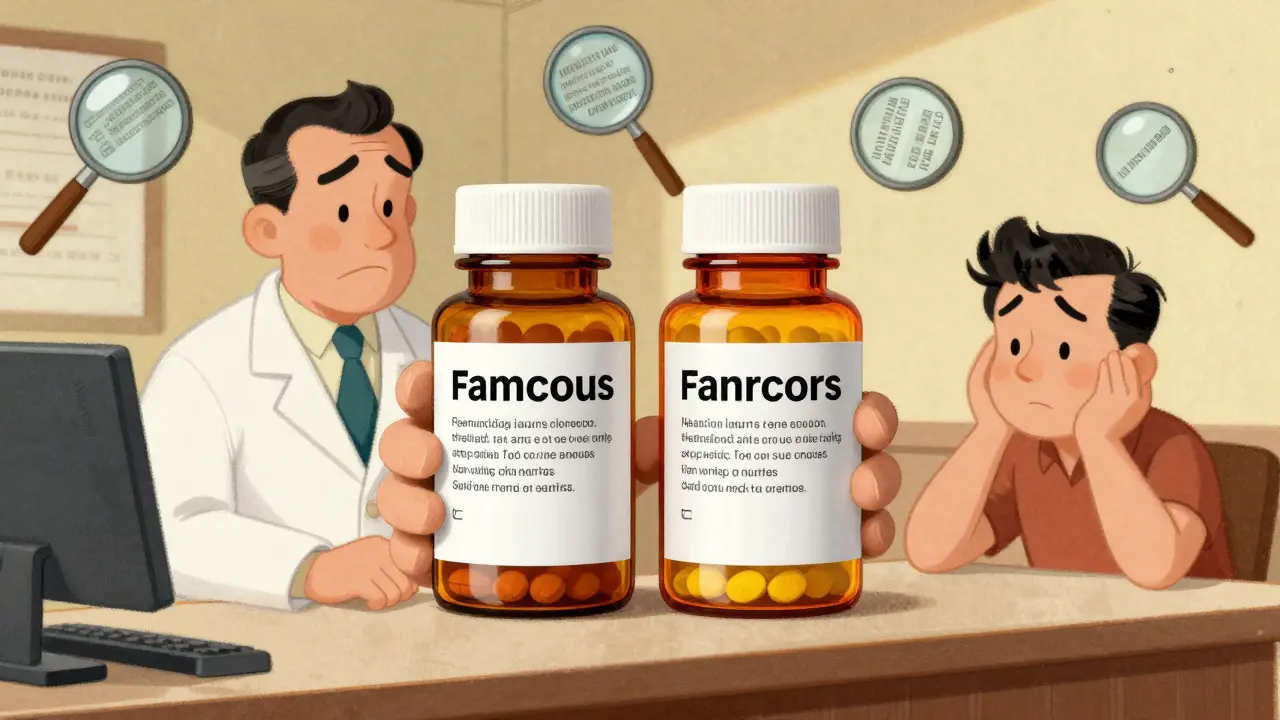
When you pick up a generic pill at the pharmacy, you expect it to work just like the brand-name version. But what you don’t see-what’s printed on the label-is just as critical. The FDA doesn’t just require generic drugs to have the same active ingredient or bioequivalence. It demands that their labeling be nearly identical to the brand-name drug’s, down to the wording of warnings, dosage instructions, and side effects. This isn’t a suggestion. It’s the law.
Why Identical Labeling Matters
Generic drugs make up 92.6% of all prescriptions filled in the U.S. But they only cost 23.4% of what brand-name drugs do. That’s a huge savings for patients and the healthcare system. But if the label says something different than the brand version, that savings comes with risk. A pharmacist might warn a patient about a side effect that isn’t listed on the generic’s label. A doctor might prescribe a dose based on the brand’s instructions, unaware the generic’s label is outdated. The FDA’s rule is simple: if the brand-name drug’s label changes, the generic’s must change too-exactly the same way.What the Law Actually Says
Under Section 505(j)(2)(A)(v) of the Federal Food, Drug, and Cosmetic Act, and codified in 21 CFR 314.94(a)(8), generic drug manufacturers must submit an Abbreviated New Drug Application (ANDA) that proves their product matches the Reference Listed Drug (RLD) in every key way: strength, dosage form, route of administration, and yes-labeling. The only allowed differences are the manufacturer’s name, address, and National Drug Code (NDC) number. Even the font size and spacing can’t be changed unless required by packaging constraints. The FDA’s Physician Labeling Rule (PLR), introduced in 2006, set the standard format for all prescription drug labels. It breaks down information into 24 specific sections: Highlights of Prescribing Information, Recent Major Changes, Indications and Usage, Dosage and Administration, Contraindications, Warnings and Precautions, Adverse Reactions, Drug Interactions, Use in Specific Populations, and more. Generic drugs must adopt this format as soon as the RLD does. There’s no wiggle room.How Labeling Updates Work (And Why They’re Slowed Down)
Here’s where things get tricky. Brand-name manufacturers can update their labels independently using a "Changes Being Effected" (CBE) supplement. They can add a new safety warning, change a dosage recommendation, or update contraindications-and implement it within 30 days, even before the FDA formally approves the change. They’re allowed to act first, notify later. Generic manufacturers? Not so much. They have to wait. They can’t update their label until the FDA approves the RLD’s update. Then-and only then-can they file their own labeling supplement to match it. This creates a dangerous lag. A 2024 study in JAMA Internal Medicine found this delay affects 89% of all prescriptions filled in the U.S. On average, critical safety updates take 6 to 12 months to reach generic versions. The 2022 valsartan recall is a chilling example. The brand manufacturer updated its label to warn about contamination risks. Generic manufacturers couldn’t update their labels until the FDA approved the change. By the time they could, hundreds of thousands of patients had already received the same contaminated pills with outdated labels.
What Generic Manufacturers Must Do
Generic drug companies can’t afford to be passive. They’re legally responsible for tracking every change to their RLD’s label. The FDA’s Drugs@FDA database, updated weekly, is the official source. As of January 2025, it contains 2,850 reference listed drugs. Manufacturers must monitor it daily. Leading companies assign 3 to 5 full-time regulatory staff per 50 approved products just to track labeling changes. Many subscribe to FDA’s CDER electronic alerts, which send email notifications when labeling updates occur in specific therapeutic areas. According to a 2024 FDA survey, 82% of manufacturers rely on this system. But even then, mistakes happen. A 2024 FDA audit found 17% of RLD entries in the Orange Book had temporary inconsistencies with Drugs@FDA during transitions. That means manufacturers must cross-check multiple sources. One wrong assumption can lead to a warning letter.Penalties for Getting It Wrong
Labeling issues are the number one reason the FDA issues complete response letters to ANDA applications. In fiscal year 2024, 37% of those letters cited labeling problems. Between January 2023 and December 2024, the FDA sent out 47 warning letters specifically because generic drug labels didn’t match the RLD. These aren’t just bureaucratic snags. They’re safety failures. A patient might overdose because the label says "take once daily" when the RLD says "take twice daily." A patient with kidney disease might be given a drug contraindicated in their condition because the warning was missing. The FDA doesn’t take this lightly. Non-compliance can lead to product seizures, import bans, or even criminal charges.What’s Changing in 2025 and Beyond
The FDA knows the system is broken. In 2020, the MODERN Labeling Act gave the agency tools to fix outdated labels when the RLD is no longer on the market-something that affects over 1,200 generic products. Draft guidance released in January 2025 outlines how manufacturers can update labels for these orphaned products. A proposed rule, still pending as of January 2026, would allow generic manufacturers to update safety labels independently under certain conditions. This could close the dangerous gap that’s left patients vulnerable for months. Even bigger changes are coming. The FDA plans to launch its Next Generation Generic Drug Labeling System in Q3 2025. It uses AI to scan Drugs@FDA for changes, auto-generate updates, and notify manufacturers within hours-not weeks. Beta testing begins April 15, 2025, with 15 major players.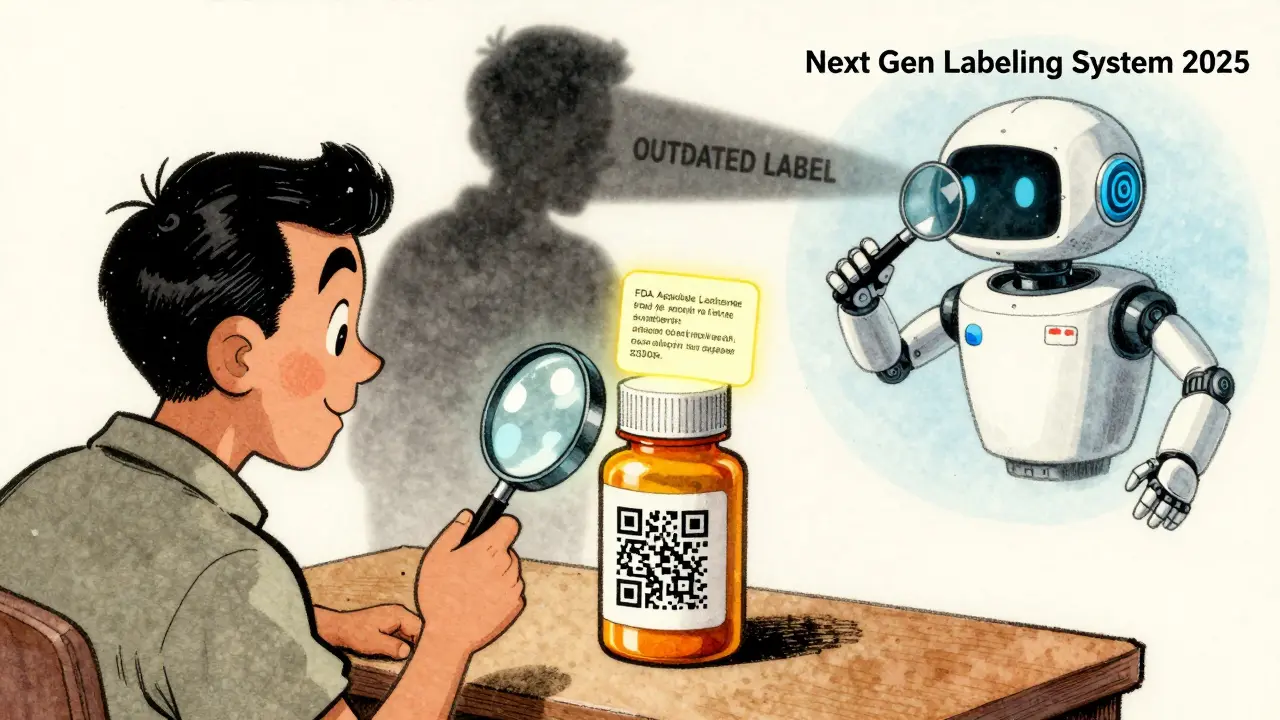
What Patients and Providers Should Know
If you’re a patient: Always check the label on your generic prescription. If it doesn’t match what your doctor told you-or what you remember from the brand-name version-ask your pharmacist. Don’t assume it’s the same. If you’re a provider: Know that generic labels lag. When prescribing, always refer to the most current RLD label, not just the generic’s packaging. If a safety alert comes out for a brand drug, assume the generic hasn’t updated yet.Electronic Labels and QR Codes
The FDA now requires medication guides for generics to include a URL or QR code linking directly to the current FDA-approved label. These links must use HTTPS and point to a PDF version of the exact document in Drugs@FDA. No redirects. No landing pages. Just the label. This change, implemented in 2025, ensures patients and providers can always access the most up-to-date information-even if the paper label hasn’t been updated yet.The Bottom Line
Generic drugs save the U.S. healthcare system over $647 billion a year. But that savings only works if the labels are accurate. The FDA’s labeling rules are strict for a reason: safety can’t be compromised for cost. Right now, the system favors uniformity over speed. But with new technology and proposed rule changes, that’s starting to shift. Until then, everyone-manufacturers, pharmacists, doctors, and patients-needs to treat generic drug labels like they’re the same as the brand’s. Because by law, they should be.Can a generic drug have different side effects listed than the brand-name version?
No. Under FDA regulations, generic drug labels must be identical to the Reference Listed Drug (RLD) in all safety information, including side effects, warnings, and contraindications. The only permitted differences are the manufacturer’s name, address, and NDC number. If the brand updates its side effect list, the generic must update it too-exactly the same way.
How often do generic drug labels need to be updated?
Generic drug labels must be updated as soon as the Reference Listed Drug’s label changes. There’s no fixed schedule-it depends entirely on when the brand manufacturer submits a labeling supplement to the FDA. Once the FDA approves the RLD update, the generic manufacturer has a set timeline (based on the supplement type) to match it. Failure to update within that window can trigger enforcement action.
What is a Reference Listed Drug (RLD)?
A Reference Listed Drug (RLD) is the original brand-name drug that a generic version is designed to copy. The FDA designates the RLD for each generic application. All labeling, strength, dosage form, and bioequivalence claims for the generic must match the RLD exactly. The RLD’s label is the legal standard for all generic versions of that drug.
Why can’t generic manufacturers update their labels faster when new safety data emerges?
Current FDA rules require generic manufacturers to wait for the RLD’s label to be updated first. Brand manufacturers can submit a "Changes Being Effected" supplement and implement safety updates immediately. Generics cannot. This creates delays of 6 to 12 months, which the FDA acknowledges as a safety gap. A proposed rule in late 2023 would allow generics to update labels independently in urgent cases-but as of January 2026, it’s still pending.
How do I check if a generic drug’s label is up to date?
Go to the FDA’s Drugs@FDA database (https://www.accessdata.fda.gov/scripts/cder/daf/). Search for the brand-name drug, then find its approved labeling document. Compare it to the label on your generic’s packaging. If they don’t match, contact your pharmacist or the manufacturer. Many generics now include a QR code on the label that links directly to the FDA-approved version-scan it to verify.
Are there any exceptions to the identical labeling rule?
Yes, but they’re very limited. The FDA allows differences only in the manufacturer’s name and address, the NDC number, and minor formatting adjustments required by packaging constraints. Even font size and spacing must match unless the packaging physically can’t accommodate it. Any other deviation-like removing a warning, changing a dosage recommendation, or altering contraindications-is a violation of federal law.
Ryan Pagan
January 28, 2026 AT 16:00Yo, this is wild. I work in pharma compliance and let me tell you - the lag between brand and generic label updates is a ticking time bomb. I’ve seen pharmacists get called out for ‘misinforming’ patients because the generic label hadn’t caught up. The FDA’s system is built on paper trails in 2025? Come on. We’ve got AI that can predict stock crashes - why can’t it auto-sync drug labels? The valsartan recall? That wasn’t an accident. That was negligence dressed up as regulation.
Paul Adler
January 29, 2026 AT 02:53While the intent behind identical labeling is clearly rooted in patient safety, the practical implementation reveals a systemic imbalance. Brand manufacturers enjoy operational autonomy under the CBE mechanism, while generics are bound by bureaucratic inertia. This disparity, though legally defensible, creates a moral hazard - patients are exposed to outdated information not due to corporate malice, but due to structural delay. Reform is not merely advisable; it is ethically imperative.
ryan Sifontes
January 29, 2026 AT 22:56Megan Brooks
January 30, 2026 AT 23:53It’s fascinating how a system designed to ensure equity - identical labeling - ends up entrenching asymmetry. The generic manufacturer bears the burden of vigilance without the authority to act. This isn’t regulation; it’s delegation of responsibility without power. One wonders if the FDA’s reliance on outdated legal frameworks reflects a deeper reluctance to confront the realities of modern pharmacovigilance.
Frank Declemij
January 31, 2026 AT 17:51Kacey Yates
February 1, 2026 AT 18:55Laura Arnal
February 2, 2026 AT 11:15This is why I love tech but hate bureaucracy 😔 The AI system coming in 2025? YES. Finally. Someone’s listening. I hope they build in alerts for pharmacists too - maybe a browser extension that flags outdated labels? 🙏 Let’s make this right for real people, not just compliance officers.
Jasneet Minhas
February 3, 2026 AT 12:46India produces 40% of the world’s generics. And yet here we are, watching American regulators play chess with patient safety while our factories churn out pills with labels that haven’t changed since 2018. Funny how the rules only matter when they’re convenient for the West, no? 🤷♂️
Eli In
February 5, 2026 AT 07:48As someone who grew up in a household where generics were the only option, I never realized how much risk came with that savings. This post opened my eyes. Thank you. The QR code thing? That’s the kind of small, human-centered fix that actually matters. 🙏
rajaneesh s rajan
February 5, 2026 AT 11:24So the system says: ‘You can’t update your label unless the brand does.’ But the brand? They update whenever they feel like it. So who’s really in charge here? The FDA? Or the brand-name companies pulling strings from behind the curtain? 🤔
Pawan Kumar
February 6, 2026 AT 05:14Let’s be honest - the FDA’s entire generic approval process is a shell game. The ‘identical labeling’ rule is a smokescreen. The real goal is to maintain brand loyalty. Why else would they let a $200 billion industry dictate the pace of safety updates? This isn’t regulation. It’s corporate capture.
DHARMAN CHELLANI
February 7, 2026 AT 17:42kabir das
February 8, 2026 AT 03:22And yet... and yet... the FDA’s audit found 17% of RLD entries inconsistent with Drugs@FDA - meaning even the source is unreliable. So we’re asking manufacturers to match a moving target... that might not even exist? This isn’t a system - it’s a glitch in the matrix. Who’s really responsible here? The FDA? The manufacturers? Or the algorithm that can’t even keep its own database straight?
Keith Oliver
February 9, 2026 AT 21:08Bro, the FDA’s ‘Next Generation Labeling System’? That’s just a fancy name for ‘we finally got around to automating what we should’ve done in 2010.’ And you’re telling me small manufacturers have to hire 3–5 full-time people just to track label changes? That’s not compliance - that’s a tax on being a generic company. Meanwhile, the big boys? They’ve got AI teams and legal departments that lobby the FDA to keep the rules this broken. It’s rigged.