Side Effect Frequency Calculator
How Side Effects Translate to Real Patients
This calculator demonstrates how FDA's proposed Patient Medication Information (PMI) rule provides specific side effect frequencies instead of vague terms like "common." For example, the new standard requires: "48% of users experience headache" instead of "headache is a common side effect."
Using the percentages in the new PMI format, you can calculate exactly how many patients experience specific side effects in a given population.
Results
The U.S. Food and Drug Administration (FDAThe federal agency responsible for protecting public health by regulating food, drugs, medical devices, and more) has proposed a major overhaul of how prescription drug information is presented to patients. This change centers on the Patient Medication Information (PMI) rule published in the Federal Register on May 31, 2023 (Docket No. FDA-2023-N-11354). Right now, only about 150 prescription drugs require Medication Guides-less than 10% of all prescriptions. The new PMI rule would cover every single outpatient prescription, including blood transfusions in outpatient settings. Medication errors cause 1.3 million injuries and 7,000 deaths yearly in the U.S., according to the Institute of MedicineIndependent nonprofit organization that provides health policy recommendations's 2006 report. The FDA says standardized PMI could cut these numbers significantly.
What's Changing: The PMI Proposal Explained
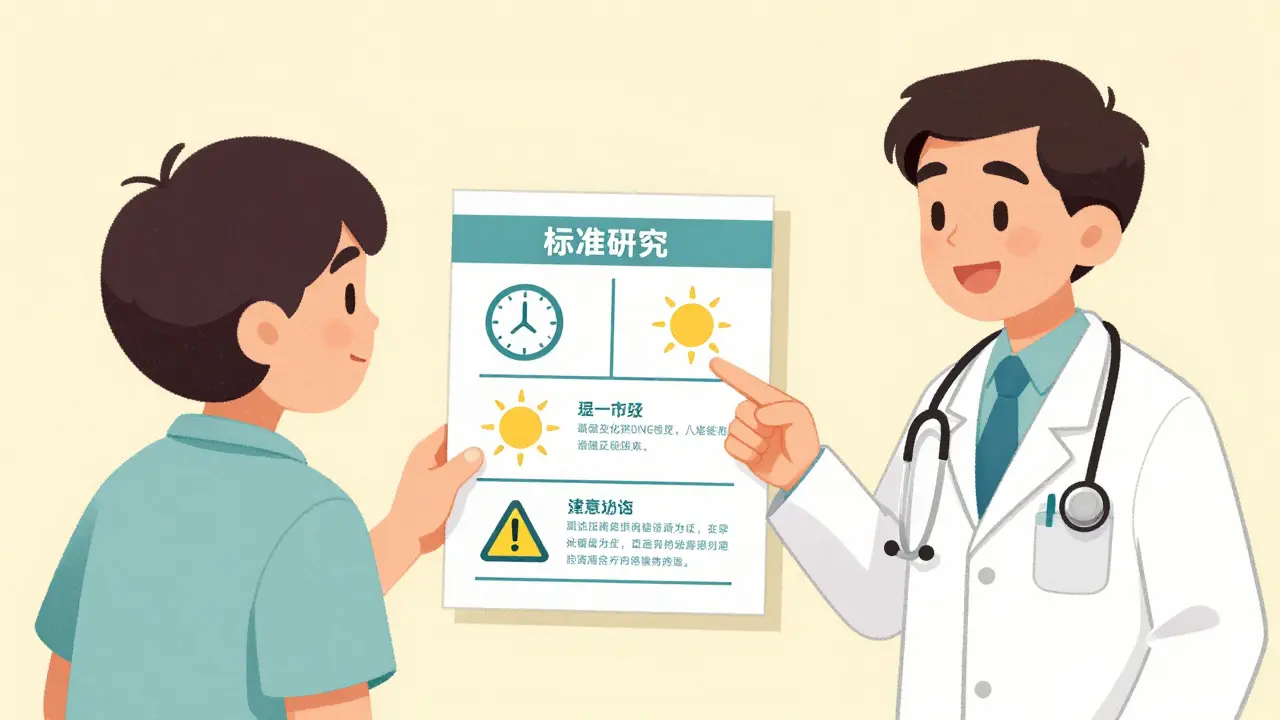
Current Medication Guides only exist for drugs with serious safety risks, like opioids or blood thinners. These guides vary widely between pharmacies, making it hard for patients to know what to expect. The new PMI rule requires a single-page document for every outpatient prescription. It must start with "Use exactly as prescribed," followed by clear directions, safety warnings, and common side effects. Unlike today's inconsistent labels, PMIs will use plain language, 12-point font, and avoid promotional language. The FDA tested prototypes with patients and found they understood critical information 25-40% better than current guides, especially those with low health literacy. About 80 million U.S. adults struggle with health literacy, making this change crucial.
How the New PMI Format Works
The PMI has strict formatting rules. It must include:
- A "Use exactly as prescribed" header
- Administration instructions (e.g., "Take one tablet by mouth daily")
- Special handling requirements (like refrigeration)
- Storage and disposal instructions
- Key safety warnings (e.g., "Do not take with alcohol")
- Common side effects with specific frequencies (e.g., "48% of users experience headache")
Pharmacies will provide PMIs in paper or electronic form. Electronic versions must meet Section 508 accessibility standards. The FDA says this flexibility respects modern preferences while ensuring everyone can access the information. Manufacturers must update PMIs whenever new safety data emerges. This prevents outdated advice-like old opioid labels that didn't clearly state addiction risks.
Current System vs. Proposed PMI: A Comparison
| Feature | Current Medication Guides | New PMI |
|---|---|---|
| Scope | Only 150 prescription drugs | All outpatient prescription drugs |
| Format | Varies by pharmacy | Standardized single-page layout |
| Health Literacy Support | Not standardized | Plain language, 12-point font size |
| Electronic Option | No | Yes, with Section 508 accessibility compliance |
| Required Information | Focuses on serious risks | Essential directions, safety info, common side effects with specific frequencies |
Why This Matters for Patients and Providers
Patients often miss critical details on current labels. A University of Pittsburgh study found patients wanted specific side effect numbers instead of vague terms like "common." For example, knowing "48% of users get fever" helps them prepare better than "fever is a common side effect." The FDA's own testing showed patients retained 30% more safety information with PMI-style labels. Higher retention means fewer mistakes-like taking double doses or skipping doses due to confusion. Pharmacies also benefit. Consistent labels reduce training time and errors. A 2018 study in the Journal of the American Pharmacists AssociationPeer-reviewed journal covering pharmacy practice and research found patients with clear instructions had 30% higher adherence rates.
Industry Reactions and Challenges
The American Medical AssociationProfessional organization representing physicians and medical students supports the move but warns against oversimplifying complex treatments. Dr. Bobby Mukkamala, AMA President, says, "Decisions about starting opioid therapy should be made on whether benefits outweigh risks." Some researchers argue the PMI doesn't go far enough. The University of Pittsburgh's "Decision Critical PMI" prototype included medication effectiveness rates and mechanisms of action, which the FDA's proposal omits. For instance, their mifepristone PMI specified "43% experience headache" instead of "headache is common."
Pharmacists have mixed feelings. A survey of 1,200 pharmacists by the American Pharmacists AssociationProfessional organization for pharmacists showed 62% worry about extra time per prescription, but 78% believe it will improve safety. Manufacturing costs are also a concern. The IQVIAGlobal healthcare intelligence company estimates 6.7 billion prescriptions are dispensed yearly in outpatient settings. Scaling PMIs to all these drugs could cost $1.2 billion over five years, with manufacturers covering 65% of expenses.

What's Next for PMI Implementation
The FDA plans phased implementation. Large drugmakers must comply within 24 months of the final rule, smaller companies get 36 months. The FDA expects the rule to be finalized in Q2 2024, with full rollout by 2025. Pharmacies will need to integrate PMIs into dispensing workflows, adding 30-60 seconds per prescription initially. Staff training will take 2-4 hours per employee, with annual refreshers. The National Community Pharmacists AssociationOrganization representing independent pharmacies warns 15% of small pharmacies might struggle without financial support. Meanwhile, the FDA is developing templates and a review team to handle 10,000+ PMI submissions yearly. International regulators like the European Medicines AgencyRegulatory body for medicines in the European Union are watching closely, with plans for similar rules by 2025.
Frequently Asked Questions
What is the Patient Medication Information (PMI)?
The Patient Medication Information (PMI) is a standardized single-page document required for all outpatient prescription drugs. It provides essential safety instructions, usage directions, and side effect details in plain language. Unlike current Medication Guides (which only cover 150 drugs), PMI applies to every prescription dispensed outside hospitals. The FDA developed it to reduce medication errors that cause over 1.3 million injuries yearly.
How is PMI different from current Medication Guides?
Current Medication Guides vary widely between pharmacies and only cover about 10% of prescriptions. They focus mainly on serious risks like addiction or birth defects. PMI standardizes the format for all prescriptions, includes specific side effect frequencies (e.g., "48% experience fever"), and requires clear directions for use. It also offers electronic access with accessibility features, which current guides don't provide.
When will the PMI rule take effect?
The FDA plans to finalize the rule in Q2 2024. Large drug manufacturers must comply within 24 months of finalization, while smaller companies get 36 months. Full rollout is expected by 2025. Pharmacies will start distributing PMIs as drugmakers submit approved versions.
Will patients receive PMI electronically?
Yes. Pharmacies can offer electronic PMIs via email, patient portals, or apps. These must meet Section 508 accessibility standards for people with disabilities. Paper copies will still be available for those who prefer them. The FDA says this flexibility ensures everyone-regardless of tech access-can use the information safely.
How will pharmacies handle the new PMIs?
Pharmacies will add PMIs to their existing dispensing workflow. Staff will need 2-4 hours of initial training, plus annual refreshers. Each prescription may take 30-60 extra seconds during the first year. The FDA has created templates to simplify content creation. Independent pharmacies might need financial support to cover costs, as 15% could struggle without it.

Lakisha Sarbah
February 7, 2026 AT 17:57The FDA's new PMI rule covers all outpatient prescriptions, not just the 150 drugs now. Standardized single-page info with plain language and specific side effect frequencies could cut errors. I've had trouble with unclear labels before. Like 'common side effect' without numbers. Now they say '48% get headache' which is way better. This definately helps people with low health literacy.
Ariel Edmisten
February 8, 2026 AT 03:18Standardized labels save lives. Simple.
Niel Amstrong Stein
February 8, 2026 AT 14:11The new PMI rule standardizes info for all outpatient prescriptions. 🌟 Clear directions, specific side effect frequencies like '48% get headache', and accessibility. Electronic options with Section 508 compliance ensure everyone can access it. This is a big step forward 👌.
Paula Sa
February 10, 2026 AT 06:19I agree with the points made earlier. Standardizing medication info is crucial. Especially for those who struggle with health literacy. The inclusion of specific frequencies like '48% experience headache' makes it so much clearer. It's about time we prioritize patient understanding over vague terms. This could really make a difference in medication safety.
Mary Carroll Allen
February 11, 2026 AT 08:35This is such a neeeded change! I've seen so many people confused by vague labels. 'Common side effect' is useless-why not say '48% get headache'? The FDA's doing it right. Also, electronic access with accessibility standards is key. But wait, will small pharmacies handle this? Costs might be tough for them. Either way, this is a huge win for patients. 🙌
Joey Gianvincenzi
February 11, 2026 AT 22:33The implementation of the Patient Medication Information rule represents a necessary and long-overdue reform. However, the current proposal lacks sufficient detail regarding the enforcement mechanisms and potential consequences for non-compliance. It is imperative that the FDA establishes rigorous oversight to ensure that all pharmaceutical manufacturers adhere to the new standards without exception. Failure to do so would undermine the entire initiative.
Amit Jain
February 12, 2026 AT 15:20The FDA is overcomplicating things. All this regulation just adds costs without real benefits. Pharmacies already have enough on their plate. This is bureaucratic nonsense. Let's focus on real issues instead of paperwork.
Sarah B
February 13, 2026 AT 21:06This rule is essential No excuses Must be done
Eric Knobelspiesse
February 14, 2026 AT 18:33This rule is great but wait-how many people actually read the PMI? Most just glance at it. Also, the cosst to manufacturers is insane. $1.2 billion? That's crazy. But hey, maybe it's worth it. I dunno. Just saying.
Heather Burrows
February 16, 2026 AT 15:18Oh sure, 'most just glance at it'-but that's why the FDA made it clear and concise. Lazy people should read it properly. The cost is justified. Safety first. End of story.