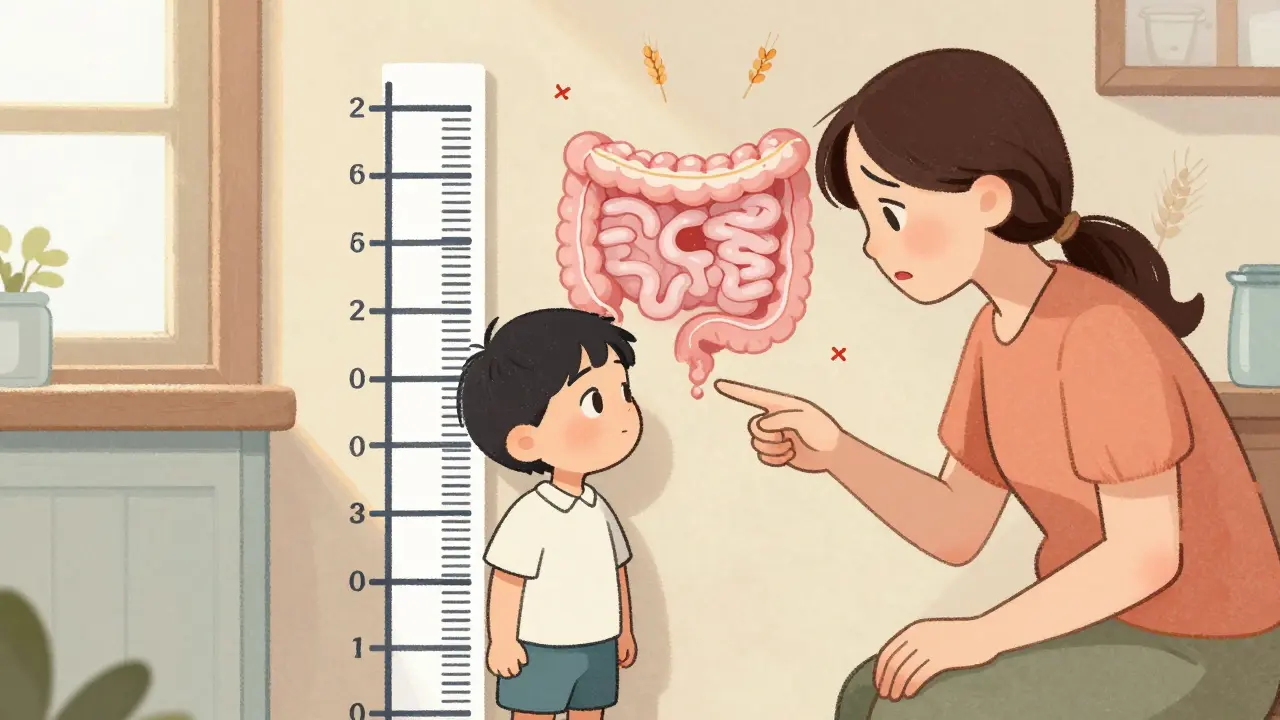
When a child isn’t growing like they should, parents often worry about nutrition, genetics, or just being a late bloomer. But what if the real issue is something hidden in their food? Celiac disease is one of the most common but underdiagnosed causes of growth delay in kids. It’s not a food allergy or a digestive quirk-it’s an autoimmune condition where the body attacks its own intestines every time gluten is eaten. And for children, that means stunted growth, tiredness, and long-term health risks if left untreated.
Why Growth Problems Are a Red Flag for Celiac Disease
In adults, celiac disease often shows up as bloating, diarrhea, or fatigue. But in kids, the most telling sign is often something quieter: they’re not gaining height or weight like other children their age. Up to 40% of children diagnosed with celiac disease are first identified because they’re shorter than expected for their age. This isn’t just about being small-it’s about a body that can’t absorb the nutrients it needs to grow.
The lining of the small intestine is covered in tiny finger-like projections called villi. These are the body’s nutrient absorption factories. In celiac disease, gluten triggers an immune response that flattens these villi. When they’re damaged, the surface area for absorbing vitamins, minerals, and calories drops by 60% to 90%. That’s why iron, calcium, vitamin D, and protein don’t get absorbed properly. Iron deficiency leads to anemia. Low vitamin D weakens bones. And without enough calories and protein, growth slows or stops.
Studies show that children with celiac disease often have delayed bone age-meaning their bones are physically younger than their calendar age. This isn’t a bad thing; it’s actually a good sign. It means their body still has time to catch up. Once gluten is removed, many kids start growing faster than their peers for a while, making up for lost time. About 85% reach their expected adult height within a few years of starting a gluten-free diet.
How Celiac Disease Is Tested in Children
Testing for celiac disease in kids has gotten smarter and less invasive. The first step is a simple blood test: tissue transglutaminase IgA (tTG-IgA). This test looks for antibodies the body makes when gluten is present. It’s 98% accurate when done right. But there’s a catch-some kids are IgA deficient, which can give a false negative. That’s why doctors always check total IgA levels at the same time.
If the tTG-IgA is high-especially 10 times above the normal limit-and the child has symptoms like poor growth, diarrhea, or abdominal pain, doctors may skip the biopsy. According to 2020 guidelines from ESPGHAN, children with very high antibody levels, positive HLA-DQ2 or DQ8 genetic markers, and clear symptoms can be diagnosed without going under anesthesia for an endoscopy. This cuts down on unnecessary procedures for about half of eligible kids.
For others, a small bowel biopsy is still needed. During an endoscopy, a tiny tube is passed through the mouth into the small intestine to take tissue samples. Under the microscope, pathologists look for Marsh 3 lesions-severe villous atrophy. This confirms the diagnosis. Bone age X-rays of the hand and wrist are also common. If the bones are delayed by 1.5 to 2.5 years, it strongly suggests celiac disease is the cause of growth delay.
Doctors also check for nutritional deficiencies. Iron, ferritin, vitamin D, folate, and B12 levels are routinely tested. About half of newly diagnosed children have low iron, and up to 60% are deficient in vitamin D. These aren’t just side effects-they’re clues that the body has been starving for months or even years.
What a Gluten-Free Diet Really Means for Kids
The only treatment for celiac disease is a strict, lifelong gluten-free diet. That means no wheat, barley, rye, or any products made from them. Sounds simple-but it’s not. Gluten hides in places you wouldn’t expect: soy sauce, malt flavoring, processed meats, some medications, and even play-dough. Cross-contamination is a huge issue. A knife used to cut regular bread and then used on gluten-free toast can trigger a reaction.
Food labeled “gluten-free” must contain less than 20 parts per million (ppm) of gluten-the international safety standard. But not all products are created equal. Only 15% to 20% of items in a typical grocery store are naturally gluten-free. The rest require careful label reading. And gluten-free products cost 156% to 242% more than regular ones, which is a major burden for many families.
For young children, parents become the main managers of the diet. But as kids get older, especially in middle school and high school, peer pressure kicks in. A 2023 study from Cincinnati Children’s Hospital found that adolescents are 25% to 35% less likely to stick to the diet than younger kids. One 14-year-old shared that skipping the diet at school led to stomach pain and fatigue-exactly what the diet was meant to prevent.
Tracking Progress: How You Know the Diet Is Working
It’s not enough to just start the diet-you need to know if it’s working. Growth is the best real-time indicator. In the first six months, kids should gain 15 to 30 grams per day in weight. Height velocity should improve by 2 to 4 cm per year above what was expected before diagnosis. Most children see weight normalize within 6 months. Height catch-up takes longer-usually 18 to 24 months.
Blood tests are the next checkpoint. tTG-IgA levels should drop to normal within 6 to 12 months. If they don’t, something’s wrong. It could be accidental gluten exposure-like shared toasters, contaminated snacks, or restaurant meals. About 20% to 30% of kids still test positive even when parents think they’re doing everything right.
Regular follow-ups are key. Doctors recommend checking iron, vitamin D, and other nutrient levels every 3 to 6 months for the first year, then annually. A child who’s gaining weight but not height? That’s a signal to dig deeper. Maybe they’re not getting enough protein. Or maybe another condition, like growth hormone deficiency, is also at play. About 5% to 10% of children don’t catch up fully, even with perfect diet adherence-and that needs further investigation.
The Hidden Challenges: Schools, Social Life, and Money
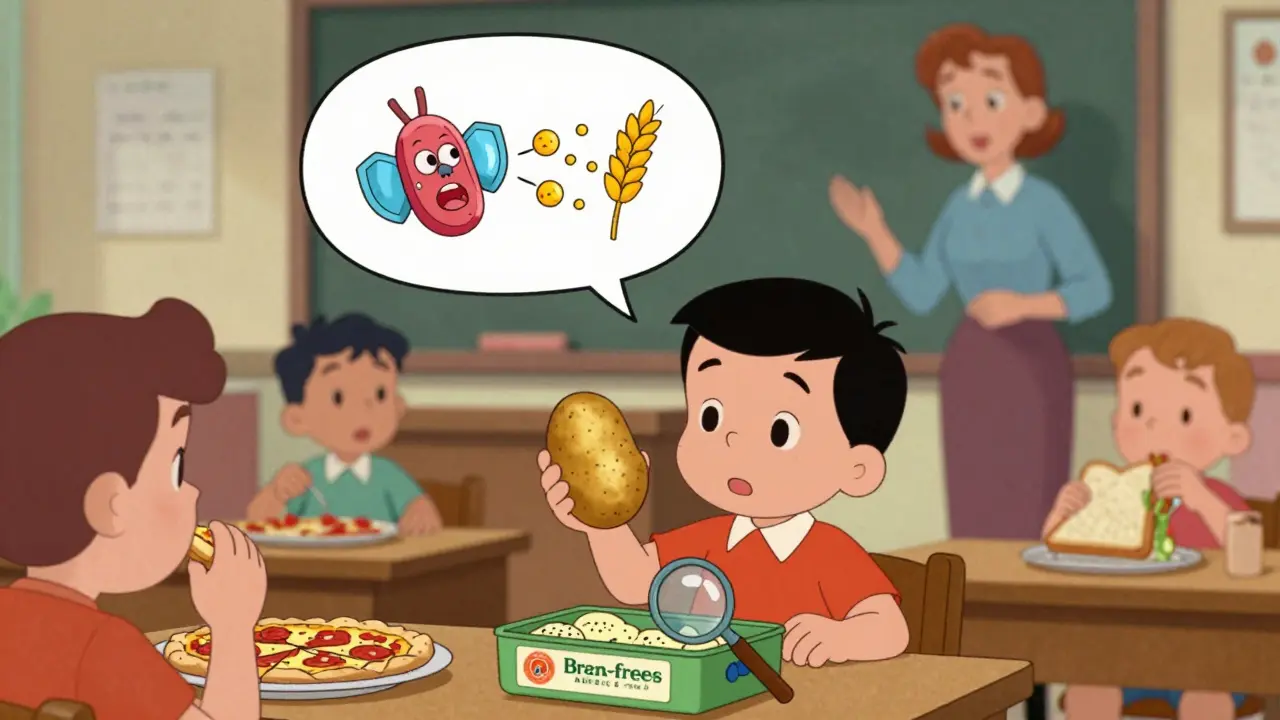
Managing celiac disease isn’t just about food. It’s about school, friendships, and finances. A 2022 survey from the University of Chicago found that 58% of children with celiac disease had gluten exposure at school. Lunches brought from home aren’t always safe. Cafeteria staff may not know how to avoid cross-contamination. That’s why many families need a 504 plan-a legal document that ensures the school provides safe meals, dedicated prep areas, and staff training.
Social life gets harder as kids get older. Birthday parties, sleepovers, and school trips become minefields. One parent described her 7-year-old crying because everyone else got pizza, and she had to eat a plain baked potato. But the flip side? Many kids report dramatic energy improvements within two weeks of starting the diet. One teenager said, “I used to nap after school. Now I play soccer and do homework without crashing.”
Cost is another silent barrier. Gluten-free bread, pasta, and snacks are expensive. Families spend hundreds more per month. Some insurance plans cover gluten-free products for children with celiac disease, but not all do. Local celiac support groups can help with tips, recipes, and even food donations. Families who join these groups have 25% to 30% better adherence rates.
What Happens If You Don’t Stick to the Diet?
Skipping the gluten-free diet-even once in a while-isn’t harmless. Each exposure reactivates the immune attack on the gut. Over time, this increases the risk of serious complications: osteoporosis, infertility, neurological issues, and even lymphoma. Swedish population data from 2022 shows that persistent non-adherence raises lymphoma risk two to three times.
But the good news? With early diagnosis and strict diet adherence, long-term outcomes are excellent. A 2023 meta-analysis in the journal Gut found that children diagnosed before age 5 have a 98% chance of reaching their full adult height. Those diagnosed after age 10 still have an 85% chance. Life expectancy returns to normal. The body heals. Growth resumes. Quality of life improves dramatically.
There’s no cure yet. But research is moving forward. Drugs like larazotide acetate are being tested to block gluten’s effect on the gut. Immunotherapy trials are ongoing. But for now, the gluten-free diet remains the only proven, effective treatment-and it works.
Can a child outgrow celiac disease?
No. Celiac disease is a lifelong autoimmune condition. The body never stops being sensitive to gluten. Even if symptoms disappear, the immune system still reacts to gluten, causing silent damage to the intestines. Sticking to a gluten-free diet for life is the only way to prevent complications.
Is a gluten-free diet healthy for a child without celiac disease?
Not necessarily. Gluten-free diets can be low in fiber, iron, B vitamins, and other nutrients if not carefully planned. For children without celiac disease or a diagnosed gluten sensitivity, there’s no proven health benefit to avoiding gluten. In fact, unnecessarily restricting grains can lead to nutritional gaps. Only start a gluten-free diet after proper testing-never before.
How long does it take for a child to feel better after starting a gluten-free diet?
Many children feel better within days to weeks. Digestive symptoms like bloating and diarrhea often improve in 1 to 2 weeks. Energy levels and mood typically bounce back in 2 to 4 weeks. But healing the gut lining takes longer-up to 6 to 12 months. Growth improvements take even longer, usually 12 to 24 months.
What foods should I avoid for a child with celiac disease?
Avoid all foods containing wheat, barley, rye, and triticale. That includes bread, pasta, cereals, baked goods, beer, and many processed snacks. Also watch out for hidden sources: soy sauce, malt vinegar, modified food starch, hydrolyzed vegetable protein, and some medications. Always check labels for “gluten-free” certification.
Can a child with celiac disease eat oats?
Pure, uncontaminated oats are generally safe for most children with celiac disease. But most oats are processed in facilities that also handle wheat, so cross-contamination is common. Only use oats labeled “gluten-free.” Introduce them slowly and monitor for symptoms. Talk to your doctor or dietitian before adding them to the diet.
What should I do if my child accidentally eats gluten?
If your child eats gluten, monitor for symptoms like stomach pain, vomiting, or fatigue. These can last hours to days. Don’t panic-occasional exposure won’t cause permanent damage if it’s rare. But it does restart the immune attack. Return to a strict gluten-free diet immediately. If symptoms are severe or frequent, talk to your doctor. They may check tTG-IgA levels to see if the diet needs tighter management.
Next Steps: What Parents Should Do Now
If your child is short, slow-growing, or has unexplained digestive issues, ask your pediatrician about celiac disease testing. Don’t wait for symptoms to worsen. Early diagnosis means better growth, fewer complications, and a brighter future.
Once diagnosed, connect with a pediatric dietitian who specializes in celiac disease. They’ll help you navigate labels, plan meals, and avoid hidden gluten. Join a local celiac support group. Talk to your child’s school about a 504 plan. Keep track of growth and blood test results. And remember-this isn’t just about food. It’s about giving your child the chance to grow, thrive, and live without limits.

Lydia H.
January 18, 2026 AT 18:56It’s wild how something so small-like a grain-can derail a whole kid’s growth. I used to think celiac was just ‘gluten sensitivity,’ but this breaks it down like, nope, it’s a full-on autoimmune war inside their intestines. Feels like our bodies are just trying to survive in a world that doesn’t stop hiding poison in plain sight.
Astha Jain
January 20, 2026 AT 09:55gluten free bread tastes like cardboard and costs 5x more… but my cousin’s kid grew 4 inches in 8 months after going GF… so i guess we all just suffer quietly 😅
Lewis Yeaple
January 20, 2026 AT 12:44The diagnostic criteria outlined here are consistent with the 2020 ESPGHAN guidelines, which represent a significant evolution in pediatric celiac management. However, it is imperative to note that serological titers must be interpreted in conjunction with clinical presentation and HLA haplotype. Failure to confirm with biopsy in borderline cases may lead to misdiagnosis and inappropriate dietary intervention.
Malikah Rajap
January 21, 2026 AT 08:39I remember when my daughter was diagnosed at 6-she was barely hitting the 10th percentile… and then, after 3 months of no gluten? She started laughing more, sleeping through the night, and asking for vegetables. I cried. Not because it was hard-but because I realized how much pain she’d been silently carrying. And yes, the cost? Insane. But worth every penny. And the school? They didn’t get it until I showed them the 504 plan. Now they keep a separate toaster. 🙏
sujit paul
January 22, 2026 AT 13:55Let me be clear: this is not just about gluten. It's about the industrial food complex poisoning our children under the guise of convenience. Gluten is a Trojan horse. The pharmaceutical industry profits from long-term complications, while the USDA subsidizes wheat. The real cure? A return to ancestral diets. And don't get me started on oats-cross-contamination is not an accident, it's corporate negligence.
Aman Kumar
January 22, 2026 AT 15:42Adherence is not a behavioral issue-it's a socioeconomic determinant of health. The 242% price premium on gluten-free products is a form of structural violence against low-income families. Coupled with the cognitive load of label-reading, the burden falls disproportionately on mothers, who are then pathologized for ‘non-compliance.’ This is not medical negligence-it's systemic erasure.
Jake Rudin
January 22, 2026 AT 17:10It’s funny… we treat celiac like it’s some rare disease, but it’s everywhere. And yet, no one talks about how the gut is basically a mirror for everything else. If your kid’s villi are flattened, what else is flattened? Their joy? Their focus? Their future? I think we’re missing the bigger picture: the body doesn’t lie. It just screams in silence until we finally listen.
Phil Hillson
January 24, 2026 AT 12:38So basically we’re telling parents to spend thousands on overpriced bread and stress out over a toaster? Meanwhile, half the kids on this diet are still malnourished because gluten-free junk food is just sugar with a label. This whole thing feels like a scam. Why not just fix the food system instead of making families play detective?
Josh Kenna
January 24, 2026 AT 21:40Just wanted to say thank you for writing this. My son was diagnosed last year at 8-he used to fall asleep in the car after school. Now he’s on the soccer team. The first time he ate a gluten-free pizza at a birthday party and didn’t get sick? I lost it. The cost is brutal. The labels are confusing. But seeing him run? Worth it. And yes, I still check every snack. Every. Single. One. 🤝