Boxed Warning Tracker
Check Drug Boxed Warning Status
Search for a drug name or active ingredient to see if it has a boxed warning and view its current status history.
Warning History
When a prescription drug comes with a boxed warning, it’s not just a caution - it’s a red flag. This isn’t a small footnote or a fine-print disclaimer. It’s a bold, black-bordered alert at the very top of the drug’s prescribing information, screaming: “This could kill you.” The U.S. Food and Drug Administration (FDA) has been using these warnings since 1979, and they’ve become the most serious safety tool in the drug industry’s toolkit. But here’s the thing: these warnings aren’t set in stone. They change. They get updated. Sometimes they’re added. Sometimes they’re removed. And keeping track of those changes? That’s where things get messy.
What Exactly Is a Boxed Warning?
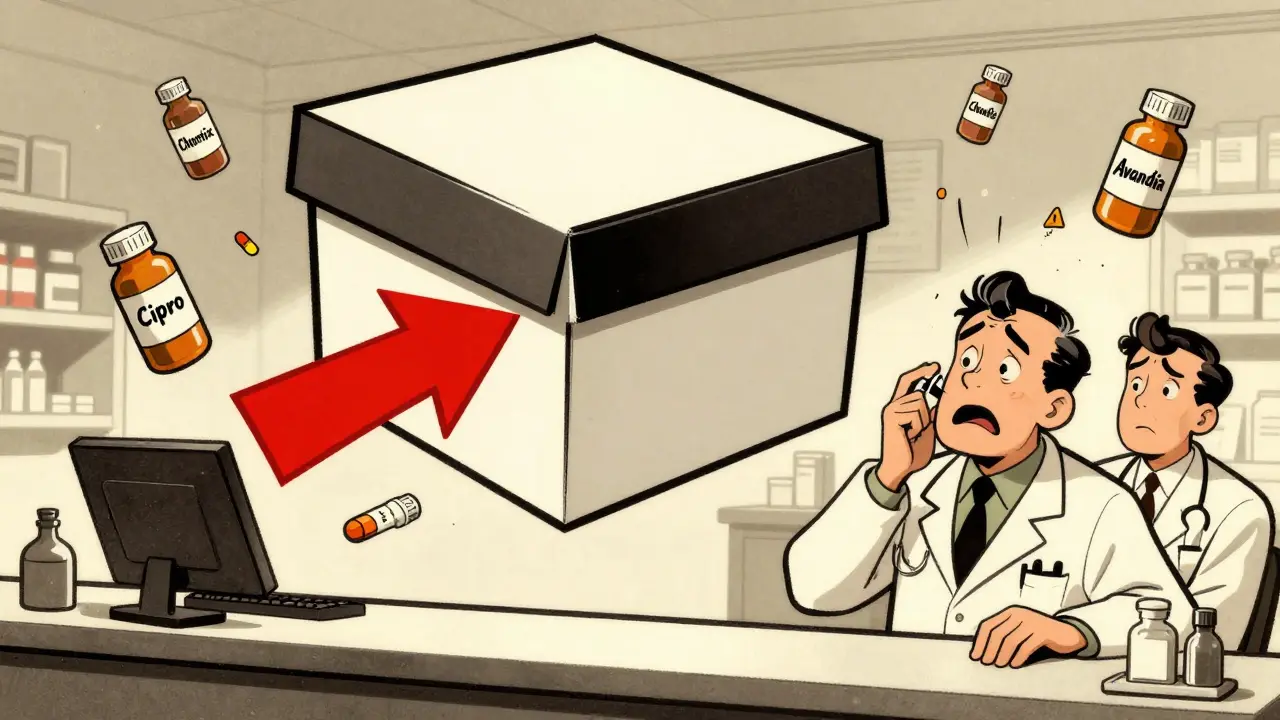
A boxed warning, also called a black box warning (BBW), is the strongest safety alert the FDA can require on a prescription drug label. It’s not optional. It’s not advisory. It’s mandatory. The warning must appear in a black border, use bold uppercase headers, and be formatted with bullet points. It goes right at the beginning of the Prescribing Information section - before contraindications, before warnings, before anything else. That’s intentional. The FDA wants doctors and pharmacists to see it first.These warnings aren’t based on lab tests or animal studies. They’re born from real-world harm. Most emerge after a drug is already on the market, when doctors start reporting deaths, severe injuries, or life-threatening side effects. For example, fluoroquinolone antibiotics like Cipro got a boxed warning in 2008 after hundreds of patients developed permanent tendon ruptures. Chantix, a smoking cessation drug, got one in 2009 after reports of suicidal thoughts and behavior. In both cases, the FDA didn’t wait for perfect data. They acted because the pattern was too clear to ignore.
How Often Do These Warnings Change?
Between 2008 and 2015, the FDA issued 111 boxed warnings. That’s about 15 per year. But here’s the breakdown: 29% were brand-new warnings. 32% were major updates - like adding new populations at risk or expanding the list of possible side effects. The rest, 40%, were minor tweaks: clarifying language, fixing typos, or adding a reference to a new study.The most common reason? Death. Over half of all boxed warnings address risks that can lead to death. Cardiovascular events come next - heart attacks, strokes, irregular heart rhythms. But the single most frequent specific concern? Addiction. Opioids, benzodiazepines, stimulants - if a drug has a high potential for abuse, it’s likely to get a boxed warning.
And it’s not just about new drugs. About 64% of drugs with boxed warnings are meant for long-term use. Diabetes meds, antipsychotics, blood thinners - these are drugs people take for years. That’s why the FDA pays extra attention to them. The longer someone uses a drug, the more likely hidden risks will show up.
The Long Wait for Safety Alerts
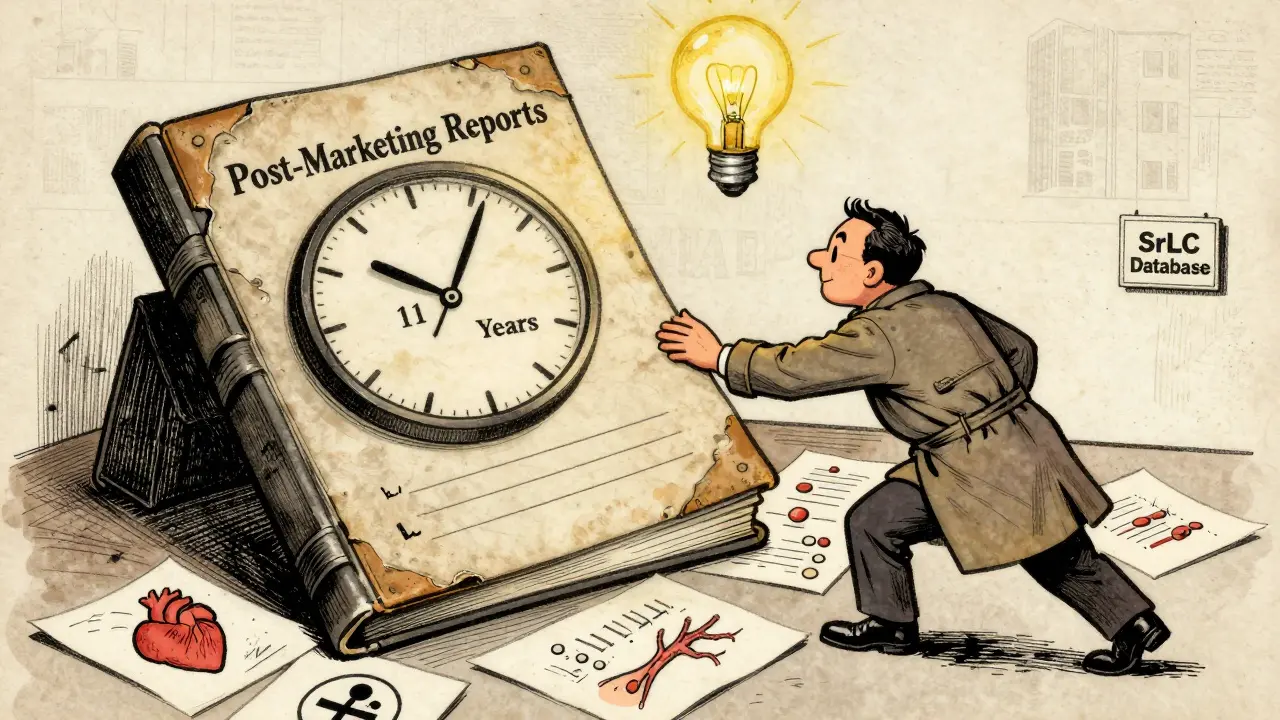
Here’s the uncomfortable truth: these warnings often come too late. In the 1990s, the average time between a drug’s approval and its first boxed warning was about 7 years. Today? It’s 11 years. That’s over a decade of patients being exposed to risks that could have been flagged sooner.Why the delay? Post-marketing surveillance is slow. It relies on doctors reporting side effects. Hospitals tracking adverse events. Patients calling in complaints. The FDA doesn’t have eyes on every prescription filled. It takes thousands of reports, over months or years, to spot a dangerous pattern. Even then, proving causation isn’t easy. Was the heart attack caused by the drug? Or by the patient’s high blood pressure? The evidence has to be solid - and that takes time.
One study found that 71% of serious drug risks weren’t identified until more than five years after the drug hit the market. By then, hundreds of thousands of people may have already taken it. Critics argue this system is broken. But the FDA says it’s the best they’ve got. As former Commissioner Dr. Scott Gottlieb put it: “The boxed warning system, while blunt, remains the most effective tool we have to communicate serious risks quickly to prescribers.”
Who Actually Uses These Warnings?
You’d think doctors and pharmacists read these warnings every time they prescribe or dispense a drug. And in theory, they do. A 2017 FDA survey found that 87% of providers say they check for boxed warnings when starting a new medication. But here’s the catch: 63% admit they often overlook updates to existing warnings.Why? Because there’s no central, real-time alert system. No email. No pop-up. No app notification. If a boxed warning changes, you have to actively go looking for it. And that’s a problem. A pharmacist at a busy hospital might be juggling 50 prescriptions an hour. They don’t have time to check the FDA’s database every time a patient comes in with a refill.
Some hospitals try to fix this. The University of Michigan dedicates 12 pharmacist-hours every month just to review FDA labeling changes. That’s a full workweek. Most community pharmacies? They don’t have that kind of staff. A 2022 survey found that only 38% of community pharmacies have any formal system for tracking boxed warning updates.
And it’s not just about access - it’s about clarity. The FDA’s own review in 2020 found that 22% of recent labeling changes lacked enough clinical context. If a warning says “risk of psychiatric events,” but doesn’t say which patients, what symptoms to watch for, or how often to monitor - what’s a doctor supposed to do?
Real-World Impact: What Happens When Warnings Change?
Boxed warnings don’t just sit on paper. They change how doctors prescribe - and how patients get treated.After the fluoroquinolone tendon rupture warning came out in 2008, 68% of physicians on the Sermo forum said they changed how they prescribed these antibiotics. Internists, who treat older patients with chronic infections, were most affected. Many stopped using them unless absolutely necessary.
Chantix’s 2009 psychiatric warning had an even bigger effect. One Reddit user, a family physician, said prescriptions dropped by 40% in their clinic. Patients were scared. Some refused to take it, even though it was their best shot at quitting smoking. When the warning was removed in 2016 - because follow-up data showed the risk was lower than first thought - prescriptions slowly crept back up.
But not all changes are welcomed. The 2007 boxed warning on Avandia (rosiglitazone), a diabetes drug, sparked outrage. It cited increased heart attack risk. But many endocrinologists argued the evidence was weak. They felt the warning scared off patients from a drug that worked well for some. In a 2023 Medscape poll, 52% of physicians said some boxed warnings are too cautious - and lead to avoiding drugs that could actually help.
How to Track Boxed Warning Updates
The FDA launched the Drug Safety-related Labeling Changes (SrLC) database in January 2016. It’s the only official, searchable source for all labeling changes since then. You can filter by drug name, active ingredient, or section (like BOXED WARNING). But it’s not user-friendly. A 2019 study found it takes pharmacists 3 to 5 hours to learn how to use it properly.For changes before 2016? You have to dig through MedWatch archives. For approval history? Go to Drugs@FDA. Three different systems. No central hub. No alerts. No integration with electronic health records. That’s the biggest gap in the system.
Some hospitals use automated alerts. But 41% of them say these systems flood clinicians with false positives - alerts for warnings that don’t apply to their patient. That leads to alert fatigue. Doctors start ignoring them.
What’s Next for Boxed Warnings?
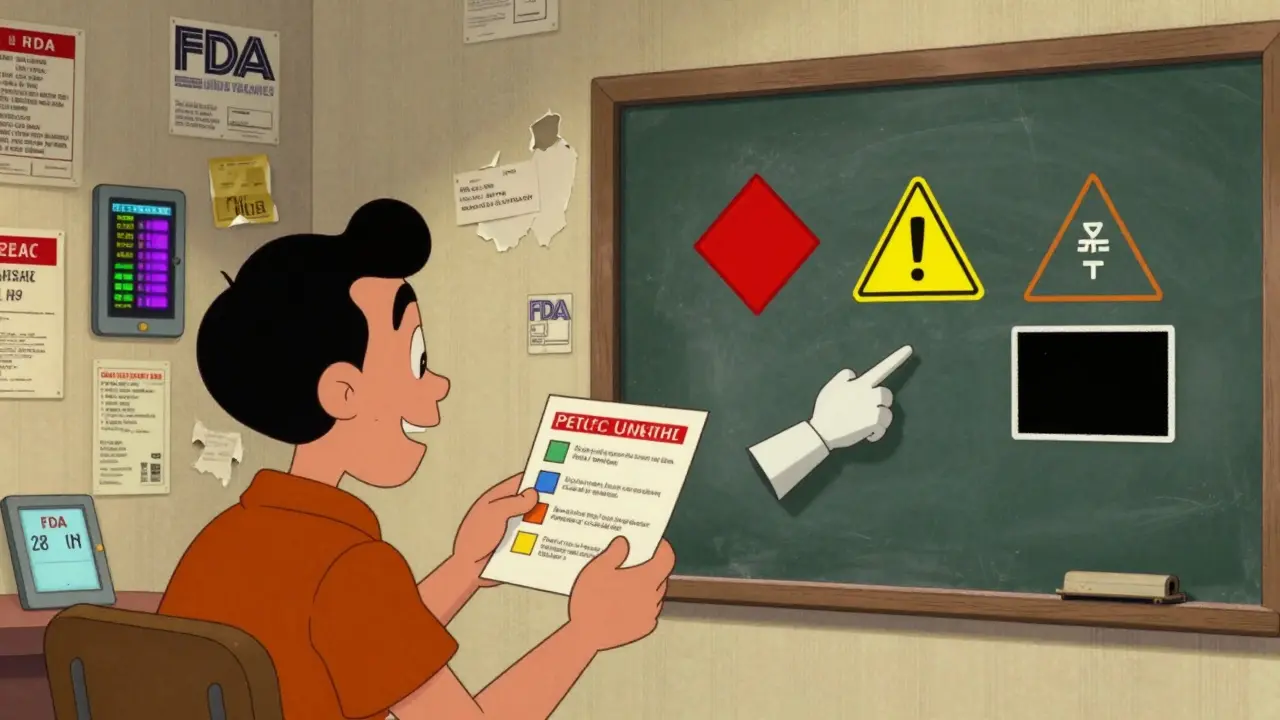
The FDA knows the system is outdated. In its 2023 Strategic Plan, it committed to modernizing the boxed warning format by 2026. Pilot tests are already underway - testing new designs that use color, icons, and plain-language summaries to make warnings easier to understand.They’re also working with the Observational Health Data Sciences and Informatics (OHDSI) consortium, using real-world data from millions of patient records to spot risks faster. The goal? Cut the 11-year lag down to under 5 years.
Some experts want more. Dr. Jerry Avorn of Harvard says we need a tiered warning system - not just one “black box” for everything. Maybe a yellow triangle for moderate risks. A red diamond for life-threatening. That way, doctors can prioritize.
For now, the boxed warning remains the gold standard. It’s blunt. It’s loud. It’s imperfect. But when used right, it saves lives. The challenge isn’t just tracking changes - it’s making sure those changes actually change behavior.
What Patients Should Know
If you’re taking a drug with a boxed warning, don’t panic. But do pay attention. Ask your doctor: “Why was this warning added? What signs should I watch for? Is there a safer alternative?”Also, ask for the Medication Guide - the patient-friendly handout that comes with the prescription. A 2021 study found that when patients read it, their understanding of risks jumped from 42% to 78%. But only 35% of pharmacies hand them out consistently. Don’t assume you’ll get one. Ask.
And if you notice a side effect - even if it seems small - report it. The FDA doesn’t know what’s happening unless someone tells them.
What does a boxed warning mean for my prescription?
A boxed warning means the drug carries a serious, potentially life-threatening risk. It doesn’t mean you can’t take it - but it does mean you and your doctor need to weigh the benefits against the risks carefully. Never stop a medication because of a boxed warning without talking to your provider first.
How do I know if a boxed warning has been updated?
There’s no automatic alert system for patients. Check the FDA’s SrLC database if you’re tech-savvy, or ask your pharmacist to confirm the latest labeling. If your doctor changes your prescription or suggests a different drug, it could be because of a recent update.
Can a boxed warning be removed?
Yes. If new data shows the risk is lower than originally thought - or if the warning was based on incomplete evidence - the FDA can remove or modify it. Chantix’s psychiatric warning was removed in 2016 after further studies showed the risk was rare and manageable.
Are boxed warnings the same in other countries?
No. The European Medicines Agency uses a “black triangle” symbol for new drugs under close monitoring, but doesn’t have an exact equivalent to the FDA’s boxed warning. Other countries have different systems, so a drug’s warning label can vary by region.
Why do some drugs get boxed warnings and others don’t?
It’s not about the drug being “worse” - it’s about the nature of the risk and how often it occurs. A drug with a rare but deadly side effect may get a boxed warning, while another with more common but mild side effects won’t. The FDA focuses on risks that are serious, unexpected, and preventable with proper monitoring or patient selection.

Lisa Rodriguez
February 1, 2026 AT 14:06Been on a blood thinner for 5 years and never even knew about the boxed warning until my pharmacist pointed it out last year. I thought it was just a standard caution. Turns out I was lucky my doc caught the update during a refill check. Scary how many people just roll with it without digging deeper.
Lilliana Lowe
February 2, 2026 AT 08:14The FDA’s labeling system is a relic of the pre-digital age. You can’t expect clinicians to manually cross-reference three disjointed databases while juggling 80 patients a day. The lack of integration with EHRs isn’t just inefficient-it’s negligent. If this were a consumer app, it would’ve been shut down for UX violations after week one.
vivian papadatu
February 3, 2026 AT 03:31I work in a rural clinic and we don’t have a single pharmacist dedicated to monitoring updates. We rely on reps, which is a joke. One rep told me Chantix’s warning was "removed"-but didn’t mention it was modified, not deleted. Patients got confused. We need plain-language summaries sent to clinics weekly. Not just a database no one knows how to use.
Also, the Medication Guide thing? We print them out and hand them to patients who ask. But most just say "I’m good" and walk out. We need to make it part of the script: "Here’s what you need to watch for." Not optional.
And yes, color-coded alerts would help. A red box for life-threatening, yellow for serious, blue for monitoring. One visual cue. No more scrolling through paragraphs of legalese.
Chris & Kara Cutler
February 3, 2026 AT 18:08My husband got on Cipro for a UTI and had tendon pain after 3 days. We didn’t know it was linked. He just thought he overdid it at the gym. If the warning had been clearer-like "stop immediately if you feel popping or sharp pain in your heel"-we could’ve avoided the ER. This isn’t just paperwork. It’s life or death.
Rachel Liew
February 4, 2026 AT 12:55my doc just told me my anxiety med got a new boxed warning and i was like wait what? i had no idea. i just take it. i dont even know how to check if its changed. can someone explain how? i dont wanna be dumb but i dont wanna die either
Melissa Melville
February 5, 2026 AT 08:36So the FDA spends millions to slap a black box on a drug, then does nothing to make sure anyone actually sees it? Brilliant. Next they’ll hand out warning stickers for cars and expect drivers to tape them to their windshields. Meanwhile, the real problem? Doctors don’t read them either. It’s not the system’s fault-it’s the culture of ignoring it.
Deep Rank
February 5, 2026 AT 17:23you know what’s funny? people act like boxed warnings are some kind of magic shield but the truth is they’re just paper. i work in pharma and i’ve seen how these warnings get written-some are rushed because of media pressure, others are dragged out because lawyers are scared. the 11-year delay? that’s not because of slow reporting, it’s because the FDA is terrified of lawsuits. they’d rather let people die than risk getting sued for removing a warning too early. and now they want to add colors? lol. like that’s gonna fix a system built on fear, not science.
also, why are we still using text? why not just send alerts to your phone when your med’s label changes? you get notifications for your bank account, your Netflix, your Uber, but not for your life? this is 2025, not 1995.
and don’t get me started on how they remove warnings. chantix was pulled because the data was "incomplete"-but they never admitted they overreacted. they just quietly buried it. that’s not transparency. that’s cover-up.
the real solution? let patients report side effects in real time through an app. not a form. not a phone call. just tap a button. if 10,000 people say their heart skipped after taking X, that’s data. not a 5-year study. we don’t need more meetings. we need more tech.
and stop pretending doctors are the gatekeepers. most of them don’t even read the labels. they rely on reps who get paid by the drug companies. so who’s really protecting us? nobody.
Naomi Walsh
February 5, 2026 AT 19:09It’s not that the system is broken-it’s that the people using it are lazy. The FDA provides the tools. The EHR vendors refuse to integrate. The hospitals refuse to fund monitoring staff. The pharmacists refuse to go beyond the script. And now we want a color-coded system? Please. The problem isn’t the format-it’s the lack of accountability. If a doctor prescribes a drug with a known boxed warning and ignores it, they should be liable. Not the FDA.
And for the love of science, stop treating patients like children. If you can’t read a 300-word warning, you shouldn’t be making decisions about your own medication. Empowerment isn’t a slogan-it’s a responsibility.
Bob Cohen
February 6, 2026 AT 16:13My wife’s endocrinologist switched her from Avandia after the warning, even though her blood sugar was perfect. She’s been on metformin since and her stomach’s been in revolt. I get the caution-but sometimes the cure is worse than the disease. Why can’t we have a middle ground? Not just black or white?
Also, the FDA’s database is a nightmare. I spent two hours trying to find the update on her med. Ended up calling the pharmacy. They had it printed out. That’s not a system-that’s a paper trail.
Aditya Gupta
February 6, 2026 AT 17:56in india we dont even have this system. drugs come with no warnings at all. people take antibiotics like candy. i wish we had black boxes here. but also… maybe we need a system that works for poor countries too. not just fancy usa databases.