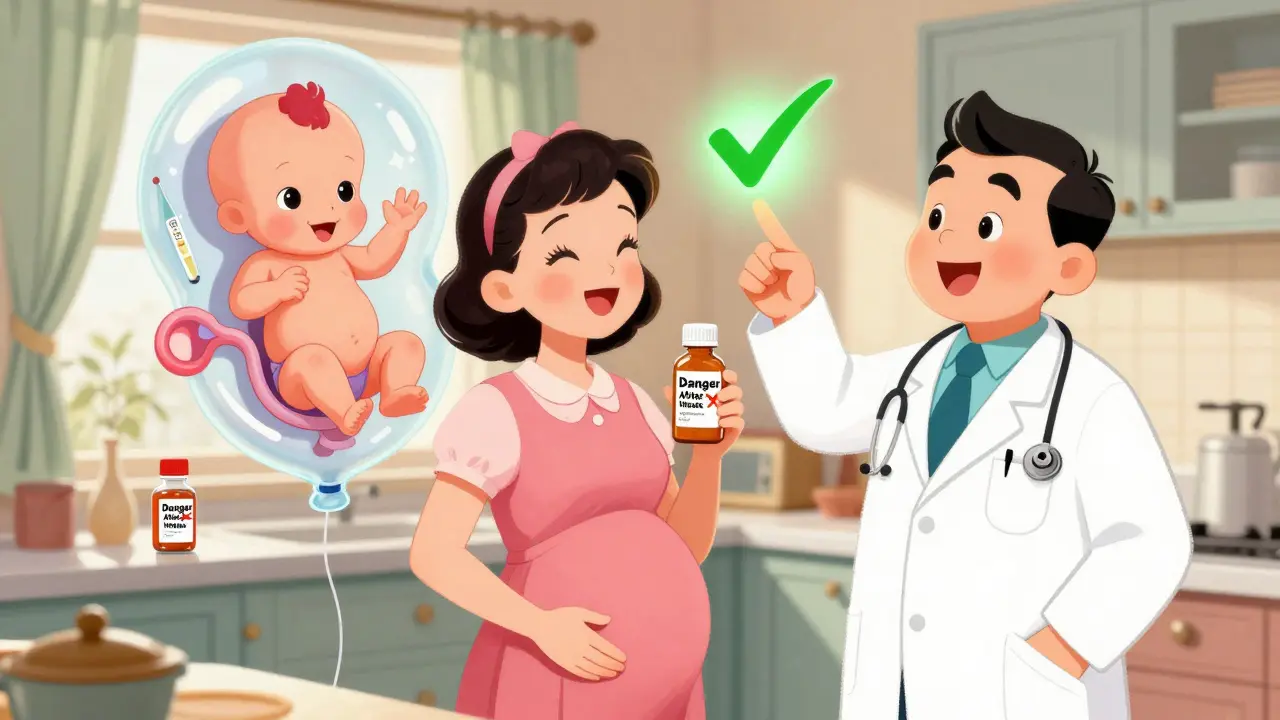
When you're pregnant, even a simple headache or fever can feel like a crisis. You want relief, but you’re terrified of harming your baby. The truth is, not all pain relievers are created equal - and knowing which ones are safe, when, and why can make all the difference.
Acetaminophen: The Only Over-the-Counter Go-To Throughout Pregnancy
Acetaminophen, also known as paracetamol, is the only over-the-counter pain reliever recommended for use in all three trimesters of pregnancy. It’s been used safely for over 70 years, and millions of pregnant women have taken it without harm. The American College of Obstetricians and Gynecologists (ACOG) and the Society for Maternal-Fetal Medicine (SMFM) both confirm it’s safe when used as directed.
Standard dosing is 325 to 1,000 mg every 4 to 6 hours, with a maximum of 4,000 mg per day. Most people find 500 mg every 6 hours is enough for mild to moderate pain or fever. You don’t need to avoid it in the first trimester - that’s a myth. In fact, untreated fever above 100.4°F during early pregnancy can raise the risk of neural tube defects by up to 2.3 times, according to a 2017 study in Birth Defects Research. Acetaminophen helps lower that risk.
Some fear it causes autism or ADHD. But a massive 2023 study in JAMA Network Open tracking nearly 100,000 mother-child pairs found no link. The adjusted odds ratio for autism was 1.03 - meaning no increased risk. Same for ADHD and intellectual disability. These aren’t small studies. They’re among the most rigorous ever done.
Still, you might’ve seen headlines claiming acetaminophen is risky. That’s mostly based on observational data that can’t prove cause. For example, if a mom took acetaminophen because she had a long-lasting illness, the illness - not the medicine - could be the real factor. Experts like Dr. Salena Zanotti at Cleveland Clinic put it plainly: “Acetaminophen is still the safest known drug to take during pregnancy for problems like fever and pain.”
NSAIDs: A Hard Stop After 20 Weeks
NSAIDs - like ibuprofen (Advil, Motrin), naproxen (Aleve), and diclofenac (Voltaren) - are a different story. They’re fine in early pregnancy, but they become dangerous after 20 weeks.
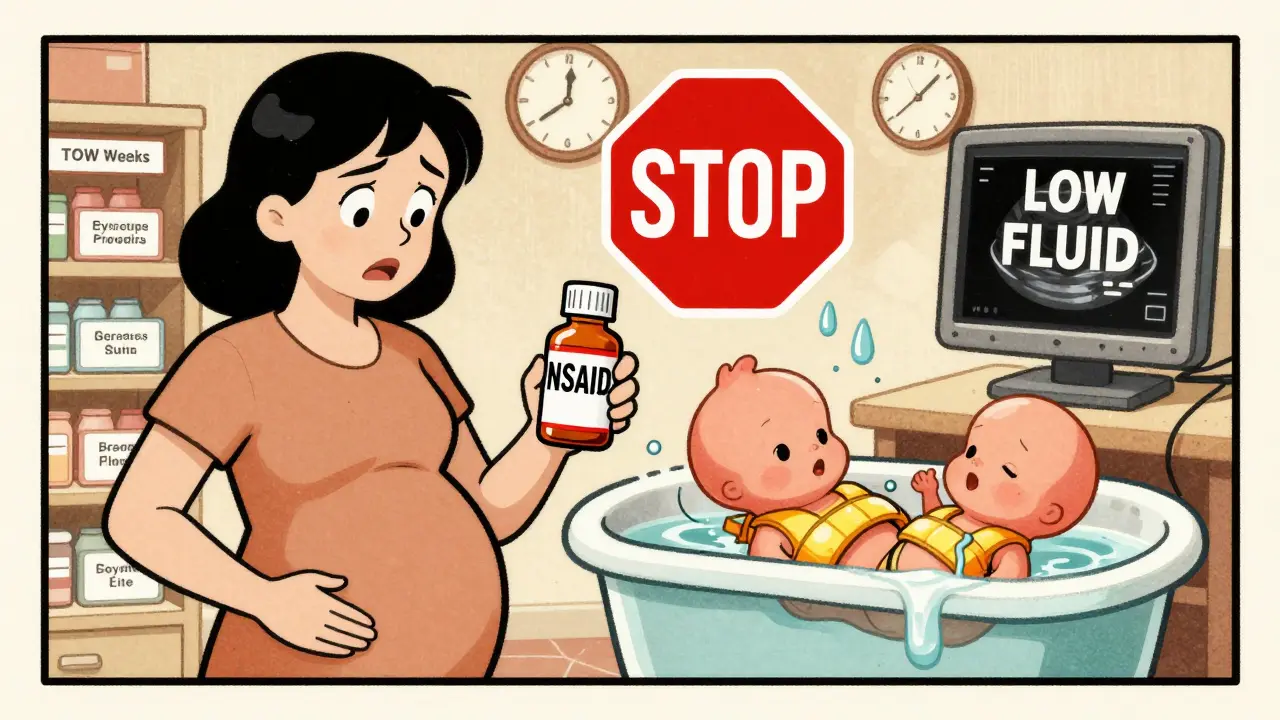
In October 2020, the FDA updated its warning: NSAIDs must not be used after 20 weeks gestation. Why? Because they can cause serious fetal kidney problems. The kidneys help make amniotic fluid. If they shut down, fluid levels drop dangerously low - a condition called oligohydramnios. Studies show this happens in 1 to 2% of fetuses exposed to NSAIDs after 20 weeks, compared to just 0.1% in unexposed pregnancies.
Once oligohydramnios develops, it can lead to lung underdevelopment, limb contractures, and even stillbirth. In some cases, the damage is reversible if the drug is stopped quickly - but not always. That’s why the FDA now requires all NSAID packaging to say: “Do not use after 20 weeks of pregnancy.”
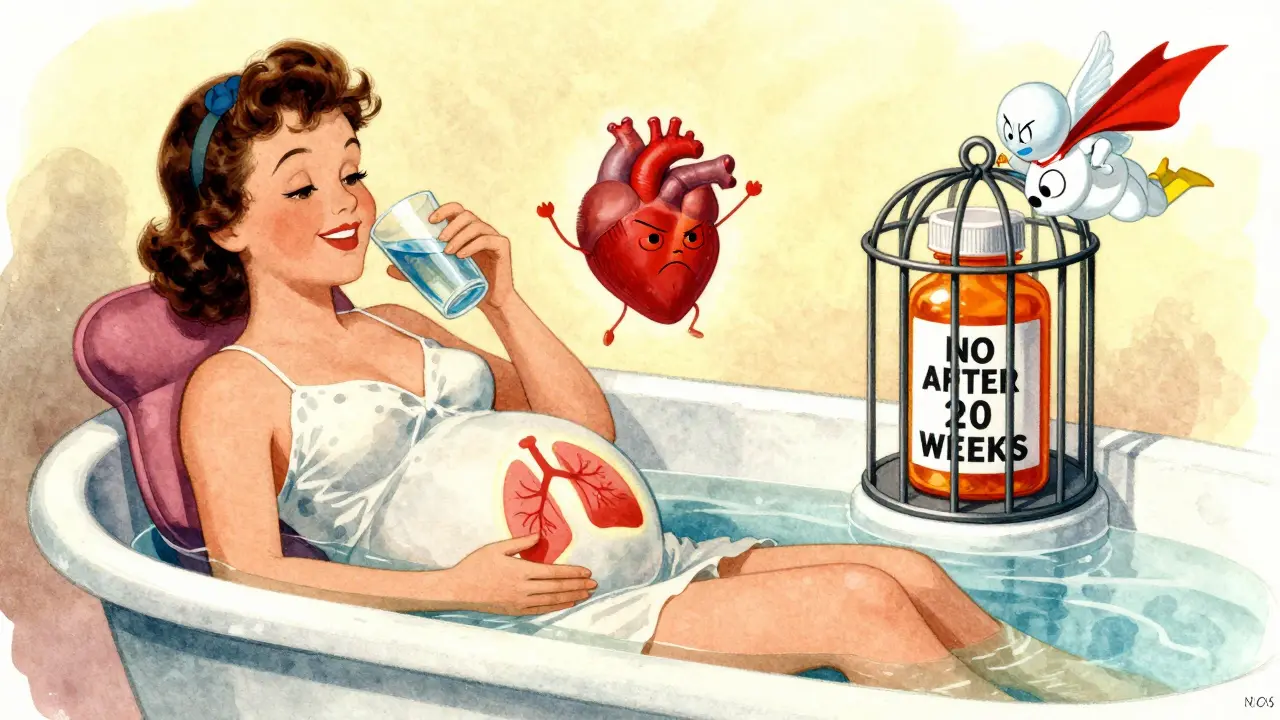
Even more concerning: after 30 weeks, NSAIDs can cause the fetal ductus arteriosus - a critical blood vessel - to close prematurely. This forces the baby’s heart to work harder and can lead to heart failure. The risk is small - about 0.5% to 1% - but it’s real, and it’s preventable.
And here’s the trap: many cold, flu, and headache medicines contain NSAIDs. You might think you’re taking just acetaminophen, but check the Drug Facts label. About 30% of OTC combo products include ibuprofen or naproxen. If you’re pregnant and reach for a “multi-symptom” remedy, you could be unknowingly taking something dangerous.
First Trimester: Acetaminophen Is Safe - But Don’t Overdo It
The first trimester is when your baby’s organs are forming. That’s why so many worry about medication. But acetaminophen doesn’t interfere with that process. Multiple large studies, including one published in PMC2809170 by the NIH, found no increase in birth defects or miscarriage with standard use.
Still, you shouldn’t treat every little ache. If you have a headache once a week, try rest, hydration, or a cold compress first. If you’re running a fever from a virus, acetaminophen is the right call. Fever is dangerous in pregnancy - not the medicine.
NSAIDs are okay in the first trimester, but they’re not necessary. Acetaminophen works just as well for pain and fever, with no added risk. Why take a chance? Stick with what’s proven safe.
Second Trimester: The Turning Point
Week 20 is the line in the sand. Before that, NSAIDs are still technically an option - but only under a doctor’s watch. After 20 weeks? No exceptions.
Some providers still say, “It’s fine before 30 weeks.” That’s outdated. The science changed in 2020. The risk of kidney damage starts as early as 20 weeks. One study showed oligohydramnios developing in as little as 48 to 72 hours after NSAID exposure.
If you accidentally took ibuprofen at 22 weeks, don’t panic. Stop immediately. Call your provider. An ultrasound can check amniotic fluid levels. If they’re normal, you’re likely fine. But don’t wait for symptoms. If you’re unsure how far along you are, skip NSAIDs entirely.
ACOG recommends using acetaminophen at the lowest effective dose for the shortest time possible. That means: 500 mg, not 1,000, if that’s enough. Three days in a row? Fine. Five days? Talk to your doctor. Chronic use - taking it every day for weeks - isn’t well studied. So unless you have a chronic condition like severe migraines or arthritis, avoid daily use.
Third Trimester: No NSAIDs. No Exceptions.
By the third trimester, your baby’s heart and lungs are preparing for life outside the womb. NSAIDs can interfere with that. The ductus arteriosus, which normally closes after birth, can shut down too early if exposed to NSAIDs. This forces the fetal heart to pump blood through the wrong pathways. The result? Low oxygen, heart strain, and in rare cases, death.
And yes - even low-dose aspirin is an NSAID. But there’s one exception: if your doctor prescribed 81 mg aspirin to prevent preeclampsia, keep taking it. That’s a medically necessary use, and it’s not the same as taking ibuprofen for a headache.
Acetaminophen remains your best and only safe option for pain, fever, or muscle aches. If you’re having back pain or pelvic discomfort, physical therapy, warm baths, or prenatal yoga may help. But if you need medicine, acetaminophen is the one to reach for.
Why So Much Confusion? Misinformation Is the Real Enemy
Despite clear guidelines, most pregnant people are scared to take any medication. A 2023 survey by the American Academy of Family Physicians found 68% of pregnant patients avoid all pain relievers - even acetaminophen - because of fear.
Social media is the biggest culprit. Reddit threads, Instagram posts, and Facebook groups are full of anecdotes like, “I took Tylenol and my kid was diagnosed with autism.” But correlation isn’t causation. Just because two things happen together doesn’t mean one caused the other. The science doesn’t support it.
Even worse, 38% of over-the-counter pain meds still don’t clearly label the 20-week NSAID warning, according to a 2023 FDA review. You could be holding a bottle that says “for headache and fever” and not realize it contains naproxen.
Doctors are adapting. In 2024, 92% of OB/GYNs now use visual aids to explain medication risks - something only 67% did in 2020. That’s progress. But you still need to be your own advocate. Always read labels. Ask your pharmacist: “Is this safe in pregnancy?”
What About Breastfeeding?
Good news: both acetaminophen and NSAIDs are considered safe while breastfeeding. Acetaminophen passes into breast milk in tiny amounts - less than 1% of the maternal dose. It’s the preferred choice for nursing moms.
NSAIDs like ibuprofen are also low-risk in breastfeeding, but only if you’re not pregnant anymore. If you’re nursing and still pregnant? Don’t use them. The risks are to the fetus, not the baby. Once you’ve delivered, you can use NSAIDs normally.
Bottom Line: What to Do
- Use acetaminophen for fever or pain at any stage of pregnancy - it’s safe and effective.
- Avoid all NSAIDs after 20 weeks. That includes ibuprofen, naproxen, and diclofenac.
- Check every OTC medicine label. If it says “NSAID” or lists ibuprofen/naproxen, don’t take it if you’re past 20 weeks.
- Use the lowest dose for the shortest time. No daily use unless your doctor says so.
- Don’t let fear stop you from treating fever. Untreated fever is riskier than acetaminophen.
- When in doubt, call your provider. Don’t guess.
The goal isn’t to avoid all medication. It’s to use the right one, at the right time. Acetaminophen is your ally. NSAIDs are a hazard after 20 weeks. Trust the science - not the scare stories.
Is acetaminophen safe in the first trimester?
Yes. Acetaminophen is the only over-the-counter pain reliever recommended for use in all trimesters, including the first. Studies involving thousands of pregnancies show no increased risk of birth defects or miscarriage when used at standard doses. In fact, treating fever with acetaminophen during early pregnancy reduces the risk of neural tube defects.
Can I take ibuprofen during pregnancy?
Only before 20 weeks, and even then, it’s not the first choice. After 20 weeks, ibuprofen and other NSAIDs are strictly avoided because they can cause fetal kidney problems and low amniotic fluid. Acetaminophen is safer and just as effective for pain and fever. If you need pain relief after 20 weeks, stick with acetaminophen.
Does acetaminophen cause autism or ADHD in babies?
No. A major 2023 study of nearly 100,000 mother-child pairs found no link between acetaminophen use during pregnancy and autism, ADHD, or intellectual disability. The odds ratios were nearly 1.0 - meaning no increased risk. While some small studies suggested a connection, they couldn’t prove cause. The strongest evidence shows acetaminophen is safe.
What if I took ibuprofen at 24 weeks without knowing?
Stop taking it immediately. One or two doses are unlikely to cause harm, but you should call your provider. They may recommend an ultrasound to check amniotic fluid levels. Oligohydramnios (low fluid) can develop within 48-72 hours of NSAID exposure, but if caught early and the drug is stopped, the body often corrects it. Don’t panic, but do get checked.
Are there any pain relievers I should avoid completely during pregnancy?
Yes. Avoid NSAIDs like ibuprofen, naproxen, and diclofenac after 20 weeks. Also avoid aspirin unless it’s low-dose (81 mg) and prescribed for preeclampsia prevention. Avoid opioids unless absolutely necessary and under strict medical supervision. Stick with acetaminophen - it’s the safest, most studied option.
Can I take acetaminophen while breastfeeding?
Yes. Acetaminophen is considered safe during breastfeeding. Only a tiny amount passes into breast milk, and it’s not known to affect the baby. It’s the preferred pain reliever for nursing mothers. NSAIDs are also generally safe while breastfeeding - but only if you’re no longer pregnant.
If you're unsure about any medication, always check with your doctor or pharmacist. Don’t rely on internet advice or old habits. Your body and your baby deserve clear, evidence-based choices.


Andrew Freeman
January 16, 2026 AT 06:42says haze
January 16, 2026 AT 07:37TooAfraid ToSay
January 17, 2026 AT 20:26Robert Way
January 18, 2026 AT 12:03Sarah Triphahn
January 18, 2026 AT 21:43Allison Deming
January 20, 2026 AT 02:01Dylan Livingston
January 20, 2026 AT 20:49Anna Hunger
January 21, 2026 AT 10:24Jason Yan
January 21, 2026 AT 18:07shiv singh
January 22, 2026 AT 08:14