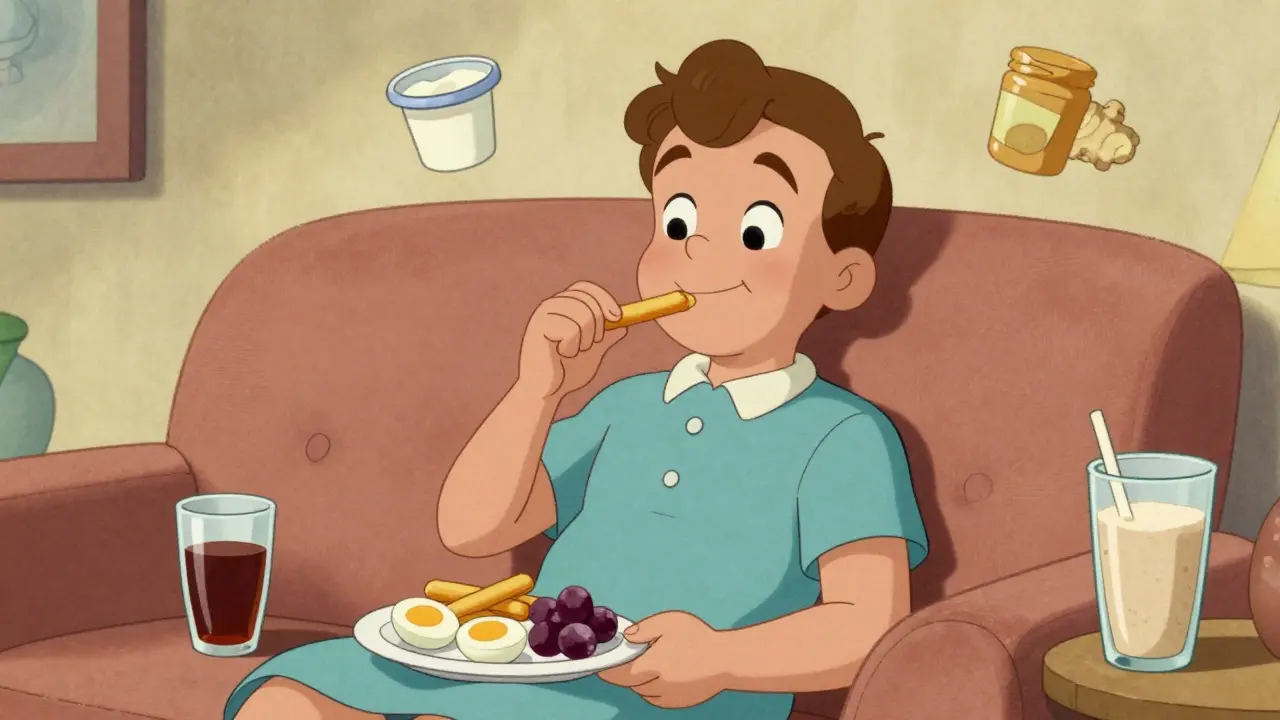
When you're going through chemotherapy, your body isn't just fighting cancer-it's also fighting the side effects of treatment. Nausea, loss of appetite, and unexpected weight loss aren't just inconvenient; they can delay your treatment, weaken your immune system, and make recovery harder. The good news? What you eat matters more than ever during this time. It's not about eating healthy in the traditional sense-it's about eating smart to keep your strength up, reduce nausea, and hold onto weight.
Why Standard Diet Advice Doesn't Work During Chemotherapy
Most nutrition advice tells you to eat whole grains, cut back on fats, and avoid sugar. But during chemotherapy, those rules can hurt you. Your body needs more calories and protein than ever before-sometimes double what a healthy person needs. The European Society for Clinical Nutrition and Metabolism (ESPEN) recommends 1.2 to 2.0 grams of protein per kilogram of body weight daily. For someone weighing 70 kg (about 154 lbs), that’s 84 to 140 grams of protein a day. Compare that to the 56 grams recommended for a healthy adult. And calories? You need 25 to 30 kcal per kilogram of body weight, not the usual 20 to 25. That’s a 20-30% increase.Restricting food to lose weight or eat "clean" during chemo can backfire. Studies show that cutting calories during active treatment increases treatment toxicity by 37% and delays recovery by two to three weeks. This isn't about prevention-it's about survival. Your goal isn't to prevent cancer later; it's to finish your treatment now.
Beating Nausea: What to Eat and What to Avoid
Nausea is one of the most common and frustrating side effects of chemotherapy. About 63% of patients report it as a major problem. But certain foods make it worse-and others can help.First, avoid greasy, fried, or overly sweet foods. These trigger nausea in 73% of patients. Strong smells are another big trigger-68% of people feel worse when cooking or even walking past a kitchen with strong odors. That’s why cold or room-temperature foods often work better than hot ones. Think chilled yogurt, cold fruit, or a smoothie instead of a steaming bowl of soup.
Drink fluids between meals, not with them. Filling your stomach with liquid during a meal can make you feel full too fast and worsen nausea. Sip water, herbal tea, or ginger ale slowly throughout the day. Ginger is a proven helper: 287 patients on Cancer Survivors Network reported that ginger chews or ginger tea made a noticeable difference. Frozen grapes or popsicles also help by soothing the mouth and providing a distraction from nausea.
Strong flavors like garlic, onion, or spicy sauces can be overwhelming. Try bland options like plain rice, toast, crackers, or mashed potatoes. If meat tastes metallic, use plastic utensils instead of metal ones. Many patients swear by this simple swap.
Small Meals, Big Impact: The 5-6 Meal Strategy
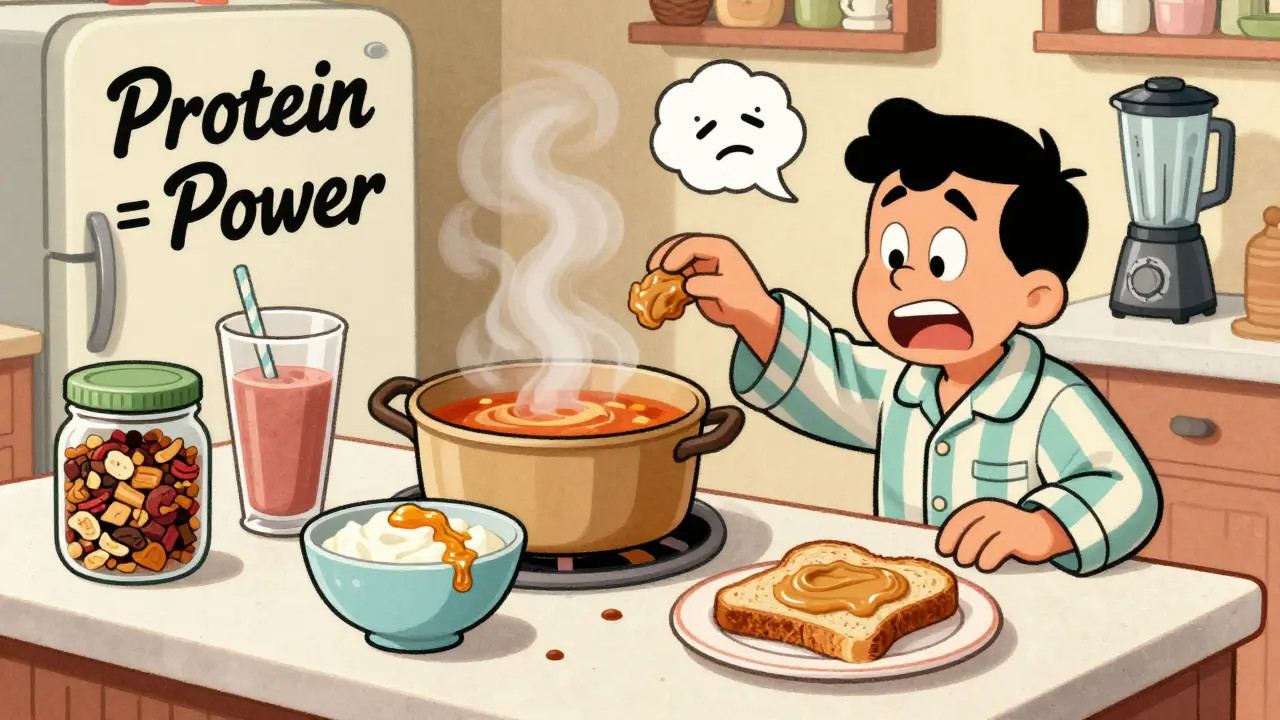
Eating three big meals a day is often impossible when you’re nauseated or tired. The National Cancer Institute recommends five to six small meals instead-each around 300 to 400 calories. This keeps your stomach from getting too full while steadily fueling your body.Plan meals around your energy levels, not the clock. If you feel better in the afternoon, make that your main meal. If mornings are okay, have a protein-rich breakfast even if it’s just peanut butter on toast and a glass of whole milk. Keep snacks visible and easy to grab: a bowl of trail mix on the counter, pre-portioned cheese and crackers in the fridge, or a jar of nut butter on the table. When you feel even a little hungry, eat. Don’t wait for mealtime.
Each small meal should include at least 20 to 30 grams of protein. That’s the amount your body needs to prevent muscle loss. A hard-boiled egg has 6 grams. A cup of Greek yogurt has 17. A scoop of protein powder mixed into a smoothie adds 20-25. Combine them: yogurt with peanut butter, cheese with crackers, or eggs with toast. You don’t need fancy supplements-just smart combinations.
Protein Is Non-Negotiable
Muscle loss during chemotherapy is real and dangerous. Losing lean body mass makes it harder to tolerate treatment and increases fatigue. The Academy of Nutrition and Dietetics found that patients who hit their protein targets had fewer treatment delays and better energy levels.Here’s how to get enough protein without feeling overwhelmed:
- Full-fat Greek yogurt (17g per cup)
- Cottage cheese (14g per half cup)
- Peanut butter (8g per 2 tablespoons)
- Eggs (6g per egg)
- Shredded chicken or turkey (25g per 3 oz)
- Protein shakes made with milk, banana, peanut butter, and a scoop of whey or plant-based powder
Reddit’s r/cancer community has thousands of posts praising homemade protein shakes. One popular recipe: blend 1 cup full-fat Greek yogurt, 2 tablespoons peanut butter, 1 banana, 1 tablespoon honey, and a splash of milk. That’s over 40 grams of protein and 500 calories-all in a drink you can sip slowly.
If you can’t eat solid food, liquids count. Smoothies, milkshakes, and nutritional drinks like Ensure Plus or Boost can help. But they’re expensive-$35 to $45 for a 12-pack. Many patients save money by making their own: blend milk, ice cream, protein powder, and fruit. It’s just as effective and far cheaper.
Food Safety: Don’t Risk Infection
Chemotherapy weakens your immune system. That means your body can’t fight off foodborne illnesses like it used to. The Blood Cancer United guidelines are clear: avoid anything raw or undercooked.- No raw fish (sushi), rare steak, or runny eggs
- Eggs must be cooked until the yolk is firm (160°F or 71°C)
- No homemade mayonnaise, Caesar dressing, or cookie dough with raw eggs
- Wash all produce thoroughly
- Use clean utensils and wash hands before handling food
Even small mistakes can lead to hospital visits. A single case of Salmonella can derail your entire treatment plan. Stick to cooked, fresh, and properly stored food. When in doubt, heat it up.
Real People, Real Strategies
Patient stories show what works beyond the guidelines. On CancerCare forums, people shared tricks that made daily life easier:- Freezing grapes for mouth sores-they’re cool, sweet, and soothing
- Keeping pre-portioned snacks in jars or bags so you don’t have to think about measuring
- Using a food diary or app to track calories and protein intake (the NCI’s Nutrition During Treatment app has been downloaded over 42,000 times since 2023)
- Drinking protein shakes first thing in the morning, even if you’re not hungry
One woman in Cardiff said she kept a basket of easy snacks by her couch: cheese sticks, granola bars, and boiled eggs. She ate one every time she sat down to watch TV. Over time, she gained back the 8 pounds she’d lost. "I didn’t have to force myself to eat three meals," she said. "I just ate when I could."
When Food Isn’t Enough
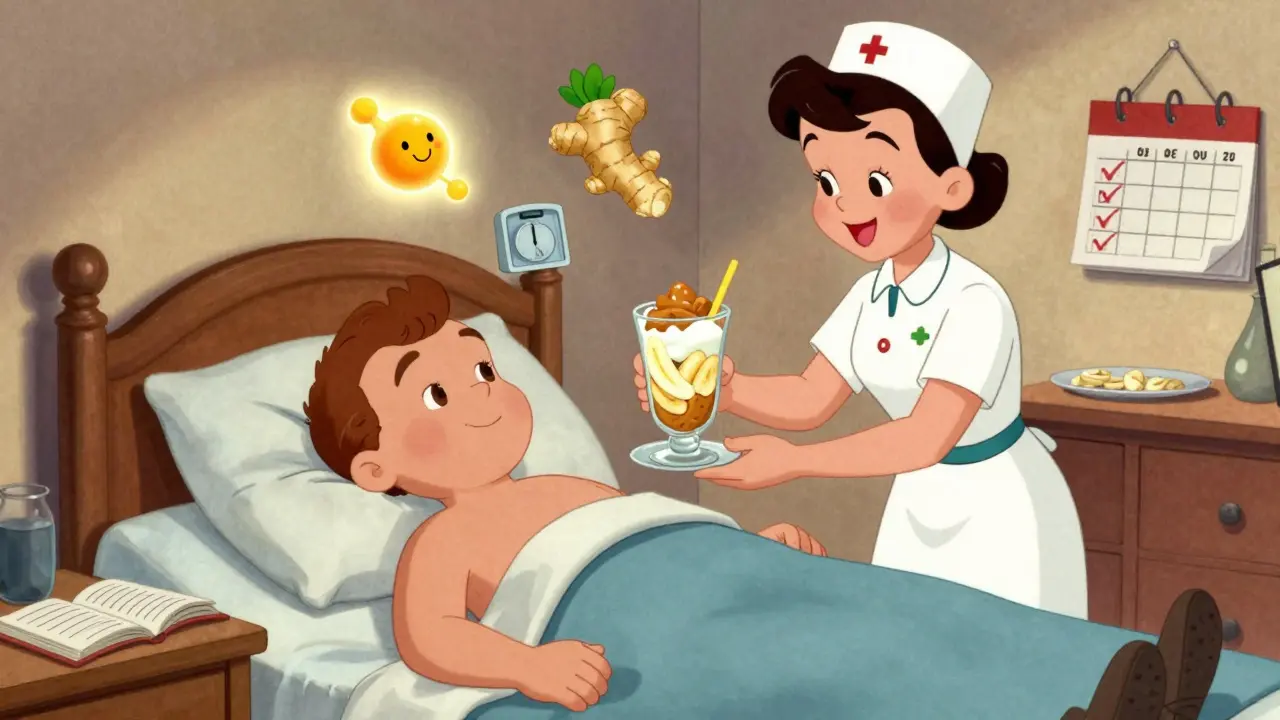
Sometimes, no matter how hard you try, you can’t eat enough. About 15-20% of patients on aggressive chemo regimens need extra help. That’s when tube feeding (enteral) or IV nutrition (parenteral) becomes necessary. It’s not failure-it’s medical support.If you’re losing weight despite trying everything, talk to your care team. Ask for a referral to a registered dietitian who specializes in oncology. Only 35% of community oncology clinics have one, but they’re worth finding. A specialist can create a personalized plan, adjust for side effects, and help you avoid hospitalizations.
Major cancer centers like Mayo Clinic have seen treatment delays drop by 28% after implementing structured nutrition programs. This isn’t luxury care-it’s essential care.
What’s Changing in 2026
The field is evolving fast. In 2023, ESPEN updated its guidelines to strongly recommend omega-3 fatty acids (EPA/DHA) at 1-2 grams per day. Studies show they improve appetite, add about 2.3 kg of weight, and boost quality of life scores by 18%. You can get them from fish oil supplements or eating fatty fish like salmon twice a week.AI-powered meal planners are starting to appear in pilot programs. IBM Watson Health, working with ASCO, is testing software that suggests meals based on your symptoms, preferences, and lab results. It’s still new, but it points to a future where nutrition is tailored to your genes, your treatment, and your day-to-day feelings.
By 2028, experts predict 90% of major cancer centers will have formal nutrition protocols. The message is clear: nutrition isn’t a side note during chemotherapy-it’s part of the treatment.
What You Can Do Today
You don’t need to overhaul your life. Start small:- Swap one big meal for two smaller ones today.
- Keep a protein-rich snack within reach at all times.
- Drink fluids between meals, not with them.
- Try ginger tea or frozen grapes if nausea hits.
- Ask your nurse or doctor for a referral to an oncology dietitian.
Every bite counts. Every calorie matters. This isn’t about eating perfectly-it’s about eating enough to get through treatment, stay strong, and give yourself the best shot at recovery.
Annette Robinson
January 8, 2026 AT 20:25When I was going through chemo, the biggest game-changer was keeping protein-rich snacks within arm’s reach at all times. Cheese sticks, hard-boiled eggs, peanut butter packets-I didn’t wait to be hungry. I ate when I could, even if it was just a spoonful of yogurt at 3 a.m. It wasn’t pretty, but it kept me alive. Your body doesn’t care if it’s ‘clean eating’-it just needs fuel.
Luke Crump
January 9, 2026 AT 21:40So we’re now treating cancer like a diet competition? Eat more calories, ignore the taste, shove down protein shakes like they’re gospel? What happened to letting the body heal naturally? This is just corporate nutritionism dressed up as science. Next they’ll tell us to drink bone broth while receiving radiation. At some point, you have to ask: who benefits from this?
Molly Silvernale
January 10, 2026 AT 18:45Food becomes a battlefield when your body turns against you-every bite a negotiation between survival and disgust. Ginger chews aren’t just a remedy, they’re tiny acts of rebellion against nausea’s tyranny. And protein? It’s not a macro-nutrient-it’s armor. Each gram is a brick in the wall keeping you from collapsing into the void. The cold grapes? Those are little icy medals you earn just for breathing through another hour. You’re not eating to live-you’re eating to defy.
Prakash Sharma
January 11, 2026 AT 14:41This is why Western medicine fails-overcomplicating everything with charts and grams and apps. In India, we eat what’s available, what tastes good, what keeps the spirit up. No fancy protein shakes. Just dal, rice, and milk with a little sugar. Simple. Strong. No need for IBM Watson to tell you what to eat. Your grandma’s wisdom beats algorithms any day.
Kristina Felixita
January 13, 2026 AT 01:48OMG YES THIS. I kept a basket of granola bars and cheese sticks by my couch like you said and it changed EVERYTHING. I didn’t even realize I was eating so little until I started just grabbing stuff whenever I sat down. And the frozen grapes?? My mouth sores felt like they were being kissed by angels. Also, I spelled ‘grapes’ wrong like 5 times in this comment but you get the vibe. Love you all.
Joanna Brancewicz
January 14, 2026 AT 19:53Protein target: 20-30g per meal. Non-negotiable. Muscle loss = treatment delay. Calorie density > food quality. Fluids between meals. Ginger = evidence-based. Avoid greasy. Cold > hot. Food safety = critical. Dietitian referral = essential.
Evan Smith
January 15, 2026 AT 13:50So… you’re telling me I can eat ice cream for breakfast and it’s not just a treat but a medical intervention? I’m in. Also, I just made a protein shake with vanilla ice cream, peanut butter, and a banana. I think I just won cancer. Or at least the snack aisle.
Lois Li
January 17, 2026 AT 12:33I want to thank everyone who shared their strategies. It’s easy to feel alone when your body feels like a betrayal. But reading these little victories-frozen grapes, plastic utensils, peanut butter on toast-it reminds me I’m not broken, I’m adapting. We’re all just trying to eat our way through hell, one spoonful at a time. You’re doing better than you think.
christy lianto
January 17, 2026 AT 16:28My oncology dietitian told me to drink my calories before I even got out of bed. I hated it. But I did it anyway. Three months later, I gained back 12 pounds of muscle. I didn’t just survive-I got stronger. If you’re tired, hungry, or just done-eat anyway. Not because it’s healthy. Because you’re worth the fight.
Ken Porter
January 18, 2026 AT 21:54Overcomplicated. All this talk about grams and apps and protein shakes. Just eat. If you can’t, get a feeding tube. No one needs a 2000-word essay on why they ate mashed potatoes.
swati Thounaojam
January 20, 2026 AT 07:41in india we eat curd rice with a little salt and sugar when nauseated. no protein shakes needed. just simple food. thank you for sharing this.