Lab Monitoring Calendar Generator
Your Personalized Lab Monitoring Schedule
Select your medication to get your recommended monitoring schedule and important safety information.
Your Monitoring Schedule
Critical Safety Information
When you start a new medication, especially one with serious risks, the real work doesn’t begin when you swallow the pill. It begins with lab monitoring. Many people think side effects are something you just endure-nausea, fatigue, dizziness-and hope they go away. But for some drugs, side effects aren’t just uncomfortable-they can be life-threatening if caught too late. That’s where a lab monitoring calendar comes in. It’s not a luxury. It’s a safety net.
Why Your Medication Needs a Lab Schedule
Not all drugs are created equal. Some, like lithium for bipolar disorder or clozapine for treatment-resistant schizophrenia, have narrow safety margins. A tiny shift in blood levels can mean the difference between control and crisis. Without regular blood tests, you won’t know your levels are climbing into danger zones until it’s too late. Lithium toxicity can cause seizures. Clozapine can drop your white blood cell count so low your body can’t fight off infections. These aren’t rare outcomes. They happen when monitoring is skipped or forgotten. The same goes for warfarin, a blood thinner. If your INR (a measure of how long your blood takes to clot) drifts too high, you risk internal bleeding. Too low, and you’re unprotected from clots. Monthly INR checks aren’t optional-they’re non-negotiable. And yet, studies show nearly 40% of patients miss at least one test in the first year. That’s not negligence. It’s confusion. No one tells you when to test, why, or what to do if results are off. That’s where a calendar changes everything.What Gets Monitored-and How Often
Different drugs need different tests. There’s no one-size-fits-all. Here’s what real-world guidelines recommend:- Clozapine: Weekly absolute neutrophil count (ANC) for the first 18 weeks, then every two weeks, then monthly for life. If ANC drops below 1,500/μL, testing increases. Below 500/μL? Stop the drug immediately. This isn’t a suggestion. It’s a federal requirement.
- Lithium: Check serum levels 5-7 days after starting, then weekly until stable. After that, every 3-6 months. But if you get sick, change doses, or start a new medication? Back to weekly.
- Warfarin: Monthly INR checks. More often if you’re on antibiotics, change your diet, or feel unusual bruising.
- Systemic corticosteroids (like prednisone for more than two weeks): Morning cortisol test before stopping to check for adrenal suppression. Skip this, and you could collapse under stress.
- LONSURF (a colon cancer drug): Weekly blood counts for anemia, low platelets, and neutrophils. Also track diarrhea and vomiting-these can turn deadly fast.
- Glaucoma eye drops (like dorzolamide/timolol): Annual eye exams to check for optic nerve damage. Many patients don’t know these drops can harm vision long-term.
Printable vs. Digital: Which Works Better?
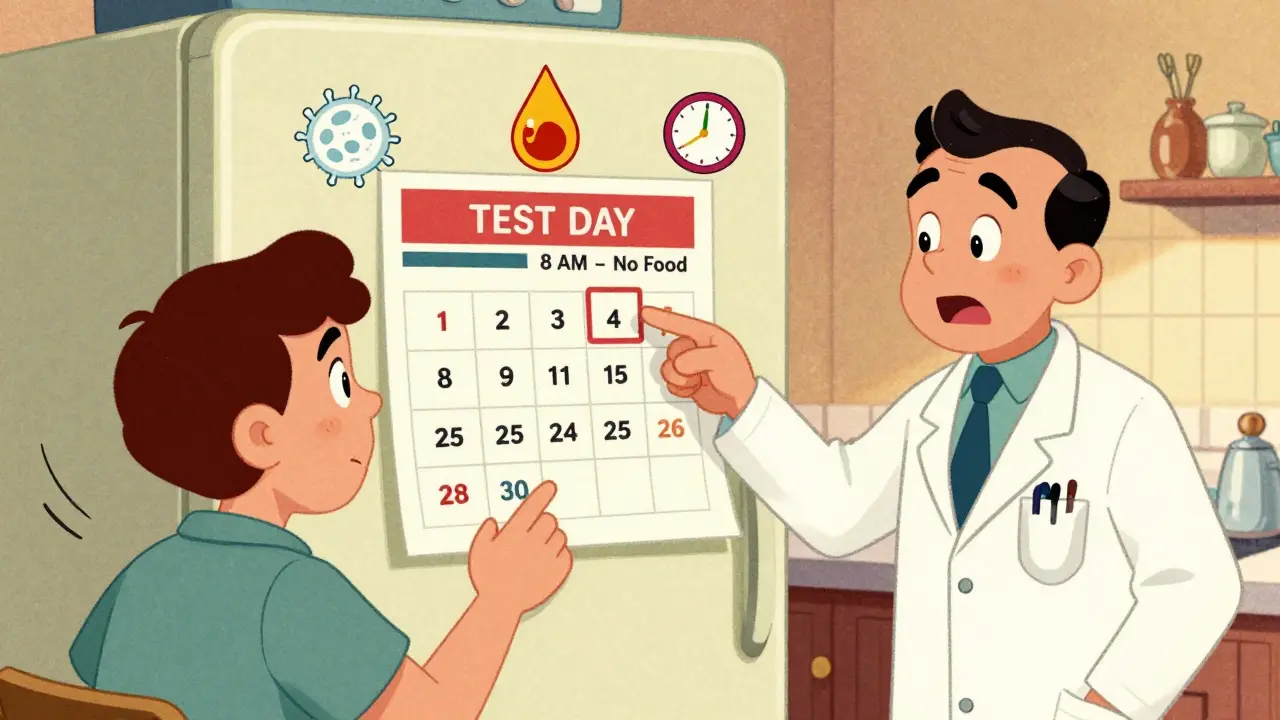
You can track this on paper. You can use an app. Or your doctor’s electronic system might auto-schedule tests. Each has pros and cons. Printable calendars-like the ones from Community Behavioral Health or CBH Philly-are simple. You can stick them on your fridge. You can check them off with a pen. But they don’t remind you. If you miss a week, there’s no alert. And if your dose changes? You have to rewrite the whole thing. Digital tools are smarter. The Health Manager app from Blood Cancer United lets you log side effects alongside lab results. You can tag symptoms like "fatigue after lunch" or "dizziness after taking pill." Over time, patterns emerge. Maybe your lithium level spikes every time you eat salty food. Maybe your ANC drops after a bad night’s sleep. That data helps your doctor adjust your plan. Ulta Lab Tests lets you order your own blood work-but doesn’t schedule it. You still have to remember when. And without a provider’s input, interpreting results is risky. A low white count could mean infection, bone marrow suppression, or just a bad day. You need context. The best system? One that syncs with your doctor’s EHR and sends you a text or email when a test is due. If that’s not available, use a phone calendar with recurring alerts. Label it clearly: "Clozapine ANC Check - 8 AM - Blood Draw Only. No Food."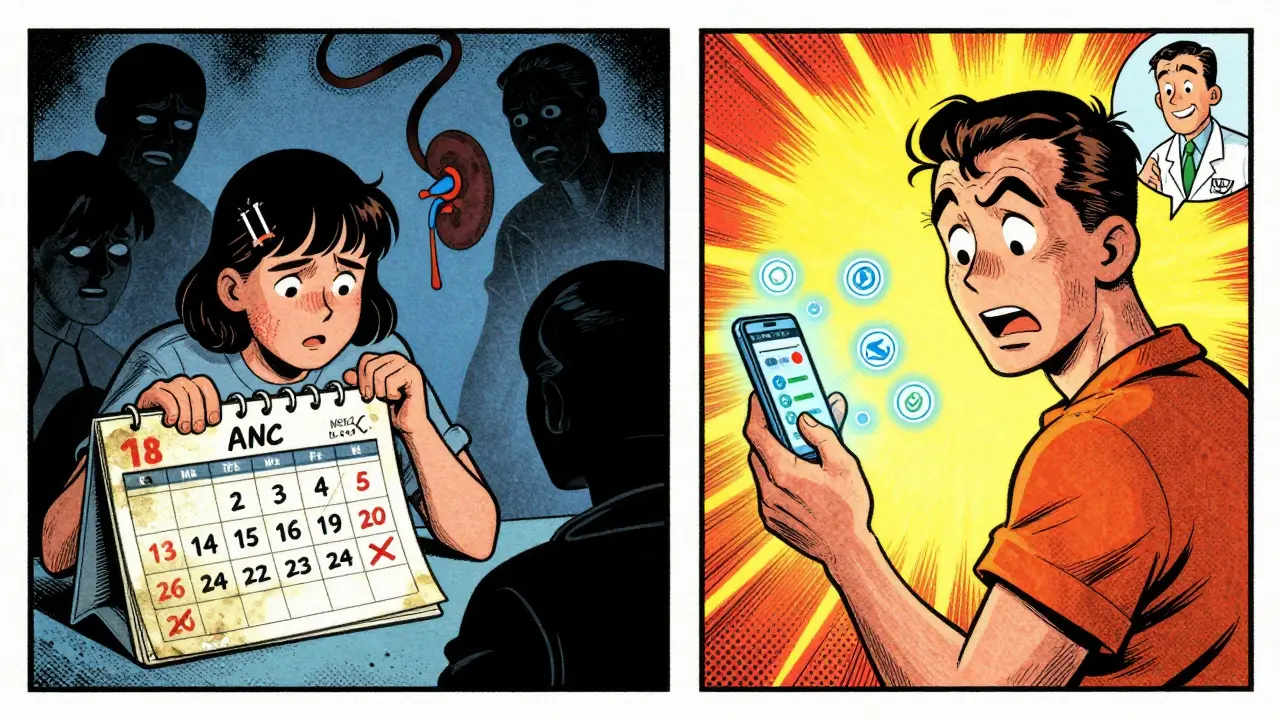
How to Build Your Own Lab Monitoring Calendar
Start with your prescription. Ask your doctor or pharmacist: "What blood tests do I need, how often, and why?" Write down the answers. Don’t assume. Don’t guess. Then, map it out:- List every required test and its frequency (weekly, monthly, etc.).
- Note special instructions: "Fast for 12 hours," "Test 12 hours after last dose," "Avoid NSAIDs 48 hours before." These details matter.
- Set recurring reminders in your phone or calendar app. Use alarms, not just notifications.
- Record results in one place-a notebook, spreadsheet, or app. Include date, value, and normal range.
- Track side effects next to each test. Did you feel dizzy after the blood draw? Did your appetite drop after starting the pill? Link symptoms to timing.
- Bring it to every appointment. Even if your doctor says they have your records, they might not. Your calendar is your voice.
What Happens When You Skip a Test
Missing a lab test doesn’t mean you’ll have an emergency tomorrow. But it does mean you’re flying blind. One patient on clozapine missed three ANC checks over four months. She felt fine. No fever. No sore throat. Then she got a cold-and developed sepsis. Her white count had been dropping for weeks. No one knew. Another took lithium for years. His levels were stable. Then he started a new antibiotic. His doctor didn’t know. His lithium level doubled. He ended up in the ER with tremors, confusion, and kidney damage. These aren’t outliers. They’re predictable. Every year, thousands of hospital admissions for drug toxicity are linked to missed monitoring. It’s not the drug’s fault. It’s the lack of a system.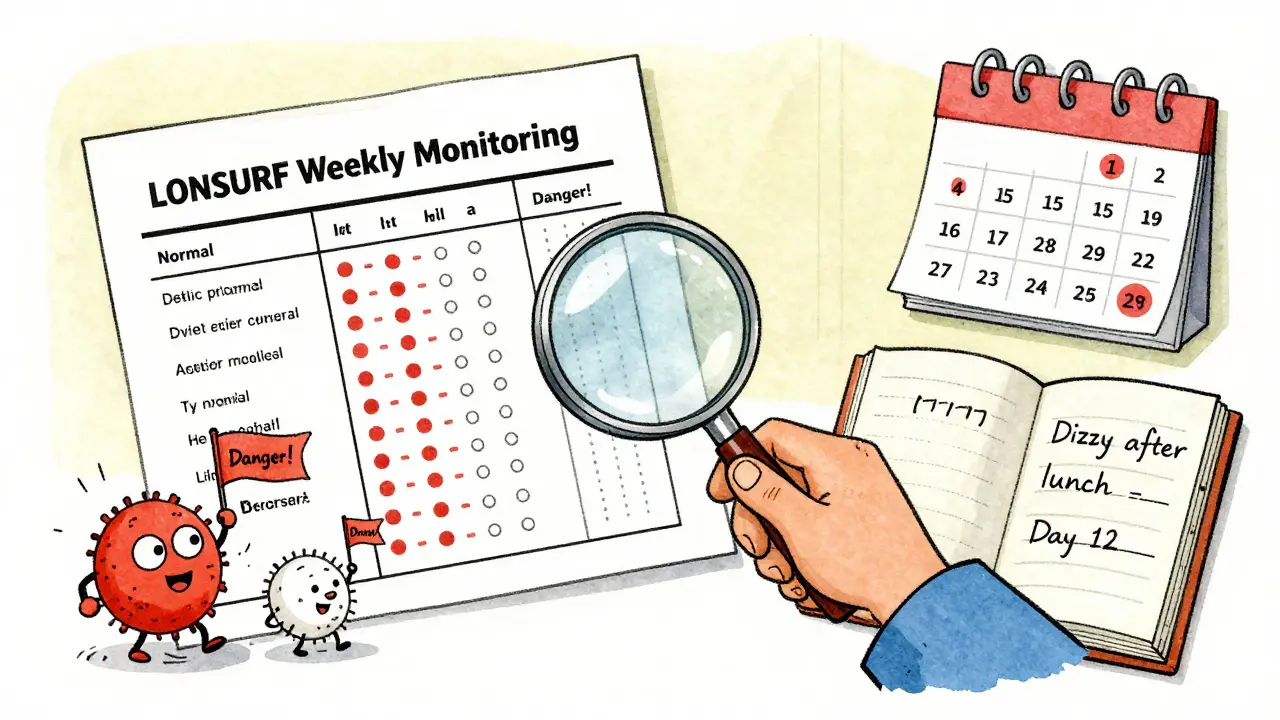
When to Update Your Calendar
Your calendar isn’t set in stone. It needs to evolve. Update it when:- Your dose changes-even a small adjustment.
- You start or stop another medication. Antibiotics, antifungals, even OTC painkillers can interfere.
- You get sick. Fever, vomiting, or diarrhea can change how your body processes drugs.
- You change your diet. Salt, potassium, and fluid intake affect lithium and diuretics.
- You hit a milestone. After six months of stable ANC on clozapine, your monitoring may drop from weekly to monthly. But only if your doctor says so.
The Bigger Picture: Monitoring as Self-Care
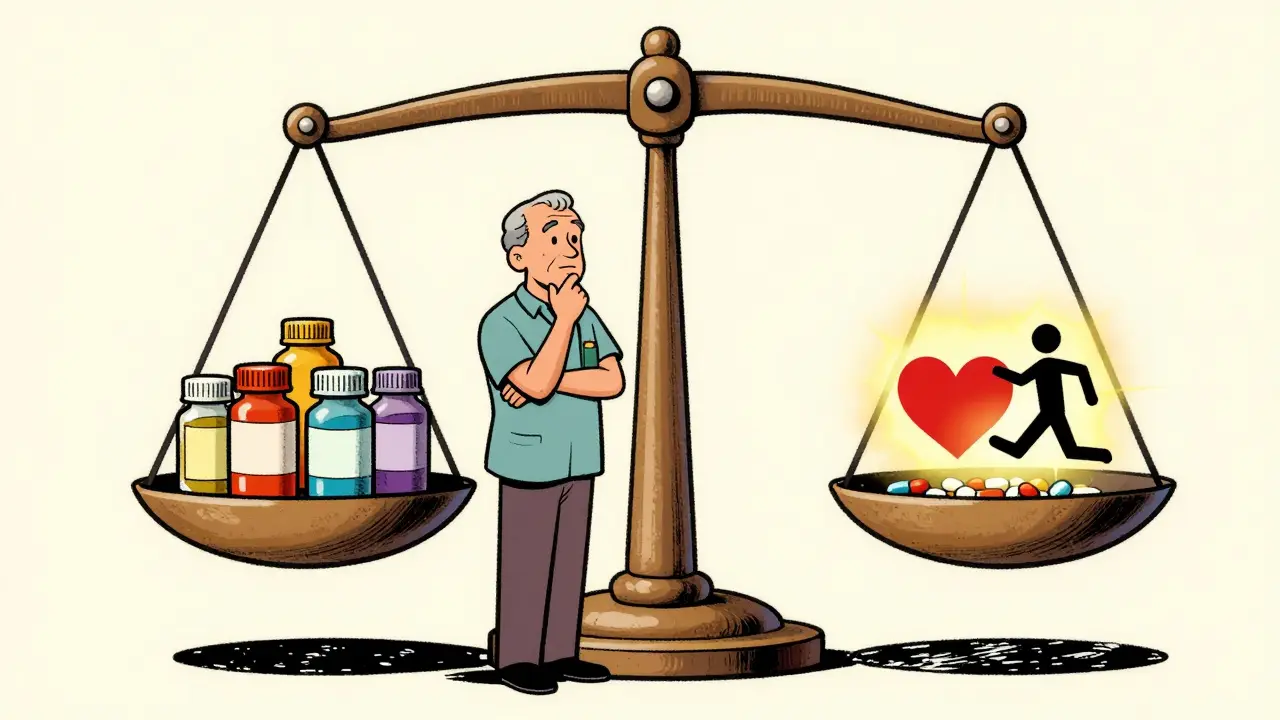
Lab monitoring isn’t just about avoiding danger. It’s about reclaiming control. When you know your numbers, you’re not just a patient-you’re a partner. You can spot trends before they become crises. You can ask better questions. You can push back when something feels off. A woman on mirtazapine started tracking her weight weekly. After three weeks, she noticed a 6-pound gain. She told her doctor. They lowered the dose. Her appetite stabilized. Her energy improved. That’s the power of tracking. It’s not about being obsessive. It’s about being informed. The goal isn’t to live in fear of your meds. It’s to use them safely-so they can do what they’re supposed to: help you feel better.Final Checklist: Your Lab Monitoring Starter Kit
Before your next appointment, make sure you’ve got this:- A printed or digital calendar with all required tests and dates
- Notes on special prep rules (fasting, timing, etc.)
- Record of all past results with normal ranges
- Log of side effects linked to timing and doses
- Questions for your doctor: "Is my schedule still right?" "Are there new guidelines?" "What should I do if a result is out of range?"




jonathan soba
January 28, 2026 AT 21:33Let’s be real-most doctors hand you a script and a smile and call it a day. Meanwhile, your liver is doing backflips and your bone marrow is throwing a protest. I’ve seen people get hospitalized because they trusted the system instead of tracking their own labs. This isn’t paranoia. It’s basic survival. If your doctor doesn’t give you a calendar, make one. Then print it. Then tape it to your mirror. Then set five alarms. Because if you’re on clozapine or lithium and you’re not monitoring, you’re just gambling with your brain.
And no, ‘I felt fine’ is not a lab result.
Chris Urdilas
January 29, 2026 AT 01:38Man, I wish I’d had this when I was on warfarin. I missed two INR checks because I thought ‘it’s just blood’ and my wife was out of town. Ended up in the ER with a bruise the size of a grapefruit on my thigh. Turned out my INR was 6.8. Six. Eight. My doctor said I was lucky I didn’t bleed out in my sleep.
Now I’ve got a sticky note on my fridge that says ‘TEST DAY = NO EXCUSES.’ And yeah, I’ve started tagging my symptoms in a Google Sheet. Fatigue after 3pm? Check. Dizziness after salt? Double check. Turns out, my body’s got a newsletter. I just had to learn how to read it.
Phil Davis
January 30, 2026 AT 15:16Digital tools are great until your phone dies or the app crashes. I use both: a printed calendar taped to my medicine cabinet, and a recurring Google Calendar alert that says ‘CLOZAPINE ANC - NO FOOD - 8AM’. I’ve had both systems save me. One time, I forgot to fast. The lab tech called me back because my lithium level was already spiking. She said, ‘You’re lucky you came in today.’
Turns out, the system doesn’t care if you’re busy. It only cares if you’re alive.
Irebami Soyinka
February 1, 2026 AT 12:55USA still thinks ‘just take the pill’ is healthcare. Meanwhile, in Nigeria, we don’t even have access to labs half the time. So we learn to read our own bodies like ancient scrolls-swelling? Fever? Dizziness? That’s not ‘side effect,’ that’s your body screaming for help.
But hey, if you’re rich enough to have an app that tracks your ANC, you’re already in the 1%. The rest of us? We pray. And hope the doctor remembers to check.
😂
Mel MJPS
February 2, 2026 AT 11:24This made me cry a little. My mom was on lithium for 15 years and never had a calendar. She missed her last test before her stroke. They said it was ‘unrelated.’ But I know. I’ve got the old blood work printouts in a shoebox. I wish someone had told her how to track it. I wish someone had told me.
If you’re reading this and you’re on one of these meds-please, please, please make a calendar. Not for your doctor. For you. You deserve to be safe.
Katie Mccreary
February 2, 2026 AT 14:44My psychiatrist said ‘just call if you feel weird.’ So I waited three weeks until I couldn’t stand up. Turns out my lithium was 2.1. Normal is 0.6–1.2. I spent a week in the hospital. Now I have a tattoo that says ‘TEST DAY.’
Yeah. It’s on my forearm. No, I’m not joking.
SRI GUNTORO
February 3, 2026 AT 09:26People think medication is a free pass to ignore their bodies. But you wouldn’t drive a car without checking the oil, would you? Why treat your body like a disposable toaster?
It’s not about being paranoid. It’s about being responsible. If you’re too lazy to track your labs, maybe you shouldn’t be on the drug in the first place. Your life isn’t a suggestion box.
Rose Palmer
February 5, 2026 AT 06:00Thank you for this comprehensive, clinically grounded, and deeply human guide. As a healthcare professional, I can confirm that adherence to lab monitoring protocols reduces hospitalization rates by over 60% for high-risk medications. This is not anecdotal-it is evidence-based practice.
I encourage every patient to treat their monitoring calendar as a living document, co-created with their care team. And to those who feel overwhelmed: start small. One test. One reminder. One day. Progress, not perfection.
Your diligence is not a burden-it is the foundation of your autonomy. You are not just a patient. You are the most important member of your care team.