
For someone with type 1 diabetes, managing blood sugar every day can feel like a full-time job. Injections multiple times a day, constant carb counting, finger pricks, and the fear of low blood sugar at night-it adds up. That’s where insulin pump therapy comes in. It’s not a magic fix, but for many, it changes everything. If you’re considering switching from injections to a pump, you need to know the real pros, the real cons, and exactly how to get started.
What Is Insulin Pump Therapy?
Insulin pump therapy is a method of delivering insulin continuously through a small, wearable device. Instead of injecting insulin several times a day, the pump sends rapid-acting insulin through a tiny tube or patch stuck under your skin. Modern pumps don’t just deliver insulin-they talk to your glucose monitor. Some can even adjust insulin automatically based on your blood sugar levels. This is called automated insulin delivery (AID), or a hybrid closed-loop system.
These devices are about the size of a small smartphone, weigh around 100 grams, and can hold up to 300 units of insulin. Brands like Medtronic, Tandem, and Insulet dominate the market. The Omnipod 5, for example, is tubeless and waterproof, so you can swim or shower without removing it. The Medtronic MiniMed 780G can predict when your blood sugar is about to drop and pause insulin before it happens.
Why People Switch: The Real Pros
People who use insulin pumps often report feeling more freedom. No more calculating doses before every meal. No more carrying syringes in your purse or pocket. Many say they sleep better because overnight lows happen less often.
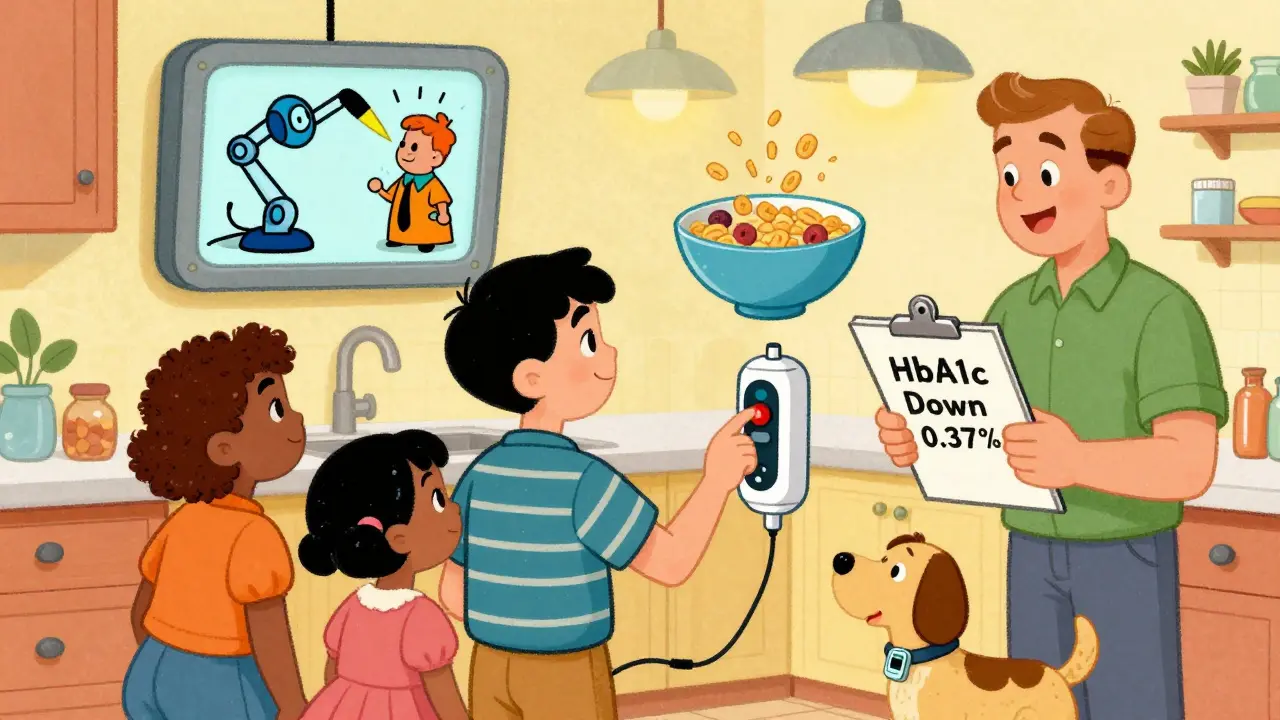
Studies show a clear benefit: users on pumps have, on average, 0.37% lower HbA1c than those using injections. That might sound small, but in diabetes, even a 0.5% drop means fewer long-term complications. One 2022 study of over 25,000 people found pump users had 32% fewer nighttime low blood sugar episodes.
Flexibility is another big win. Want to eat dinner at 9 p.m.? Go ahead. Feeling extra active on Saturday? The pump can reduce your basal rate without you having to plan ahead. Parents of young kids with type 1 diabetes often say pumps make life easier-especially when dealing with unpredictable eating habits or growing children who need changing insulin needs.
And the technology keeps improving. In January 2023, the FDA approved the Tandem t:slim X2 with Control-IQ for children as young as two. That means even toddlers can benefit from automated insulin delivery. The American Diabetes Association now recommends AID systems as a preferred option for anyone with type 1 diabetes who can access them.
The Other Side: The Real Cons
But pumps aren’t for everyone. They come with risks and frustrations that aren’t always talked about.
First, if the pump stops working-because of a kinked tube, a dislodged catheter, or a battery failure-your insulin delivery stops. That can lead to diabetic ketoacidosis (DKA) in as little as 4 to 6 hours. About 15% of users report a delivery issue at least once a month. That’s why everyone on a pump must carry backup insulin pens. One user on TuDiabetes.org shared how their Medtronic pump failed during a family vacation. Within five hours, they were in the ER with DKA. Now, they never leave home without pens.
Then there’s the physical side. Skin irritation from the infusion set happens to nearly half of users. Some get red, itchy bumps that last for days. Others get frustrated with tubing getting caught on doorknobs, chairs, or clothing. Tubeless pumps help, but they still need to be changed every 2-3 days, and insertion can be painful.
Alarm fatigue is real. Pumps beep for low insulin, high glucose, disconnected tubing, low battery-you name it. One survey found 38% of users feel overwhelmed by the noise. Over time, some start ignoring alarms, which is dangerous.
And it’s expensive. The pump itself costs $5,000 to $7,000. Supplies-infusion sets, reservoirs, sensors-run $3,000 to $5,000 a year. In the U.S., 90% of people get insurance coverage, but copays can still hit $100-$500 after meeting deductibles. In the UK, access varies by region, and some patients wait months for approval.

Who Is a Good Candidate?
Not everyone needs or should use a pump. Experts at the Association of Diabetes Care & Education Specialists (ADCES) say pumps work best for people who:
- Have high blood sugar variability
- Struggle with frequent low blood sugars, especially at night
- Have hypoglycemia unawareness (don’t feel when their sugar drops)
- Have an HbA1c above 7.5% despite trying injections
- Want more flexibility in eating and activity
But if you’re not comfortable with technology, have trouble seeing small screens, or get anxious about medical devices, a pump might add stress instead of relief. Dr. Anne Peters warns that people with eating disorders or severe anxiety around tech often struggle with pumps. It’s not just about the device-it’s about your mental readiness.
Children and teens often do very well with pumps. In the U.S., 45% of kids with type 1 diabetes use them, compared to 34% of adults. That’s because parents manage the pump for younger kids, and teens appreciate the freedom it gives them.
How to Get Started: A Step-by-Step Guide
Getting a pump isn’t as simple as ordering online. It’s a process that takes weeks, not days.
- Talk to your diabetes care team. Start with your endocrinologist or diabetes educator. They’ll assess whether you’re a good fit and help you navigate insurance.
- Check your insurance coverage. Ask what pumps are covered, what your copay will be, and if prior authorization is needed. Some insurers require proof of HbA1c levels or a history of hypoglycemia.
- Choose your pump. You’ll likely get a demo from a representative. Try the Omnipod 5 if you want no tubing. Go with Medtronic or Tandem if you prefer a screen that talks to your CGM and adjusts insulin automatically.
- Attend training. Most programs require 3-5 sessions over 2-4 weeks. You’ll learn how to insert the infusion set, program basal rates, calculate insulin-to-carb ratios, and respond to alarms.
- Start slowly. Your first week is about getting used to the device. Don’t try to fine-tune everything at once. Focus on keeping your infusion site clean and checking your glucose at least 4-6 times a day.
- Keep backup insulin. Always have fast-acting insulin pens and syringes on hand. Test your backup supplies monthly.
Don’t expect perfection right away. About 70% of new users need 2-3 weeks to feel confident. Common mistakes? Misplacing the infusion set, miscalculating boluses, or ignoring low alarms. That’s normal. The key is to keep learning.
What to Expect in the First Month
The first few weeks are a learning curve. You might feel overwhelmed. You’ll probably check your glucose more than ever-because now you have real-time data from your CGM. You’ll learn how your body reacts to different foods, exercise, and stress with pump insulin.
Some users say their blood sugar becomes more stable within days. Others take weeks. One Reddit user, u/PumpLife2023, wrote: “My overnight lows dropped from 3-4 a week to maybe once a month after turning on auto-basal.” That’s the kind of win people talk about.
But you’ll also face frustrations. A site might get infected. The pump might beep at 3 a.m. for no reason. You might forget to bolus before a snack. That’s okay. It’s part of the process. The goal isn’t perfection-it’s better control and less stress over time.
What’s Next? The Future of Insulin Delivery
The technology is moving fast. In late 2024, Medtronic plans to release the MiniMed 880G with SmartGuard Extended, which can suspend insulin for up to 150 minutes during low blood sugar. Beta Bionics’ iLet Bionic Pancreas, currently in final trials, is designed to automatically deliver both insulin and glucagon-no carb counting needed.
By 2027, experts predict 65% of new type 1 diabetes diagnoses in children will start on a hybrid closed-loop system. That’s up from 32% in 2022. The global pump market is expected to nearly double by 2029.
But even with all this progress, the biggest barrier isn’t technology-it’s access. Insurance denials, high out-of-pocket costs, and provider reluctance still keep many people from getting pumps. In the U.S., 22% of patients report being denied coverage. In the UK, access depends on your local NHS trust.
Is It Right for You?
Insulin pump therapy isn’t about being “better” than someone on injections. It’s about what works for your life. If you’re tired of constant injections, hate the fear of nighttime lows, and are ready to learn a new system, it could be a game-changer.
If you’re overwhelmed by tech, hate alarms, or can’t afford the costs-even with insurance-it might not be worth it. There’s no shame in sticking with injections. Many people manage just fine.
The best decision comes from talking to your care team, trying a demo pump, and listening to real users-not just marketing videos. Ask someone who’s been on a pump for a year. What did they wish they knew before starting? What did they get right? What surprised them?
There’s no single right answer. But for thousands, insulin pump therapy has meant fewer hospital visits, better sleep, and more freedom to live without diabetes holding them back.
Can children use insulin pumps?
Yes, children as young as 2 years old can use insulin pumps. The FDA approved the Tandem t:slim X2 with Control-IQ for kids aged 2 and up in January 2023. Many parents find pumps easier to manage for young children because they eliminate multiple daily injections and allow more precise insulin dosing. Pumps also help reduce nighttime lows, which is a major concern for families.
Do I still need to check my blood sugar if I use a pump?
Yes. Even with automated insulin delivery, you still need to monitor your blood sugar. Most pumps work with continuous glucose monitors (CGMs), which give you readings every 5 minutes. But you should still do manual checks if your CGM reads high or low, if you feel symptoms, or if the pump alerts you to a sensor error. The American Diabetes Association says pump therapy is not a set-and-forget system.
How often do I need to change the infusion set?
Infusion sets need to be changed every 2 to 3 days, no matter which pump you use. This helps prevent infection, skin irritation, and insulin absorption issues. Some users change them every 48 hours to reduce the risk of site problems. Always follow your pump manufacturer’s guidelines and your diabetes educator’s advice.
Can I swim or shower with an insulin pump?
It depends on the pump. Tubeless pumps like the Omnipod 5 are waterproof up to 3 meters for 30 minutes, so you can swim and shower without removing it. Tube-based pumps like the Medtronic MiniMed 780G are not waterproof-you must disconnect them before getting wet. Always check your pump’s water resistance rating and follow the manufacturer’s instructions.
What happens if my pump breaks or runs out of battery?
Always carry backup insulin pens and syringes. If your pump fails, you’ll need to switch to injections immediately. Most pumps have a battery life of 7-10 days, but you should always carry spare batteries. If you experience a delivery failure, check for kinks in the tubing, air bubbles, or dislodged catheters. If you can’t fix it, use your backup insulin and contact your pump company for a replacement. Never wait more than 4-6 hours without insulin.
Are insulin pumps covered by insurance in the UK?
In the UK, insulin pumps are available through the NHS, but access varies by region. Your diabetes team will assess if you meet clinical criteria-such as frequent hypoglycemia, high HbA1c, or difficulty managing injections. Some areas have long waiting lists. Private insurance may cover pumps too, but out-of-pocket costs can be high. Always discuss your options with your diabetes nurse or endocrinologist.
Do insulin pumps cause weight gain?
Insulin pumps themselves don’t cause weight gain, but better blood sugar control can lead to weight gain because your body starts using glucose more efficiently instead of losing it in urine. Some people also eat more because they’re no longer afraid of low blood sugars. Working with a dietitian to adjust carb intake and insulin ratios can help prevent unwanted weight gain.
How long does it take to learn how to use a pump?
Most people need 2 to 3 weeks to feel comfortable using a pump. Training usually includes 3 to 5 sessions with a diabetes educator. You’ll learn how to insert the infusion set, program basal rates, calculate boluses, and respond to alarms. It’s normal to make mistakes at first. Many users say they feel confident after about a month of daily use.
Next Steps: What to Do Today
If you’re thinking about a pump, don’t wait. Start by asking your diabetes care team one simple question: “Am I a good candidate for insulin pump therapy?” Then ask for a demo. Many companies offer free trial units so you can wear one for a few days and see how it feels.
Check your insurance coverage. If you’re in the UK, ask your NHS team about local guidelines. If you’re in the U.S., call your insurer and ask what pumps are covered and what documentation they need.
And talk to someone who’s already using one. Join a forum like r/insulinpumps or connect with a local support group. Real stories matter more than brochures.
Insulin pump therapy isn’t about perfection. It’s about progress. For many, it’s the difference between living with diabetes and living fully despite it.





James Rayner
December 16, 2025 AT 19:38It’s funny how something so technical can feel so deeply human-like your body becomes a machine you have to negotiate with every day. I’ve watched my brother go from panic attacks over nighttime lows to sleeping through the night since he got his pump. Not because it’s perfect, but because it gave him back some quiet. That’s worth more than any HbA1c number.
Kayleigh Campbell
December 17, 2025 AT 22:37So let me get this straight-you’re telling me I can finally eat ice cream at midnight without turning into a zombie? Sign me up. Also, the fact that I now have to babysit a $7k beeping toaster is just the universe’s way of saying ‘you’re not done suffering yet.’ 😅
Joanna Ebizie
December 18, 2025 AT 10:07People act like pumps are some kind of miracle cure, but if you’re gonna be glued to a device that beeps at 3 a.m. for no reason, you might as well just stick with needles. At least needles don’t judge you for eating a bag of chips.
Andrew Sychev
December 19, 2025 AT 15:08THEY’RE TRACKING YOU. EVERY. SINGLE. BITE. You think the pump is just delivering insulin? Nah. It’s feeding your data to Big Pharma, your insurer, and probably the government. They’re building a diabetes profile so they can raise your premiums next year. I’ve seen the leaked documents. This isn’t medicine-it’s surveillance with a rubber band.
Elizabeth Bauman
December 21, 2025 AT 11:53Look, I get it-pumps are fancy, but in America, if you can’t afford this, you’re basically being punished for being poor. Meanwhile, in Canada and the UK, they just give these to people who need them. We’re a first-world country that treats diabetes like a luxury subscription. Shameful.
Souhardya Paul
December 23, 2025 AT 08:26I’ve been on a pump for 18 months now, and honestly? The first week was chaos-I misprogrammed my bolus twice and cried over a kinked tube. But after that, things got quiet. I stopped checking my glucose every 20 minutes. I started hiking again. I didn’t realize how much mental energy I was spending just surviving until the next meal. The tech isn’t perfect, but it gave me space to live-not just manage.
Billy Poling
December 24, 2025 AT 10:52While it is undeniably true that insulin pump therapy represents a significant technological advancement in the management of Type 1 Diabetes Mellitus, one must not overlook the broader sociological implications of medical device dependency, particularly in light of the increasing corporatization of healthcare infrastructure, wherein patient autonomy is subtly eroded through algorithmic governance and proprietary software ecosystems that are not interoperable with third-party solutions, thereby creating vendor lock-in phenomena that are economically coercive and ethically questionable, especially when one considers the disproportionate burden placed upon underinsured populations who are effectively excluded from accessing these life-improving modalities despite their clinical efficacy and demonstrated outcomes in peer-reviewed literature.
Josias Ariel Mahlangu
December 25, 2025 AT 09:49If you’re too lazy to inject yourself, then you shouldn’t be allowed to use a pump. Diabetes isn’t a convenience issue-it’s a discipline issue. I’ve been on needles for 30 years. I’ve never missed a dose. You don’t get to trade responsibility for a beeping gadget that costs more than my car.
Cassandra Collins
December 25, 2025 AT 11:59wait so the pump is secretly connected to the government?? i knew it!! i saw this video on tiktok where a girl said her pump made her crave sugar and then she got a bill for $12k and her insurance canceled her. also the tubes are made with nanotech that makes you forget how to spell your own name. i’ve been avoiding all pumps since 2021. my blood sugar is fine. i just eat less sugar. and i dont trust anything with a screen.
Dylan Smith
December 26, 2025 AT 13:03I got my pump last year and I didn’t know how to change the site so I left it on for 10 days and got a huge infection and ended up in the ER and now I’m terrified to touch it but my endo says I have to keep using it because my HbA1c dropped from 9.1 to 6.8 so I guess I’m stuck