Drug Regulation Comparison Tool
Compare Global Medication Regulation Systems
Understand how different countries evaluate drug safety and approval. Select a country to see its regulatory approach, approval timeline, data requirements, and key features.
Select a Regulatory System:
U.S. FDA
The FDA operates a centralized system with rigorous requirements and a focus on speed for unmet medical needs.
When you take a pill, you assume it’s safe. But that safety isn’t guaranteed by magic-it’s the result of complex, country-specific systems that decide what drugs make it to market, how they’re monitored, and when they’re pulled. The truth? drug regulation varies wildly across the world, and those differences can affect your health more than you think.
How the U.S. FDA Approves Drugs
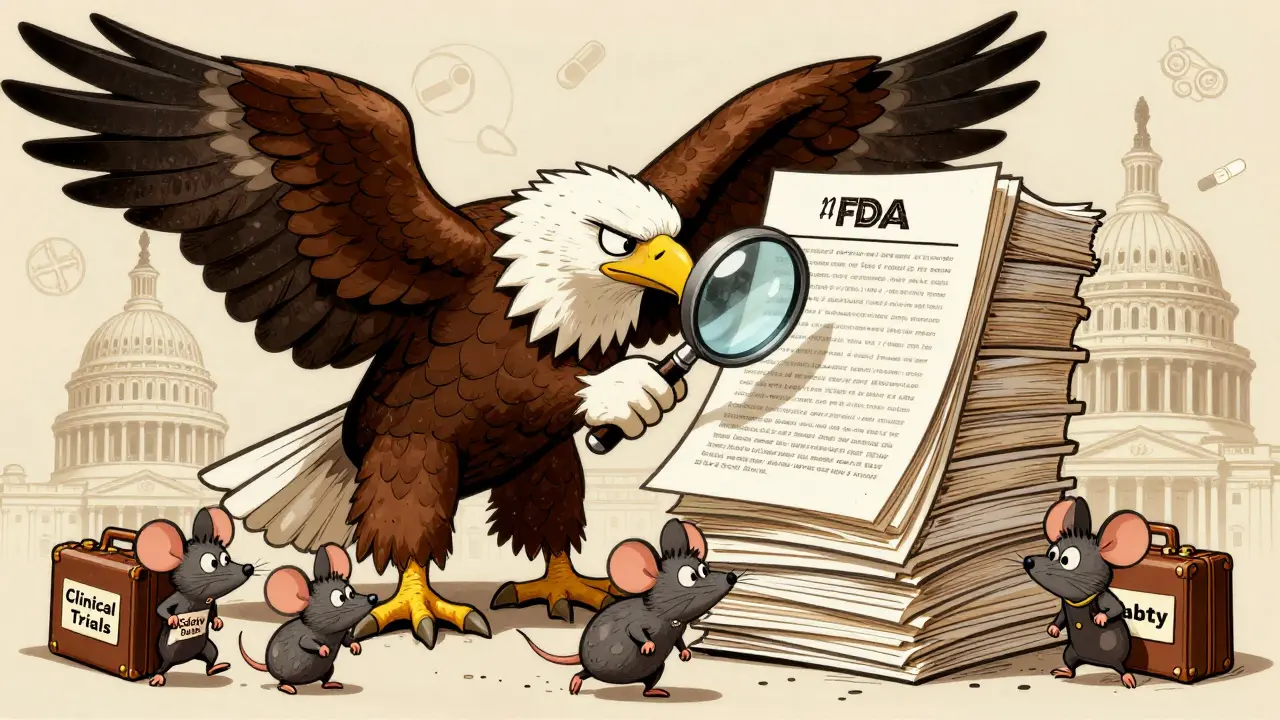
The U.S. Food and Drug Administration (FDA) runs a centralized system. One agency, one set of rules, one approval path. That sounds simple, but it’s also rigid. In 2022, the average time for a new drug to get FDA approval was 10.2 months. That’s faster than most other major regions, but it comes at a cost: the FDA demands massive amounts of data. A single new drug application can run 15,000 to 20,000 pages long. Companies spend millions just preparing paperwork. The FDA doesn’t just approve drugs-it watches them after they’re sold. Its MedWatch system lets doctors and patients report side effects directly. In 2022, 83% of clinicians said these alerts were timely and useful. But critics say the system is too slow to react. During the pandemic, FDA review times jumped 37% because of backlogs. Former FDA Commissioner Dr. Margaret Hamburg called this a bottleneck in emergencies. The FDA also has unique rules. In 2022, its Modernization Act 2.0 removed mandatory animal testing for some drugs, cutting approval time by up to six months. It’s also leading in digital health-processing 217 digital therapeutics in 2022, up from just 42 in 2019.The European Union’s Hybrid Model
The European Medicines Agency (EMA) doesn’t work alone. It’s part of a network of 27 national regulators. For new, complex drugs-like cancer treatments or gene therapies-the EMA handles centralized approval. For generics and older medicines, each country can approve its own version. This gives flexibility but creates chaos for drugmakers. In 2022, the EMA’s centralized approval process took 12.7 months-longer than the FDA’s. But European physicians prefer the transparency. A 2022 survey found 71% of doctors thought EMA risk-benefit reports were clear and detailed, compared to 63% for FDA documents. The EU also moves faster on safety alerts. When the painkiller Vioxx was pulled in 2004, 22 EU countries coordinated action in 14 days. The U.S. took 28. The EU’s rules are written into law-Eudralex Volume IV-and apply across all member states. But enforcement varies. Some countries have stronger inspection systems than others. Still, the EU leads in oncology drug approvals, approving 12.7% more cancer drugs than the FDA in 2022. Why? They’re more willing to approve drugs with smaller benefit margins if the unmet need is high.Canada’s Middle Ground
Canada’s Health Canada sits between the U.S. and EU models. It’s centralized like the FDA, but it has a formal agreement with the EU since 2019. That means if a drug passes EMA inspection for manufacturing, Health Canada accepts it without a second audit. That saves time and money. After the EU-Canada Mutual Recognition Agreement (MRA), Canada’s safety decisions aligned with the EU in 87% of major cases. That’s higher than its alignment with the FDA. Canada also approves rare disease drugs faster than the EU-partly because it uses the FDA’s review data as a starting point. But Canada’s system isn’t perfect. It has fewer staff than the FDA and slower funding cycles. Some drugs approved in the U.S. take over a year longer to reach Canadian pharmacies.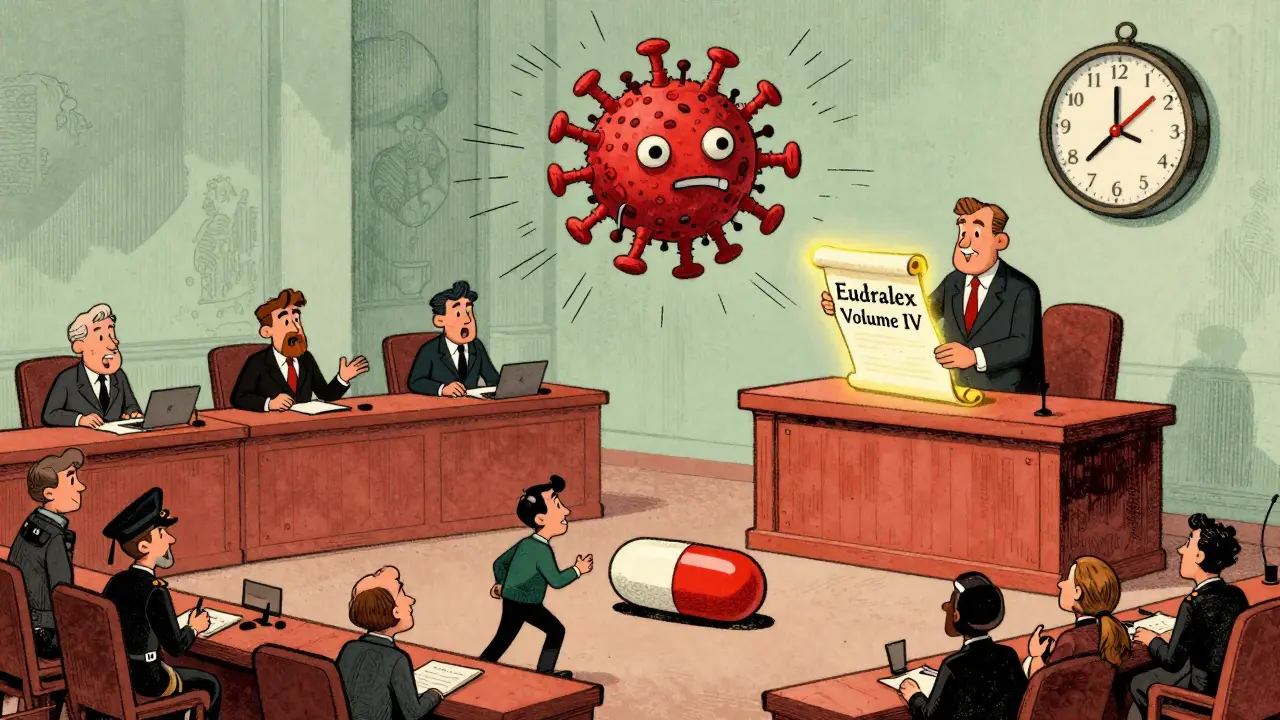
Australia’s TGA: Pragmatic and Data-Driven
Australia’s Therapeutic Goods Administration (TGA) is small but efficient. It follows its own law-the Therapeutic Goods Act 1989-and doesn’t follow anyone else’s rules blindly. In 2022, it matched FDA safety decisions 79% of the time, but only 63% with the EMA. That tells you something: Australia pays more attention to U.S. data than European ones. The TGA is known for speed. It often approves drugs faster than the EU, sometimes even before the FDA. It also uses a risk-based approach-less paperwork for low-risk products, more scrutiny for high-risk ones. That’s why 85% of pharmaceutical companies say the TGA’s guidelines are clear, even if they’re strict. It’s also ahead in digital tools. Australia was one of the first to use AI to flag suspicious drug submissions, reducing manual review time by 30%.Who Sets the Global Rules? The WHO’s Role
The World Health Organization (WHO) doesn’t have legal power. But its guidelines shape how 150+ countries-especially low- and middle-income ones-run their drug systems. WHO’s Good Manufacturing Practices (GMP) aren’t law, but they’re the default standard for countries without strong regulators. In 2023, WHO launched a Global Benchmarking Tool with 89 measurable indicators. By the end of 2022, 67 countries had reached “Maturity Level 3”-meaning they had functional, if not advanced, drug oversight. That’s progress. But in Africa, only 37% of manufacturing sites meet even basic GMP standards. In India, new inspections increased by 40% in 2022 after regulatory reforms. The problem? Patients in Nigeria or Bangladesh often don’t get safety alerts. The International Alliance of Patients’ Organizations found only 42% of patients in low-income countries receive timely warnings about dangerous drugs. That’s not a technical issue-it’s a communication failure.Why Do Safety Warnings Differ So Much?
Here’s the scary part: a 2019 study found only 10.3% agreement across the U.S., Canada, the UK, and Australia on when to issue safety warnings for the same drug. That means a medication deemed safe in one country might be pulled in another. Why? Because each system weighs risk differently. The FDA wants strong proof of harm before acting. The EU acts faster on early signals. Australia leans on U.S. data. Canada follows the EU. None are wrong-but the lack of alignment puts patients at risk. Dr. Thomas Frieden, former CDC director, called this “dangerous fragmentation.” Imagine a patient in Germany takes a drug approved in the U.S. and Canada. Their doctor in Germany sees a safety alert the FDA didn’t issue. Now they’re confused. That’s not hypothetical-it happens daily.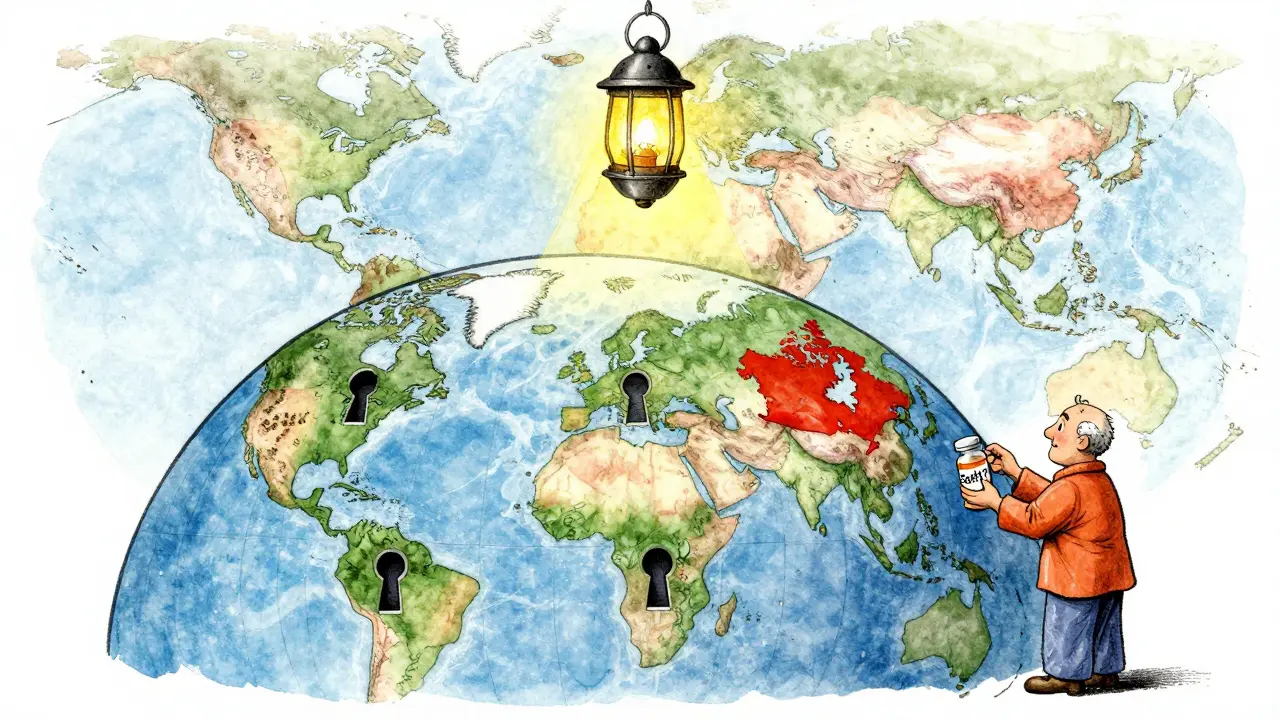
The Cost of Compliance
For drug companies, navigating this maze is expensive. It takes 18 to 24 months just to train staff on global regulations. The average cost to set up compliance across all major markets? $1.2 million per company. For a single new drug, total regulatory costs can hit $2.6 billion. Documentation alone is a nightmare. The FDA wants 20,000 pages. The EMA wants 18,000. The TGA wants 12,000. And they all ask for slightly different data. The International Council for Harmonisation (ICH) has helped. Its E6(R3) guidelines, adopted by 89% of major regulators by 2023, cut clinical trial paperwork by 22%. Still, companies complain. U.S. firms like the FDA’s predictability. EU firms like the flexibility-but hate the complexity. PhRMA found 78% of U.S. companies preferred the FDA’s rigid system. Sixty-five percent of EU firms liked the EU’s flexibility-even if it was messy.What’s Changing in 2026?
The world is moving faster. The FDA is using AI to review 43% of manufacturing inspections. The EMA’s Innovation Task Force reviewed 189 advanced therapies in 2022. The EU’s Pharmaceutical Strategy aims to cut approval times by 25% by 2025. WHO’s benchmarking tool is pushing countries to improve. But the biggest shift? AI-driven regulatory review. Boston Consulting Group predicts AI will cut standard approval times by 30-40% by 2027. That could mean faster access to life-saving drugs-but also more risk if algorithms miss subtle patterns. The real question isn’t which system is best. It’s whether these systems can learn to talk to each other. The ICH wants 75% alignment across the U.S., EU, Japan, and Canada by 2028. But politics, culture, and fear of liability stand in the way.What This Means for You
If you take medication, you’re playing a global game of regulatory roulette. A drug approved in the U.S. might be banned in the EU. A warning issued in Australia might not reach your doctor in Brazil. Your safety depends on where you live, what your local regulator knows, and whether your pharmacy has access to global updates. The good news? Systems are improving. AI is helping. Harmonization is slowly advancing. But until countries agree on how to measure risk, how to share data, and how to act on it, medication safety will always be a patchwork-and you’ll always be the one stitching it together.Why do some drugs get approved in the U.S. but not in Europe?
The U.S. FDA often approves drugs faster because it prioritizes speed for unmet medical needs, even with smaller clinical trial data. The EMA tends to require larger studies and is more cautious about long-term risks. For example, the FDA approved more rare disease drugs in 2022 because it accepts smaller patient populations as proof of benefit. The EU waits for stronger evidence of overall benefit, even if it delays access.
Is the FDA safer than the EMA?
Neither is inherently safer. The FDA is more consistent and faster, but its centralized system can delay urgent responses. The EMA is more responsive to emerging safety signals but creates complexity for manufacturers. Studies show the EMA approved more cancer drugs, while the FDA approved more rare disease treatments. Safety depends on how each agency defines risk-not which one is stronger.
Can I trust drugs from other countries?
If the drug is approved by a major regulator like the FDA, EMA, Health Canada, or TGA, yes. But if it’s from a country with weak oversight-like some parts of Africa or South Asia-there’s a higher risk of counterfeit or substandard products. Always check the manufacturer and ask your pharmacist where the drug was approved. Avoid buying from unverified online sellers.
Why don’t all countries follow the same rules?
Each country has different priorities, resources, and legal systems. The U.S. values speed and innovation. The EU values transparency and public input. Canada balances both. Low-income countries often lack funding and trained staff. Harmonization efforts like the ICH help, but political will and national sovereignty make full alignment unlikely anytime soon.
How can I find out if my medication has been recalled elsewhere?
Check your country’s official drug regulator website-like fda.gov, ema.europa.eu, or healthcanada.gc.ca. You can also use the WHO’s Global Surveillance and Monitoring System, which tracks international alerts. If you take multiple medications from different countries, ask your pharmacist to cross-check with global databases. Don’t rely on news reports-they’re often delayed or incomplete.




Hilary Miller
January 22, 2026 AT 10:08Just had my prescription filled from Canada and realized it’s the exact same pill as the US version-just cheaper. Why do we pay double here?
Margaret Khaemba
January 22, 2026 AT 10:28I’ve been on a few different meds over the years and noticed how some got pulled in Europe but stayed on the shelf here. It’s wild how the same drug can be called ‘safe’ or ‘dangerous’ depending on which side of the Atlantic you’re on. Makes you wonder who’s really protecting patients.
Malik Ronquillo
January 22, 2026 AT 12:34So the FDA is slow and the EU is messy and Australia just does whatever it wants and we’re all just guessing if our pills are gonna kill us? Great. Just great. I’m gonna start taking vitamins from my cousin’s garage.
Jasmine Bryant
January 24, 2026 AT 07:24Wait so the TGA uses AI to flag sketchy submissions? That’s actually kinda cool. I didn’t know Australia was that ahead. I thought they just copied the US. Turns out they’re the quiet overachiever of drug regulation. Also, typo: ‘medicaiton’ in the title. Just sayin’.
Liberty C
January 24, 2026 AT 12:55Let’s be real-the FDA isn’t a regulator, it’s a corporate puppet show. You think they’re protecting you? They’re protecting Big Pharma’s quarterly earnings. The EMA might be bureaucratic, but at least they pretend to care about patients instead of stock prices. And don’t even get me started on how the WHO is just a glorified suggestion box for countries that can’t afford real oversight.
shivani acharya
January 25, 2026 AT 12:19Okay but have you ever heard what really happens in Indian pharma factories? I worked in one. They reuse vials. They skip stability tests. They label stuff wrong because the printer ran out of ink. And guess what? That stuff gets shipped to Africa, South America, even Canada sometimes because the ‘mutual recognition’ is just a fancy word for ‘we don’t check’. The FDA is slow? At least they don’t let your grandma’s diabetes meds be made in a shed with a goat wandering around. This whole system is a lie. They know. They all know.
Keith Helm
January 26, 2026 AT 08:02Regulatory harmonization is a necessary step toward global patient safety. The current fragmentation introduces unacceptable variability in risk assessment and undermines public trust in pharmaceutical interventions.
Daphne Mallari - Tolentino
January 26, 2026 AT 12:41The notion that ‘speed’ equates to ‘safety’ is a dangerous fallacy perpetuated by market-driven ideologies. The EMA’s cautious approach reflects a deeper ethical commitment to long-term public health, not bureaucratic inertia. One cannot simply trade rigor for efficiency and call it progress.
Neil Ellis
January 28, 2026 AT 07:58It’s actually kind of beautiful how each system reflects its culture-America’s hustle, Europe’s deliberation, Australia’s pragmatism. We’re all trying to save lives, just with different tools. Maybe instead of fighting over who’s right, we should be building bridges. AI could help us share data faster, not just cut paperwork. Imagine if every country could see the same safety alerts in real time? That’d be next-level.
Kenji Gaerlan
January 28, 2026 AT 10:19why does the usa even have a fda if they just copy the eu anyway? i mean look at the numbers, they approve less cancer drugs and take longer for everything. its like theyre scared to make a decision. also i think the guy who wrote this works for pfizer
Brenda King
January 29, 2026 AT 00:06As someone who’s had to chase down drug recalls across three countries, I can say this: if you’re on a med, check your regulator’s site weekly. Don’t wait for your doctor to tell you. I’ve saved my sister’s life twice just by catching a warning before her refill. Also, emojis are life: 🚨💊
Lauren Wall
January 29, 2026 AT 06:57US is reckless. EU is overcautious. Australia’s the only one doing it right. End of story.
Sarvesh CK
January 31, 2026 AT 05:47What strikes me is not the technical differences in approval timelines, but the philosophical divergence beneath them. The U.S. treats medicine as a product to be optimized; the EU as a public good to be safeguarded; Australia as a problem to be solved efficiently. But patients? We’re treated as variables in a cost-benefit equation. Is there a way to design a system where the human experience-not the corporate ledger or the regulatory checklist-becomes the primary metric? Perhaps we need a new paradigm, one rooted in solidarity rather than sovereignty.
Alec Amiri
February 1, 2026 AT 08:49OMG I just realized my blood pressure med was pulled in the UK but I’m still taking it?? I’m gonna die. I’m literally gonna die. This is a horror movie. Someone call the FDA. Someone call WHO. Someone call my mom.
Lana Kabulova
February 2, 2026 AT 23:22Okay but the FDA’s Modernization Act 2.0 removing animal testing?? That’s huge. But wait-did they really cut approval time by six months? Or did they just let companies skip steps and call it ‘innovation’? And why is no one talking about how this affects long-term side effects? We’re trading animal lives for human risk-and calling it progress. I’m not buying it.