Know Your Pollen Days Before You Step Outside
Imagine waking up feeling fine, deciding to go for a morning run, and by noon you’re sneezing, itchy, and exhausted. It’s not just bad luck - it’s pollen. If you live in a place like Sydney, where spring brings bursts of grass and tree pollen, you’ve probably learned the hard way that not all days are equal. Some days, the air is thick with allergens. Others, it’s clear enough to breathe easy. The difference? Pollen forecasting.
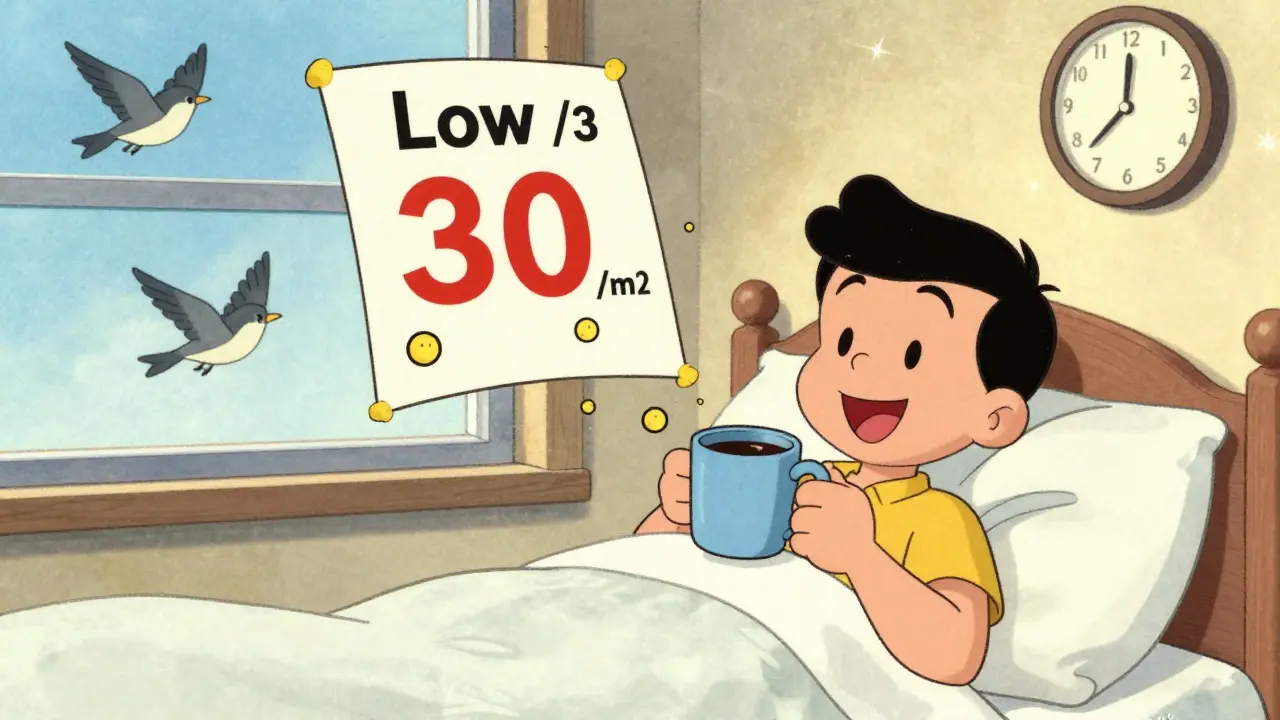
Pollen counts aren’t guesses. They’re measurements. Scientists use special rods to collect airborne grains over 24 hours, then count them under a microscope. One cubic meter of air might hold 30 pollen grains - that’s low. Or it might hold 800 - that’s very high. When counts hit 500 or more, even people with mild allergies start feeling it. And if you’re one of the 150 million Europeans or 50 million Americans with seasonal allergies, knowing these numbers isn’t optional - it’s survival.
When Does Pollen Hit Its Peak?
Pollen doesn’t just show up randomly. It follows a calendar - and it’s different depending on where you are. In Sydney, tree pollen starts rising in late July, peaks in August, and fades by October. Grass pollen explodes in November and stays high through December and January. Weeds like ragweed aren’t as common here as in North America, but plantain and nettle can still cause trouble in late summer.
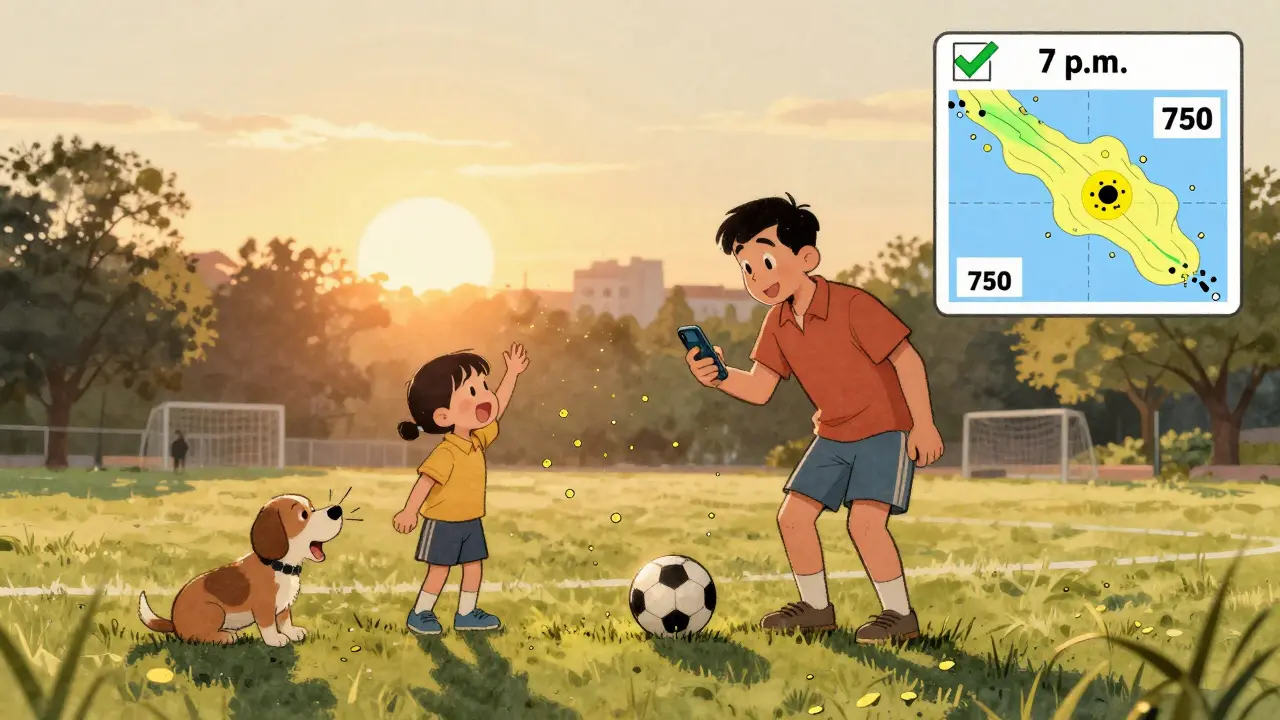
But timing isn’t just about the season. It’s about the time of day. Tree pollen? Highest between 5 and 10 a.m., right after the dew dries. Grass pollen? Peaks around midday, from 10 a.m. to 4 p.m. Weed pollen? It doesn’t care - it hangs around until 8 p.m. If you’re trying to avoid symptoms, plan your walk, bike ride, or kid’s soccer practice for early morning or after sunset. Pollen counts drop 30-50% between 7 and 9 p.m. That’s your sweet spot.
Weather Changes Everything
Don’t just check the pollen forecast - check the weather too. Rain is your friend. A light shower can wash pollen out of the air and drop counts by 30-50% within two hours. But don’t rush outside right after it stops. Pollen settles on surfaces, and when the sun comes back out, it dries up and flies again. Wait at least a few hours.
Wind is your enemy. A 10-mile-per-hour breeze can kick up pollen from lawns, parks, and bushland and send it swirling through your neighborhood. If the wind is blowing from the east and you live near a field of ryegrass, expect trouble. Dry, hot days? Pollen counts soar. Humidity above 70%? Pollen stays grounded. But drop below 40%? You’re in for a spike.
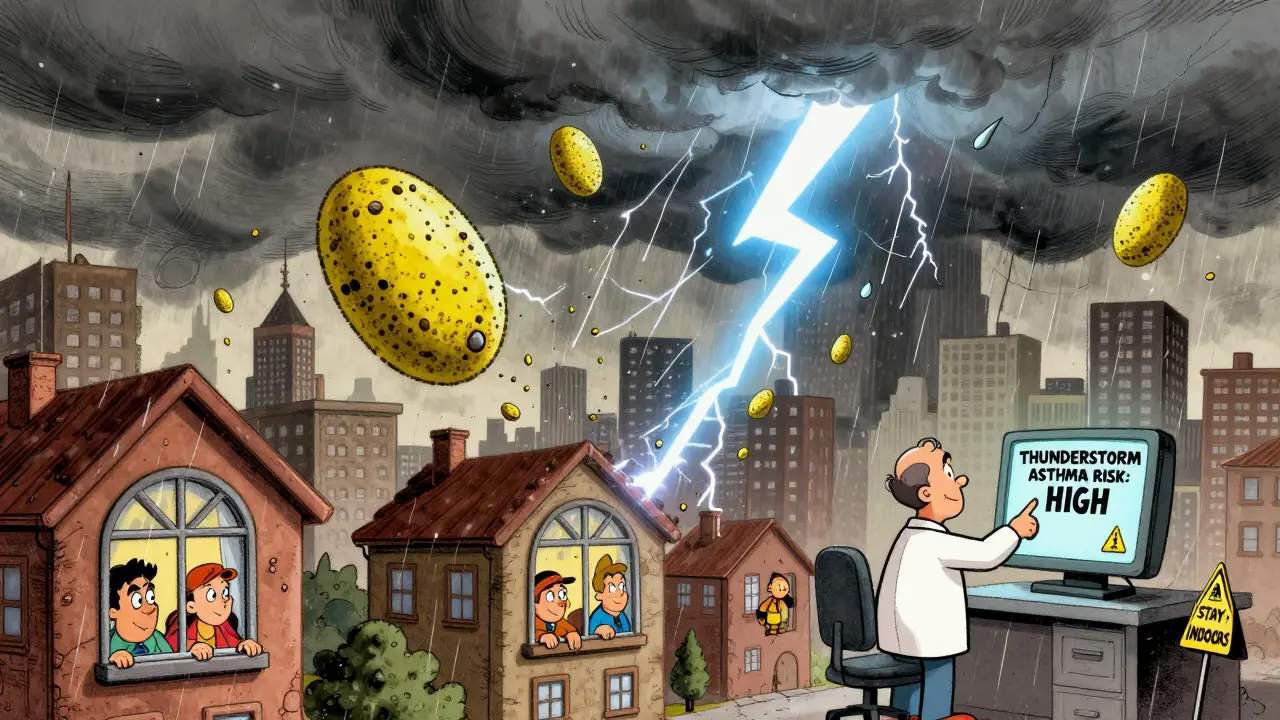
Thunderstorms are the wild card. In Melbourne back in 2016, a storm turned a moderate pollen day into a medical emergency. Thousands ended up in hospitals. Why? Rain broke apart pollen grains into tiny particles that got sucked deep into lungs. No forecast predicted that. Even today, most systems still miss these events. If the sky looks dark and the wind is picking up, stay inside - even if the app says “low.”
How to Use Pollen Forecasts Right
Not all apps are created equal. Pollen.com gives you a basic 5-day outlook for the U.S., but it’s not fine-tuned for Australia. BreezoMeter, used by Apple Health and other global apps, tracks pollen at 1.5-kilometer resolution - meaning it can tell you if your street has more pollen than the next block. It’s not free, but it’s accurate. For most people, combining two free sources works: check the CSIRO Pollen Forecast and the Bureau of Meteorology’s allergy alerts side by side.
Here’s what to do:
- Check your local forecast every morning before planning your day.
- Look for the pollen type - tree, grass, or weed - not just the number. If you’re allergic to ryegrass, oak pollen won’t bother you.
- Plan high-exposure tasks (mowing, gardening, sports) for low-pollen times: early morning or after rain.
- Keep windows closed on high-count days, especially between 5 a.m. and 10 a.m.
- Shower and change clothes after being outside. Pollen sticks to hair and clothes like dust.
One user on Reddit said she cut her antihistamine use in half just by shifting her runs from lunchtime to 7 a.m. That’s not magic - it’s data.
What the Experts Say
Doctors don’t just recommend pollen forecasts - they rely on them. The European Academy of Allergy and Clinical Immunology calls them “an essential part of allergy management.” In the Netherlands, hospitals used forecasts to schedule outdoor therapy sessions and saw emergency visits drop by 22% during peak season. In the U.S., 22 school districts now delay sports practices on high-pollen days. Even professional teams like Manchester United and the New England Patriots track pollen to adjust training schedules.
Dr. Richard Weber from National Jewish Health says, “Proactive use of pollen forecasts can reduce symptom days by 40%.” That’s not a small number. It means fewer missed workdays, less reliance on meds, and more time outside without suffering.
But here’s the catch: forecasts only work if you act on them. A 2023 survey found that 73% of allergy sufferers check pollen counts regularly - but only 58% actually change their behavior based on them. Knowing is half the battle. Doing is the other half.
What’s Changing in 2025?
Pollen seasons are getting longer. Since 1990, the U.S. pollen season has stretched by over three weeks, and concentrations are up 21%. In Australia, warmer winters mean trees bloom earlier. Grasses are growing more aggressively. Climate change isn’t just about heat - it’s about more pollen, more often.
Technology is catching up. In March 2023, the European Centre for Medium-Range Weather Forecasts upgraded its model to use satellite images of vegetation, making seasonal predictions 12% more accurate. Apple and BreezoMeter are now linking pollen data to heart rate and breathing patterns from smartwatches - so your watch might soon warn you, “Your pollen exposure today is high. Your breathing rate spiked last time. Consider staying inside.”
And in 2025, the European Space Agency is launching PollenSat - the first satellite designed to map pollen types from space. It won’t replace ground sensors, but it’ll help fill in gaps in places like Southeast Asia or Africa, where monitoring is still rare.
Common Mistakes (And How to Avoid Them)
People make the same errors over and over:
- Thinking “it’s cloudy, so pollen must be low.” Nope. Clouds don’t stop wind. Pollen can still be airborne.
- Assuming one app is enough. Free apps often lack local precision. Cross-check with at least two sources.
- Ignoring wind direction. If the wind’s coming from a park full of eucalyptus or grass, your backyard might be a pollen trap.
- Waiting until symptoms start to act. By then, it’s too late. Pollen exposure triggers inflammation within minutes.
- Believing rain = instant relief. It helps, but only after the dust settles. Don’t go outside right after a storm.
Final Tip: Track Your Symptoms Too
Forecasts are tools, not crystal balls. Your body is the best sensor. Keep a simple log: note the day, the forecast, what you did, and how you felt. After a few weeks, you’ll start seeing patterns. Maybe you’re fine on high-pollen days if you take your antihistamine at 6 a.m. Maybe you’re fine after a walk at 6 p.m. but not after mowing. That’s personal data - and it’s more powerful than any app.
Pollen forecasting isn’t about avoiding the outdoors. It’s about reclaiming it. You don’t have to cancel your weekend hike or skip your kid’s soccer game. You just need to pick the right day - and the right time.
What time of day has the lowest pollen count?
Pollen counts are usually lowest between 5 and 7 a.m. and again between 7 and 9 p.m. Tree pollen peaks in the early morning, grass pollen peaks midday, and weed pollen peaks in the late afternoon. Early morning before sunrise and after sunset are your safest windows for outdoor activity.
Do rain showers reduce pollen?
Yes - but not instantly. Light to moderate rain washes pollen out of the air and can reduce counts by 30-50% within two hours. However, pollen settles on surfaces and can become airborne again when the sun returns. Wait a few hours after rain before going outside for the best results.
Which pollen types are most common in Sydney?
In Sydney, the main allergens are ryegrass (peaks November-January), followed by tree pollens like eucalyptus and plane tree (peaks July-October). Weed pollens like plantain and nettle can also cause issues in late summer. Ryegrass is the biggest trigger for seasonal allergies in the region.
Are pollen forecasts reliable in Australia?
Yes, but with limits. Australia’s CSIRO and Bureau of Meteorology provide reliable forecasts for major pollen types. Accuracy is around 80% for 24-hour predictions, similar to global standards. However, forecasts for rare weeds or microclimates (like urban parks vs. suburbs) can be less precise. Use at least two sources for better accuracy.
Should I use a paid pollen app?
Free apps like Pollen.com or BOM’s alerts are good for general guidance. But if you’re highly sensitive or live in a high-pollen area, paid apps like BreezoMeter offer hyperlocal data (1.5km resolution) and integrate with weather, wind, and even satellite vegetation data. For most people, free tools work - but if you’re missing work or school due to allergies, the $5/month subscription can pay for itself.
Can pollen forecasts predict thunderstorm asthma?
Not reliably - yet. Thunderstorm asthma happens when rain breaks pollen grains into tiny, inhalable particles. Current forecasts don’t measure this. Melbourne’s 2016 event caught many off guard. New AI models funded by the NIH are being developed to predict these events by combining pollen data with atmospheric instability. For now, if a storm is coming and pollen counts are high, stay indoors.
Emma Duquemin
December 28, 2025 AT 14:03Okay, I’ve been using the CSIRO forecast for months and it’s saved my sanity. Last week I planned a hike for Saturday morning at 6 a.m.-zero sneezes, no itchy eyes, just crisp air and birdsong. I used to think I was just ‘bad with allergies’-turns out I was just timing it wrong. Now I treat pollen counts like a weather app: check it, plan around it, live better. Also, showering after being outside? Non-negotiable. Pollen clings to your hair like glitter at a toddler’s birthday party.
Duncan Careless
December 30, 2025 AT 00:11Interesting read. I’ve noticed that even on low-count days, if the wind’s from the east near the park, I still get hit. Maybe the maps don’t capture microclimates well. I’ve started checking BreezoMeter alongside BOM-seems to give me a better picture. Still, I wish there was a way to track personal exposure over time. My watch doesn’t do that yet, but maybe soon.
Jim Rice
December 31, 2025 AT 11:17Wow. So we’re supposed to live like a hermit now? Avoid the outdoors because of a few airborne grains? Next you’ll tell me to wear a hazmat suit to the park. I’ve got allergies too, but I don’t let a number on a screen dictate my life. I take my meds, I live. Some of us don’t need apps to tell us when to breathe.
Henriette Barrows
January 1, 2026 AT 05:08Jim, I get where you’re coming from-sometimes it feels like we’re being told to live in fear. But I think the point isn’t to avoid the outdoors-it’s to reclaim it without suffering. I used to skip everything in spring. Now I go for walks at 7 p.m. and feel like I’ve got my life back. It’s not about being paranoid. It’s about being smart.
Russell Thomas
January 2, 2026 AT 22:10Oh please. You people are treating pollen like it’s a villain in a Marvel movie. ‘Beware the ryegrass!’ ‘The thunderstorm asthma is coming!’ Meanwhile, I’ve been breathing Sydney air since ’98 and I’ve never once checked a damn forecast. I just take Zyrtec and go about my day. You’re all turning a mild inconvenience into a full-blown lifestyle brand.
Sharleen Luciano
January 4, 2026 AT 04:28Let’s be real-using free apps is like trying to navigate Paris with a 1998 paper map. If you’re serious about your health, BreezoMeter’s $5/month is the bare minimum. Anyone relying on CSIRO alone is basically playing Russian roulette with their sinuses. And if you think rain = instant relief, you’ve never stood in a Sydney park right after a storm. Pollen doesn’t vanish-it just waits for you to lower your guard.
Samar Khan
January 5, 2026 AT 23:57OMG I literally cried when I read about thunderstorm asthma 😭 I had no idea rain could make it worse?? I went for a run after a storm last year and ended up in the ER. My mom says I’m dramatic but I’m just saying… maybe we should all be scared?? 🙏 #PollenIsTheNewClimateChange
Alex Ronald
January 6, 2026 AT 02:07One thing nobody mentions: tracking your own symptoms. I started a simple Google Sheet-date, forecast, activity, symptoms. After two weeks, I noticed I’m fine on high-pollen days if I take my pill at 6 a.m. and don’t mow the lawn. Turns out, I’m not allergic to pollen-I’m allergic to bad timing. Data > apps.
Teresa Rodriguez leon
January 6, 2026 AT 16:55My dog sneezes more than I do now.