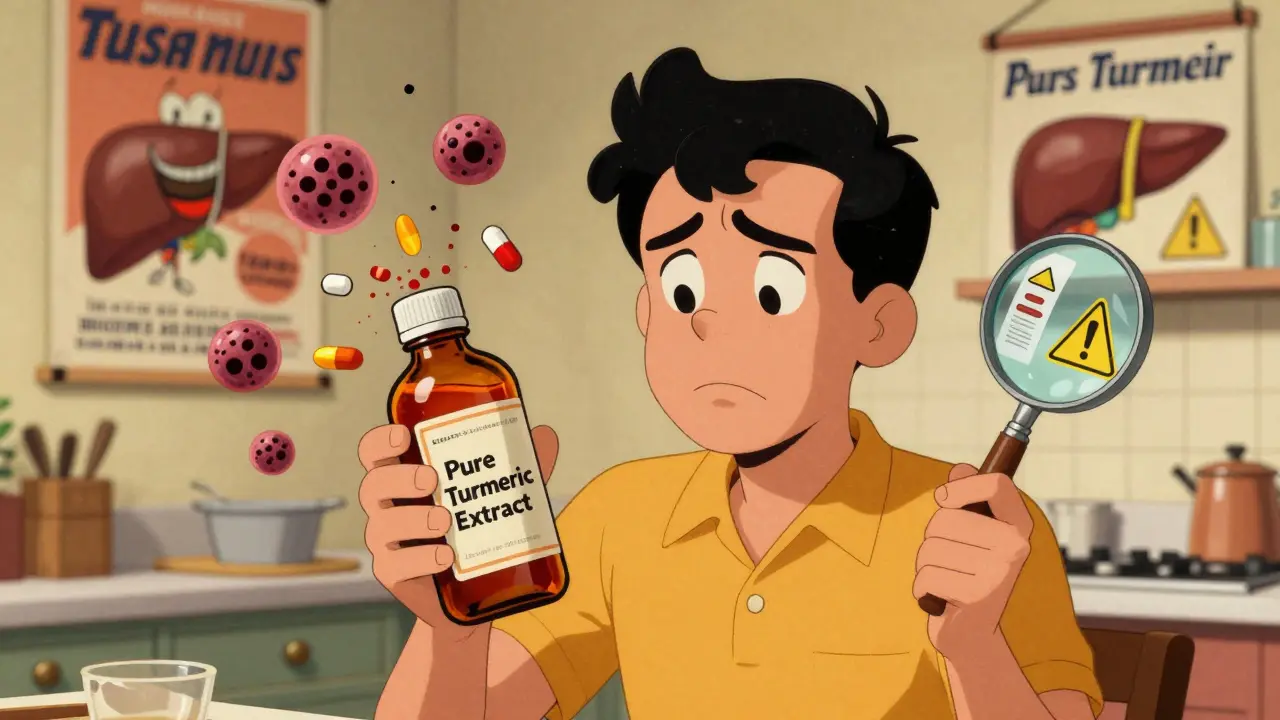
Every year, millions of people take herbal supplements thinking they’re making a safe, natural choice for their health. But what if the very things you’re taking to feel better are quietly damaging your liver? The truth is, herbal and supplement liver toxicity is not a rare exception-it’s a growing crisis. And most people have no idea they’re at risk.
What’s Really in Your Supplement Bottle?
You open a bottle labeled “pure turmeric extract” or “natural green tea weight loss pills.” You trust the brand. You assume it’s safe because it’s herbal. But here’s what you’re not seeing: the label doesn’t tell you if it’s contaminated with lead, if it contains hidden pharmaceuticals, or if the dose is 10 times higher than what’s been studied. A 2023 Consumer Reports analysis found that 30% of turmeric supplements contained lead levels above California’s safety limit. Another 25% of green tea extract products had epigallocatechin gallate (EGCG) levels that exceeded safe daily limits. Meanwhile, the NIH’s LiverTox database shows that up to 60% of herbal supplements tested had ingredients that didn’t match the label. Some had pesticides. Others had banned weight-loss drugs or even erectile dysfunction pills like sildenafil. These aren’t outliers. They’re standard. The FDA doesn’t require herbal supplements to prove safety or effectiveness before they hit the shelves. Unlike prescription drugs, which go through years of clinical trials, supplements can be sold with zero human safety data. That means you’re essentially a test subject.The Top 6 Herbal Supplements Linked to Liver Damage
Research from a 2024 JAMA Network Open study, backed by data from the Drug-Induced Liver Injury Network, identified six herbal products that consistently show up in cases of severe liver injury:- Turmeric or curcumin - Often marketed for inflammation and joint pain, high-dose turmeric supplements have caused hospitalizations. One patient took 1,000 mg daily for six months and developed acute hepatitis. His liver enzymes spiked to 15 times the normal level.
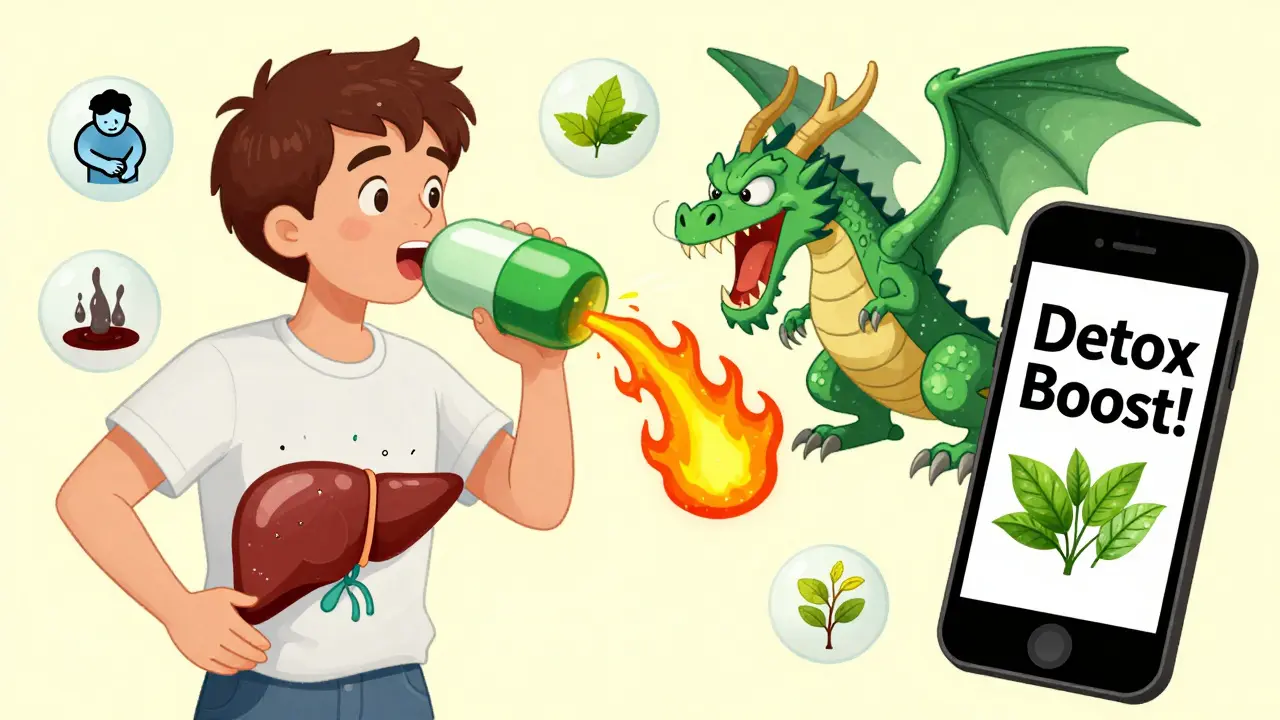
- Green tea extract - While drinking green tea is safe, concentrated extracts in pill form are a different story. The active compound EGCG, when taken in high doses, overwhelms the liver’s detox pathways. Cases of liver failure from green tea extract have been documented in young, otherwise healthy people.
- Garcinia cambogia - Popular for weight loss, this supplement has been linked to liver inflammation and even acute liver failure. The FDA issued warnings about it in 2017 after multiple hospitalizations.
- Black cohosh - Used by women for menopause symptoms, this herb has caused hepatitis in dozens of cases. Some patients didn’t even know they were taking it-because it was hidden in multi-ingredient formulas labeled “hormonal support.”
- Red yeast rice - Marketed as a natural alternative to statins, it actually contains monacolin K, the same compound as the prescription drug lovastatin. But without dosage control, people end up taking toxic levels. Liver damage from this supplement is often misdiagnosed as a statin side effect.
- Ashwagandha - A trendy adaptogen promoted for stress and sleep, it’s now showing up in liver injury reports. The mechanism isn’t fully understood, but cases are rising fast, especially among users taking it daily for months.
How Your Liver Gets Hurt-Without You Knowing
Your liver is your body’s main detox center. It breaks down everything you take in: food, alcohol, medications, supplements. Herbal products don’t bypass this system-they go straight through it. And many of them interfere with the liver’s natural enzymes. The damage isn’t always immediate. It builds up. You might feel fine for months. Then, one day, you’re exhausted, your skin turns yellow, your urine is dark, and your abdomen aches. That’s when you go to the doctor-and find out your liver enzymes are through the roof. According to the NIH LiverTox database, symptoms of herbal-induced liver injury include:- Fatigue (87% of cases)
- Abdominal pain (76%)
- Nausea (68%)
- Dark urine (52%)
Who’s Most at Risk?
It’s not just people who take huge doses. Even moderate, long-term use can be dangerous. Dr. Robert S. Brown from Weill Cornell Medicine compares it to an allergy: “In susceptible people, even a small amount of a toxin can trigger a severe reaction.” Some people are genetically wired to be more vulnerable. Early research suggests a specific gene variant, HLA-B*35:01, may increase the risk of liver injury from certain herbs. But right now, there’s no test to tell you if you’re one of them. Other high-risk groups include:- People over 50
- Those with pre-existing liver conditions (fatty liver, hepatitis, etc.)
- People taking multiple supplements or combining them with prescription drugs
- Those who use supplements for months or years without breaks
What You Can Do to Protect Your Liver
You don’t have to give up supplements entirely. But you need to be smarter about them. Here’s what works:- Stop taking any supplement with no clear ingredient list. If the label says “proprietary blend,” walk away. You can’t assess risk if you don’t know what’s in it.
- Avoid high-dose extracts. Turmeric capsules with 95% curcumin? Skip them. Green tea extract with 450 mg EGCG? Too much. Stick to whole-food sources when possible.
- Check for third-party testing. Look for certifications from USP, NSF, or ConsumerLab. These organizations test for contaminants and label accuracy. It’s not perfect, but it’s better than nothing.
- Don’t combine supplements. Taking five different herbs at once multiplies your risk. Your liver doesn’t handle combinations well.
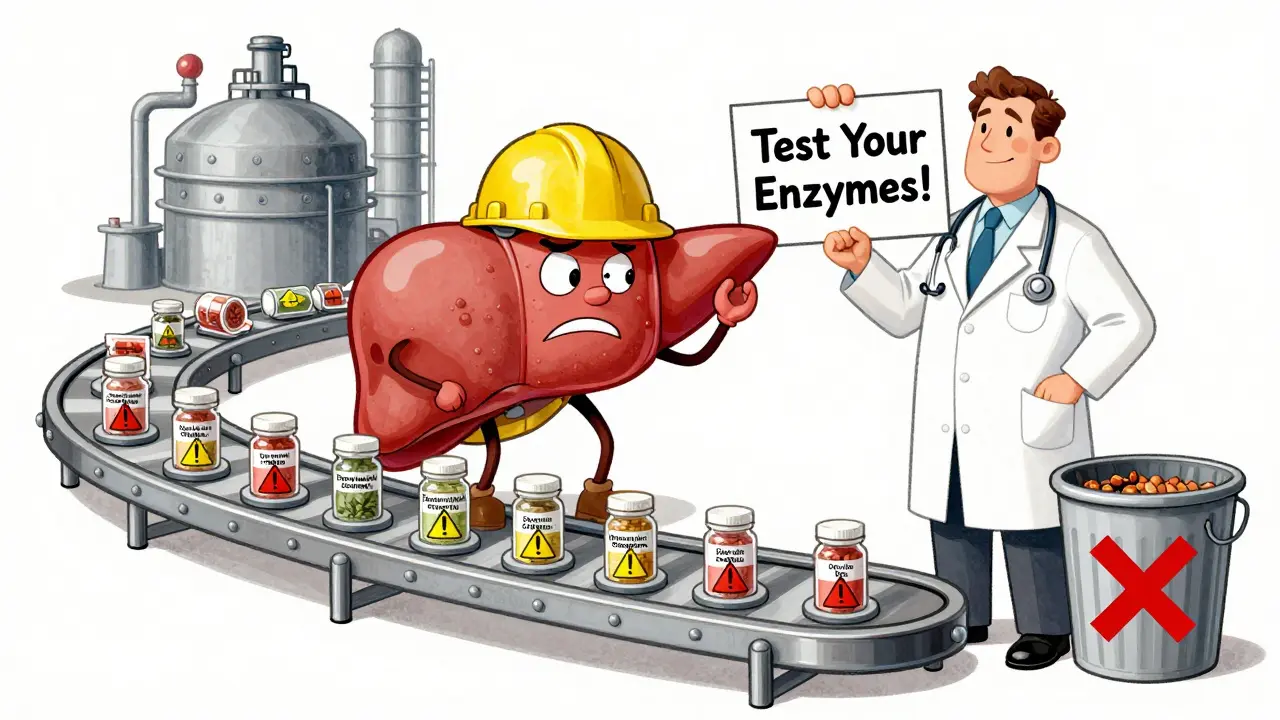
- Talk to your doctor before starting anything. Especially if you’re being treated for a liver condition or taking any medication. The American College of Gastroenterology now recommends that doctors ask every patient about supplement use during liver tests.
- Take breaks. If you’re using something like ashwagandha or turmeric daily, take a 2-week break every 3 months. Let your liver reset.
What to Do If You Think Your Liver Is Affected
If you’ve been taking herbal supplements and you’re experiencing fatigue, nausea, dark urine, or pain under your right ribs, get your liver tested. Ask your doctor for:- ALT (alanine aminotransferase)
- AST (aspartate aminotransferase)
- ALP (alkaline phosphatase)
- Bilirubin
The Bottom Line
Herbal doesn’t mean safe. Natural doesn’t mean harmless. The idea that supplements are risk-free because they come from plants is outdated-and dangerous. The liver doesn’t care if a toxin comes from a pill, a tea bag, or a capsule labeled “organic.” It only cares if it can process it. And too many herbal products are pushing it past its limit. If you’re taking supplements for health, ask yourself: Am I helping my body-or putting it under stress? The safest supplements are the ones you don’t need to take at all. Focus on food, sleep, movement, and stress management first. If you still want to use herbs, do it with caution, with knowledge, and with your doctor’s approval.Frequently Asked Questions
Can turmeric supplements really damage your liver?
Yes. While eating turmeric in food is safe, concentrated supplements-especially those with high doses of curcumin-have been linked to acute hepatitis and liver failure. Cases have been documented in people taking 1,000 mg or more daily for months. The risk increases with long-term use and in people with underlying liver conditions.
Is green tea safe for the liver?
Drinking brewed green tea is generally safe and may even support liver health. But green tea extract in pill form is different. These concentrated forms deliver high doses of EGCG, which can overwhelm the liver’s detox system. Cases of liver injury from green tea extract are well-documented, especially in people taking more than 800 mg of EGCG per day.
Why are herbal supplements not regulated like drugs?
Under the Dietary Supplement Health and Education Act of 1994, herbal supplements don’t need FDA approval before being sold. Manufacturers don’t have to prove safety, efficacy, or purity. The FDA can only act after harm is reported-meaning dangerous products can stay on shelves for years before being pulled.
Can supplements cause liver damage even if I feel fine?
Absolutely. Liver damage from supplements often happens silently. Many people have elevated liver enzymes for months without symptoms. By the time fatigue, nausea, or jaundice appear, the damage may already be advanced. Routine blood tests are the only way to catch it early.
What should I do if I’m taking multiple supplements?
Simplify. Most people don’t need more than one or two supplements, and combining them increases risk. Keep a list of everything you take-including doses-and review it with your doctor. Stop anything without clear evidence of benefit or safety. When in doubt, pause it for a few weeks and see how you feel.
Are there any herbal supplements that are proven safe for the liver?
There’s no herbal supplement proven to be universally safe for the liver in high-dose, long-term use. Milk thistle is often promoted for liver support, but studies on its effectiveness are mixed, and quality control varies widely. The safest approach is to avoid supplements unless there’s strong clinical evidence and your doctor approves them.

Uzoamaka Nwankpa
January 5, 2026 AT 03:41My aunt took that green tea extract for weight loss and ended up in the hospital with liver failure. No one warned her. No one even asked if she was taking supplements. It’s insane that this stuff is sold like candy.
jigisha Patel
January 5, 2026 AT 03:43The data presented is statistically significant and methodologically sound, particularly the JAMA Network Open study and NIH LiverTox findings. However, the author fails to contextualize the relative risk compared to pharmaceutical hepatotoxins such as acetaminophen, which causes over 50,000 emergency visits annually in the U.S. alone. The conflation of ‘natural’ with ‘safe’ is a fallacy, but so is the implication that herbal supplements are uniquely dangerous without comparative risk stratification.
Jason Stafford
January 5, 2026 AT 19:02They’re hiding the truth. The FDA’s been in the pocket of Big Supplement since ’94. You think this is about safety? No. It’s about control. They want you dependent on prescriptions. That’s why they don’t test these herbs - because if people knew turmeric worked better than statins, the whole system collapses. And don’t get me started on the glyphosate in those ‘organic’ supplements. It’s all a scam.
Michael Rudge
January 7, 2026 AT 03:41Oh wow, someone finally wrote the truth. I’m so glad we’re past the ‘natural = good’ delusion. I used to take ashwagandha because my yoga instructor said it ‘balanced my chakras.’ Turns out it balanced my liver enzymes into oblivion. Thanks for the reminder that if you can’t spell it, you probably shouldn’t swallow it.
Cassie Tynan
January 8, 2026 AT 05:19It’s funny how we’ll trust a pill with 17 chemicals and a 30-page warning label but think a ‘pure’ herb from a guy on Instagram is harmless. We’re wired to romanticize nature - but nature also has poison ivy, snake venom, and hemlock. Maybe we should stop treating plants like saints.
Catherine HARDY
January 9, 2026 AT 05:07I’ve been taking red yeast rice for 3 years because my doctor said it was ‘natural statin.’ Last month my ALT was 480. I thought I was being smart. Turns out I was just the lab rat they never told me about. Why does no one talk about this? I feel so stupid.
bob bob
January 10, 2026 AT 11:43I get it. I used to take everything - turmeric, ashwagandha, spirulina, you name it. Then I started feeling wiped out all the time. Got bloodwork done - liver enzymes through the roof. Stopped everything. Three months later, I felt like a new person. Sometimes the best supplement is just… stopping.
Chris Cantey
January 11, 2026 AT 09:42It’s not the herbs. It’s the energy. Your liver doesn’t just process chemicals - it processes intent. When you take something to fix a symptom instead of healing the root, you’re forcing your body into a state of resistance. The toxicity isn’t in the plant - it’s in the fear behind the purchase. You’re not poisoning your liver. You’re poisoning your relationship with your body.
Abhishek Mondal
January 13, 2026 AT 01:19While the author presents a compelling narrative, they conspicuously omit the fact that the vast majority of herbal supplement-related liver injuries occur in individuals who concurrently consume alcohol, or who possess pre-existing metabolic syndrome - both of which independently elevate hepatic risk. Furthermore, the FDA’s regulatory framework is not uniquely permissive; it aligns with the Codex Alimentarius and WHO guidelines for traditional medicine. The real issue is consumer literacy - not corporate malfeasance.
Oluwapelumi Yakubu
January 14, 2026 AT 21:31Man, I love how we always act like nature is some innocent angel. Plants have been poisoning animals for millions of years - that’s how evolution works. The real villain isn’t the supplement industry - it’s the modern myth that we can outsmart biology with a capsule. My grandma chewed bitter leaves for headaches and never saw a doctor. Maybe we lost something when we stopped trusting the earth and started trusting labels.
Terri Gladden
January 15, 2026 AT 20:20i just took like 3 diffrent supplements for 2 years and now my liver is messed up?? like wtf?? i thought they were all healthy?? like i even bought the ones with the green labels??
Vicki Yuan
January 15, 2026 AT 20:38Thank you for this. I’m a nurse and I see this every week - patients come in with jaundice, and they swear they ‘only take herbs.’ No one asks about supplements until it’s too late. I now have a checklist: ‘What are you taking besides your prescriptions?’ I’ve saved lives just by asking. If you’re on anything long-term, get your liver checked. It’s a simple blood test. Don’t wait until you’re yellow.