Energy Drink & Stimulant Risk Checker
Calculate your potential blood pressure risk from energy drinks and stimulant medications. Understand how caffeine and prescription stimulants interact based on your specific consumption habits.
When you down an energy drink after a long night or pop a prescription stimulant to get through a workday, you might think you’re just boosting focus or fighting fatigue. But what you’re really doing is pushing your heart and blood vessels into overdrive. The combination of energy drinks and stimulant medications like Adderall or Ritalin doesn’t just add up-it multiplies the danger.
What’s Actually in Energy Drinks?
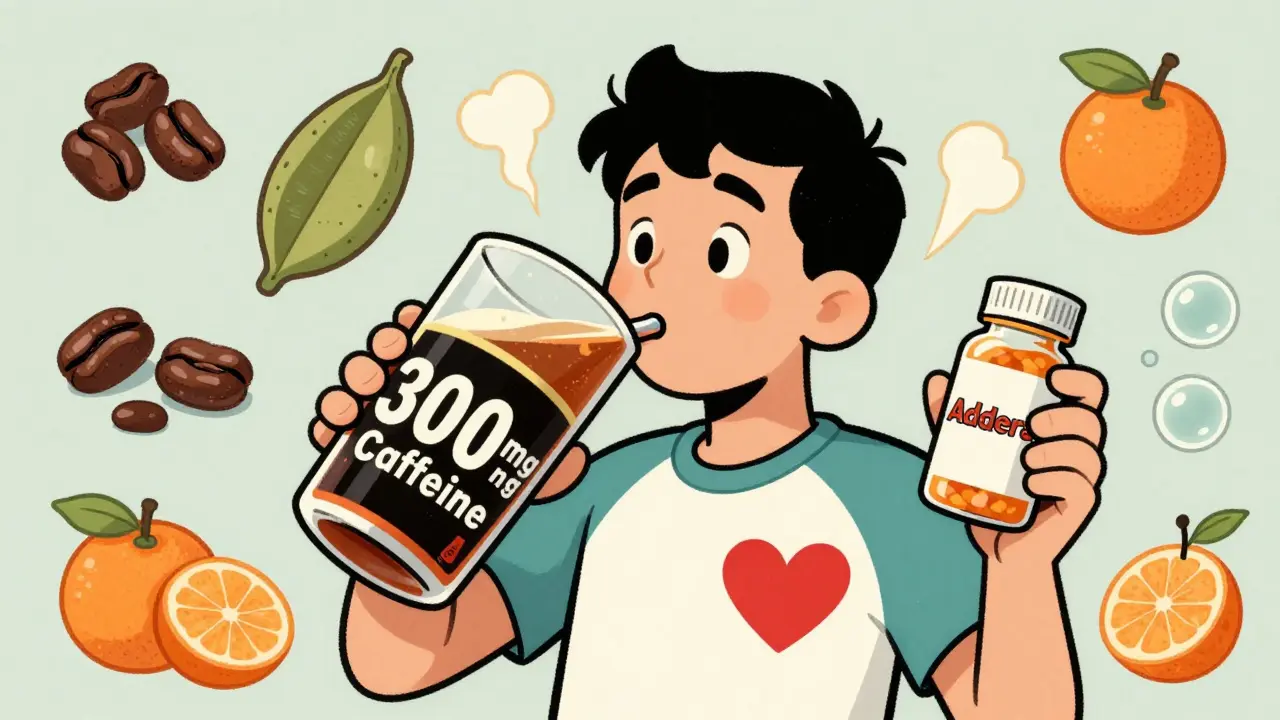
Energy drinks aren’t just sugary soda with caffeine. A typical 16-ounce can of Monster Energy has 160 mg of caffeine. Bang Energy packs 300 mg. That’s more than three cups of coffee in one drink. But caffeine isn’t the only stimulant. Most also contain guarana, a plant that adds even more caffeine-sometimes up to 50% more than what’s listed on the label. Then there’s taurine, bitter orange (which contains synephrine), and various B-vitamins marketed as ‘energy boosters.’
These ingredients don’t work alone. They interact. Synephrine, for example, acts like adrenaline. It tightens blood vessels, forcing your heart to pump harder. When combined with caffeine, the effect isn’t just additive-it’s explosive. A 2015 Mayo Clinic study found that a single 240 mg caffeine energy drink raised adrenaline levels by nearly 75% in healthy young adults. That’s not a minor spike. That’s your body thinking it’s under attack.
How Stimulant Medications Work-and Why They’re Risky Together
Prescription stimulants like Adderall (amphetamine salts) and Ritalin (methylphenidate) are designed to increase dopamine and norepinephrine in the brain. That’s why they help people with ADHD focus. But these same chemicals also activate your sympathetic nervous system-the part that controls your fight-or-flight response.
According to FDA labeling data, a single dose of Adderall can raise systolic blood pressure by 2-7 mmHg and heart rate by 3-13 beats per minute. Ritalin does the same. Now imagine taking that pill and then drinking a Monster Energy. The caffeine in the drink does the same thing: it triggers adrenaline, tightens arteries, and speeds up your heartbeat. Together, they can push your blood pressure into dangerous territory.
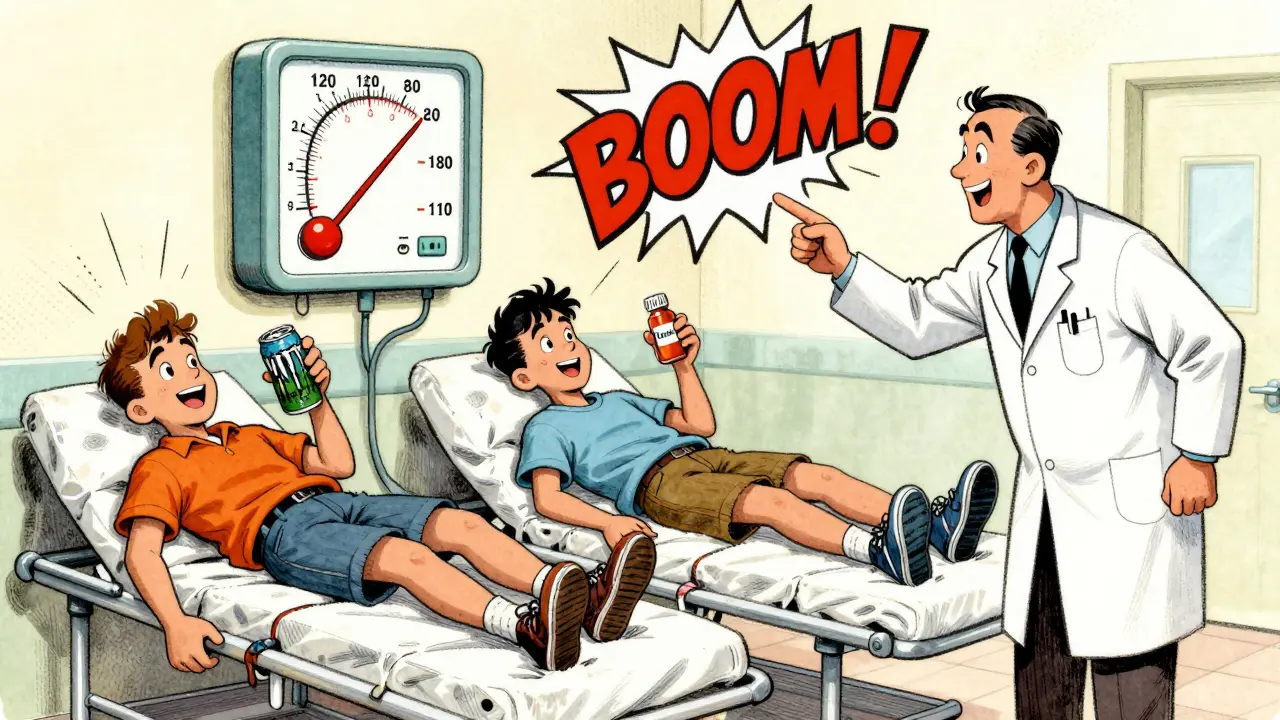
One 2017 study documented cases where blood pressure spiked by 20-30 mmHg after someone consumed multiple energy drinks. That’s the difference between normal (120/80) and stage 2 hypertension (140/90 or higher)-in under an hour.
The Real-World Consequences
People don’t just feel jittery. They end up in emergency rooms.
In 2011, nearly 1,500 teens in the U.S. visited ERs because of energy drink-related emergencies. Symptoms? Heart palpitations, chest pain, seizures, vomiting. Fast forward to 2023, and pediatric exposure cases to energy drinks jumped 24.2% in just two years, according to America’s Poison Centers. Seventy-eight percent of those cases were unintentional-kids grabbing a can thinking it was a sports drink.
Case reports are terrifying. One 19-year-old in California suffered a heart attack after drinking three Monster Energy drinks in two hours. He had no prior heart problems. Another young man, documented in a medical journal, developed acute cardiomyopathy after daily consumption of energy drinks for six months. His heart muscle weakened so badly, it stopped pumping properly.
Reddit threads like r/Healthyhooha are full of personal stories. One user, u/BloodPressureWatcher, recorded his BP rising from 120/80 to 145/95 within 45 minutes of a 300 mg energy drink. Another described heart palpitations lasting three hours after two cans of Monster. These aren’t outliers. They’re predictable outcomes.
Who’s Most at Risk?
You might think, ‘I’m young and healthy, so I’m fine.’ But that’s exactly what many of these victims believed.
Teenagers are especially vulnerable. Their bodies are still developing. Their hearts haven’t fully matured. The American Academy of Pediatrics says adolescents should avoid energy drinks entirely. Yet 30-50% of teens still drink them regularly, according to the CDC.
People with undiagnosed heart conditions are at even higher risk. A 2024 UC Davis Health study found that regular energy drink use can cause endothelial dysfunction-damage to the lining of blood vessels that’s an early sign of heart disease. That damage builds up silently. By the time symptoms appear, it’s often too late.
And if you’re on stimulant medication? The risk multiplies. A preliminary NIH-funded study tracking 5,000 consumers found that combining energy drinks with ADHD meds increased the chance of a serious cardiac event by 3 to 5 times. That’s not a small increase. That’s a red flag.
How Much Is Too Much?
The FDA says 400 mg of caffeine per day is safe for healthy adults. But that’s a population average. It doesn’t mean it’s safe for everyone. Some people feel jittery after 100 mg. Others develop arrhythmias at 200 mg.
For teens, the limit should be 100 mg or less. For anyone with high blood pressure, heart disease, or anxiety disorders? Zero is the only safe amount.
And here’s the kicker: energy drink labels are often wrong. A 2023 GoodRx review found that some drinks contained up to 20% more caffeine than stated. That means a drink labeled ‘200 mg’ could actually have 240 mg. Add that to your Adderall, and you’re over 300 mg before lunch.
Warning Signs You Can’t Ignore
If you’ve had an energy drink or taken stimulant meds and feel any of these, stop. Immediately.
- Chest pain or pressure
- Heart palpitations lasting more than a few minutes
- Severe headache or blurred vision
- Shortness of breath
- Dizziness or fainting
These aren’t ‘just anxiety.’ They’re signs your heart is struggling. Call emergency services. Don’t wait. Don’t ‘see how it feels.’
What Should You Do Instead?
If you’re using energy drinks to get through the day, ask yourself: why? Are you tired because you’re sleeping poorly? Stressed? Dehydrated? Caffeine isn’t fixing the root problem-it’s masking it.
For ADHD patients on stimulants, talk to your doctor. There are non-stimulant medications like Strattera or behavioral therapies that don’t raise blood pressure. For everyone else: swap energy drinks for water, black tea, or a short walk. Sleep better. Eat regularly. Manage stress. These are the real energy boosters.
If you’re already a regular consumer, don’t quit cold turkey. Withdrawal can cause headaches, fatigue, and irritability for up to nine days. Cut back slowly. Replace one drink a week with a healthier option. Track your blood pressure at home if you can. You’ll see the difference.
The Bigger Picture
The global energy drink market hit $77.6 billion in 2023. Companies aren’t selling energy-they’re selling a shortcut. A quick fix. A promise of performance. But the cost isn’t just financial. It’s written in hospital bills, emergency room visits, and lives lost.
The American Heart Association now recommends that people with known heart disease avoid energy drinks entirely. That’s not a suggestion. It’s a medical directive.
And it’s not just about what’s in the can. It’s about what’s being hidden. Labels don’t warn about interactions with ADHD meds. Stores don’t require ID for purchase. Schools don’t teach kids about the risks. The system is broken.
But you can change your part in it. You don’t need an energy drink to be productive. You don’t need a stimulant to be alert. What you need is respect-for your body, your heart, and your future.
Can energy drinks cause a heart attack in healthy people?
Yes. While rare, cases have been documented in young, otherwise healthy individuals who consumed multiple energy drinks in a short time-especially when combined with physical exertion or stimulant medications. A 2022 California case involved a 19-year-old who suffered a heart attack after drinking three Monster Energy drinks in two hours. No prior heart conditions were found. The combination of high-dose caffeine, synephrine, and adrenaline overload triggered a fatal cardiac event.
Is it safe to drink energy drinks while taking Adderall or Ritalin?
No. Combining energy drinks with prescription stimulants like Adderall or Ritalin significantly increases the risk of dangerously high blood pressure, rapid heart rate, arrhythmias, and even heart attack. Both substances stimulate the same nervous system pathways. Together, they can overdrive your cardiovascular system. Medical experts, including the American Heart Association, strongly advise against this combination.
How long does it take for energy drinks to raise blood pressure?
Blood pressure can rise within 15-30 minutes after consuming an energy drink. Studies show systolic pressure increases by 4.8-6.9 mmHg on average, with some individuals seeing spikes of 20-30 mmHg. Peak effects usually occur within one hour and can last up to four hours. This rapid spike is especially dangerous for people with undiagnosed hypertension or heart conditions.
Are sugar-free energy drinks safer for your heart?
No. Sugar-free energy drinks contain the same stimulants-caffeine, guarana, synephrine, taurine-as regular versions. The absence of sugar doesn’t reduce cardiovascular risk. In fact, some sugar-free versions have even higher caffeine content to compensate for taste. The danger comes from the stimulants, not the sugar. A sugar-free Bang Energy drink (300 mg caffeine) poses the same heart risks as a sugary Monster.
What are the long-term effects of daily energy drink consumption?
Daily use can lead to chronic high blood pressure, stiffened arteries, and endothelial dysfunction-damage to the inner lining of blood vessels that’s an early sign of heart disease. A 2024 UC Davis Health study linked regular consumption to increased risk of atherosclerosis. Long-term users also show higher rates of arrhythmias, anxiety disorders, and sleep disturbances. The body doesn’t adapt safely to constant stimulant overload-it deteriorates.
What to Do Next
If you’re currently using energy drinks with stimulant meds, talk to your doctor. Don’t stop your medication without guidance-but do stop the energy drinks. Keep a log of your symptoms: heart rate, BP readings, how you feel after consumption. Bring it to your appointment.
If you’re a parent, check what your teen is drinking. Energy drinks are marketed like sports drinks. They’re sold next to Gatorade in convenience stores. Many teens don’t realize how potent they are. Start the conversation now.
If you’ve had a scary episode-palpitations, dizziness, chest tightness after drinking one-don’t brush it off. See a cardiologist. Get an ECG. Get your blood pressure checked. Your heart doesn’t send warning signs lightly. Listen to it.
Rory Corrigan
January 3, 2026 AT 19:37Bro, I just chugged a Bang after pulling an all-nighter… and now my heart’s doing the cha-cha. 😅 Maybe we’re all just one caffeine bomb away from becoming a medical case study. RIP my arteries.
Connor Hale
January 5, 2026 AT 00:40It’s not about the caffeine. It’s about the cultural delusion that we need external boosts to be human. We’ve turned our bodies into machines that need fuel upgrades instead of rest, nutrition, and stillness. The real addiction isn’t to stimulants-it’s to the myth of productivity at all costs.
Oluwapelumi Yakubu
January 5, 2026 AT 17:49My guy, in Lagos we don’t even call it ‘energy drink’-we call it ‘heart attack in a can’ 🤣. One guy I know drank three Monster’s while studying for exams… woke up in the hospital thinking he was in a Bond movie. The doctor told him, ‘Bro, your heart just did a sprint without a warm-up.’
Guarana? Synephrine? Man, that’s not ‘energy’-that’s your body screaming for mercy. And don’t even get me started on Adderall + Bang. That’s like lighting a match next to a gas tank and calling it ‘focus.’
Joseph Snow
January 7, 2026 AT 00:10Let’s be honest-this whole article is fearmongering pushed by Big Pharma and the American Heart Association, who profit from your dependence on their meds and your fear of natural stimulants. Energy drinks have been around for decades. Millions consume them without incident. The real issue? People who can’t self-regulate. Blame the user, not the product.
Also, the FDA’s 400mg limit is based on peer-reviewed science-not anecdotal ER visits. Why are you trusting Reddit stories over federal guidelines?
melissa cucic
January 8, 2026 AT 06:02While I appreciate the data-driven approach of this post, I must emphasize that the cumulative risk-especially in adolescents-is not merely statistical; it is physiological, systemic, and profoundly under-recognized. The normalization of high-dose stimulant consumption as a lifestyle choice is alarming, and the absence of regulatory oversight in labeling and marketing is indefensible.
Moreover, the interaction between pharmacological agents and unregulated dietary supplements warrants immediate public health intervention-not just individual caution.
jigisha Patel
January 9, 2026 AT 06:33Let’s dissect the cherry-picked data here. The 2017 study cited? It involved subjects who consumed multiple energy drinks within hours-often with alcohol or physical exertion. That’s not ‘typical use.’ And the 3-5x increased cardiac risk? That’s from a preliminary, unpublished NIH study with no peer review. This isn’t science-it’s panic marketing dressed in academic clothing.
Also, why are we ignoring the fact that people on Adderall are often prescribed it because they’re chronically fatigued? Maybe the solution isn’t banning energy drinks-it’s fixing sleep culture.
Jason Stafford
January 10, 2026 AT 12:15They don’t want you to know the truth. Energy drinks are being weaponized by the pharmaceutical-industrial complex to make you dependent on their meds. The FDA knows caffeine is a controlled substance in other countries. They’re hiding it. The same people who sold you nicotine as ‘safe’ are now selling you ‘energy’ as ‘harmless.’ Wake up.
And don’t get me started on the B-vitamins-they’re not boosting energy. They’re masking the damage. Your body’s screaming. The system’s lying. And your doctor? Probably on their payroll.
Cassie Tynan
January 11, 2026 AT 14:06So let me get this straight: you’re telling me that drinking a can of liquid lightning while on a pill that turns your nervous system into a jackhammer… is a bad idea? Who knew? 🙄 I guess we should’ve seen this coming when ‘energy’ became a marketing buzzword instead of a biological state.
Next up: ‘Sleep is for the weak’-sponsored by Monster and Big Pharma. Can’t wait for the TikTok challenge.
Abhishek Mondal
January 12, 2026 AT 04:59It is worth noting, however, that the majority of these case reports involve poly-substance use, pre-existing metabolic conditions, or genetic predispositions-factors that are rarely controlled for in media narratives. Furthermore, the physiological response to caffeine is highly variable across populations due to CYP1A2 polymorphisms. To generalize risk across all consumers is, frankly, statistically unsound.
Moreover, the suggestion that ‘zero’ is the only safe amount for those with anxiety disorders ignores decades of clinical evidence supporting low-dose, controlled stimulant use in certain contexts.
Terri Gladden
January 14, 2026 AT 03:40OMG I JUST ATE A BANG AND NOW MY HEART IS LIKE WHHHHHHHHHHHHHHHHHHHHHH!!! 😱 I thought I was having a panic attack but it was just my body being like ‘hey girl we’re not a racecar’… I’m so sorry I ever thought this was a good idea. I’m gonna cry into my chamomile tea now. 💔
Jennifer Glass
January 16, 2026 AT 03:32I used to drink one a day with my Adderall. Thought I was being productive. Turns out I was just making my heart work overtime. Last year, I got an ECG and found out I had occasional PVCs-no symptoms, just a routine check-up. Stopped the drinks. Three weeks later, my resting heart rate dropped 12 bpm. I didn’t need the boost. I needed the rest.
Also, the sugar-free ones? Same problem. The stimulants are the issue, not the sugar. Just… breathe. Drink water. Walk. It’s not sexy. But it works.
Peyton Feuer
January 17, 2026 AT 17:18bro i used to do this all the time… 2 monster + adderall = ‘focus mode’… then one day i felt like someone was squeezing my chest and i couldn’t catch my breath. thought i was dying. turned out it was just my heart saying ‘enough.’ now i drink black tea and nap. best decision ever.
Vikram Sujay
January 19, 2026 AT 17:16It is imperative to recognize that the physiological burden imposed by the concurrent ingestion of exogenous stimulants and pharmacological agents constitutes a significant, yet under-documented, public health concern. The sympathetic nervous system, when chronically overstimulated, initiates a cascade of neurohormonal adaptations that lead to structural and functional cardiac remodeling. This phenomenon, observed in longitudinal studies, is irreversible in many cases. The onus, therefore, lies not merely on individual choice, but on institutional accountability.
Jay Tejada
January 21, 2026 AT 16:14honestly? i get it. we’re all tired. but energy drinks are like putting duct tape on a leaking pipe. yeah, it holds for now… but the water’s still flooding the basement. i switched to matcha and sleep schedules. weirdly, i’m more focused. and i don’t feel like i’m gonna explode.
josh plum
January 22, 2026 AT 15:43So you’re telling me that people who take Adderall and drink energy drinks are just dumb? What about the people who are just trying to survive? Who work two jobs and have kids and sleep 4 hours? You think they care about your ‘heart health’ when their rent is due? This isn’t about laziness-it’s about a system that grinds people down and then blames them for reaching for a crutch.
Yeah, it’s dangerous. But the real crime? Making people feel guilty for trying to stay alive.