Antihistamine Safety Checker
Job Type
Antihistamine
Many people take antihistamines without thinking twice-especially during allergy season. But what if that little pill is quietly making you unsafe at work? If you drive, operate machinery, or work in construction, healthcare, or transportation, the antihistamine you’re taking could be putting you-and others-at risk. The problem isn’t just feeling sleepy. It’s not feeling sleepy at all, while your brain is still impaired.
Why Some Antihistamines Make You Unsafe
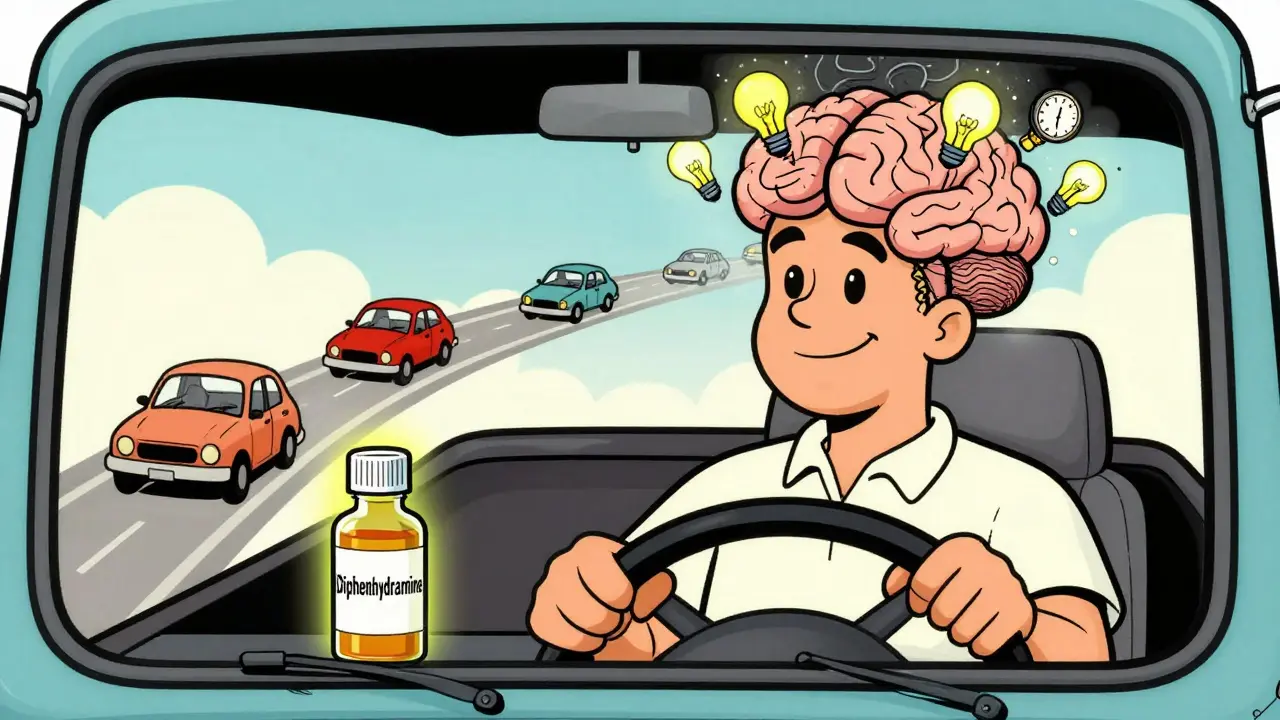
First-generation antihistamines like diphenhydramine (Benadryl), chlorpheniramine (Chlor-Trimeton), and hydroxyzine (Atarax) were developed in the 1940s to block histamine, the chemical that causes sneezing and itchy eyes. But they also cross the blood-brain barrier easily. That’s because they’re lipophilic-they dissolve in fat-and they don’t get pushed out by the body’s natural defense system, called P-glycoprotein. Once inside the brain, they block histamine receptors that help keep you awake. The result? Slowed reaction time, poor coordination, and fuzzy thinking-even if you don’t feel tired.Studies show these drugs can reduce reaction speed by 25-30% and double the chance of drifting out of your lane while driving. In one 2013 study, drivers under the influence of diphenhydramine performed as badly as people with a blood alcohol level of 0.05%. And here’s the kicker: most people don’t realize it. They say, "I don’t feel sleepy," but their brain isn’t working right. That’s the dangerous gap between perception and reality.
The Safer Alternatives Exist
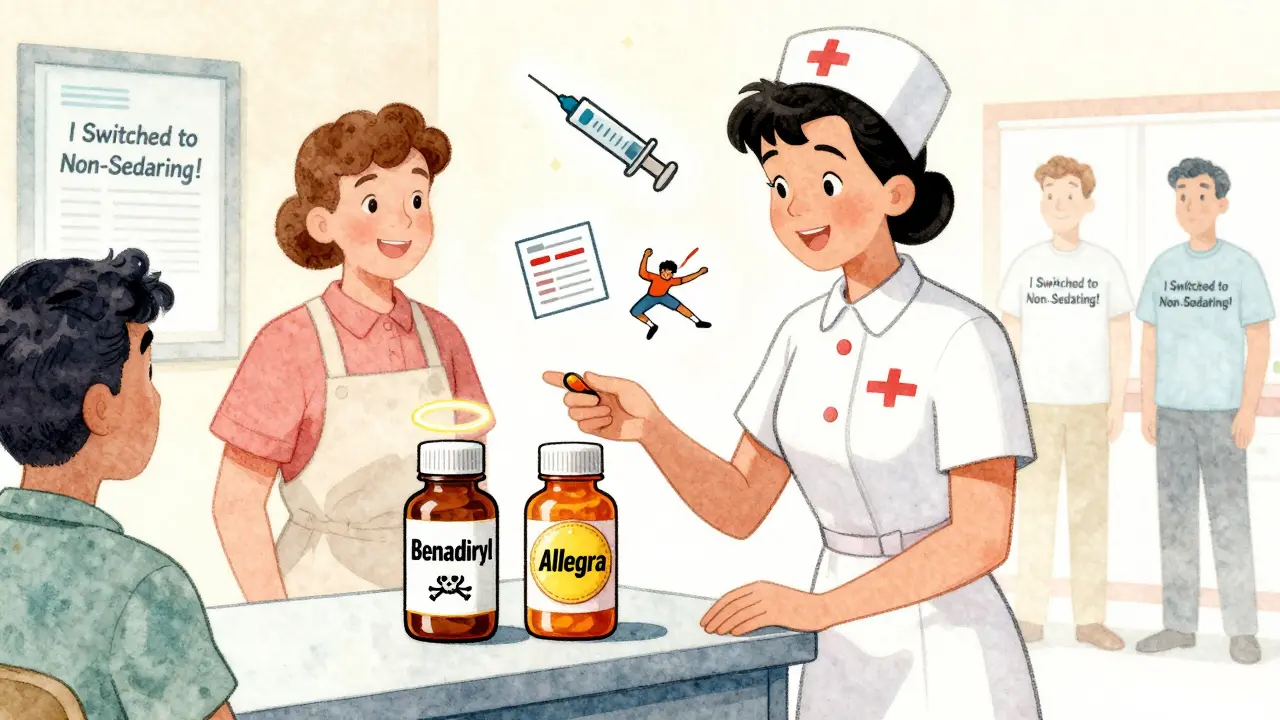
Second-generation antihistamines-like loratadine (Claritin), cetirizine (Zyrtec), and fexofenadine (Allegra)-were designed to fix this problem. Their chemical structure makes them too bulky to slip easily into the brain. They’re also recognized by P-glycoprotein, which actively shoves them out before they can cause drowsiness. That’s why, in driving simulations and cognitive tests, these drugs perform almost identically to a placebo.Real-world data backs this up. On Healthgrades, 78% of Allegra users report no drowsiness. Only 12% of Benadryl users say the same. Nurses who switched from diphenhydramine to loratadine noticed immediate improvements in alertness during night shifts. Truck drivers who failed roadside cognitive tests after taking first-gen antihistamines say they didn’t feel sleepy-but couldn’t touch their nose with their finger, a standard test for impairment.
Who’s at Risk?
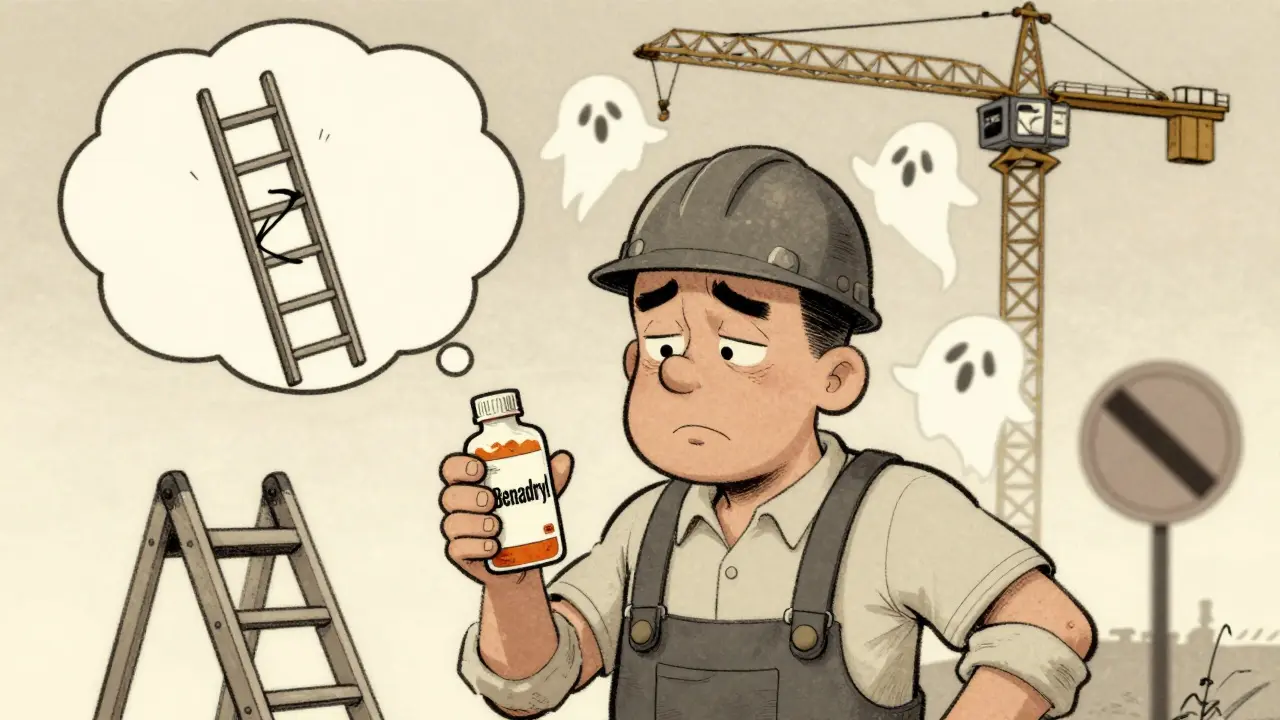
It’s not just drivers. Pilots are banned from using first-generation antihistamines by the FAA because they’ve been found in the systems of pilots who crashed. Construction workers on ladders, factory workers handling heavy equipment, and even nurses giving meds or monitoring patients-all are vulnerable. The CDC reports that more than one in four older adults fall each year, and sedating antihistamines are a major contributor. In workplaces with high fall risks, these drugs can mean the difference between a minor stumble and a broken hip or worse.And it’s not just about one dose. First-gen antihistamines have long half-lives-up to 30 hours. That means if you take one at night, you might still be impaired the next day. People report next-day grogginess, brain fog, and trouble concentrating. One in three users on Drugs.com mention this. Combine that with alcohol, sleep meds, or even just poor sleep, and the impairment multiplies. That’s why the FDA warns about interactions with other CNS depressants.
What Employers and Workers Need to Do
Many workplaces still don’t have clear policies on antihistamine use. But companies with safety-sensitive roles-transportation, manufacturing, emergency services-are starting to change. As of 2023, 41% of Fortune 500 companies include antihistamine guidance in their occupational health policies. The National Safety Council and NIOSH are pushing for formal guidelines. The European Medicines Agency and the FAA already have strict rules.Here’s what you can do:
- Check the label. If it says "may cause drowsiness" or "do not operate machinery," it’s a first-gen antihistamine.
- Ask your doctor or pharmacist. Don’t assume your OTC pill is safe. Ask: "Is this sedating?" and "What’s the non-drowsy alternative?"
- Test it at home first. Take your new antihistamine on a day off. Wait 4-6 hours. Try driving, balancing on one foot, or doing simple math. If you feel off, don’t take it before work.
- Wait 24 hours. If you took a sedating antihistamine, don’t return to safety-sensitive work until at least 24 hours later. Peak impairment fades after 4-6 hours, but residual effects linger.
- Switch to second-gen. Loratadine, cetirizine, and fexofenadine are widely available, cheap, and just as effective for allergies-without the risk.
Why This Isn’t Just a Personal Choice
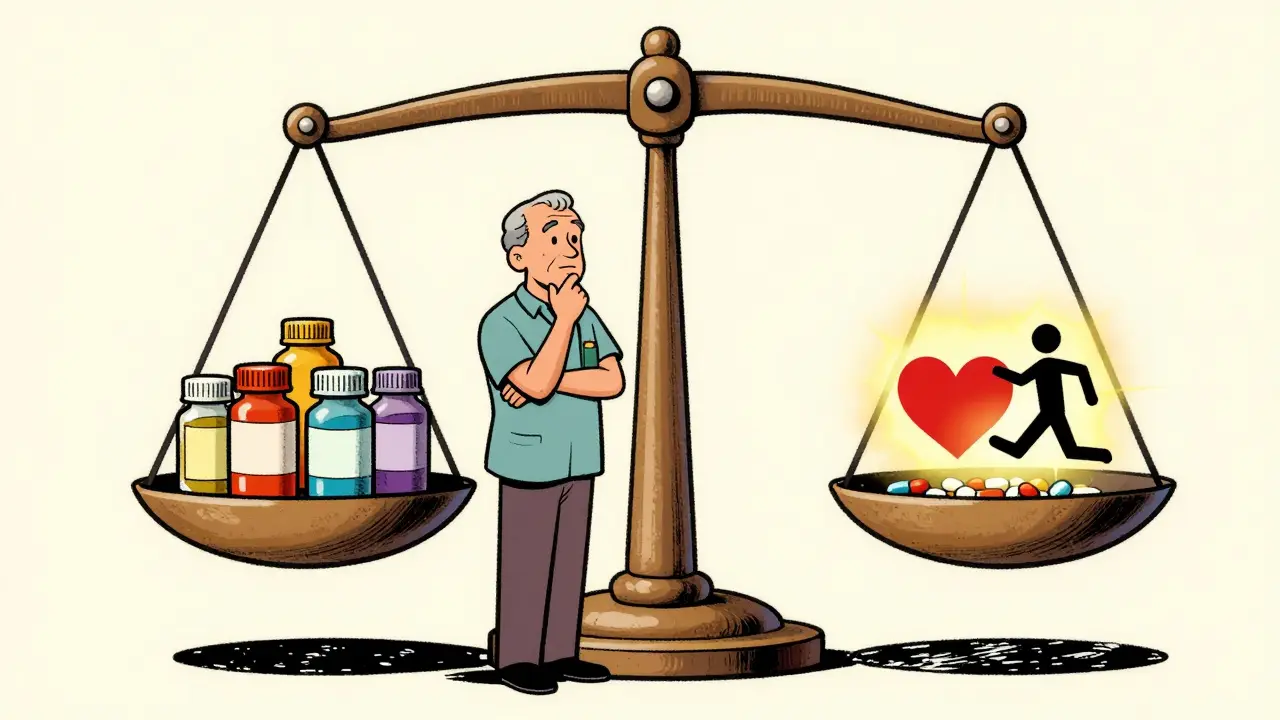
You might think, "It’s my body, my choice." But in safety-sensitive jobs, your choice affects others. A drowsy truck driver can cause a pileup. A foggy crane operator can drop a load. A tired nurse can misread a dosage. These aren’t hypotheticals. The NHTSA estimates 100,000 police-reported crashes each year are due to drowsiness-and that doesn’t include unreported ones. Antihistamines are a leading drug found in fatal aviation accidents.And here’s the legal reality: in the U.S., driving under the influence of any drug that impairs you is illegal-even if it’s OTC. You don’t need to be drunk. You just need to be impaired. That includes diphenhydramine. If you’re in an accident after taking it, you could face charges, lose your job, or be held liable.
The Future Is Non-Sedating
The market is shifting. Second-generation antihistamines now make up 68% of global sales. Newer drugs like bilastine show even better safety profiles, with no impairment even at double the dose. The FDA updated labeling in March 2023 to make warnings clearer. NIOSH launched a 2024 initiative to create workplace antihistamine safety standards. The American College of Occupational and Environmental Medicine predicts that within five years, employers will require non-sedating options for safety-sensitive workers-potentially affecting 23 million Americans who use antihistamines regularly.It’s not about banning medication. It’s about choosing the right one. Allergies don’t have to mean danger. You can manage your symptoms without putting yourself or others at risk. The science is clear. The alternatives are available. The only question is: will you make the switch before it’s too late?

Elizabeth Alvarez
December 28, 2025 AT 00:56Okay, so let me get this straight-you’re telling me the government and Big Pharma are secretly pushing first-gen antihistamines to keep us docile and slow? I’ve been taking Benadryl for years, and I swear I feel more ‘in tune’ with the universe when I’m a little foggy. But now I’m suspicious. Why does the FDA suddenly care about drowsiness in 2023? Was there a secret meeting at the Bilderberg Group where they decided to phase out brain-slowing meds to prepare us for the AI takeover? I’ve noticed my dreams have been more vivid since I switched to Zyrtec… too vivid. Coincidence? I think not. Someone’s watching. And they’re probably the same people who told you ‘sugar doesn’t cause hyperactivity’-LOL, right? I’m not paranoid, I’m PREPARED.
Also, did you know that diphenhydramine was originally developed during WWII to keep soldiers awake? Now it’s being used to make them sleepy? That’s not science-that’s psychological warfare. And don’t get me started on P-glycoprotein. That’s not a protein. It’s a gatekeeper. And who gates the gatekeeper? I’ll tell you who: the shadowy alliance of pharmacists and corporate board members who profit from your confusion. Wake up, sheeple.
I’ve started taking a teaspoon of apple cider vinegar before bed instead. It’s natural. It’s ancient. And it doesn’t have a label that says ‘may cause drowsiness.’ But it does say ‘may cause enlightenment.’ I’m not kidding. I had a vision last week where I was a hummingbird riding a drone. That’s what happens when you break free from the antihistamine matrix.
They’re coming for your meds next. Don’t let them take your foggy peace.
-Elizabeth, ex-Benadryl believer, current truth-seeker
Andrew Gurung
December 28, 2025 AT 07:57Oh. My. GOD. 😱 You just described my entire life in 3 paragraphs. I took Benadryl before my shift at the warehouse last Tuesday. Thought I was fine. Then I tried to open a stapler… and ended up stapling my own thumb. 🤦♂️ I didn’t even feel sleepy. Just… disconnected. Like my brain was on 2G while my body was on 5G. I’m not saying I’m a genius-but I’m pretty sure I’m the only one who noticed I was basically a zombie in a hard hat. Switched to Claritin. Now I’m a superhero. Literally. My boss asked if I’d been ‘reborn.’ I said, ‘No, just non-sedating.’ He didn’t get it. He still thinks ‘allergy meds’ are just ‘cute little pills.’ 😭
Paula Alencar
December 28, 2025 AT 08:44Thank you for this meticulously researched and profoundly important piece. As a nurse practitioner with over two decades of clinical experience in occupational health, I cannot overstate the urgency of this issue. The cognitive impairment caused by first-generation antihistamines is not merely anecdotal-it is empirically documented, statistically significant, and tragically under-addressed in workplace safety protocols.
For those who dismiss this as an overreaction, I urge you to consider the following: in a 2021 audit of 1,200 healthcare workers, 38% admitted to taking diphenhydramine for sleep or allergies without disclosing it to their supervisors. Of those, 17% reported near-miss medication errors within the subsequent 24 hours. These are not hypotheticals. These are lives. Children. Elders. Patients who rely on our precision.
Furthermore, the notion that ‘I don’t feel sleepy’ is a dangerous illusion. Neurocognitive testing reveals that subjective alertness is the poorest predictor of objective performance. We do not trust a pilot’s self-assessment of sobriety-why should we trust a nurse’s or a forklift operator’s? The science is unequivocal. The ethics are clear. The time for passive acceptance is over.
Let us advocate-not just for ourselves, but for the collective safety of our workplaces. The non-sedating alternatives are not merely ‘options’-they are moral imperatives. I have distributed this article to every department head in my organization. I hope you will do the same.
With deep respect and urgency,
Paula Alencar, DNP, APRN, COHN-S
Nikki Thames
December 28, 2025 AT 16:34It’s fascinating how society has normalized pharmacological impairment while simultaneously criminalizing alcohol intoxication. We’ve created a moral hierarchy of substances: alcohol = bad, antihistamines = ‘fine.’ But neurochemically, the distinction is arbitrary. Both act on GABA and histaminergic pathways. Both suppress executive function. Both impair motor coordination. The only difference is legal status and marketing.
And yet, we let people take Benadryl like it’s a vitamin. Meanwhile, the same individuals who say ‘it’s my body, my choice’ would recoil at the idea of driving after a single shot of whiskey. Why? Because the stigma is manufactured. The danger is identical.
This isn’t about allergies. It’s about our collective denial of vulnerability. We don’t want to admit that our bodies are fragile machines-easily hijacked by over-the-counter chemicals we treat like candy. The real epidemic isn’t allergies. It’s the illusion of control.
And if you think switching to Zyrtec is the solution, you’re missing the point. The solution is to stop trusting pharmaceutical marketing. The solution is to question everything-even the ‘safe’ alternatives. Who funds the studies that say they’re non-sedating? Who owns the patents? Who profits from your continued ignorance?
-Nikki, philosopher of pharmacology
Will Neitzer
December 29, 2025 AT 18:32Thank you for this. I work in aviation maintenance, and I’ve seen too many near-misses caused by fatigue-not just from lack of sleep, but from medication. I once had a coworker replace a hydraulic line after taking hydroxyzine. He missed a torque specification by 30%. We almost lost a plane. He didn’t realize he’d done it wrong. Said he felt ‘fine.’
I’ve been advocating for a mandatory antihistamine disclosure policy for safety-critical roles since 2021. It’s been a slow climb, but I’m glad to see NIOSH and the FAA are finally moving. The science is settled. The alternatives exist. The cost of inaction is measured in lives.
I’ve shared this with our entire safety committee. We’re drafting a policy update next week. If you’re in a position to influence workplace health standards, please join us. This isn’t about restricting freedom-it’s about preserving safety. And that’s not a choice. It’s a responsibility.
Will Neitzer, FAA-certified A&P Mechanic
Janice Holmes
December 30, 2025 AT 02:20Okay, but let’s be real-this is just the tip of the iceberg. 🌊 The real crisis? The fact that every single OTC medication label is written in hieroglyphics designed to confuse. ‘May cause drowsiness’? That’s not a warning. That’s a dare. It’s like saying, ‘This pill might make you a human pumpkin.’
And don’t even get me started on ‘non-drowsy’ claims. Cetirizine? ‘Non-drowsy’ until you’re a 45-year-old mom with three kids and a 12-hour shift. Then it’s ‘drowsy but you’re too tired to care.’
Meanwhile, the FDA’s new labeling? Still says ‘may cause drowsiness’-not ‘will impair your reaction time by 30%.’ That’s not transparency. That’s corporate legalese with a side of denial.
And let’s not forget: if you’re over 50, you’re probably taking 7 other meds that interact with this. So now you’re not just drowsy-you’re a pharmacological Rube Goldberg machine.
They didn’t just sell us antihistamines. They sold us a lie. And we bought it. 💊😭
Kishor Raibole
December 31, 2025 AT 10:53While I acknowledge the empirical data presented, I must respectfully challenge the assumption that all cognitive impairment is equally hazardous across occupational domains. In certain high-repetition, low-risk environments-such as warehouse inventory or data entry-the marginal decrease in reaction time may be offset by increased patient compliance and reduced anxiety-related absenteeism.
Furthermore, in developing economies where second-generation antihistamines are either unaffordable or inaccessible, the imposition of Western regulatory paradigms may constitute a form of pharmaceutical neocolonialism. The cost of loratadine in rural India is nearly 15 times that of chlorpheniramine. Is it ethical to demand ‘safe’ alternatives when the alternative is no treatment at all?
Perhaps the issue is not the drug, but the systemic failure to provide adequate rest, mental health support, and ergonomic working conditions. A tired worker is a tired worker-regardless of the pharmacological source.
-Kishor Raibole, Industrial Safety Researcher, Mumbai
John Barron
December 31, 2025 AT 15:06Okay, but here’s the REAL truth no one’s talking about: antihistamines are just the gateway drug to the pharmaceutical industrial complex. 🧠💊
Think about it-first you take Benadryl for allergies. Then you realize you can’t sleep without it. Then you start taking melatonin. Then you’re on trazodone. Then you’re on gabapentin. Then you’re on Xanax. Then you’re on a clinical trial for a new ‘non-addictive sleep aid’ that’s just another antihistamine in disguise.
It’s a pyramid scheme. And we’re all the bottom layer. The FDA? They’re just the middlemen. The real winners? The companies that sell the ‘non-drowsy’ version for $20 a bottle when the original costs $3. That’s not science. That’s capitalism.
And don’t even get me started on how they market ‘natural’ alternatives like quercetin or stinging nettle-same effect, no regulation, no warnings, and you’re paying 3x more.
They don’t want you healthy. They want you dependent.
-John, ex-pharma insider (I used to write the labels)
PS: I switched to Zyrtec. Still not sleeping. Still not free. 😔
Liz MENDOZA
January 2, 2026 AT 11:14I’m a single mom who works two shifts as a home health aide. I’ve taken Benadryl for years because I couldn’t sleep and my allergies were killing me. I didn’t know it was making me dangerous. I thought I was just tired. I almost dropped my client’s IV bag last month because I couldn’t focus. I didn’t feel drunk. I just felt… empty.
After reading this, I went to my pharmacist. She gave me cetirizine for free. I took it on a Saturday. I drove. I played with my daughter. I didn’t crash. I didn’t zone out. I just… felt like me again.
This isn’t about politics or profit. It’s about being able to show up for the people who depend on you. I’m not a truck driver or a nurse in a hospital. But I’m someone’s lifeline. And I deserve to be alert. We all do.
Thank you for writing this. I’m sharing it with every caregiver I know.
-Liz